The Best Stand Mixers of 2026
Compared on the specs that decide years of baking — bowl size, build quality, the attachment ecosystem, and honest value.
Disclosure:Watt & Whisk is reader-supported. When you buy through links on this page we may earn an Amazon Associates commission, at no extra cost to you. Prices are pulled live from Amazon and shown with the date checked. How this works.
For most home bakers the KitchenAid Artisan (5 Qt) is the one to buy: an all-metal tilt-head body, a 5-quart bowl, and the full KitchenAid attachment ecosystem behind it. Want a bigger bowl for less money? The Cuisinart Precision Master SM-50 gives you 5.5 quarts and a stated 500-watt motor. Want the lowest way into KitchenAid? The KitchenAid Classic (4.5 Qt) takes the same attachments for less. Prices below are pulled live from Amazon.
The short answer
Quick picks
| # | Product | Best for | Score | Price |
|---|---|---|---|---|
| 01 | 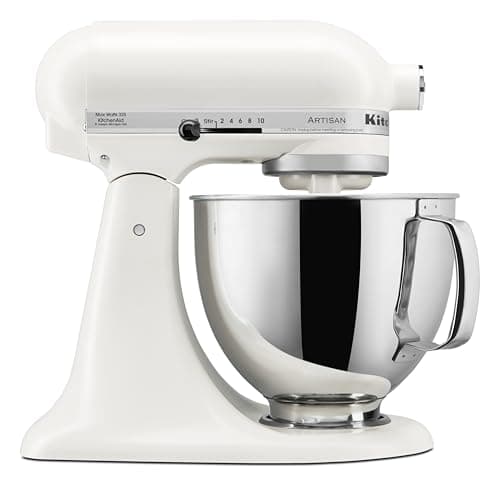 KitchenAid Artisan (5 Qt) The 5-quart tilt-head Artisan is the default for a reason: a metal body, a big color range, and the whole KitchenAid attachment ecosystem. It handles most home baking short of daily heavy bread. 5 Quart | Best overall stand mixer | 4.6★★★★★ | $489.00Amazon |
| 02 | 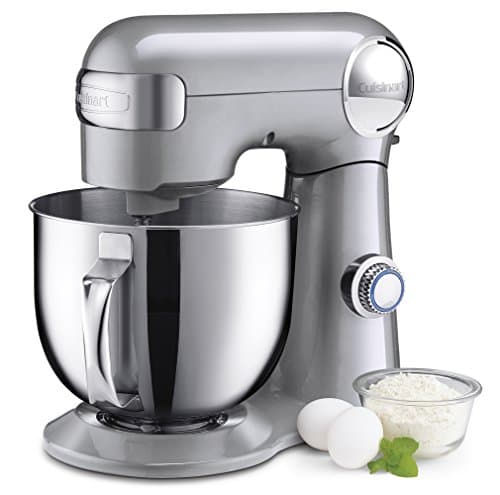 Cuisinart Precision Master SM-50 The 5.5-quart, 500-watt Precision Master gives you a bigger bowl and a stated higher wattage than a same-price KitchenAid. The trade-off is a smaller accessory ecosystem, but for straight mixing it's a lot of machine for the money. 5.5 Qt · 500W | Best big bowl for the money | 4.2★★★★★ | $229.95Amazon |
| 03 | 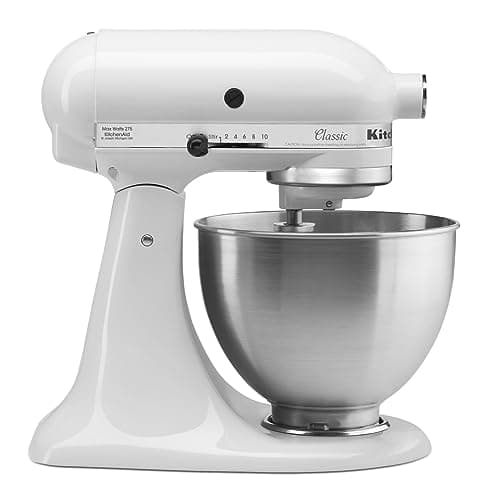 KitchenAid Classic (4.5 Qt) The 4.5-quart Classic is the cheapest way into the KitchenAid ecosystem and takes the same attachments as the Artisan. A slightly smaller bowl and fewer colors, but the same fundamentals. 4.5 Q | Best budget KitchenAid | 4.3★★★★★ | $322.99Amazon |
#ad · Live prices from the Amazon Product API, as of October 17, 2026. Where we have no verified live price, we show none — a gap beats a number that has rotted.
The picks, in detail
KitchenAid Artisan (5 Qt)
spec score /5
Price as of October 17, 2026. Prices change — Amazon's is the one that counts.
#ad · we may earn a commission from this link to KitchenAid Artisan (5 Qt)
The 5-quart tilt-head Artisan is the default for a reason: a metal body, a big color range, and the whole KitchenAid attachment ecosystem. It handles most home baking short of daily heavy bread.
- Capacity
- 5 Quart
- Footprint (W×D×H)
- 8.7 × 14.1 × 13.9 in
- Weight
- 22.8 lb
- Warranty
- 1 Year Limited Warranty
- Huge attachment ecosystem (grinder, pasta, more)
- All-metal build; holds resale value
- 5-qt bowl suits most baking
- Struggles with repeated stiff bread dough
- Premium price
- Heavy to lift on and off the counter
Cuisinart Precision Master SM-50
spec score /5
$319.9528% off
Price as of October 17, 2026. Prices change — Amazon's is the one that counts.
#ad · we may earn a commission from this link to Cuisinart Precision Master SM-50
The 5.5-quart, 500-watt Precision Master gives you a bigger bowl and a stated higher wattage than a same-price KitchenAid. The trade-off is a smaller accessory ecosystem, but for straight mixing it's a lot of machine for the money.
- Capacity
- 5.5 Qt
- Footprint (W×D×H)
- 11.2 × 16.5 × 15.9 in
- Power
- 500 W
- Weight
- 17 lb
- Cost per use*
- ≈3¢
- Est. per year*
- ≈$6
- Warranty
- Limited 3-Year Warranty
- Bigger 5.5-qt bowl
- 500 W stated motor
- Often cheaper than KitchenAid
- Smaller attachment ecosystem
- Less iconic resale value
- Plastic trim in places
*Cost-to-run computed from the manufacturer's stated 500W at $0.17/kWh (US average), 20-min sessions, 4×/week. Your rate and use will vary.
KitchenAid Classic (4.5 Qt)
spec score /5
$399.9919% off
Price as of October 17, 2026. Prices change — Amazon's is the one that counts.
#ad · we may earn a commission from this link to KitchenAid Classic (4.5 Qt)
The 4.5-quart Classic is the cheapest way into the KitchenAid ecosystem and takes the same attachments as the Artisan. A slightly smaller bowl and fewer colors, but the same fundamentals.
- Capacity
- 4.5 Q
- Footprint (W×D×H)
- 8.7 × 14.1 × 13.9 in
- Weight
- 24.2 lb
- Warranty
- 1 Year Limited Warranty
- Lowest-cost route to KitchenAid
- Takes the full attachment lineup
- Compact-ish 4.5-qt bowl
- Smaller bowl than the Artisan
- Fewer color options
- Same dough limits as the 5-qt
How the stand-mixer category divides
A stand mixer is a ten-year purchase, so the decision is less about today's recipe and more about the platform you're buying into. Two things separate the machines: the bowl-and-body itself, and the accessory ecosystem it plugs into. Get those right and the rest is color and price.
The KitchenAid platform
Both KitchenAids here are tilt-head machines with a 10-speed all-metal drive and 59 mixing touchpoints around the bowl. The Artisan carries a 5-quart stainless bowl rated for up to 9 dozen cookies in a batch; the Classic steps down to 4.5 quarts and fewer colors but is otherwise the same fundamentals. The real reason to buy either is the hub on the front: the same grinder, pasta roller, spiralizer, and ice-cream bowl fit both, so the mixer grows with you. Note that neither KitchenAid publishes a wattage on its listing — the motor is rated by capacity and speed, not a headline watt number.
The big-bowl alternative
The Cuisinart Precision Master SM-50is the value counter-argument: a larger 5.5-quart bowl, a stated 500-watt die-cast motor, and 12 speeds, usually for less than a same-size KitchenAid. It comes with a whisk, paddle, dough hook, and a splash guard with a pour spout. The trade-off is a much smaller accessory ecosystem and less of the resale value the KitchenAid name holds — so if you only ever plan to mix, knead, and whip, it's a lot of machine for the money.
What actually decides the price
Build and ecosystem, not wattage. All three are heavy, metal-bodied machines that will mix cookie dough, cake batter, and whipped cream without complaint. What you pay extra for with KitchenAid is the attachment hub and the resale value; what you save with Cuisinart is real, but you give up that ecosystem. Bowl size matters too: 4.5 quarts suits everyday baking, 5 to 5.5 quarts gives you headroom for double batches. See how we weigh these on our review method.
What a stand mixer costs to run
Effectively nothing on your power bill — even the 500-watt Cuisinart run for ten minutes costs a fraction of a cent at the US average electricity rate (source below). The cost that matters is the machine itself and whether it lasts, which is why we weight build quality and warranty over raw specs. Treat a mixer as a once-a-decade purchase and buy accordingly. The weight is worth noting up front: all three of these are 17 to 24 pounds, so they're heavy to lift on and off the counter. If you bake often, plan to leave the mixer out on a dedicated spot rather than storing it in a low cupboard — a mixer you have to wrestle out is a mixer you use less than you meant to.
The mistake buyers make
Expecting a home tilt-head mixer to knead heavy bread dough daily. All three of these machines can make an occasional loaf, but repeated stiff dough is where tilt-head motors strain — that's a job for a bowl-lift or a commercial mixer. If you bake bread most days, size up; if you bake cookies, cakes, and the odd loaf, any pick here is right.
Who should buy what
Most bakers who want the platform and the resale value: the Artisan. The most bowl for the money, with no plans to buy attachments: the Cuisinart SM-50. The lowest-cost route into KitchenAid's ecosystem: the Classic. Whichever you choose, buy the machine you'll grow into rather than the cheapest one today — a mixer that lasts a decade makes the extra outlay disappear over its life, and the attachments turn a single motor into a pasta maker, grinder, or ice-cream churn as your baking widens. Baking in a tight kitchen? These are heavy, tall machines — our small-kitchen guide covers what earns the counter space, and if you also blend a lot, compare a full-size blender.
Go deeper
The two questions people ask most about this category have their own pages. If you are choosing between the two big names, KitchenAid vs. Cuisinart settles it on bowl size, published wattage, warranty and the attachment hub — and Cuisinart wins more categories than most buyers expect. If you have already decided on KitchenAid, KitchenAid models compared decodes the range and shows where the one real capability step sits.
For specific jobs: best stand mixers for bread covers the only task that genuinely separates these machines, and best budget stand mixers shows how much you can skip paying for if cakes and cookies are the whole job. And if you have not committed yet, are stand mixers worth it is the honest case both ways — including the three kinds of baker who should buy a hand mixer instead.
Buying one for a baker rather than for yourself? Best gifts for bakers starts from the question that decides it — whether they already own a mixer, because if they do, an attachment is a far better present than a second machine at a fraction of the price. And our Black Friday hub explains where mixers sit in the discount cycle, which is not where most people assume.
Two more pages cover the questions that come before and after the purchase. Before: hand mixer vs. stand mixer settles the format job by job, and stand mixer vs. food processor explains why the two machines overlap on dough and almost nothing else. After: how to use a stand mixer decodes the three attachments and the speed dial, and what you can make with a stand mixer is the wider list of jobs once you have one on the counter.
And if the honest answer is that you do not need a stand mixer at all — no bread, no long creaming jobs, no counter to spare — buy a good handheld instead of a cheap stand mixer. Best hand mixers ranks that field on the two specs the category hides: published weight, because you are the stand, and whether the beaters have a center post that stiff dough can pack into. The warranty ladder there runs the opposite way to the price ladder.
Buying your first mixer rather than replacing one? best stand mixers for beginners ranks this field on the two specs that actually decide whether a first mixer gets used — the published weight, which runs from 8 lb to 24.2 lb across the category, and how slow the lowest speed really goes. Capacity, the spec most guides lead with, barely matters at this stage.
One spec deserves a warning before you compare machines on it. KitchenAid publishes no wattage on any of its stand mixers, and the highest figure in the category belongs to the cheapest machine — so watts are a poor way to rank these. How many watts a stand mixer needs explains what the figure measures and what to use instead.
More stand mixers guides
Comparison
KitchenAid vs. Cuisinart: Which Stand Mixer Should You Buy?
KitchenAid vs Cuisinart on bowl size, wattage, warranty, attachments and resale — and who each brand is actually for.
Comparison
KitchenAid Models Compared: Classic vs. Artisan vs. Bowl-Lift
Classic vs Artisan vs bowl-lift KSM55 — what actually changes between KitchenAid's models, and which one you need.
Roundup
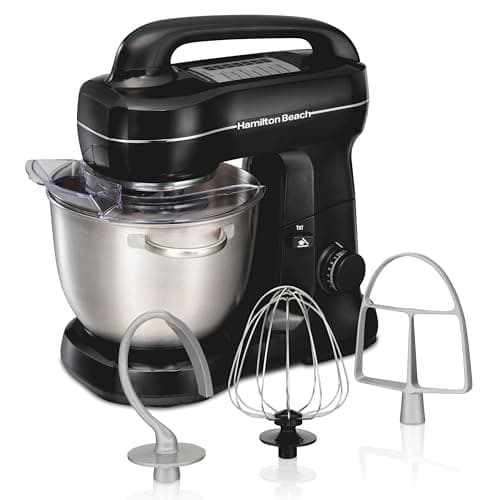
The Best Stand Mixers for Bread Dough
Four mixers ranked for bread: bowl-lift rigidity, stated dough capacity and what kneading does to a machine built for cake.
Roundup
The Best Budget Stand Mixers
Budget stand mixers ranked on bowl size, stated wattage, weight and warranty — plus what you actually give up.
Guide
Are Stand Mixers Worth It?
What a stand mixer genuinely does better than a hand mixer, what it doesn't, and the four questions that settle it.
Review
KitchenAid Artisan Review
The KitchenAid Artisan on bowl coverage, speeds, the attachment hub, weight and the one job it struggles with.
Review
Cuisinart Precision Master SM-50 Review
The Cuisinart SM-50 on bowl size, 500 W motor, 12 speeds, 3-year warranty and the footprint it costs you.
Comparison
Tilt-Head vs. Bowl-Lift: Which Stand Mixer Design?
Tilt-head vs bowl-lift on rigidity, dough capacity, loading, height and cost — and which design your baking needs.
Guide
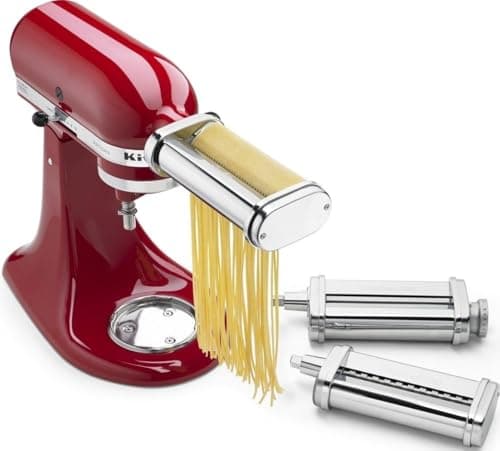
Stand Mixer Attachments: Which Are Actually Worth It?
Which stand mixer attachments are worth buying, in what order, plus the compatibility traps to check first.
Guide
What Can You Make With a Stand Mixer?
Every job the beater, whisk and dough hook actually own — and what the attachment hub adds beyond baking.
Guide
What Size Stand Mixer Do I Need?
4 to 6.5 quarts mapped to real batch sizes, why bread is limited by torque not volume, and the footprint each costs.
Roundup
The Best Stand Mixers for Small Kitchens
Stand mixers ranked on real width, height and weight — the specs that matter when counter space is the constraint.
Review
KitchenAid Classic K45SS Review
The 4.5-quart KitchenAid Classic on capacity, speeds, footprint and warranty — and how it stacks against the Artisan.
Comparison
Hand Mixer vs. Stand Mixer
Job by job: where a hand mixer is genuinely the right buy, and the three tasks that need a stand mixer.
Comparison
Stand Mixer vs. Food Processor
One builds structure slowly, one destroys it in seconds. Which to buy first, and where the overlap actually is.
Guide
How to Use a Stand Mixer
Flat beater, dough hook or whisk; what each speed is really for; and the order of operations that stops split batters.
Roundup
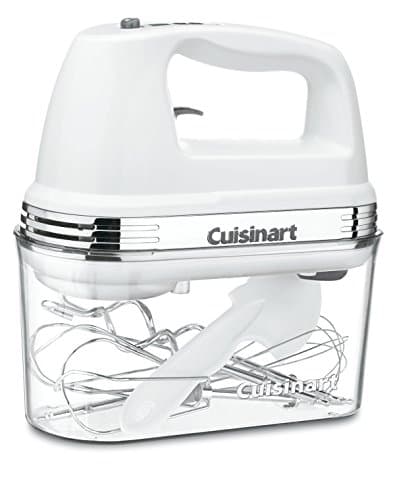
The Best Hand Mixers of 2026
Five hand mixers compared on weight, beater design, how slow the slowest speed really is, and what is actually in the box.
Roundup
The Best Stand Mixers for Beginners
Ranked on the two specs that decide whether a first mixer gets used — published weight and slow-speed control — not on quart ratings.
Roundup
Best Stand Mixers for Cookies
Ranked on the published cookie-dozen rating, the flat beater in the box and low-speed creaming control — not on price or bowl size.
Guide
How Long Do Stand Mixers Last?
Published warranty terms for every stand mixer we track, the sacrificial gear that ends most of them, and why that gear is good news.
Guide
How Many Watts Does a Stand Mixer Need?
Why KitchenAid publishes no wattage, what 300 to 660 watts really buys you, and the published figure to shop on instead.
Frequently asked questions
What is the best stand mixer for most people?
The KitchenAid Artisan (5 Qt) is our overall pick: an all-metal tilt-head body, a 5-quart bowl that handles most home baking, and access to the full KitchenAid attachment ecosystem. For a bigger bowl at a lower price, the Cuisinart Precision Master SM-50 is the value alternative.
Is the KitchenAid Artisan worth it over the Classic?
The Artisan adds a slightly larger 5-quart bowl and more color choices, but both take the exact same attachments and share the same all-metal drive. If budget matters more than bowl size, the 4.5-quart Classic is the cheapest way into the same ecosystem.
Should I buy KitchenAid or Cuisinart?
Buy KitchenAid for the attachment ecosystem and resale value; buy the Cuisinart SM-50 for a bigger 5.5-quart bowl and a stated 500-watt motor at a lower price. If you only plan to mix, knead, and whip, the Cuisinart is more machine for the money.
Can a stand mixer knead bread dough?
Occasionally, yes — all three picks here handle the odd loaf. But repeated stiff bread dough strains tilt-head motors over time. If you bake bread most days, step up to a heavier bowl-lift machine; for cookies, cakes, and occasional bread, any pick here is fine.
Sources
Keep reading
Food Processors
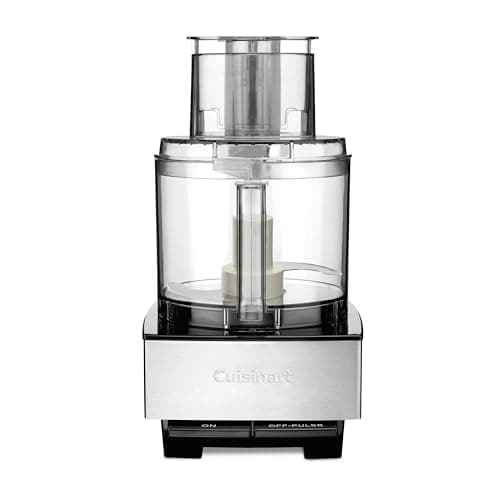
The Best Food Processors of 2026
Cuisinart 14-cup, KitchenAid 13-cup and a 3-cup mini compared on bowl size, power and discs.
Blenders
The Best Blenders of 2026
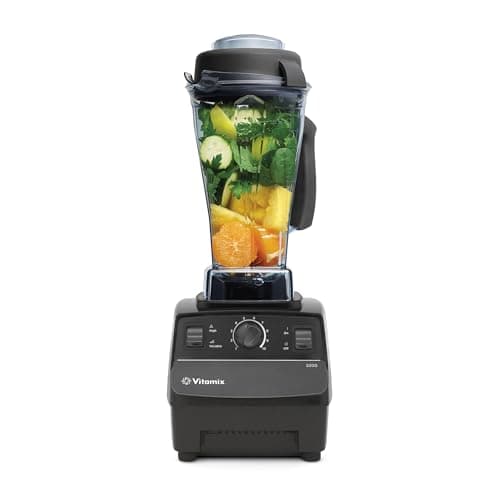
Vitamix, Ninja and personal blenders compared on motor class, jar size, footprint and cleanup.
Small Kitchen
Best Appliances for Small Kitchens & Apartments
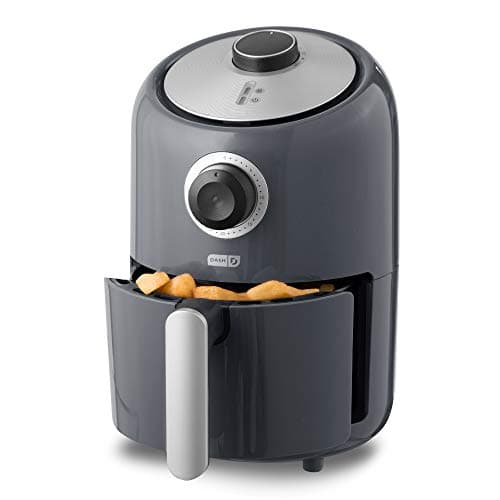
The most compact air fryer, blender, food processor and sous vide, chosen footprint-first for tight kitchens.
https://wattandwhisk.com/stand-mixers