How Many Watts Do You Need in a Blender?
Wattage is the number every blender box shouts and the number that explains the least. Here is what it does and doesn't tell you.
Disclosure:Watt & Whisk is reader-supported. When you buy through links on this page we may earn an Amazon Associates commission, at no extra cost to you. Prices are pulled live from Amazon and shown with the date checked. How this works.
By job: 250–600 watts is enough for soft fruit smoothies, dips and dressings. 700–1,000 watts is the range where a blender handles ice and frozen fruit reliably. 1,000–1,400 watts covers dense loads, nut butters and big batches. Above that, the wattage number stops being the useful spec — which is why Vitamix quotes 2 HP instead. Wattage measures electricity going in, not blending work coming out.
The short answer
Quick picks
| # | Product | Best for | Score | Price |
|---|---|---|---|---|
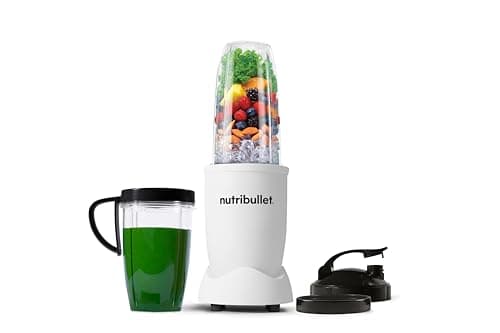
| 01 | 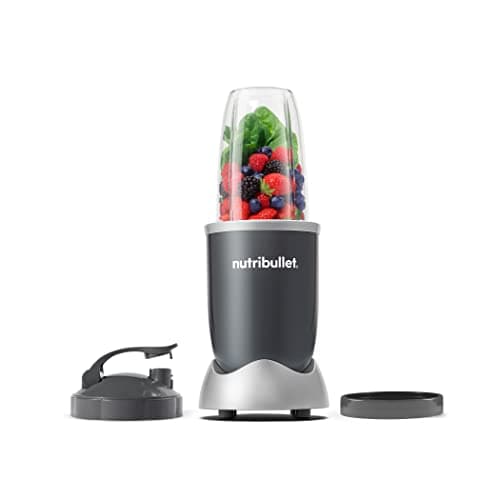 NutriBullet 600 The original 600-watt NutriBullet does one thing: a 24-ounce smoothie in a cup you drink from. It is the cheapest way into blend-and-go without dropping to a 250-watt bullet, and it fits in the gap between the kettle and the toaster. One Cup · 600W | Best cheap personal blender | 4.1★★★★★ | $59.96Amazon |
| 02 | 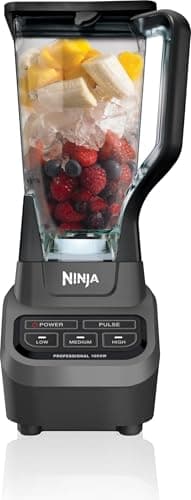 Ninja Professional BL610 The BL610 is the plain, cheap, hard-working Ninja: a 1,000-watt base, a 72-ounce Total Crushing pitcher, and three speeds plus pulse. No Auto-iQ presets, no to-go cups, nothing to break — which is exactly why it's the full-size blender we'd hand someone with a strict budget. 72oz · 1000W | Best full-size blender under $100 | 4.2★★★★★ | $99.00Amazon |
| 03 | 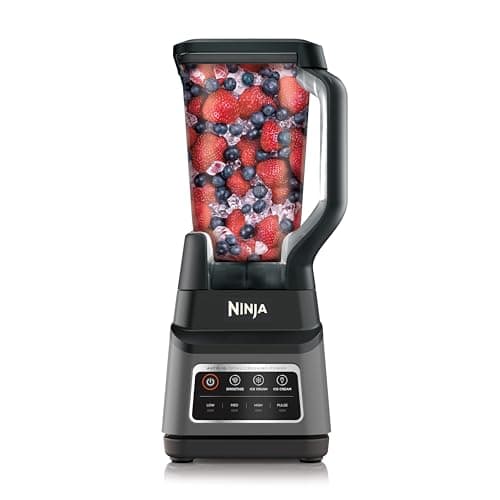 Ninja Professional Plus BN701 The BN701 is the value champion: strong ice-crushing power, Auto-iQ programs, and a big pitcher for a fraction of a Vitamix. It won't self-clean or make hot soup, but for daily smoothies it's plenty. Professional Plus Blender · 1400W | Best value blender | 4.3★★★★★ | $89.99Amazon |
| 04 | 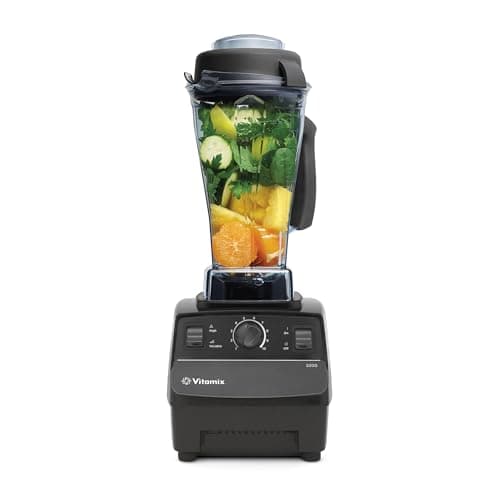 Vitamix 5200 The 5200 is the workhorse Vitamix — a tall 64-oz jar, an aircraft-grade blade, and a variable dial that takes it from a silky smoothie to hot soup by friction. Expensive, but it's the one people keep for 15 years. Self-Cleaning 64 oz | Best overall blender | 4.6★★★★★ | $479.00Amazon |
#ad · Live prices from the Amazon Product API, as of October 17, 2026. Where we have no verified live price, we show none — a gap beats a number that has rotted.
The picks, in detail
NutriBullet 600
spec score /5
Price as of October 17, 2026. Prices change — Amazon's is the one that counts.
#ad · we may earn a commission from this link to NutriBullet 600
The original 600-watt NutriBullet does one thing: a 24-ounce smoothie in a cup you drink from. It is the cheapest way into blend-and-go without dropping to a 250-watt bullet, and it fits in the gap between the kettle and the toaster.
- Capacity
- One Cup
- Footprint (W×D×H)
- 6.85 × 11.61 × 12.28 in
- Power
- 600 W
- Cost per use*
- ≈3¢
- Est. per year*
- ≈$7
- Warranty
- One Year Limited
- Blends straight into the 24-oz cup you drink from
- Under 7 in wide — parks anywhere
- Twist-off blade rinses in seconds
- 600 W stalls on thick frozen loads
- Single-serve only
- One-year limited warranty
*Cost-to-run computed from the manufacturer's stated 600W at $0.17/kWh (US average), 20-min sessions, 4×/week. Your rate and use will vary.
Ninja Professional BL610
spec score /5
$109.9910% off
Price as of October 17, 2026. Prices change — Amazon's is the one that counts.
#ad · we may earn a commission from this link to Ninja Professional BL610
The BL610 is the plain, cheap, hard-working Ninja: a 1,000-watt base, a 72-ounce Total Crushing pitcher, and three speeds plus pulse. No Auto-iQ presets, no to-go cups, nothing to break — which is exactly why it's the full-size blender we'd hand someone with a strict budget.
- Capacity
- 72oz
- Footprint (W×D×H)
- 8.27 × 10.71 × 15.94 in
- Power
- 1000 W
- Weight
- 7.1 lb
- Cost per use*
- ≈6¢
- Est. per year*
- ≈$12
- Warranty
- 1 year limited warranty
- Full 72-oz pitcher at a budget price
- 1,000 W crushes ice without complaint
- Three speeds and pulse — nothing to learn
- No presets or programs
- Stacked blade assembly to wash separately
- Not rated for hot liquids
*Cost-to-run computed from the manufacturer's stated 1000W at $0.17/kWh (US average), 20-min sessions, 4×/week. Your rate and use will vary.
Ninja Professional Plus BN701
spec score /5
$119.9925% off
Price as of October 17, 2026. Prices change — Amazon's is the one that counts.
#ad · we may earn a commission from this link to Ninja Professional Plus BN701
The BN701 is the value champion: strong ice-crushing power, Auto-iQ programs, and a big pitcher for a fraction of a Vitamix. It won't self-clean or make hot soup, but for daily smoothies it's plenty.
- Capacity
- Professional Plus Blender
- Footprint (W×D×H)
- 9 × 6.75 × 17.5 in
- Power
- 1400 W
- Weight
- 8.1 lb
- Cost per use*
- ≈8¢
- Est. per year*
- ≈$17
- Warranty
- 1 year limited warranty
- Crushes ice easily
- Auto-iQ preset programs
- A quarter of a Vitamix's price
- Stacked blades are fiddly to clean
- Plastic build vs premium blenders
- Not for hot blending
*Cost-to-run computed from the manufacturer's stated 1400W at $0.17/kWh (US average), 20-min sessions, 4×/week. Your rate and use will vary.
Vitamix 5200
spec score /5
Price as of October 17, 2026. Prices change — Amazon's is the one that counts.
#ad · we may earn a commission from this link to Vitamix 5200
The 5200 is the workhorse Vitamix — a tall 64-oz jar, an aircraft-grade blade, and a variable dial that takes it from a silky smoothie to hot soup by friction. Expensive, but it's the one people keep for 15 years.
- Capacity
- Self-Cleaning 64 oz
- Footprint (W×D×H)
- 7.25 × 8.75 × 20.5 in
- Weight
- 10.9 lb
- Warranty
- 7-Year Limited Warranty
- Blends anything to a genuinely smooth texture
- Runs for years; 7-year warranty class
- Self-cleans with soap and warm water
- Premium price
- Tall — may not fit under cabinets
- Loud at full speed
Wattage is the most prominent number on a blender box and one of the least informative. It measures how much electricity the motor draws, not how much of that becomes useful blending. A poorly-matched motor and blade assembly can draw 1,200 watts and produce a worse smoothie than a well-designed 900-watt machine. That said, watts are not useless — within a sensible range they correlate with what a blender can survive. Here is how to read the number properly.
Watts by job
250–600 W — soft fruit, dips, dressings
This is personal-blender territory and it is genuinely sufficient for a lot of people. The Magic Bullet runs a 250-watt high-torque motor and handles pico de gallo, milkshakes, dips and dressings. The original NutriBullet at 600 watts takes it further — NutriBullet describes it as turning anything from strawberries to spinach into smooth drinkable nutrition in a 24-oz cup.
What this range will not do is grind ice cubes repeatedly or make nut butter. Ask it to and you will get gritty results and a shortened motor life.
700–1,000 W — ice and frozen fruit
This is where a blender becomes a general-purpose machine. The Hamilton Beach Power Elite at 700 watts of peak power pairs Ice Sabre blades with a Wave~Action system that forces ingredients down into the blades — a design answer to the ice problem rather than just more electricity. The Ninja Professional BL610 at 1,000 watts and 12.5 amps is built explicitly around crushing ice, with Total Crushing blades running the height of a 72-oz pitcher.
If you make frozen drinks or smoothies with ice, this is the range to shop in. Below it you are stressing the machine; above it you are mostly paying for headroom.
1,000–1,400 W — dense loads and big batches
The NutriBullet Pro at 900 watts is the personal blender that copes with nuts, seeds and dense whole foods without stalling. The Ninja Professional Plus BN701 at 1,400 watts is the full-size version of the same idea — Ninja is explicit that it is a more powerful motor than the 1,000-watt original.
Note what actually improves here. It is not that the smoothie gets smoother; it is that the machine stops slowing down under load, which means less heat, less strain and a longer life.
Why Vitamix doesn't print a wattage
Both the Vitamix 5200 and the Propel 510 are specified as 2 HP motors, not as a watt figure. That is a deliberate and defensible choice: horsepower describes mechanical work delivered, while wattage describes electrical power consumed. The gap between the two is efficiency — and efficiency is exactly what separates a motor that holds its speed against a jar of frozen fruit from one that bogs down.
It also means you cannot directly compare a Vitamix to a Ninja on the headline number, and anyone who does is comparing different units. What you can compare is behavior under load, warranty length, and the design features each brand uses to solve the same problem. Vitamix pairs its motor with laser-cut stainless blades, ten variable speeds, a vortex-shaped jar and a tamper. Ninja pairs a bigger watt figure with stacked full-height blades and timed pulse programs. Both work; they are different engineering answers. We put them side by side in Vitamix vs Ninja.
Peak watts versus sustained watts
Watch the wording on a spec sheet. Hamilton Beach specifies 700 watts of peak blending power — peak, meaning the maximum momentary draw, not what the motor sustains through a two-minute smoothie. Ninja quotes its figures alongside an amperage rating (12.5 A for the BL610), which is a more honest way to describe continuous draw.
The practical rule: when two machines quote similar wattage and one says "peak", assume the one that doesn't is the stronger machine. And when a very cheap blender claims a very high wattage, be suspicious — that number is easy to inflate and hard to verify.
The one job where watts genuinely matter most
Friction heating. A high-powered blender run at full speed for five or six minutes will heat soup to steaming through blade friction alone, with no heating element involved. This is a Vitamix party trick that genuinely works, and it requires sustained high-speed power that mid-range machines cannot deliver without overheating.
If hot soup from raw ingredients is something you actually want, that is one of the few cases where you need to shop at the top of the power range rather than the middle — the field is in best blenders for hot soup.
What a blender costs to run
Almost nothing, and this is the part nobody publishes. The formula is watts ÷ 1,000 × hours × rate, and we use the US average residential rate of about $0.17/kWh from the EIA. Blenders run for seconds, not hours, so:
- NutriBullet 600 W, 45-second blend: 0.6 kW × 0.0125 h = 0.0075 kWh ≈ 0.13 cents
- Ninja BL610 1,000 W, 90-second blend: 1.0 kW × 0.025 h = 0.025 kWh ≈ 0.4 cents
- Ninja BN701 1,400 W, 90-second blend: 1.4 kW × 0.025 h = 0.035 kWh ≈ 0.6 cents
A daily smoothie on the most power-hungry machine here costs about 22 cents a year in electricity. So running cost is genuinely not a reason to buy a lower-wattage blender — buy the power you need for the job and ignore the bill. Our full method is on how we review.
So how many watts should you buy?
Work from what you make, not from the biggest number you can afford:
- Smoothies from soft or frozen fruit, one serving at a time → 600 W is plenty. See best personal blenders.
- Ice, frozen drinks, family batches → 1,000 W and up, with blades designed for it. See best blenders for crushing ice.
- Nut butters, dense doughs, daily heavy use → 1,400 W, or a 2 HP Vitamix.
- Hot soup by friction → top of the range only.
And remember the number that actually predicts lifespan is not on the front of the box: it is the warranty. One year is the Ninja norm; Hamilton Beach gives three; Vitamix gives seven on the 5200 and five on the Propel 510. That is a manufacturer betting its own money on the motor — which is more information than any wattage claim. More in our blender buying guide.
Which is why wattage can only be read alongside the vessel it is working in: 900 watts behind a 32-ounce cup works ingredients harder than 1,000 watts behind a half-filled 72-ounce pitcher. The capacity side of that pairing — including the max-liquid figures and the published heights — is what size blender do I need.
For a worked example of how little the wattage figure decides, take the easiest job any blender gets: a protein shake. The 700-watt Hamilton Beach handles it as well as the 1,000-watt Ninja, because what fixes clumping is downward circulation in the jar and the order you load it — not input power. The detail is in best blenders for protein shakes.
Frequently asked questions
How many watts do I need in a blender for smoothies?
For smoothies from soft or frozen fruit, 600 watts is plenty — the original 600-watt NutriBullet handles strawberries through spinach in a 24-oz cup. If your smoothies include ice cubes rather than just frozen fruit, step up to 1,000 watts and blades designed for crushing.
Is 1000 watts good for a blender?
Yes — 1,000 watts is the comfortable general-purpose point. The Ninja BL610 sits exactly there and is built around crushing ice. Above 1,000 watts you are buying headroom so the motor does not slow under load, which extends its life more than it improves the blend.
Why doesn't Vitamix list watts?
Vitamix specifies 2 HP for the 5200 and Propel 510 because horsepower describes mechanical work delivered while wattage describes electricity consumed. The gap between them is efficiency — and efficiency is what keeps a motor from bogging down against frozen fruit. You cannot directly compare the two units.
Does a higher-wattage blender make smoother smoothies?
Not directly. Blade design, jar geometry and speed control matter at least as much. What extra wattage buys is a motor that does not slow down under load, which means less heat and a longer life rather than a visibly better result.
How much electricity does a blender use?
Almost none, because blenders run for seconds. A 1,000-watt blender running 90 seconds uses 0.025 kWh — about 0.4 cents at the 17-cents-per-kWh US average. A daily smoothie costs well under a dollar a year in electricity.
What does 'peak watts' mean on a blender?
The maximum momentary draw, not what the motor sustains through a blend. Hamilton Beach specifies 700 watts of peak power for the Power Elite. When two machines quote similar figures and one says peak, assume the one that does not is the stronger machine.
Sources
Keep reading
Blenders
The Best Blenders of 2026
Vitamix, Ninja and personal blenders compared on motor class, jar size, footprint and cleanup.
Guide
Blender Buying Guide: The Specs That Actually Matter
Why blender wattage misleads, what jar shape and blade design really do, and the six specs worth checking before you buy.
Roundup
The Best Blenders for Crushing Ice
What actually lets a blender crush ice — motor, blades and jar shape — and the machines that do it without dying.
Comparison
Vitamix vs. Ninja: Which Blender Is Actually Worth It?
Vitamix vs Ninja on motor rating, jar size, hot blending, cleanup and warranty — and who each one is really for.
Roundup
The Best Personal Blenders
Four blend-and-go blenders compared on cup size, footprint, power and cleanup — including a cordless one.
Roundup
The Best Blenders for Hot Soup
Which blenders are genuinely rated for hot contents, why sealing hot soup builds pressure, and the immersion-blender shortcut.
https://wattandwhisk.com/blenders/how-many-watts-do-you-need-in-a-blender