Blender Buying Guide: The Specs That Actually Matter
Six numbers decide whether you like a blender. Only one of them is on the front of the box, and it is the least useful.
Disclosure:Watt & Whisk is reader-supported. When you buy through links on this page we may earn an Amazon Associates commission, at no extra cost to you. Prices are pulled live from Amazon and shown with the date checked. How this works.
Ignore the wattage on the box — brands measure it differently and the number does not compare across makers. The six specs that actually decide a blender are jar size and shape, blade design, total height versus your cabinets, whether it self-cleans, whether it is rated for hot contents, and warranty length. Check those six and you cannot buy the wrong blender.
The short answer
Quick picks
| # | Product | Best for | Score | Price |
|---|---|---|---|---|
| 01 | 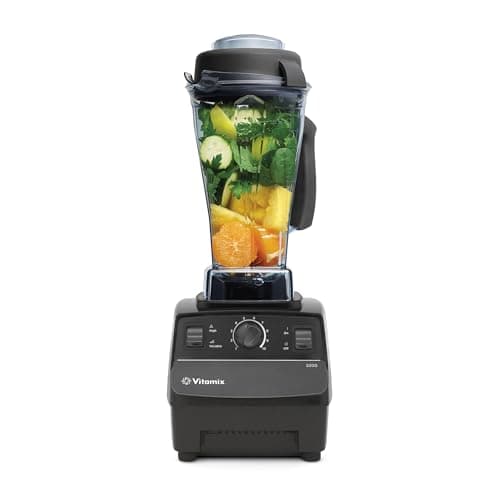 Vitamix 5200 The 5200 is the workhorse Vitamix — a tall 64-oz jar, an aircraft-grade blade, and a variable dial that takes it from a silky smoothie to hot soup by friction. Expensive, but it's the one people keep for 15 years. Self-Cleaning 64 oz | Best overall blender | 4.6★★★★★ | $479.00Amazon |
| 02 | 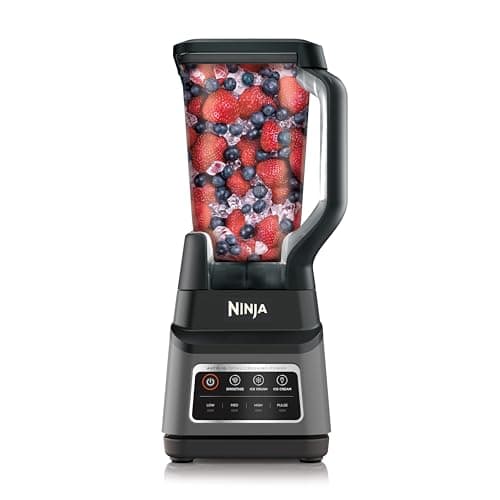 Ninja Professional Plus BN701 The BN701 is the value champion: strong ice-crushing power, Auto-iQ programs, and a big pitcher for a fraction of a Vitamix. It won't self-clean or make hot soup, but for daily smoothies it's plenty. Professional Plus Blender · 1400W | Best value blender | 4.3★★★★★ | $89.99Amazon |
| 03 | 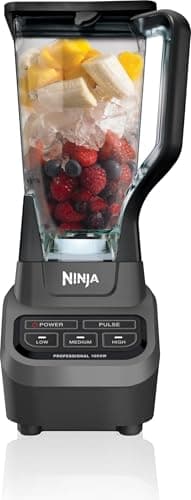 Ninja Professional BL610 The BL610 is the plain, cheap, hard-working Ninja: a 1,000-watt base, a 72-ounce Total Crushing pitcher, and three speeds plus pulse. No Auto-iQ presets, no to-go cups, nothing to break — which is exactly why it's the full-size blender we'd hand someone with a strict budget. 72oz · 1000W | Best full-size blender under $100 | 4.2★★★★★ | $99.00Amazon |
| 04 | 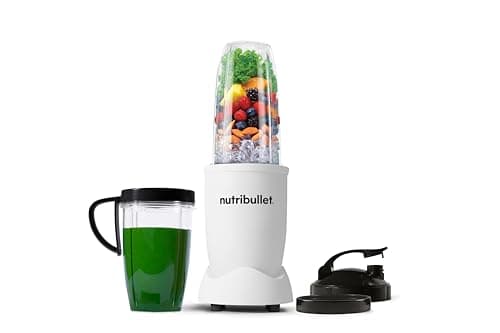 NutriBullet Pro 900 A 900-watt personal blender that blends straight into a to-go cup and stores in almost no space. For single smoothies in a small kitchen, it beats hauling out a full-size pitcher. 32 oz Cup · 900W | Best personal blender | 4.2★★★★★ | $69.99Amazon |
#ad · Live prices from the Amazon Product API, as of October 17, 2026. Where we have no verified live price, we show none — a gap beats a number that has rotted.
The picks, in detail
Vitamix 5200
spec score /5
Price as of October 17, 2026. Prices change — Amazon's is the one that counts.
#ad · we may earn a commission from this link to Vitamix 5200
The 5200 is the workhorse Vitamix — a tall 64-oz jar, an aircraft-grade blade, and a variable dial that takes it from a silky smoothie to hot soup by friction. Expensive, but it's the one people keep for 15 years.
- Capacity
- Self-Cleaning 64 oz
- Footprint (W×D×H)
- 7.25 × 8.75 × 20.5 in
- Weight
- 10.9 lb
- Warranty
- 7-Year Limited Warranty
- Blends anything to a genuinely smooth texture
- Runs for years; 7-year warranty class
- Self-cleans with soap and warm water
- Premium price
- Tall — may not fit under cabinets
- Loud at full speed
Ninja Professional Plus BN701
spec score /5
$119.9925% off
Price as of October 17, 2026. Prices change — Amazon's is the one that counts.
#ad · we may earn a commission from this link to Ninja Professional Plus BN701
The BN701 is the value champion: strong ice-crushing power, Auto-iQ programs, and a big pitcher for a fraction of a Vitamix. It won't self-clean or make hot soup, but for daily smoothies it's plenty.
- Capacity
- Professional Plus Blender
- Footprint (W×D×H)
- 9 × 6.75 × 17.5 in
- Power
- 1400 W
- Weight
- 8.1 lb
- Cost per use*
- ≈8¢
- Est. per year*
- ≈$17
- Warranty
- 1 year limited warranty
- Crushes ice easily
- Auto-iQ preset programs
- A quarter of a Vitamix's price
- Stacked blades are fiddly to clean
- Plastic build vs premium blenders
- Not for hot blending
*Cost-to-run computed from the manufacturer's stated 1400W at $0.17/kWh (US average), 20-min sessions, 4×/week. Your rate and use will vary.
Ninja Professional BL610
spec score /5
$109.9910% off
Price as of October 17, 2026. Prices change — Amazon's is the one that counts.
#ad · we may earn a commission from this link to Ninja Professional BL610
The BL610 is the plain, cheap, hard-working Ninja: a 1,000-watt base, a 72-ounce Total Crushing pitcher, and three speeds plus pulse. No Auto-iQ presets, no to-go cups, nothing to break — which is exactly why it's the full-size blender we'd hand someone with a strict budget.
- Capacity
- 72oz
- Footprint (W×D×H)
- 8.27 × 10.71 × 15.94 in
- Power
- 1000 W
- Weight
- 7.1 lb
- Cost per use*
- ≈6¢
- Est. per year*
- ≈$12
- Warranty
- 1 year limited warranty
- Full 72-oz pitcher at a budget price
- 1,000 W crushes ice without complaint
- Three speeds and pulse — nothing to learn
- No presets or programs
- Stacked blade assembly to wash separately
- Not rated for hot liquids
*Cost-to-run computed from the manufacturer's stated 1000W at $0.17/kWh (US average), 20-min sessions, 4×/week. Your rate and use will vary.
NutriBullet Pro 900
spec score /5
$99.9930% off
Price as of October 17, 2026. Prices change — Amazon's is the one that counts.
#ad · we may earn a commission from this link to NutriBullet Pro 900
A 900-watt personal blender that blends straight into a to-go cup and stores in almost no space. For single smoothies in a small kitchen, it beats hauling out a full-size pitcher.
- Capacity
- 32 oz Cup
- Footprint (W×D×H)
- 5.5 × 5.5 × 7.9 in
- Power
- 900 W
- Cost per use*
- ≈5¢
- Est. per year*
- ≈$11
- Blend-and-go cup design
- Tiny footprint (5.5 in)
- Rinses clean in seconds
- Single-serve only
- Not for hot or large batches
- Can stall on very thick blends
*Cost-to-run computed from the manufacturer's stated 900W at $0.17/kWh (US average), 20-min sessions, 4×/week. Your rate and use will vary.
Blender marketing is unusually noisy. Peak watts, horsepower, blade counts, program names, RPM figures — almost none of it is comparable between brands, and some of it is designed not to be. This guide strips it down to the handful of specifications that change how the machine behaves in your kitchen, and explains what each one actually does.
1. Wattage — and why it misleads
This is the number on the front of the box, and it is the least useful one there. The problem is that brands do not measure the same thing. Ninja quotes peak watts — the momentary spike a motor can draw under load — because that number is large. Vitamix quotes horsepower, because its machines are built around sustained blending rather than a spike. One horsepower is about 746 watts, so a 2 HP Vitamix looks like roughly 1,500 watts and lands suspiciously close to a 1,400-peak-watt Ninja.
Do not make that conversion. Peak and continuous are different measurements, and every brand measures peak differently. The practical consequence: a 1,400-peak-watt Ninja is not more powerful than a 2 HP Vitamix, and a 600-watt personal blender can out-blend a 1,000-watt full-size machine on a single serving because the cup shape keeps the blade in constant contact with the food.
Where wattage isinformative is within a single brand and format. A 900-watt NutriBullet Pro really does handle frozen fruit better than the 600-watt model, and a 250-watt Magic Bullet really will labor where both of those don't. Compare like with like, and treat cross-brand wattage claims as marketing.
2. Jar size and shape
Size first, because it is the most common mistake in both directions. One person drinking immediately wants 24 to 32 ounces. Two people want a full-size pitcher. A 72-ounce pitcher used for a single 12-ounce serving is actively worse than a small cup, because the blade never gets proper contact with such a small load.
Read stated capacity carefully. A Ninja 72-ounce pitcher is rated to 64 ounces of liquid— the rest is headroom for foam and ice. Against a Vitamix 5200's 64-ounce jar that is a tie, not a 50% advantage. The Vitamix Propel 510's 48-ounce jar is genuinely smaller, and that is the real trade you make for its shorter body.
Shape matters as much as volume. A tapered jar creates the downward vortex that keeps pulling the load back into the blade; a straight-sided jar lets contents ride up the walls and cavitate around a spinning blade. If a jar looks like a bucket, expect to stop and stir.
3. Blade design
Three approaches, all of them solving the same cavitation problem, and each with a predictable consequence for cleanup.
- Fixed blade in a tapered jar (Vitamix): blunt, aggressive, and part of the jar. Nothing to remove, which is why these self-clean, and nothing to lose. It is also the design that handles long, heavy blends best.
- Stacked blade on a central spindle (Ninja): cutting edges at every height, which is excellent on ice and frozen fruit. The cost is that you lift a multi-blade spindle out of a sticky pitcher and wash it as a separate part, every time.
- Inverted cup blade (NutriBullet, Magic Bullet): the cup screws onto the blade and flips, so gravity feeds the load. Cleanup is a twist and a rinse — the best in the business — but the format is single-serve by definition.
Blade count is not a meaningful spec. Six blades are not better than four; the geometry and the jar are what matter.
4. Height, and the cabinet problem
The most preventable buying mistake in this category. Standard upper kitchen cabinets sit about 18 inches above the counter. The Vitamix 5200 is 20.5 inches tall with the jar on — it will not fit under a typical cabinet, which is precisely why the 17.5-inch Propel 510 exists. The Ninja BN701 is also 17.5 inches, the BL610 is 15.94 inches, and personal blenders are all well under.
Measure the gap between your counter and the underside of your cabinet before you buy anything. If a machine does not fit, you will store it in a cupboard, and a blender in a cupboard is a blender you do not use. If clearance is tight across the board, our small-kitchen appliance guide is built entirely around footprint.
5. Cleanup
The criterion you will feel most often and think about least when buying. A self-cleaning jar means warm water, a drop of dish soap, 30 to 60 seconds on high, and a rinse — no disassembly, because the blade is part of the jar. Every other design means removing a blade assembly and washing it separately while it is coated in whatever you just blended.
Also check whether the jar is dishwasher-safe and whether it is glass or plastic. Plastic scratches, clouds over time and eventually holds odors; glass does neither but adds weight, and glass jars are rare below $100 — the Hamilton Beach Power Elite's 40-ounce glass jar is the notable exception.
6. Hot contents and warranty
These belong together because they are both statements the manufacturer makes about what the machine is built to survive. Vitamix designs its classic containers for hot and cold contents and the 5200 will bring soup to steaming from blade friction alone. Ninja's owner's guide for the BN700 series says the opposite — do not blend hot liquids, because sealing hot contents in the pitcher can build pressure and steam. That is a hard line, not a preference, and it decides the purchase if soup is on your list.
Warranty is the maker's own estimate of lifespan. One year is standard on value machines; Vitamix lists 7 years on the 5200 and 5 on the Propel 510, and states its household warranties cover parts, labor and return shipping both ways. Run the arithmetic on cost per year of ownership rather than sticker price: a blender replaced every three years can quietly cost more across a decade than one machine that survives it.
What you can safely ignore
Preset program counts, mostly. A program is a timed pulse-blend-pause pattern; useful if you like pressing one button, irrelevant to what the machine can do. Recipe books. Color options. Blade counts. Noise ratings, which are almost never measured comparably. And any claim about "nutrient extraction," which is marketing language, not a mechanism — blending breaks cell walls, and every blender on the market does that.
Noise: the spec nobody publishes
Worth a paragraph because it is the complaint most likely to make you stop using a blender, and almost no manufacturer publishes a comparable figure. What you can predict from the specs you do have: a high-powered full-size blender running a tapered jar at full speed is loud, and a Vitamix 5200 in particular is not a machine you use at 6am in a flat with thin walls. Personal blenders are much quieter simply because they run for fifteen seconds rather than ninety.
The practical fixes are unglamorous and effective. Run the machine at a lower speed for longer where the recipe allows. Put a folded tea towel or a silicone mat under the base to kill the vibration transmitted into the worktop, which is a surprising share of the perceived noise. And do not chase "quiet" marketing claims without a stated decibel figure and a stated test condition — in this category they almost never come with either.
Running cost, so you can stop worrying about it
A blender runs for a minute or two, not an hour. At the highest wattage in common use — 1,400 W — a two-minute blend draws about 0.047 kWh, which at the 17-cent U.S. average residential rate is well under a penny. Blend daily for a year and you are looking at roughly $3 in electricity. Buy on capability and lifespan; power consumption is not a differentiator in this category.
New, refurbished or second-hand?
A last practical note, because blenders are one of the few small appliances where this is a real question. Premium machines are built to be serviced — Vitamix sells containers, blades and tampers as components, which is why decade-old machines stay in use — so a manufacturer-refurbished or well-kept used premium blender is a genuinely sensible purchase, and often lands near the price of a new mid-range machine.
Two things to check if you go that route. The jar, not the base, is usually the worn part: look for deep scratching, clouding, or a blade that feels rough rather than smooth when you turn it. Jars are replaceable, so a good base with a tired jar is a fair deal if you price it that way. And confirm what warranty transfers, which for manufacturer-refurbished stock is usually a shorter but real term, and for private sales is usually nothing.
At the budget end this logic reverses. A used $80 blender saves you very little, comes with no cover at all, and the parts you would need are not economically replaceable. Buy those new.
The checklist
Before you buy, answer six questions. How many servings at once? Does the jar taper? Fixed blade or removable? Does it clear my cabinet? Does it self-clean? How long is the warranty, and does hot blending matter to me? If you can answer those, the specific model almost picks itself — and our best blenders guide, under-$100 roundup and personal blender guide have the shortlists for each answer.
Two specs this guide deliberately leaves to their own pages. If the jar material is part of your decision, best non-toxic blenders ranks the field on published jar claims — glass, a written BPA-free statement, or silence. And if you are shopping on how long the machine will last, how long do blenders last publishes the full warranty table, which spans a tenfold range and does not track price.
The one spec worth settling before any of the above is capacity, and it is published two ways — pitcher volume and marked max liquid, which are not the same number. Both Ninja 72-ounce pitchers are marked 64 ounces max liquid, and the ladder across our catalog runs from an 18-ounce cup to that 72-ounce jug. The full ladder, plus the cabinet-clearance figure that catches people out, is what size blender do I need.
Frequently asked questions
How many watts should a good blender have?
Wattage is the wrong question, because brands measure it differently — Ninja quotes peak watts, Vitamix quotes horsepower, and the two do not convert. Compare wattage only within a brand and format: a 900-watt NutriBullet really does beat the 600-watt model on frozen fruit.
What size blender jar do I need?
One person drinking immediately wants 24 to 32 ounces. Two or more people want a full-size pitcher of 48 to 72 ounces. Note that Ninja's 72-ounce pitchers are rated to 64 ounces of liquid, so against a Vitamix 5200's 64-ounce jar it is a tie, not an advantage.
Will a blender fit under my kitchen cabinets?
Measure first — standard upper cabinets sit about 18 inches above the counter. The Vitamix 5200 is 20.5 inches tall and will not fit with the jar on; the Vitamix Propel 510 is 17.5 inches, the Ninja BN701 is 17.5 and the Ninja BL610 is 15.94.
What does a self-cleaning blender actually mean?
It means the blade is fixed in the base of the jar, so you add warm water and a drop of dish soap, run it 30 to 60 seconds and rinse — with no blade assembly to remove and wash separately. Vitamix jars work this way; Ninja's removable stacked blades do not.
Are more blades better in a blender?
No. Blade count is not a meaningful spec — geometry and jar shape decide performance. A tapered jar with one well-designed fixed blade outperforms a straight-sided jar with six, because the taper creates the vortex that keeps pulling food back into the blade.
Do blenders use much electricity?
No. A two-minute blend at 1,400 watts uses about 0.047 kWh, well under a penny at the 17-cent US average residential rate, or roughly $3 a year for daily use. Buy on capability and warranty; running cost is not a differentiator between blenders.
Sources
Keep reading
Blenders
The Best Blenders of 2026
Vitamix, Ninja and personal blenders compared on motor class, jar size, footprint and cleanup.
Comparison
Vitamix vs. Ninja: Which Blender Is Actually Worth It?
Vitamix vs Ninja on motor rating, jar size, hot blending, cleanup and warranty — and who each one is really for.
Roundup
The Best Blenders for Smoothies
Five smoothie blenders ranked on frozen-load handling, jar size, cleanup and warranty — from a $90 Ninja to a decade-long Vitamix.
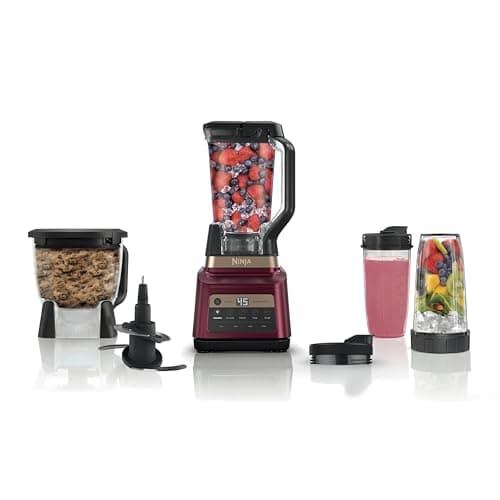
Comparison
Blender vs. Food Processor: Which Do You Actually Need?
The honest line between a blender and a food processor, which to buy first, and when a combo machine is the right answer.
Roundup
The Best Blenders for Hot Soup
Which blenders are genuinely rated for hot contents, why sealing hot soup builds pressure, and the immersion-blender shortcut.
Guide
How to Clean a Blender
The 30-second self-clean, the gasket that causes smells, cloudy jars, and what should never go in the dishwasher.
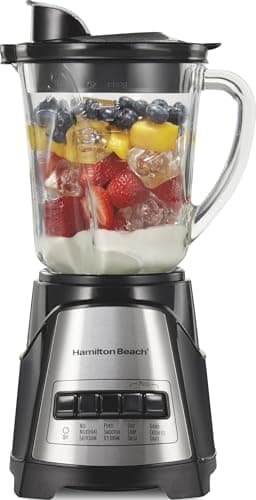
Roundup
The Best Non-Toxic Blenders of 2026
Ranked on published jar material: the one glass jar we stock, then the blenders that state in writing that their plastic is BPA-free.
Guide
How Long Do Blenders Last?
The published warranty table for every blender we track, what actually fails first, and which parts you can replace instead of the machine.
https://wattandwhisk.com/blenders/blender-buying-guide