The Best Blenders for Smoothies
A smoothie blender has one hard job: turn frozen fruit and ice into something with no grit in it. Here is what actually decides that, and the five machines that do it.
Disclosure:Watt & Whisk is reader-supported. When you buy through links on this page we may earn an Amazon Associates commission, at no extra cost to you. Prices are pulled live from Amazon and shown with the date checked. How this works.
For a smoothie you will actually make every morning, the Ninja Professional Plus BN701 is the sensible buy — a 72-ounce pitcher, 1,400 peak watts and Auto-iQ programs that run the blend for you. Step up to the Vitamix 5200 if you blend fibrous greens or want a machine warranted for seven years, drop to the Ninja Professional BL610 if you want the same size pitcher for less, and take the NutriBullet Pro if your smoothie is one cup and you are leaving the house with it. All five prices below come live from Amazon.
The short answer
Quick picks
| # | Product | Best for | Score | Price |
|---|---|---|---|---|
| 01 | 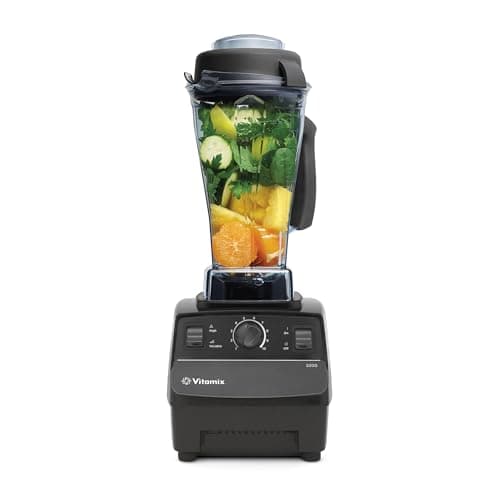 Vitamix 5200 The 5200 is the workhorse Vitamix — a tall 64-oz jar, an aircraft-grade blade, and a variable dial that takes it from a silky smoothie to hot soup by friction. Expensive, but it's the one people keep for 15 years. Self-Cleaning 64 oz | Best overall blender | 4.6★★★★★ | $479.00Amazon |
| 02 | 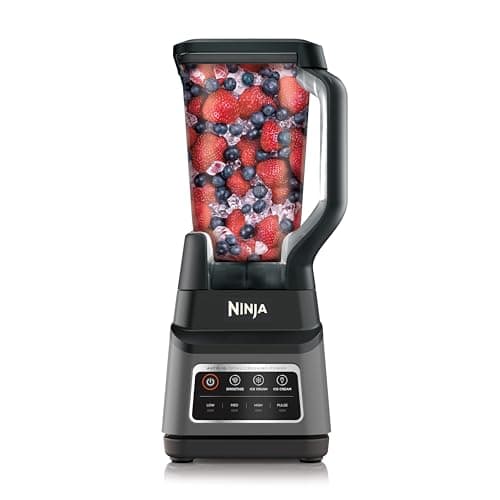 Ninja Professional Plus BN701 The BN701 is the value champion: strong ice-crushing power, Auto-iQ programs, and a big pitcher for a fraction of a Vitamix. It won't self-clean or make hot soup, but for daily smoothies it's plenty. Professional Plus Blender · 1400W | Best value blender | 4.3★★★★★ | $89.99Amazon |
| 03 | 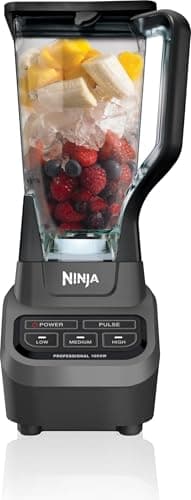 Ninja Professional BL610 The BL610 is the plain, cheap, hard-working Ninja: a 1,000-watt base, a 72-ounce Total Crushing pitcher, and three speeds plus pulse. No Auto-iQ presets, no to-go cups, nothing to break — which is exactly why it's the full-size blender we'd hand someone with a strict budget. 72oz · 1000W | Best full-size blender under $100 | 4.2★★★★★ | $99.00Amazon |
| 04 | 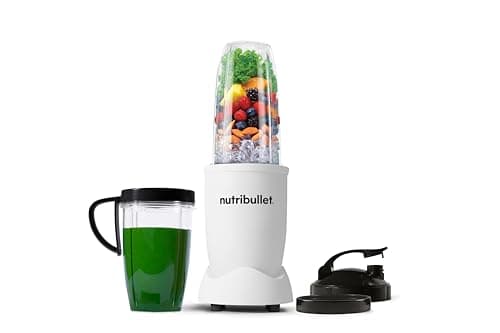 NutriBullet Pro 900 A 900-watt personal blender that blends straight into a to-go cup and stores in almost no space. For single smoothies in a small kitchen, it beats hauling out a full-size pitcher. 32 oz Cup · 900W | Best personal blender | 4.2★★★★★ | $69.99Amazon |
| 05 | 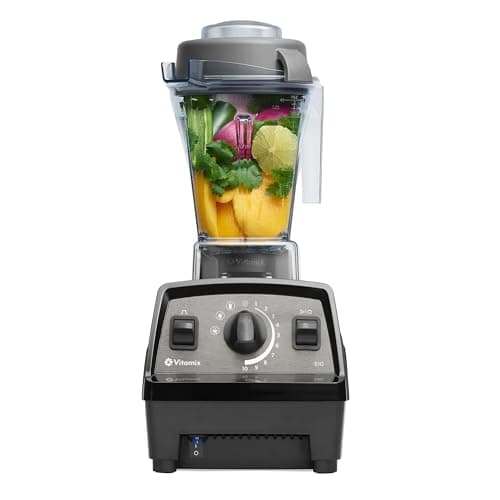 Vitamix Propel Series 510 The Propel 510 is the compact Vitamix: the same 2 HP motor and laser-cut stainless blades as the pricier machines, a self-cleaning 48-oz container, and a 17.5-inch body that clears a standard cabinet. It also adds three automatic programs — smoothie, hot soup and frozen dessert — that run and shut off on their own. 48 oz | Best compact Vitamix | 4.5★★★★★ | $389.00Amazon |
#ad · Live prices from the Amazon Product API, as of October 17, 2026. Where we have no verified live price, we show none — a gap beats a number that has rotted.
The picks, in detail
Vitamix 5200
spec score /5
Price as of October 17, 2026. Prices change — Amazon's is the one that counts.
#ad · we may earn a commission from this link to Vitamix 5200
The 5200 is the workhorse Vitamix — a tall 64-oz jar, an aircraft-grade blade, and a variable dial that takes it from a silky smoothie to hot soup by friction. Expensive, but it's the one people keep for 15 years.
- Capacity
- Self-Cleaning 64 oz
- Footprint (W×D×H)
- 7.25 × 8.75 × 20.5 in
- Weight
- 10.9 lb
- Warranty
- 7-Year Limited Warranty
- Blends anything to a genuinely smooth texture
- Runs for years; 7-year warranty class
- Self-cleans with soap and warm water
- Premium price
- Tall — may not fit under cabinets
- Loud at full speed
Ninja Professional Plus BN701
spec score /5
$119.9925% off
Price as of October 17, 2026. Prices change — Amazon's is the one that counts.
#ad · we may earn a commission from this link to Ninja Professional Plus BN701
The BN701 is the value champion: strong ice-crushing power, Auto-iQ programs, and a big pitcher for a fraction of a Vitamix. It won't self-clean or make hot soup, but for daily smoothies it's plenty.
- Capacity
- Professional Plus Blender
- Footprint (W×D×H)
- 9 × 6.75 × 17.5 in
- Power
- 1400 W
- Weight
- 8.1 lb
- Cost per use*
- ≈8¢
- Est. per year*
- ≈$17
- Warranty
- 1 year limited warranty
- Crushes ice easily
- Auto-iQ preset programs
- A quarter of a Vitamix's price
- Stacked blades are fiddly to clean
- Plastic build vs premium blenders
- Not for hot blending
*Cost-to-run computed from the manufacturer's stated 1400W at $0.17/kWh (US average), 20-min sessions, 4×/week. Your rate and use will vary.
Ninja Professional BL610
spec score /5
$109.9910% off
Price as of October 17, 2026. Prices change — Amazon's is the one that counts.
#ad · we may earn a commission from this link to Ninja Professional BL610
The BL610 is the plain, cheap, hard-working Ninja: a 1,000-watt base, a 72-ounce Total Crushing pitcher, and three speeds plus pulse. No Auto-iQ presets, no to-go cups, nothing to break — which is exactly why it's the full-size blender we'd hand someone with a strict budget.
- Capacity
- 72oz
- Footprint (W×D×H)
- 8.27 × 10.71 × 15.94 in
- Power
- 1000 W
- Weight
- 7.1 lb
- Cost per use*
- ≈6¢
- Est. per year*
- ≈$12
- Warranty
- 1 year limited warranty
- Full 72-oz pitcher at a budget price
- 1,000 W crushes ice without complaint
- Three speeds and pulse — nothing to learn
- No presets or programs
- Stacked blade assembly to wash separately
- Not rated for hot liquids
*Cost-to-run computed from the manufacturer's stated 1000W at $0.17/kWh (US average), 20-min sessions, 4×/week. Your rate and use will vary.
NutriBullet Pro 900
spec score /5
$99.9930% off
Price as of October 17, 2026. Prices change — Amazon's is the one that counts.
#ad · we may earn a commission from this link to NutriBullet Pro 900
A 900-watt personal blender that blends straight into a to-go cup and stores in almost no space. For single smoothies in a small kitchen, it beats hauling out a full-size pitcher.
- Capacity
- 32 oz Cup
- Footprint (W×D×H)
- 5.5 × 5.5 × 7.9 in
- Power
- 900 W
- Cost per use*
- ≈5¢
- Est. per year*
- ≈$11
- Blend-and-go cup design
- Tiny footprint (5.5 in)
- Rinses clean in seconds
- Single-serve only
- Not for hot or large batches
- Can stall on very thick blends
*Cost-to-run computed from the manufacturer's stated 900W at $0.17/kWh (US average), 20-min sessions, 4×/week. Your rate and use will vary.
Vitamix Propel Series 510
spec score /5
$499.9522% off
Price as of October 17, 2026. Prices change — Amazon's is the one that counts.
#ad · we may earn a commission from this link to Vitamix Propel Series 510
The Propel 510 is the compact Vitamix: the same 2 HP motor and laser-cut stainless blades as the pricier machines, a self-cleaning 48-oz container, and a 17.5-inch body that clears a standard cabinet. It also adds three automatic programs — smoothie, hot soup and frozen dessert — that run and shut off on their own.
- Capacity
- 48 oz
- Footprint (W×D×H)
- 7.5 × 9 × 17.5 in
- Weight
- 9.6 lb
- Warranty
- 5-year full warranty covers parts, labor and return shipping both ways.
- 17.5 inches tall — fits under a standard cabinet
- Smoothie, hot soup and frozen dessert programs run unattended
- Self-cleaning 48-oz container and a five-year warranty
- 48-oz container means batching soup for four
- Premium price — a capable Ninja costs a quarter as much
- No wireless container detection like the Ascent line
Smoothies are the single most common reason people buy a blender, and they are also the job most likely to expose a bad one. A blender that makes a fine milkshake will leave spinach in threads and ice in shards, and you find that out on the first Monday morning after you have thrown the box away. So this guide is built around the specific failure modes of a frozen blend rather than around brand hierarchy.
Every number quoted here comes from the manufacturer's current listing for the exact machine we link to. We have not run these in a lab, and we are not going to imply we did — our method is on how we review, and it is a specification and running-cost analysis, honestly labeled.
What actually decides a smoothie blender
Four things, in this order. Everything else is a preference, not a criterion.
- Behavior under a frozen load.A smoothie is mostly a solid until it isn't. The blender needs to keep pulling ice down into the blade instead of spinning a cavity underneath it — a problem called cavitation, and the reason you end up poking a machine with a spoon.
- Jar size versus how many people you feed. One person needs 24 to 32 ounces. Two need a full-size pitcher. Buying a 72-ounce pitcher for a single serving means the blade never gets enough contact with the food.
- Cleanup, measured in parts. The number of pieces you wash at 7am decides whether the blender is still in use in March.
- Warranty.Smoothie duty is the hardest thing most home blenders ever do, daily. The warranty is the maker's own estimate of how long that lasts.
Why cheap blenders fail at frozen fruit
It is worth understanding the actual mechanism, because it explains why wattage is a poor predictor. When you drop frozen fruit and ice into a jar and hit go, the blade throws the load outward and upward. If the jar is a plain cylinder and the blade sits flat, the contents ride up the walls and an air pocket forms around the blade. The motor is now spinning freely at full power and cutting nothing. Adding watts does not fix this; it just spins the void faster.
The three designs that do fix it are all represented below. Vitamix uses a tapered jar and a blunt, aggressive blade that creates a downward vortex, plus a tamper you push through the lid to force the load back into the blade. Ninja stacks blades up a central spindle so there is always a cutting edge at every height in the pitcher. NutriBullet and the bullet class simply invert the whole problem — the cup is small, the blade is at what becomes the top when you flip it, and gravity does the feeding. None of these is a wattage story.
How the five picks divide
Ninja Professional Plus BN701 — the default
This is the one we point most people to for smoothies specifically. The 72-ounce pitcher is rated to 64 ounces of liquid, which is two large smoothies with room for foam, and the stacked-blade assembly is genuinely good at frozen fruit — the reason Ninja owns this category despite being the cheaper brand. The three Auto-iQ programs run timed pulse-blend-pause patterns, so you press one button and walk away rather than standing over a variable dial.
The listing rates it at 1,400 peak watts. Treat that as a marketing figure rather than a comparison tool — peak watts is a momentary spike under load, measured differently by every brand. What matters is that at 17.5 inches tall and 9 inches wide it fits under a standard cabinet, and it is the cheapest machine here that handles a full pitcher of frozen fruit without complaint. Honest cons: the stacked blade is a separate part to wash every time, the build is plastic, and Ninja's owner's guide for this series says not to blend hot liquids — so this is a cold-only machine.
Ninja Professional BL610 — same job, less money
The BL610 is the BN701 with the clever bits removed: a 1,000-watt base, the same 72-ounce Total Crushing pitcher, three speeds and a pulse button. No Auto-iQ, no to-go cups, no programs. For a smoothie that is a smaller loss than it sounds, because a smoothie is about forty seconds on high and you were going to press one button anyway.
At 8.27 inches wide, 10.71 deep and 15.94 tall it is actually the most cabinet-friendly of the full-size picks, and 7.1 lb makes it the lightest to lift down from a shelf. The trade-offs are the same stacked-blade cleanup and a one-year limited warranty. If your budget has a hard ceiling and you want a full pitcher rather than a single cup, this is the pick — see our blenders under $100 guide for the rest of that field.
Vitamix 5200 — if you blend greens
The gap between a Ninja and a Vitamix on a banana-and-berry smoothie is small. The gap on a kale, spinach and frozen-mango smoothie is not. Fibrous greens are the specific thing that separates these machines: the 5200's 2-HP motor and tapered 64-ounce jar keep working the load long past the point where a cheaper machine has given you a smooth base with green threads suspended in it.
The other two arguments are cleanup and lifespan. The blade is fixed in the base of the jar, so you add warm water and a drop of soap, run it for 30 to 60 seconds, and rinse — there is no blade assembly to lift out and wash. And the listing carries a 7-year limited warranty, which is a different category of promise from one year. The honest cons are real: it is 20.5 inches tall and will not fit under a standard 18-inch cabinet with the jar on, it is loud at full speed, and it costs several times a Ninja. Whether that is worth it depends entirely on frequency — we work through that arithmetic in Vitamix vs. Ninja.
Vitamix Propel 510 — the one that fits
Same 2 HP motor and blade quality, same self-cleaning design, 17.5 inches tall instead of 20.5, and a 48-ounce jar instead of 64. If you want the Vitamix behavior on greens but have a low cabinet or a smaller budget, this is the machine, and the five-year warranty — which Vitamix states covers parts, labor and return shipping both ways — is still far beyond what the value brands offer. It also adds three automatic programs, for smoothies, hot soups and frozen desserts, that run and stop on their own. You give up a quarter of the jar capacity, which matters if you blend for three or more.
NutriBullet Pro — for one, going out the door
If your smoothie is one 32-ounce cup that you drink on the way to work, a full-size pitcher is the wrong tool. The NutriBullet Pro's 900-watt base is 5.5 inches square and 7.9 inches tall — it lives permanently on a counter without anyone noticing — and you blend directly into the vessel you drink from, then twist off the blade and rinse. That is the entire cleanup.
It is not a substitute for a full-size machine: it is single-serve, it is not for hot contents or large batches, and it can stall on a very thick blend if you pack the cup with frozen fruit and not enough liquid. But for the specific job of one daily smoothie in a small kitchen it beats hauling out a pitcher, and our personal blender guide covers the rest of that class.
The four ingredients that separate these machines
Generic advice is useless here, so here is how the field actually sorts on the things that cause trouble.
Ice.Everything on this page handles it. This is the ingredient buying guides obsess over and it is the one that discriminates least — Ninja's stacked blades and Vitamix's tapered jar solve it by different routes, and even a 600-watt personal blender manages ice in a narrow cup. Do not choose a blender on ice performance.
Fibrous greens. Kale stems, chard, celery. This is the real discriminator, and it is where the premium machines earn their money. A cheaper blender gives you a smooth base with visible green threads suspended in it; the Vitamix pair keeps working the fiber until it disappears. If you drink green smoothies daily, this alone justifies the step up.
Frozen banana and dense frozen fruit. Frozen banana in particular is heavier and stickier than ice and will bog a small motor. The full-size picks all cope; the NutriBullet Pro copes if you leave enough liquid; a 250-watt bullet does not. If frozen banana is your base, that is an argument for the BN701 or BL610 over a personal blender.
Seeds, oats and nuts. Chia, flax, rolled oats and almonds get mostly broken down by every machine here and completely broken down by almost none of them except the Vitamix pair. If you notice grit and it bothers you, that is a jar-and-blade problem rather than a duration problem — blending longer will not fix it, and will heat your smoothie.
The technique that fixes most smoothie problems
Load order matters more than most people expect, and it is free. Liquid goes in first, against the blade — water, milk, juice, yogurt, whatever your recipe uses. Soft ingredients next. Leafy greens after that. Frozen fruit and ice last, on top. This gives the blade something fluid to bite immediately and lets the frozen load fall into a moving vortex rather than sitting on a stalled blade.
The second fix is ratio. A smoothie that will not blend is almost always short on liquid, not short on watts. If a machine is laboring, add an ounce of liquid before you add pressure with a spoon — and never put a spoon or spatula into a running jar. The third is patience with pulses: three or four short pulses to break up the frozen load, then a continuous run, gets a smoother result than holding high from a standing start.
What a daily smoothie costs to run
Almost nothing, and we would rather show the arithmetic than assert it. Take the highest published figure among these machines, the Ninja's 1,400 watts, and a generous two-minute blend: that is 1.4 kW × (2 ÷ 60) h ≈ 0.047 kWh. At the U.S. average residential rate of about 17 cents per kilowatt-hour, that is well under a penny per smoothie, or roughly $3 a year if you blend every single day.
So electricity is not a differentiator here, and any guide telling you to buy a lower-watt blender to save money on power is selling you something. The running cost that actually matters is replacement: a $90 blender replaced every three years costs more across a decade than one machine that survives it. That is the frame we would use.
Who should buy which
Buy the BN701 if you want one machine for daily smoothies and do not want to think about it. Buy the BL610 if you want that same 72-ounce capability for less and can live without presets. Buy the 5200 if greens, nut butters or hot soup are on your list and you intend to keep the machine for a decade. Buy the Propel 510 for the same reasons in a kitchen with a low cabinet. Buy the NutriBullet Pro if the answer is one cup, every morning, on the move.
Still deciding whether a blender is even the right appliance? Our blender vs. food processor guide draws that line, and the blender buying guide covers the specs in more depth. If counter space is your binding constraint, start at small-kitchen appliances instead.
Frequently asked questions
What is the best blender for smoothies with frozen fruit?
For frozen fruit specifically, the Ninja Professional Plus BN701 is the best value — its stacked blade assembly keeps a cutting edge at every height in the 72-ounce pitcher, which is what stops frozen loads from riding up the walls. If you also blend fibrous greens, the Vitamix 5200's tapered jar and 2 HP motor handle those better.
Do I need a high-wattage blender for smoothies?
No. Wattage is a poor predictor because brands measure it differently — Ninja quotes peak watts, Vitamix quotes horsepower, and neither converts to the other meaningfully. Jar shape, blade design and whether the machine keeps pulling the load down into the blade matter far more than the number on the box.
What order should I put smoothie ingredients in the blender?
Liquid first, against the blade, then soft ingredients, then leafy greens, then frozen fruit and ice on top. This gives the blade something fluid to bite immediately and lets the frozen load fall into a moving vortex instead of sitting on a stalled blade.
Is a personal blender enough for smoothies?
If you make one 24-to-32-ounce smoothie at a time, yes. A NutriBullet Pro blends into the cup you drink from and rinses in seconds. It is not enough if you blend for two or more people, want hot contents, or pack the cup with frozen fruit and little liquid, where a single-serve machine can stall.
How much does it cost to run a blender every day?
Roughly $3 a year. Even a 1,400-watt blender uses only about 0.047 kWh in a two-minute blend, which is well under a penny at the 17-cent US average residential rate. Replacement cost matters far more than electricity when you compare blenders.
Can you put hot liquid in a Ninja blender?
No. The owner's guide for the Ninja BN700 series says not to blend hot liquids, because sealing hot contents in the pitcher can build pressure and steam. If you want to make hot soup in the jar, that is a Vitamix job — the 5200 and Propel 510 containers are designed for hot and cold contents.
Sources
Keep reading
Blenders
The Best Blenders of 2026
Vitamix, Ninja and personal blenders compared on motor class, jar size, footprint and cleanup.
Comparison
Vitamix vs. Ninja: Which Blender Is Actually Worth It?
Vitamix vs Ninja on motor rating, jar size, hot blending, cleanup and warranty — and who each one is really for.
Roundup
The Best Personal Blenders
Four blend-and-go blenders compared on cup size, footprint, power and cleanup — including a cordless one.
Roundup
The Best Blenders Under $100
Five blenders under $100 ranked on jar size, frozen-load handling and materials, with the trade-offs stated plainly.
Review
Vitamix 5200 Review
The Vitamix 5200 on motor rating, jar design, the tamper, self-cleaning and warranty — and who should buy the Propel 510 instead.
Guide
How to Clean a Blender
The 30-second self-clean, the gasket that causes smells, cloudy jars, and what should never go in the dishwasher.
https://wattandwhisk.com/blenders/best-blenders-for-smoothies