Blender vs. Food Processor: Which Do You Actually Need?
They look like the same idea — a motor, a blade, a bowl. They are built around opposite problems, and the difference is liquid.
Disclosure:Watt & Whisk is reader-supported. When you buy through links on this page we may earn an Amazon Associates commission, at no extra cost to you. Prices are pulled live from Amazon and shown with the date checked. How this works.
Buy a blender if what you want is a drink: smoothies, shakes, frozen cocktails, puréed soup. Buy a food processor if what you want is texture you control: chopped, sliced, shredded, or a dough brought together. The physical difference is liquid — a blender needs it to create the vortex that feeds the blade, a processor works almost dry in a wide, shallow bowl. If you genuinely need both and have one budget, a combo like the Ninja BN801 Kitchen System does both jobs on one base at the cost of more parts to store.
The short answer
Quick picks
| # | Product | Best for | Score | Price |
|---|---|---|---|---|
| 01 | 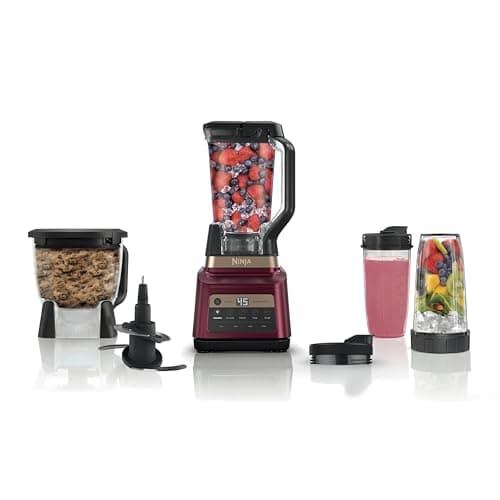 Ninja Professional Plus Kitchen System BN801 The BN801 is the BN701's motor base with a kitchen attached: the same 1,400-peak-watt motor and 72-oz pitcher, plus a 64-oz processor bowl, two 24-oz to-go cups and a dough program rated for up to 2 lb in about 30 seconds. One appliance instead of two, if you have the cupboard for the parts. Blender + XL Bowl + (2) 24-oz.Cups | Best blender-and-processor combo | 4.3★★★★★ | $219.99Amazon |
| 02 | 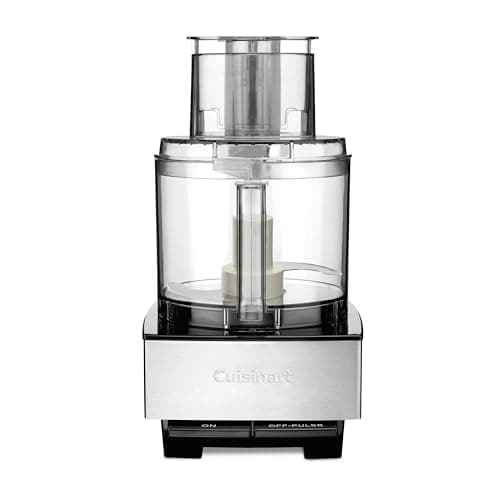 Cuisinart DFP-14BCNY (14-Cup) The 14-cup, 720-watt DFP-14 is the long-running benchmark: a big bowl, a strong motor, and a simple three-button interface that just works. It's the food processor most test kitchens keep on the counter. 14-Cup · 720W | Best overall food processor | 4.6★★★★★ | $229.95Amazon |
| 03 | 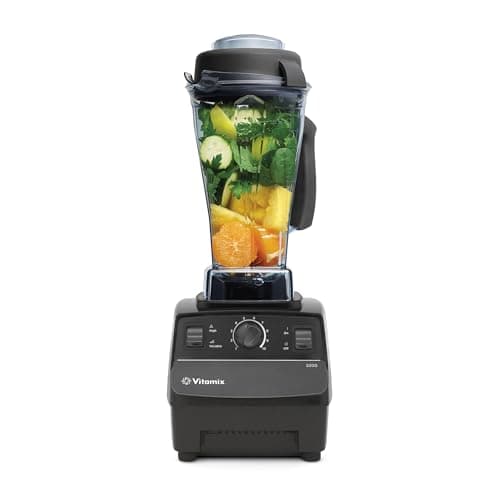 Vitamix 5200 The 5200 is the workhorse Vitamix — a tall 64-oz jar, an aircraft-grade blade, and a variable dial that takes it from a silky smoothie to hot soup by friction. Expensive, but it's the one people keep for 15 years. Self-Cleaning 64 oz | Best overall blender | 4.6★★★★★ | $469.00Amazon |
| 04 | 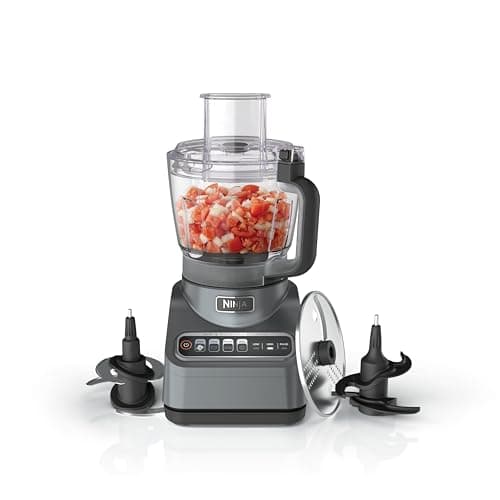 Ninja Professional Plus BN601 A 1,000-peak-watt motor under a 9-cup (72-ounce) bowl with four Auto-iQ programs and a dough blade in the box. It's the processor for people who want to press one button — and the only one here that ships with a dedicated dough blade as standard. 72 Oz · 1000W | Best for dough and presets | 4.3★★★★★ | $129.99Amazon |
#ad · Live prices from the Amazon Product API, as of October 16, 2026. Where we have no verified live price, we show none — a gap beats a number that has rotted.
The picks, in detail
Ninja Professional Plus Kitchen System BN801
spec score /5
Price as of October 16, 2026. Prices change — Amazon's is the one that counts.
#ad · we may earn a commission from this link to Ninja Professional Plus Kitchen System BN801
The BN801 is the BN701's motor base with a kitchen attached: the same 1,400-peak-watt motor and 72-oz pitcher, plus a 64-oz processor bowl, two 24-oz to-go cups and a dough program rated for up to 2 lb in about 30 seconds. One appliance instead of two, if you have the cupboard for the parts.
- Capacity
- Blender + XL Bowl + (2) 24-oz.Cups
- Footprint (W×D×H)
- 9.63 × 7.38 × 18 in
- Weight
- 8.8 lb
- Warranty
- 1 Year Limited Warranty
- Blender, food processor and to-go cups on one base
- 5 Auto-iQ programs incl. dough (up to 2 lb)
- Same 72-oz family pitcher as the BN701
- A lot of parts to wash and store
- Not for hot blending (per Ninja's owner's guide)
- 1-year limited warranty vs Vitamix's 5–7 years
Cuisinart DFP-14BCNY (14-Cup)
spec score /5
$299.9523% off
Price as of October 16, 2026. Prices change — Amazon's is the one that counts.
#ad · we may earn a commission from this link to Cuisinart DFP-14BCNY (14-Cup)
The 14-cup, 720-watt DFP-14 is the long-running benchmark: a big bowl, a strong motor, and a simple three-button interface that just works. It's the food processor most test kitchens keep on the counter.
- Capacity
- 14-Cup
- Footprint (W×D×H)
- 7.9 × 11 × 14.8 in
- Power
- 720 W
- Weight
- 18 lb
- Cost per use*
- ≈4¢
- Est. per year*
- ≈$8
- Warranty
- Warranty
- Big 14-cup bowl for batch prep
- 720 W handles dough and hard veg
- Simple, durable, long track record
- Large to store
- Only slicing/shredding + chopping blades included
- Feed tube pusher can be fiddly
*Cost-to-run computed from the manufacturer's stated 720W at $0.17/kWh (US average), 20-min sessions, 4×/week. Your rate and use will vary.
Vitamix 5200
spec score /5
$499.956% off
Price as of October 16, 2026. Prices change — Amazon's is the one that counts.
#ad · we may earn a commission from this link to Vitamix 5200
The 5200 is the workhorse Vitamix — a tall 64-oz jar, an aircraft-grade blade, and a variable dial that takes it from a silky smoothie to hot soup by friction. Expensive, but it's the one people keep for 15 years.
- Capacity
- Self-Cleaning 64 oz
- Footprint (W×D×H)
- 7.25 × 8.75 × 20.5 in
- Weight
- 10.9 lb
- Warranty
- 7-Year Limited Warranty
- Blends anything to a genuinely smooth texture
- Runs for years; 7-year warranty class
- Self-cleans with soap and warm water
- Premium price
- Tall — may not fit under cabinets
- Loud at full speed
Ninja Professional Plus BN601
spec score /5
Price as of October 16, 2026. Prices change — Amazon's is the one that counts.
#ad · we may earn a commission from this link to Ninja Professional Plus BN601
A 1,000-peak-watt motor under a 9-cup (72-ounce) bowl with four Auto-iQ programs and a dough blade in the box. It's the processor for people who want to press one button — and the only one here that ships with a dedicated dough blade as standard.
- Capacity
- 72 Oz
- Footprint (W×D×H)
- 7.76 × 9.88 × 16.02 in
- Power
- 1000 W
- Weight
- 7.65 lb
- Cost per use*
- ≈6¢
- Est. per year*
- ≈$12
- Warranty
- 1
- Dough blade included, not an upsell
- 4 Auto-iQ presets — chop, puree, dough, more
- All removable parts BPA-free and dishwasher-safe
- 9 cups is smaller than the 13–14-cup benchmarks
- 16 in tall assembled
- Presets can over-process if you walk away
*Cost-to-run computed from the manufacturer's stated 1000W at $0.17/kWh (US average), 20-min sessions, 4×/week. Your rate and use will vary.
This question gets answered badly almost everywhere, usually as a feature list. The useful answer is mechanical, and once you see it you can predict what either machine will do with anything you put in it.
The actual difference: shape and liquid
A blender jar is tall and narrow. The blade sits at the bottom and spins fast, and the jar's shape turns that into a vortex that continuously pulls the contents back down into the blade. That circulation only happens if there is enough liquid to carry the solids. Take the liquid away and the load rides up the walls, an air pocket forms around the blade, and the motor spins freely while cutting nothing. This is why a blender full of dry vegetables just packs itself into the corners.
A food processor bowl is wide and shallow. The blade sweeps a large flat area close to the bottom, and instead of relying on circulation it relies on the food falling back under gravity in a short drop. That works with no liquid at all — which is why a processor can chop an onion, shred a block of cheese, or bring pastry together without turning any of them into a purée. Add a lot of liquid to a processor and it leaks past the lid, because the bowl was never designed to hold a spinning column of soup.
Everything else follows from those two shapes. A blender makes things smooth and wet. A processor makes things a specific size and dry. Neither is a better machine; they are answers to different questions.
The second difference: discs
The other thing a processor has that a blender fundamentally cannot is the disc. A slicing or shredding disc sits at the top of the bowl, food goes down a feed tube onto it, and the disc does knife work at a consistent thickness — a mandoline that cannot cut you. The Cuisinart DFP-14 ships with a slicing disc and a shredding disc; the KitchenAid 13-cup adds an adjustable slicer and a dicing kit; the Cuisinart 8-cup includes a reversible shred-and-slice disc.
A blender has no equivalent and never will, because a disc needs a wide bowl and a flat feed path. If your real complaint is "I spend twenty minutes slicing potatoes" or "grating cheese is miserable," no blender at any price solves it. That is a processor job, full stop.
Which machine for which job
| Job | Blender | Food processor |
|---|---|---|
| Smoothies, shakes | Yes — the core job | No — leaks and won't go smooth |
| Crushed ice, frozen drinks | Yes | No |
| Puréed soup | Yes (hot only in machines rated for it) | No — volume and leaking |
| Chopping onions, herbs | Poor — purées instead of chops | Yes — the core job |
| Slicing, shredding | No | Yes — with discs |
| Pastry, pizza dough | No | Yes (with a dough blade) |
| Nut butters | Yes, in a premium machine | Yes |
| Hummus, pesto, dips | Workable | Better — controls texture |
| Batter, cake mixing | No | Partly — a stand mixer is the right tool |
Which should you buy first?
Answer honestly what you cooked last week rather than what you intend to cook. Most households buy the blender first and are right to: smoothies and frozen drinks are frequent, the machine is cheaper, it takes less cupboard space, and there is no realistic substitute — you cannot make a smoothie with a knife. A processor replaces work you can already do with a knife and a box grater; it is a time-saver rather than a capability, which makes it the second purchase for most people and the first for anyone who cooks in batches.
Flip that order if you prep in volume, make a lot of dips and pastry, or genuinely dread knife work. Someone doing a Sunday cook-up for the week gets far more from a 14-cup processor than from a blender, and our food processor guide covers that field properly.
When a combo machine is the right answer
Combo machines get dismissed too quickly. The Ninja Professional Plus Kitchen System BN801 puts a 72-ounce blender pitcher, a 64-ounce processor bowl and two 24-ounce to-go cups on one 1,400-peak-watt base, with a dough program its listing rates at up to 2 lb of dough in about 30 seconds. One motor, one footprint on the counter, both jobs. For a kitchen with one free cupboard shelf, that is a genuinely good trade.
Be clear about what you give up. A combo's processor bowl is smaller than a dedicated 14-cup, its disc selection is thinner, and you are washing and storing two sets of parts for one base. And it is not a stand mixer substitute — a processor bowl brings dough together fast but cannot knead a wet, high-hydration dough for ten minutes, whip egg whites, or cream butter and sugar. If baking is weekly rather than occasional, a cheaper blender plus a real stand mixer beats a combo.
The other combo worth naming is the Ninja Professional Plus Food Processor BN601, which comes at it from the other side: a dedicated 9-cup processor with a 1,000-peak-watt motor, four Auto-iQ presets and a dough blade in the box. It is a processor first, and a better one than the bowl that comes with a blender.
The three jobs people buy the wrong machine for
These come up constantly, and in each case the intuitive choice is the wrong one.
"I want to chop onions without crying." People buy a blender for this, because a blender is the machine they have heard of. A blender will turn an onion into onion water — there is no setting that produces dice. This is a processor job, and a 3-cup mini does it for very little; our mini food processor guide covers that class.
"I want to make soup."People buy a processor, reasoning that soup involves vegetables. A processor cannot hold a spinning volume of hot liquid — it leaks past the lid and it is a burn risk. Soup is a blender job, and specifically a blender rated for hot contents, which most are not. Ninja's owner's guide for the BN700 series explicitly warns against blending hot liquids; Vitamix designs its classic containers for hot and cold.
"I want to make bread." People buy a processor with a dough blade, which does genuinely work for pizza and pastry. What it does not do is knead — it develops gluten by shearing the dough in about a minute rather than stretching it over ten, and the difference shows up in an open-crumb loaf. If bread is the goal, that is a stand mixer question, not a processor one.
Where they genuinely overlap
Three jobs sit in the middle, and both machines do them acceptably. Hummus and dips — a processor gives you more texture control, a blender gives you a smoother result; pick by preference. Nut butters — a premium blender like the Vitamix 5200 does this well with its tamper, and so does a full-size processor; the processor is gentler on the motor. Salsa — a processor pulses to a chunky salsa, a blender goes straight past it to a sauce, so it depends entirely which one you wanted.
Outside those three, the machines do not substitute for each other, and buying one hoping it will do the other's job is the most common regret in this category.
The practical tiebreaker: which one you will actually get out
Worth weighing if the capability argument leaves you undecided, because it decides more real-world outcomes than specifications do.
A blender is two parts — base and jar — and cleaning it is a rinse or a self-clean cycle. A food processor is four or more: bowl, lid, pusher, S-blade, plus every disc you used. That difference compounds. People reach for a blender casually and plan around a processor, which is why blenders get used several times a week and processors get used on cooking days.
If your realistic pattern is a quick thing on a weeknight, that asymmetry favors the blender even for jobs the processor does better. If your pattern is a weekend session where you prep for the week, it favors the processor, because the setup cost is amortized across an hour of work rather than paid for one onion.
The bottom line
Wet and smooth is a blender. Dry and specific is a processor. If you want one machine and one budget, buy the blender first unless you cook in batches. If you want both and have one cupboard shelf, a combo like the BN801 is a real answer rather than a compromise — just don't ask it to be a mixer. Start with our blender buying guide or the budget food processor roundup depending on which side of that line you land.
If the machine you are actually weighing against a blender is a small chopper rather than a full-size processor, the decision changes shape again — a chopper shares the blender's sealed-bowl limitation and adds none of a processor's slicing and shredding. Food processor vs. chopper covers that pairing directly.
There is one recipe where the line between these two machines genuinely blurs, and it is nut butter. A processor's wide flat bowl keeps the paste under the blade where a tall blender jar lets it climb the wall and cavitate, so the cheaper machine often does the easier job — but a blender with a tamper finishes smoother. We work through both routes, and the price difference, in best blenders for nut butter.
Frequently asked questions
Can a food processor replace a blender?
Not for smoothies or drinks. A processor bowl is wide and shallow, so a spinning column of liquid leaks past the lid, and the blade sweep will not take a smoothie fully smooth. It can handle hummus, pesto and nut butters well, but drinks are a blender job.
Can a blender replace a food processor?
Only partly. A blender needs liquid to create the vortex that feeds its blade, so it purées dry ingredients instead of chopping them and cannot slice or shred at all — discs need a wide bowl and a feed tube. For chopping, slicing and shredding, no blender substitutes.
Which should I buy first, a blender or a food processor?
For most households, the blender. Smoothies and frozen drinks are frequent, there is no manual substitute, and the machine is cheaper and smaller. Buy the processor first only if you batch-prep, make a lot of dips and pastry, or genuinely dread knife work.
Are blender and food processor combo machines any good?
Yes, with caveats. The Ninja BN801 Kitchen System puts a 72-ounce pitcher and a 64-ounce processor bowl on one 1,400-peak-watt base and includes a dough program. You give up bowl size and disc variety versus a dedicated 14-cup processor, and you store two sets of parts.
Can a food processor make bread dough?
It can bring dough together quickly with a dough blade — Ninja rates the BN801's dough program at up to 2 lb in about 30 seconds — but it cannot knead a wet, high-hydration dough for ten minutes, whip egg whites or cream butter and sugar. Weekly baking wants a stand mixer.
Why does my blender leave chunks when I chop vegetables?
Because there is not enough liquid to carry the solids into the blade. Without it, the load rides up the jar walls and an air pocket forms around the blade — the motor spins freely and cuts nothing. Dry chopping is what a food processor's wide, shallow bowl is designed for.
Sources
Keep reading
Blenders
The Best Blenders of 2026
Vitamix, Ninja and personal blenders compared on motor class, jar size, footprint and cleanup.
Food Processors
The Best Food Processors of 2026
Cuisinart 14-cup, KitchenAid 13-cup and a 3-cup mini compared on bowl size, power and discs.
Roundup
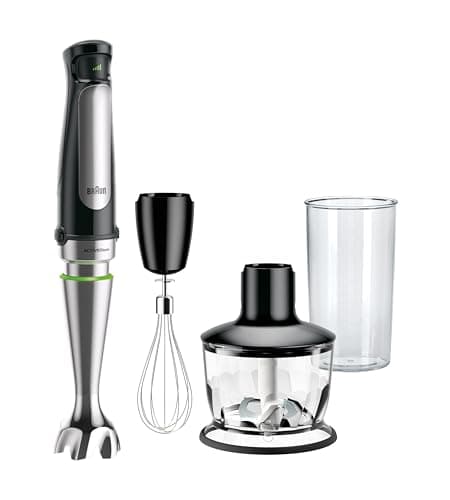
The Best Immersion Blenders of 2026
Stick blenders ranked on immersion depth, anti-suction guard design, speed control and warranty.
Roundup
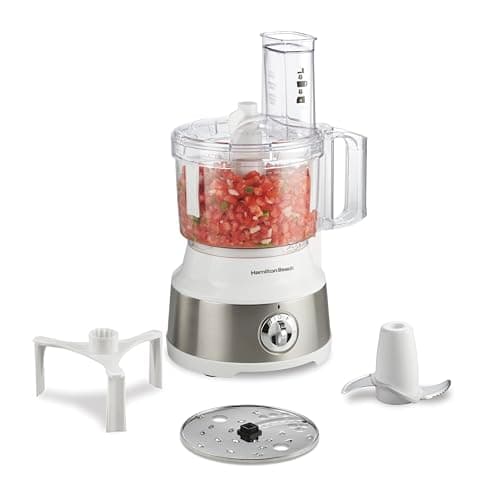
The Best Budget Food Processors
Five budget processors ranked on bowl size, motor, discs and warranty — and the three jobs where cheap machines genuinely fall short.
Stand Mixers
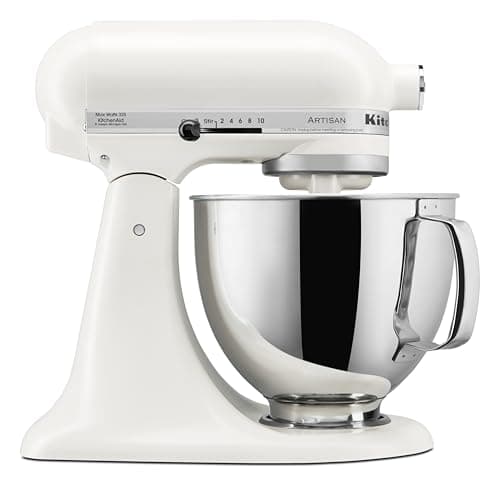
The Best Stand Mixers of 2026
KitchenAid Artisan, KitchenAid Classic and Cuisinart compared on bowl size, build and attachments.
Review
Ninja Professional Plus BN601 Review
The Ninja BN601 on its 1,000-peak-watt motor, 9-cup bowl, Auto-iQ presets and the included dough blade.
Roundup
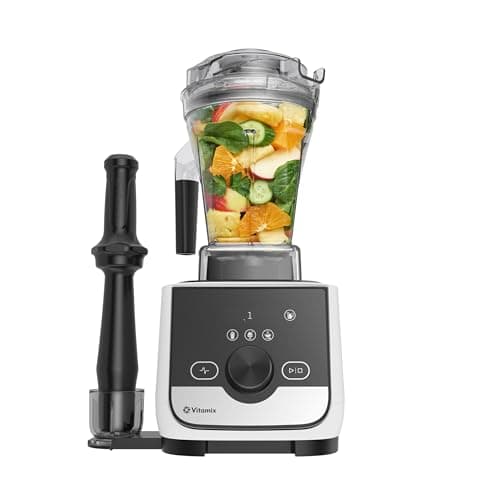
The Best Blenders for Nut Butter
Nut butter is a low-liquid blend that cavitates around the blade. The machines that can finish it, ranked on tamper, container size and motor cover.
https://wattandwhisk.com/blenders/blender-vs-food-processor