How to Clean a Blender
Thirty seconds if you do it right away, twenty minutes if you don't. Plus the gasket nobody removes and the reason your jar smells.
Disclosure:Watt & Whisk is reader-supported. When you buy through links on this page we may earn an Amazon Associates commission, at no extra cost to you. Prices are pulled live from Amazon and shown with the date checked. How this works.
Immediately after use, fill the jar a third with warm water and a drop of dish soap and run it for 30 to 60 seconds, then rinse. That is the whole job on a fixed-blade jar. On a removable stacked blade, lift the assembly out and wash it separately — and take the gasket off it monthly, because trapped moisture under that seal is where the smell people complain about comes from. Never put the motor base in water.
The short answer
Quick picks
| # | Product | Best for | Score | Price |
|---|---|---|---|---|
| 01 | 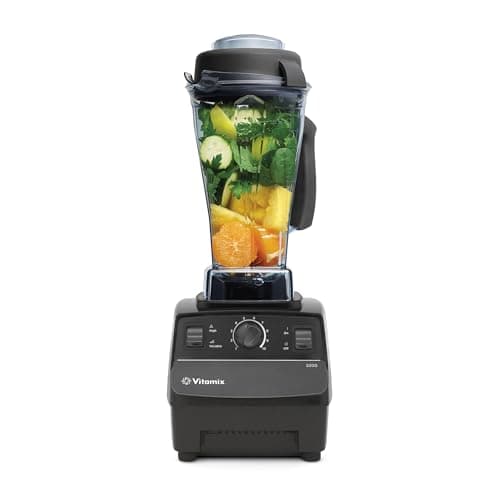 Vitamix 5200 The 5200 is the workhorse Vitamix — a tall 64-oz jar, an aircraft-grade blade, and a variable dial that takes it from a silky smoothie to hot soup by friction. Expensive, but it's the one people keep for 15 years. Self-Cleaning 64 oz | Best overall blender | 4.6★★★★★ | $479.00Amazon |
| 02 | 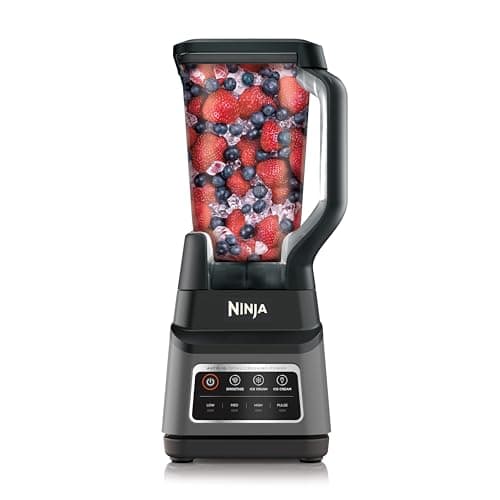 Ninja Professional Plus BN701 The BN701 is the value champion: strong ice-crushing power, Auto-iQ programs, and a big pitcher for a fraction of a Vitamix. It won't self-clean or make hot soup, but for daily smoothies it's plenty. Professional Plus Blender · 1400W | Best value blender | 4.3★★★★★ | $89.99Amazon |
#ad · Live prices from the Amazon Product API, as of October 17, 2026. Where we have no verified live price, we show none — a gap beats a number that has rotted.
The picks, in detail
Vitamix 5200
spec score /5
Price as of October 17, 2026. Prices change — Amazon's is the one that counts.
#ad · we may earn a commission from this link to Vitamix 5200
The 5200 is the workhorse Vitamix — a tall 64-oz jar, an aircraft-grade blade, and a variable dial that takes it from a silky smoothie to hot soup by friction. Expensive, but it's the one people keep for 15 years.
- Capacity
- Self-Cleaning 64 oz
- Footprint (W×D×H)
- 7.25 × 8.75 × 20.5 in
- Weight
- 10.9 lb
- Warranty
- 7-Year Limited Warranty
- Blends anything to a genuinely smooth texture
- Runs for years; 7-year warranty class
- Self-cleans with soap and warm water
- Premium price
- Tall — may not fit under cabinets
- Loud at full speed
Ninja Professional Plus BN701
spec score /5
$119.9925% off
Price as of October 17, 2026. Prices change — Amazon's is the one that counts.
#ad · we may earn a commission from this link to Ninja Professional Plus BN701
The BN701 is the value champion: strong ice-crushing power, Auto-iQ programs, and a big pitcher for a fraction of a Vitamix. It won't self-clean or make hot soup, but for daily smoothies it's plenty.
- Capacity
- Professional Plus Blender
- Footprint (W×D×H)
- 9 × 6.75 × 17.5 in
- Power
- 1400 W
- Weight
- 8.1 lb
- Cost per use*
- ≈8¢
- Est. per year*
- ≈$17
- Warranty
- 1 year limited warranty
- Crushes ice easily
- Auto-iQ preset programs
- A quarter of a Vitamix's price
- Stacked blades are fiddly to clean
- Plastic build vs premium blenders
- Not for hot blending
*Cost-to-run computed from the manufacturer's stated 1400W at $0.17/kWh (US average), 20-min sessions, 4×/week. Your rate and use will vary.
Blenders are the appliance most often abandoned over cleaning, and almost always because of a single habit: leaving it until later. A blender rinsed immediately takes half a minute. A blender left until the evening has a layer of set smoothie that needs soaking, and after three of those most people quietly stop making smoothies.
So this guide starts with the thirty-second routine, then deals with the specific problems — smell, cloudiness, stuck-on residue — that build up when the routine slips.
The 30-second self-clean
This works on every blender, and it is genuinely all that most blends require.
- Empty the jar and give it a quick rinse under the tap to get the bulk out.
- Fill it about a third with warm — not boiling — water, and add a single drop of dish soap. More soap means more rinsing, not more cleaning.
- Run it for 30 to 60 seconds. On a variable-speed machine, start low and increase; on a preset machine, one short program is plenty.
- Rinse and drain upside down so it dries without water pooling around the blade.
On a fixed-blade jar like a Vitamix, that is the entire job — there is nothing to disassemble, which is exactly why the design matters more than people expect when they are shopping. On a removable stacked bladelike a Ninja's, run the same cycle first to loosen everything, then lift the blade assembly out and wash it as a separate part.
Do it while the jar is still wet. The single highest-value habit in this whole guide is running the self-clean before you drink the smoothie, not after.
Fixing a blender that smells
The most common complaint, and the cause is almost always the same: the gasket. Every removable blade assembly has a rubber or silicone sealing ring, and on personal blenders the blade screws onto the cup with a gasket between them. Water gets under it, stays there, and the smell follows.
The fix: take the gasket off. On most blade assemblies it lifts out with a fingernail or the tip of a teaspoon. Wash both parts separately, dry them completely, and reassemble only when dry. Do this monthly, or immediately if a smell has already appeared.
For a jar that smells even with a clean gasket, blend a cup of warm water with a tablespoon of bicarbonate of soda for thirty seconds, leave it to stand for ten minutes, then rinse. For strongly colored or aromatic offenders — garlic, curry paste, turmeric — a cut lemon rubbed around the jar afterwards works well.
The behavioral fix matters more than any of these: never store a personal blender with the blade screwed onto a damp cup. That single habit accounts for most of the smell complaints in this category.
Stuck-on, dried-in residue
When the routine has slipped and there is a set layer in the jar, do not attack it with an abrasive — you will scratch the jar and make future cleaning harder.
The fix: fill with warm water and a drop of soap and leave it to soak for fifteen minutes, then run the self-clean cycle. Repeat rather than scrub. For genuinely baked-on protein powder or nut butter, a tablespoon of bicarbonate in the soak water is mildly abrasive at a molecular level without scratching.
For the underside of a stacked blade assembly, a washing-up brush with a narrow head is far safer than fingers and a cloth. Never reach into a jar to clean around a fixed blade — use a long-handled brush.
Cloudy plastic jars
Plastic jars go hazy over time, and people read this as dirt. Mostly it is not — it is fine surface abrasion from ice and frozen fruit, plus etching from repeated dishwasher cycles. It is cosmetic and it does not affect performance.
What you can do: hand wash rather than machine wash, which slows it considerably; and for genuine mineral film from hard water, a soak of equal parts white vinegar and warm water for fifteen minutes will clear it. What you cannot do is reverse abrasion. If a permanently clear jar matters to you, that is an argument for glass — the Hamilton Beach Power Elite is the notable glass-jar option under $100, covered in best blenders under $100.
Cleaning differs by blender type
The routine above works everywhere, but each format has one specific thing to know.
Fixed-blade jug blenders (Vitamix and similar). The self-clean genuinely is the whole job, and you should never put your hand into the jar — the blade is fixed at the bottom and blunt, but it is still a spinning-metal component in a deep container. Use a long-handled brush if something needs targeting.
Stacked-blade jug blenders (Ninja and similar). Run the self-clean cycle first to loosen everything, then lift the blade spindle out. Doing it the other way round means handling a sticky multi-blade assembly, which is both unpleasant and the point at which people cut themselves. Wash it by the plastic collar, not the blades.
Personal and bullet blenders. The gasket is everything, as described above. Also rinse the threads on both the cup and the blade — dried smoothie in the screw thread is what makes a cup progressively harder to twist off.
Immersion blenders. The one format with a genuinely quick clean: run the shaft in a jug of warm soapy water for a few seconds, then rinse. Do not submerge the motor body, and check that the detachable shaft is separated before washing — the join is where residue hides.
What should and should not go in the dishwasher
Never: the motor base. It contains the motor, the switchgear and the electronics, and it is cleaned with a damp cloth and nothing else. Never immerse it, never run water over it, never spray cleaner at the controls.
Usually fine, with a caveat: jars, lids and blade assemblies on most modern machines are dishwasher-safe on the top rack. But dishwasher detergent is alkaline and abrasive, and repeated cycles dull plastic and can degrade gaskets faster than hand washing. If you use the machine daily, hand washing genuinely extends the life of the parts.
Check before assuming: some premium containers are hand-wash-recommended despite being technically dishwasher-safe, precisely because of that etching.
Blades, and why yours are probably fine
People often diagnose a struggling blender as having "blunt blades." On most machines that is unlikely, because blender blades are not sharp by design — Vitamix's laser-cut stainless blades are deliberately blunt and pulverize by impact at speed rather than by slicing. They do not need sharpening and they do not meaningfully dull.
If performance has genuinely dropped, the likelier causes are a worn drive coupling (the part between motor and blade, which is cheap and replaceable on most machines), an overloaded jar, or simply not enough liquid. The mechanism is explained in our blender buying guide.
The motor base, and the bit under it
Two areas people never clean, and one of them causes a fault that looks like a dead machine.
The drive coupling. The recessed part on top of the base that engages the jar. Liquid runs down there every time you lift a wet jar off, and dried residue in the coupling stops the jar seating properly — which on many blenders triggers the safety interlock and the machine simply will not start. Wipe it with a damp cloth wrapped over a fingertip, and dry it.
Underneath the base. Blenders have rubber feet with a recess between them, and drips collect there and go unnoticed for months. Tip the base up occasionally and wipe it. Sticky feet also let a machine walk across a counter under load.
Neither area ever goes near running water. A damp cloth, then a dry one — the base contains the motor, the switchgear and the electronics, and it is the one part with no safe immersion depth at all.
How often to do what
Every use: the 30-second self-clean, immediately, plus lifting out a removable blade to wash separately.
Monthly: remove and clean the gasket, wipe the motor base and the area around the drive coupling, and check under the base pad where drips collect.
As needed: bicarbonate soak for residue, vinegar soak for hard-water film, lemon for lingering smells.
That is the whole discipline, and it takes about a minute a week. Blenders are one of the longest-lived appliances in a kitchen when they are looked after — which is what makes the long warranties on machines like the Vitamix 5200 worth something, and why a self-cleaning fixed-blade design is worth paying for if you blend daily.
Two related questions this routine raises. A jar that has gone cloudy is usually detergent etching rather than wear, and when that matters is covered in are plastic blender jars safe. What actually fails first — and which parts are replaceable rather than terminal — is in how long do blenders last.
Frequently asked questions
How do you clean a blender quickly?
Fill the jar about a third with warm water and one drop of dish soap, run it for 30 to 60 seconds, then rinse and drain upside down. Do it immediately after use rather than later — that is the difference between a 30-second job and a 20-minute one.
Why does my blender smell bad?
Almost always the gasket — the rubber sealing ring on the blade assembly traps water underneath and it stays there. Lift the gasket out, wash both parts separately, dry completely and reassemble only when dry. Never store a personal blender with the blade screwed onto a damp cup.
Can you put a blender in the dishwasher?
Jars, lids and blade assemblies on most modern machines are dishwasher-safe on the top rack, but never the motor base — wipe that with a damp cloth only. Dishwasher detergent is alkaline and abrasive, so hand washing meaningfully extends the life of jars and gaskets.
How do you clean a cloudy blender jar?
Cloudiness is usually fine surface abrasion from ice and dishwasher etching, and it is cosmetic and irreversible. Hard-water mineral film is different and will clear with a 15-minute soak in equal parts white vinegar and warm water. Hand washing slows the hazing considerably.
Do blender blades need sharpening?
No. Blender blades are blunt by design and pulverize by impact at speed rather than by slicing — Vitamix's laser-cut stainless blades are deliberately blunt. If performance has dropped, look at the drive coupling, an overloaded jar, or not enough liquid instead.
How do you get dried smoothie out of a blender?
Soak rather than scrub. Fill with warm water and a drop of soap, leave 15 minutes, then run the self-clean cycle and repeat if needed. A tablespoon of bicarbonate of soda in the soak water helps with set protein powder or nut butter without scratching the jar.
Sources
Keep reading
Blenders
The Best Blenders of 2026
Vitamix, Ninja and personal blenders compared on motor class, jar size, footprint and cleanup.
Review
Vitamix 5200 Review
The Vitamix 5200 on motor rating, jar design, the tamper, self-cleaning and warranty — and who should buy the Propel 510 instead.
Review
Ninja Professional Plus BN701 Review
The Ninja BN701 on stacked blades, Auto-iQ presets, real pitcher capacity, cleanup and the no-hot-liquids rule.
Guide
Blender Buying Guide: The Specs That Actually Matter
Why blender wattage misleads, what jar shape and blade design really do, and the six specs worth checking before you buy.
Guide
Are Plastic Blender Jars Safe?
Polycarbonate vs. Tritan copolyester, the FDA's published BPA position, why hot soup is the case that matters, and which jars carry a written claim.
Guide
How Long Do Blenders Last?
The published warranty table for every blender we track, what actually fails first, and which parts you can replace instead of the machine.
https://wattandwhisk.com/blenders/how-to-clean-a-blender