The Best Kitchen Appliance Brands, Explained
What Ninja, Cosori, Instant, KitchenAid, Cuisinart, Vitamix, and Anova are each actually known for — no brand loyalty, just what the specs say.
No single brand wins every countertop category. Ninja and Cosori own value air frying, Instant makes the most feature-complete multi-cookers, KitchenAid defines the stand mixer, Cuisinart is the food-processor benchmark, Vitamix is the premium blender, and Anova is the sous-vide default. Here is what each is genuinely good at, judged on the models we actually track.
How we judge a brand
A brand is only as good as the specific machine you buy, so everything below is grounded in the real models in our catalog — their published capacities, wattages, materials, and warranties — not in reputation or memory. We are enthusiasts comparing spec sheets and running-cost math, not a lab, and we say so on how we review. Read this as a map of what each maker tends to do best, then check the individual pick before you buy.
One thing worth saying up front: a strong brand is not a guarantee, and a lesser-known one is not a red flag. What actually protects you is buying the right model for the job, from a maker with a track record in that category and a warranty you can live with. The names below have earned their reputations in specific lanes — so the useful question is not "which brand is best?" but "which brand is best at the thing I am about to buy?"
Ninja
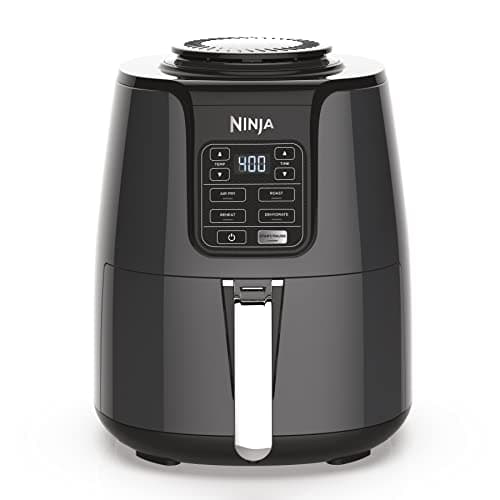
Ninja (made by SharkNinja) is the brand that made air frying mainstream, and it earns its shelf space on approachable, feature-rich machines at fair prices. The 4-quart AF101 is the value default we point most people to — simple dial-and-button controls and a ceramic-coated, non-PTFE aluminum basket. Above it sit the two-basket Foodi DualZone for families and the coating-free, borosilicate- glass Crispi for anyone who wants no nonstick surface at all. Ninja also plays in blenders, where the 1,400-watt Professional Plus is a strong ice-crusher for a fraction of a premium machine. The through-line is versatility for the money. Browse the range in our air fryer rankings.
Cosori
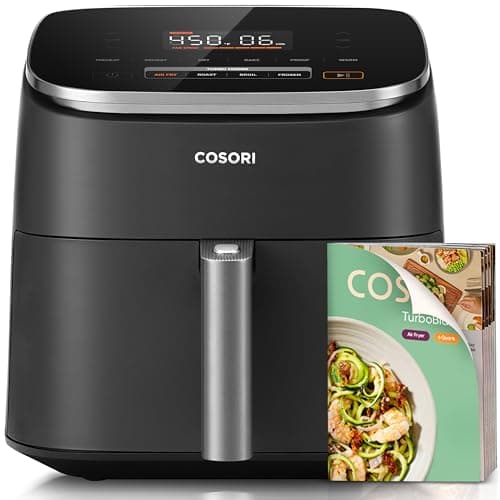
Cosori is the air-fryer specialist, and its recent strength is materials. The TurboBlaze pairs a roomy 6-quart square basket with a genuinely PFAS-free ceramic coating and a faster 3,600-rpm fan, while the friendlier Pro LE leads with clearly labeled one-touch presets for first-timers. Both carry a two-year warranty, which is a step up from much of the field. If you want a modern, roomier air fryer and care about the coating claim being on the spec sheet rather than in the marketing, Cosori is usually the first place to look — especially among the best non-toxic air fryers.
Instant (Instant Pot)
Instant built its name on the multi-cooker and brings that same do-everything mindset to air frying. The 6-quart Vortex Plus runs six functions — air fry, roast, broil, bake, reheat, dehydrate — and adds a ClearCook window and interior light so you can watch food crisp without pulling the basket, all at a stated 1,700 watts. There is a compact 4-quart Vortex for smaller kitchens too. Instant's appeal is feature-completeness at mass-market prices; the trade-off is that the baskets use standard nonstick rather than ceramic, and 1,700 watts is a touch thirstier than most (though still only about a dime a batch — see our running-cost breakdown).
KitchenAid
KitchenAid is the stand mixer. The tilt-head Artisan (5 quart) and Classic (4.5 quart) share an all-metal build, a huge color range on the Artisan, and — crucially — the entire KitchenAid attachment ecosystem, which turns the mixer into a pasta roller, grinder, or spiralizer. That ecosystem and the resale value that comes with it are the real reasons to buy the brand; the machines handle most home baking short of daily heavy bread dough. KitchenAid also makes a capable 13-cup food processor with an adjustable slicer and dicing kit. See where the mixers land in our stand mixer picks.
Cuisinart
Cuisinart is the food-processor benchmark. The 14-cup, 720-watt DFP-14 is the long-running machine most test kitchens keep on the counter — a big bowl, a strong motor, and a simple three-button interface that just works. At the other end, the 3-cup, 250-watt Mini-Prep Plus lives in a cabinet and handles pesto, dressings, and a single onion. Cuisinart also makes a value stand mixer, the 5.5-quart, 500-watt Precision Master, which trades KitchenAid's accessory ecosystem for a bigger bowl at a lower price. The brand's pattern is a lot of capable machine for the money. Start with our food processor rankings.
Vitamix
Vitamix is the premium blender, full stop. The workhorse 5200 pairs a tall 64-ounce jar with an aircraft-grade blade and a variable dial that takes it from a silky smoothie to steaming soup by friction alone, backed by a seven-year warranty class that is the real story — these are machines people keep for well over a decade. The shorter Propel Series 510 delivers most of that in a 48-ounce, under-cabinet body at a lower entry price. You pay up front, but the longevity and warranty are what justify it. Compare them in our blender rankings, or head-to-head against the value brand in Vitamix vs. Ninja.
Anova
Anova brought sous vide into home kitchens and remains the category default. The Precision Cooker 3.0 is a 1,100-watt immersion circulator that clamps to any pot, holds temperature tightly, and pairs with a mature, reliable app — which, for a device whose entire job is precise, steady temperature, is exactly what you want. It is not silent and it needs a container and bags, but for consistent edge-to-edge results it is the low-risk pick. See it in context in our sous vide rankings.
A few more names you will see
Beyond the big seven, several brands are worth recognizing when you are comparing listings. Philips invented the consumer air fryer and still makes solid large-capacity models, so its name carries real history in the category. Chefman is the value play in dual-basket air frying, undercutting the name brands when you want to cook a main and a side at once on a budget. Dash owns the tiny, inexpensive end — its 2-quart compact is the pick for a dorm, an RV, or a counter with no room to spare. Typhur sits at the opposite, premium end with a very large single-layer basket for entertaining. On the blender side, NutriBullet is the personal blend-and-go specialist, and for sous vide, Inkbird is the budget circulator that lets you try the technique without committing to a premium wand. None of these unseat the category leaders above, but each is the right answer for a specific need.
So which brand should you pick?
Buy the brand that owns the job you are trying to do, not the one with the best-known name overall. For a first air fryer, Ninja or Cosori. For a do-everything air fryer with a window, Instant. For a stand mixer you will pass down, KitchenAid. For serious chopping and dough, Cuisinart. For a blender that outlasts three cheaper ones, Vitamix. For sous vide, Anova. Match the specialist to the task and you will be happy with any of them — the mistake is expecting one badge to be best at everything.
It is also perfectly normal — and usually smarter — to mix brands across your counter rather than chase a matching set. A Ninja air fryer, a Cuisinart food processor, a KitchenAid mixer, and a Vitamix blender is a completely reasonable kitchen, because each leads its own lane. The only time a single brand across categories makes sense is if you specifically want a shared app or a coordinated look; otherwise, buy the best tool for each job. And within a brand the specific model still matters more than the badge — a maker's entry machine and its flagship can differ sharply in capacity, materials, and controls, so read the spec sheet on the exact unit before you commit, which is the same discipline we apply to every pick we score.
The head-to-heads worth reading before you commit
Every claim above gets tested properly on its own page, and the brand rivalries below are the ones that actually change a purchase.
Mixers. KitchenAid vs. Cuisinart is closer than the reputations suggest — Cuisinart wins on bowl size, published wattage, speeds and warranty length, while KitchenAid wins on footprint, the attachment hub and resale value. If you have already settled on KitchenAid, KitchenAid models compared decodes the confusing model numbers and shows that there is only one real capability step in the range. For dough specifically, best stand mixers for bread.
Food processors. Cuisinart vs. KitchenAid comes down to the strongest published motor in the category against the widest set of included discs — the answer depends entirely on whether you chop or slice more.
Air fryers. Ninja vs. Cosori is our closest-run comparison, because the two brands compete on different axes: Cosori refines the single basket, Ninja invents formats. The other pairing people ask about is Ninja vs. Instant, and it splits the same way: Ninja sells formats nobody else does — two independent drawers, glass cooking — while Instant adds the details everyone else forgot to a conventional basket, like a window you can watch food through and filters for the fish smell.
If you want the clearest single illustration of Ninja doing something no rival does, read our Ninja Crispi review. It cooks in borosilicate glass containers with no coating anywhere near the food, and the whole system nests into a cupboard — which is a genuinely different product rather than a slightly better basket, and exactly the kind of thing that makes a brand worth choosing rather than a model.
Sous vide. Anova vs. Joule reduces to a single question — whether you want to cook without your phone — and once you see it that way the choice is usually obvious.
Blenders. Beyond Vitamix vs. Ninja, the blender buying guide explains why the wattage figures these brands publish cannot be compared with each other at all. On a tighter budget, best budget stand mixers, best budget food processors and best budget sous vide each name the specific places where a cheaper machine genuinely falls short — and, more usefully, the places where it does not.
Two more worth a look if you are buying rather than researching: is sous vide worth it for the most-asked question about the technique, and best kitchen appliance gifts if you are buying for someone else and need picks sorted by budget.
Frequently asked questions
What is the best air fryer brand?
For most people it comes down to Ninja or Cosori. Ninja makes approachable, versatile machines at fair prices, including the value-default AF101 and the coating-free glass Crispi. Cosori specializes in air fryers and leads on materials, with genuinely PFAS-free ceramic baskets and a two-year warranty. Instant is the pick if you want the most cooking functions in one machine.
Is KitchenAid or Cuisinart better?
They lead different categories. KitchenAid is the benchmark for stand mixers thanks to its all-metal build and huge attachment ecosystem, while Cuisinart is the benchmark for food processors, led by the 14-cup, 720-watt DFP-14. Cuisinart also makes a strong-value stand mixer, and KitchenAid a capable food processor, but each brand is strongest in its home category.
Is a Vitamix worth the money?
For heavy blender users, yes. Vitamix machines like the 64-ounce 5200 blend anything to a genuinely smooth texture, can make hot soup by friction, and are backed by a seven-year warranty class, so they routinely last over a decade. If you only make the occasional smoothie, a cheaper blender is the sensible call; the value is in longevity, not any single feature.
Sources
Keep reading
Buying guide
Air Fryer Buying Guide: How to Choose
The five things worth deciding before you buy an air fryer — none of which need a lab test to judge.
Air Fryers
The Best Air Fryers of 2026
Our ranked air-fryer picks, compared on capacity, footprint, materials and running cost — with live Amazon prices.
Running costs
How Much Does an Air Fryer Cost to Run?
A typical air fryer costs about 9 to 10 cents of electricity per batch. Here is exactly how that is calculated.
https://wattandwhisk.com/blog/best-kitchen-appliance-brands