Air Fryer Buying Guide: How to Choose
A plain-English decision framework — capacity, footprint, wattage, basket materials, and controls, in the order that actually matters.
The best air fryer is the one that fits your counter, feeds your household, and uses a basket material you are comfortable with — in that order. Capacity, footprint, wattage, basket type, and controls are the five things worth deciding before you shop, and none of them require a lab test to judge. Here is how to weigh each one so you buy once and buy right.
Start with your counter, not the feature list
Air fryers are counter hogs, and the most common regret is buying one that does not fit the space you actually have. The number on the box is the capacity; the number that decides whether you will keep it out and use it is the footprint— how much counter it eats and whether it clears your upper cabinets. A "compact" 4-quart model can still stand 15 inches tall, so measure the gap under your cabinets before you fall for a spec.
Check the width, depth, and height for any model you are considering, and leave a few inches behind and above it for the hot air the fryer vents. If your counter is genuinely tight, start with our best small air fryers rather than trying to shoehorn a family-sized machine into a studio kitchen.
Capacity: match it to your household
A rough guide, since manufacturers all measure quarts a little differently:
- 2 qt — one person, snacks and sides. Great for a dorm, an RV, or a single reheat.
- 4 qt — one to two people. The sweet spot for most couples and the most popular size for a reason.
- 5 to 6 qt — two to four people, a real weeknight main plus a side in two rounds.
- 8 qt or a dual-basket— a family. Two-basket machines are the honest answer to "too small for us" because they cook two foods at once and finish them together.
Bigger baskets need bigger footprints, so capacity trades directly against the point above. Do not buy more quarts than you will fill — you pay for the size in counter space every day, not just at checkout.
One honest caveat: a listed capacity is the whole basket, but usable capacity is the single layer you can spread food across for it to crisp. Pile food two deep and the top browns while the bottom steams. So if you regularly cook for four, size up rather than assuming a 4-quart basket will stretch — the number that matters is how much you can lay flat, not the quart figure on the box.
Wattage and what it costs to run
Most air fryers draw 1,400 to 1,800 watts. It is worth knowing, but it should not scare you off a model, because the running cost is small: a typical fryer uses about 9 to 10 cents of electricity per batch at the US average rate, and the difference between the highest- and lowest-wattage models is roughly a penny a cook. Higher wattage mostly buys faster preheating and more even crisping, not a meaningfully bigger bill. We work the full math out, model by model, in how much an air fryer costs to run — the short version is that running cost should be near the bottom of your decision list.
Basket vs. oven-style
Basket air fryers — the drawer pulls out — heat fast, crisp hard, and are easy to clean. For most people they are the right default. Oven-style air fryers have a door and racks, hold more, and can toast or bake on multiple levels, but they take up more room and preheat slower. If you already own a decent countertop oven, an oven-style air fryer is largely redundant; if you do not, it can replace two appliances. For most kitchens, a basket model is the simpler, faster, easier-to-clean choice.
Basket materials: ceramic, glass, and nonstick
This is where the "are air fryers toxic?" worry lives. There are three broad camps:
- Standard nonstick (PTFE) coating. The most common, safe at normal air-frying temperatures, and the easiest to clean. The concern is long-term wear and overheating an empty basket.
- Ceramic, PFAS-free coating. An increasingly common upgrade — some baskets are explicitly free of the PFAS chemical family. If you want to sidestep the coating question, this is the mainstream way to do it.
- Coating-free glass or stainless. A few designs cook in borosilicate glass with no nonstick surface touching your food at all — the cleanest materials story, though usually heavier and pricier per quart.
Read the coating type off the spec sheet rather than guessing from the photo. If this matters to you, start with the best non-toxic air fryers and our materials explainer, are air fryers toxic? It is also worth knowing that any high-heat, low-moisture cooking method can form acrylamide in starchy foods, which is a food-chemistry issue rather than an appliance one — the FDA has practical guidance on keeping it low.
Controls: presets vs. dials
Analog dials are cheaper, effectively unbreakable, and all most cooks ever need — you set a temperature and a time and go. Digital presets add one-touch buttons for fries, wings, and the like, which genuinely help if you are nervous about times and temperatures, plus niceties like a shake reminder or a cook window. They also add a small learning curve and one more thing that can fail. Neither is "better" — buy dials if you want simplicity, presets if you want hand-holding. Do not pay a premium for app connectivity unless you know you will use it; most people set it up once and never open it again.
Cleaning and upkeep — a real buying factor
The chore that decides whether an air fryer stays on the counter or goes in a cupboard is cleaning, so weigh it before you buy, not after. Look for a basket and crisper plate that are dishwasher-safe, and prefer a design where the crisper plate lifts out cleanly rather than trapping grease underneath. Fewer parts means fewer things to wash; a dual-basket machine doubles the pieces you scrub. Removable, coated baskets rinse fastest, while coating-free glass and stainless take a bit more elbow grease but never wear out their surface. If a model needs a consumable — an odor filter, say — factor in that small recurring cost and hassle.
What you can safely ignore
A few features get heavy billing in marketing but rarely change day-to-day life. App control is the big one — most people connect it once and never open it again, so do not pay a premium for it. Long preset lists past the basic handful (fries, wings, reheat) are mostly padding; you will use three of them. Sky-high maximum temperatures look impressive but you will cook nearly everything between 350 and 400°F. And "XL" branding is meaningless without the actual quart and footprint numbers, which is why we always list both. Spend your attention on capacity, footprint, and basket material, and let the rest be a tiebreaker.
A word on warranty and brand
Warranties in this category run from one to two years, occasionally longer. It is a reasonable tiebreaker between two similar models, but not a reason to overpay. Brand matters more for the things a warranty does not cover — availability of the exact basket you will eventually want to replace, consistency of the coating, and how easy the controls are to live with. We break down what each maker is actually good at in the best kitchen appliance brands.
A quick decision framework
If you want to short-circuit all of the above, answer these in order:
- How much counter and cabinet clearance do I have? This caps your maximum size before anything else.
- How many people am I usually cooking for? Pick the smallest capacity that covers a normal meal without cooking in three rounds.
- Do coatings bother me? If yes, filter to ceramic PFAS-free or glass; if no, a standard nonstick basket is fine.
- Dials or presets? Simplicity versus hand-holding — there is no wrong answer.
Work those four and running cost will sort itself out, because every mainstream air fryer is cheap to run. When you are ready to see specific picks scored on exactly these axes, our air fryer rankings lay them out side by side.
Where to go from here
If your answer to the capacity question was "a family," skip straight to best dual-basket air fryers — two independent drawers are the practical answer to feeding four, because they let a main and a side finish together instead of one going cold. Just check the depth figures before you commit; that format costs more counter than people expect.
If you narrowed the field to a brand rather than a size, Ninja vs. Cosori compares the two most people end up choosing between — on basket materials, footprint per quart, presets and warranty. And whichever you buy, read how to clean an air fryer before the first cook rather than after the first time it smokes; the aerosol-cooking-spray warning alone will save you a basket.
For a single machine reviewed against every criterion on this page, our Ninja DZ401 review is the most detailed we have written — 10 quarts across two independent drawers, a PFAS-free cooking surface, and the 17.1 inches of counter depth that nobody mentions until you have bought it.
One last thing worth reading after you buy rather than before: air fryer not crisping works through the eight real causes of soggy results, in order of likelihood. Overcrowding and wet food account for most of them, and both are free to fix — which is why we would always rule those out before concluding a machine was the wrong choice.
Two decisions sit either side of this guide. Before it: air fryer vs. deep fryer, if you are not yet certain hot air is the method you want — there is a short list of battered foods it genuinely cannot cook. After it: where to buy an air fryer, because the return window varies from 15 days to open-ended depending on the retailer, and that is the only thing about the purchase that is not identical everywhere.
Frequently asked questions
What size air fryer should I buy?
Match capacity to your household: 2 quarts for one person, 4 quarts for a couple, 5 to 6 quarts for two to four people, and 8 quarts or a dual-basket model for a family. Buy the smallest size that covers a normal meal without cooking in multiple rounds, since larger baskets take up more counter space every day.
Does air fryer wattage matter?
Not much for cost. Most air fryers draw 1,400 to 1,800 watts and cost only about 9 to 10 cents of electricity per batch, with roughly a penny separating the highest and lowest wattage. Higher wattage mainly buys faster preheating and more even crisping, so it should be near the bottom of your decision list.
Are ceramic air fryer baskets better than nonstick?
They are the mainstream way to avoid PFAS chemicals, and some cooks prefer them for that reason. Standard nonstick (PTFE) baskets are safe at normal air-frying temperatures and easy to clean; ceramic PFAS-free baskets sidestep the coating question, and coating-free glass avoids it entirely. Choose based on how much the materials question matters to you.
Do I need a digital air fryer with presets?
No. Analog dials are cheaper, durable, and all most cooks need. Presets add one-touch buttons and reminders that help if you are unsure about times and temperatures, but they also add cost and a small learning curve. Buy dials for simplicity or presets for hand-holding, and skip app connectivity unless you know you will use it.
Sources
Keep reading
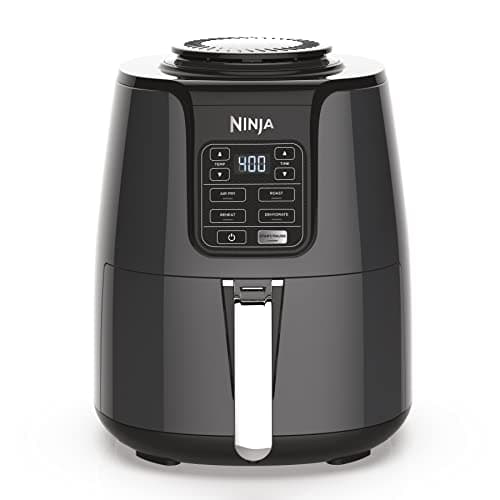
Air Fryers
The Best Air Fryers of 2026
Our ranked air-fryer picks, compared on capacity, footprint, materials and running cost — with live Amazon prices.
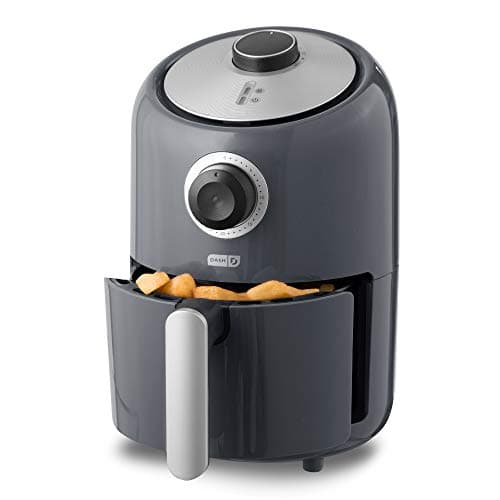
Roundup
The Best Small Air Fryers of 2026
The smallest-footprint air fryers for apartments, dorms and RVs, ranked by real width.
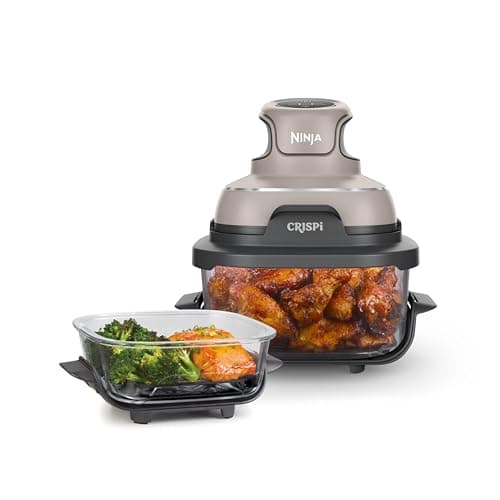
Guide
Are Air Fryers Toxic? The Honest, Sourced Answer
PTFE, PFOA, PFAS and acrylamide explained plainly — plus how ceramic and glass baskets avoid coatings.
Running costs
How Much Does an Air Fryer Cost to Run?
A typical air fryer costs about 9 to 10 cents of electricity per batch. Here is exactly how that is calculated.
Comparison
Air Fryer vs. Deep Fryer: Which One Belongs on Your Counter?
Air fryer vs deep fryer on batter, oil cost, electricity, footprint, cleanup and safety — including what an air fryer genuinely cannot do.
Guide
Where to Buy an Air Fryer
Amazon, Walmart, Target, Costco and Best Buy compared on return windows, model-number traps and warranty — the things that actually differ.
https://wattandwhisk.com/blog/air-fryer-buying-guide