Are Air Fryers Healthy? An Honest Look
They cut the oil of deep frying — but healthy still depends far more on what you put in the basket.
Disclosure:Watt & Whisk is reader-supported. When you buy through links on this page we may earn an Amazon Associates commission, at no extra cost to you. Prices are pulled live from Amazon and shown with the date checked. How this works.
Air fryers can be a healthier way to cook because they crisp food with a fraction of the oil deep frying uses, which cuts added fat and calories. But an air fryer is a cooking method, not a health food — it will not make junk food healthy, and it is not a weight-loss device. How healthy the result is depends far more on what you cook and how brown you cook it than on the machine itself.
The short answer
Quick picks
| # | Product | Best for | Score | Price |
|---|---|---|---|---|
| 01 | 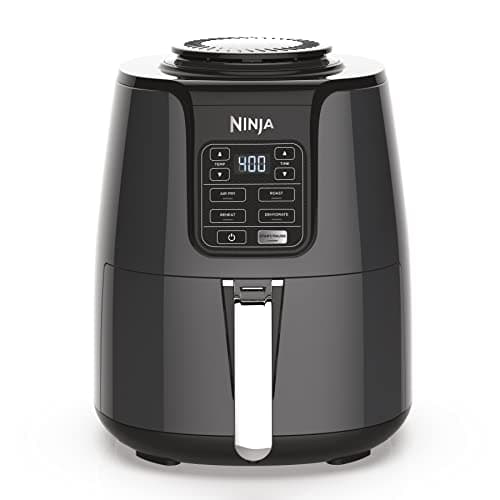 Ninja AF101 The 4-quart Ninja AF101 is the one we point most people to: a genuinely simple dial-and-button air fryer with a ceramic-coated basket, a 105–400°F range, and a footprint that fits a normal counter. It has been the reliable default since 2018 for good reason. 4 QT · 1550W | Best overall on value | 4.6★★★★★ | $104.99Amazon |
| 02 | 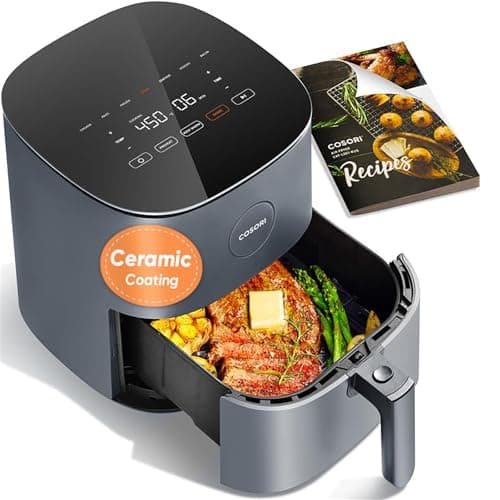 Cosori Pro LE The 5-quart Pro LE is the friendliest first air fryer here: seven clearly labeled presets, a ceramic nonstick basket, and 450°F top heat in a body that doesn't hog the counter. If dials intimidate you, this removes the guesswork. 5 QT | Best presets for beginners | 4.4★★★★★ | $89.95Amazon |
#ad · Live prices from the Amazon Product API, as of October 16, 2026. Where we have no verified live price, we show none — a gap beats a number that has rotted.
The picks, in detail
Ninja AF101
spec score /5
$119.9913% off
Price as of October 16, 2026. Prices change — Amazon's is the one that counts.
#ad · we may earn a commission from this link to Ninja AF101
The 4-quart Ninja AF101 is the one we point most people to: a genuinely simple dial-and-button air fryer with a ceramic-coated basket, a 105–400°F range, and a footprint that fits a normal counter. It has been the reliable default since 2018 for good reason.
- Capacity
- 4 QT
- Footprint (W×D×H)
- 12.25 × 15.1 × 15.25 in
- Power
- 1550 W
- Weight
- 10.58 lb
- Cost per use*
- ≈9¢
- Est. per year*
- ≈$18
- Warranty
- 1 Year Manufacturers
- Ceramic-coated aluminum basket — no PTFE nonstick
- Dead-simple controls; nothing to learn
- Small enough for a normal counter (12 × 15 in)
- 4 qt is tight for a family of 4+
- No preset buttons or window
- Dial isn't the most precise
*Cost-to-run computed from the manufacturer's stated 1550W at $0.17/kWh (US average), 20-min sessions, 4×/week. Your rate and use will vary.
Cosori Pro LE
spec score /5
$99.9910% off
Price as of October 16, 2026. Prices change — Amazon's is the one that counts.
#ad · we may earn a commission from this link to Cosori Pro LE
The 5-quart Pro LE is the friendliest first air fryer here: seven clearly labeled presets, a ceramic nonstick basket, and 450°F top heat in a body that doesn't hog the counter. If dials intimidate you, this removes the guesswork.
- Capacity
- 5 QT
- Footprint (W×D×H)
- 10.8 × 14.4 × 12 in
- Weight
- 10 lb
- Warranty
- 2 year manufacturer
- 7 one-touch presets take the guesswork out
- Ceramic coating, dishwasher-safe basket
- Compact 10.8-in-wide body
- 5 qt still tight for big families
- App is optional and skippable
- No cook window
"Are air fryers healthy?" is really two questions wearing one coat: is the cooking method healthier, and does owning one make you eat better? The first has a clear, evidence-based answer; the second is up to you. Here is the honest version, with the genuine benefit stated plainly and the caveats not swept under the rug.
The short answer
Compared with deep frying, air frying is meaningfully healthier: you get a similar crispy result using a teaspoon of oil or a light spray instead of a quart of hot oil, which dramatically cuts the added fat and calories that a deep-fry bath soaks into food. But "healthier than deep frying" is a low bar, and it is not the same as "healthy." What you put in the basket matters more than the basket.
Less oil than deep frying
This is the real, defensible benefit. Deep frying submerges food in oil, and the food absorbs a significant amount of it; air frying crisps the surface with hot air instead, so you use a tiny fraction of the fat for a comparable crunch. As the Cleveland Clinic explains, swapping deep frying for air frying cuts the fat and calories that come from cooking oil, and lowering the oil you eat is a sensible move for heart health. If your household eats a lot of fried food, moving that same food to an air fryer is a straightforward improvement — the food is the same, but far less oil comes along with it.
To put numbers on why that matters: oil is calorie-dense, at roughly 120 calories and 14 grams of fat per tablespoon, and deep-fried food soaks up a meaningful amount of it. Replacing a deep-fry bath with a teaspoon or a light spray removes most of those added fat calories while keeping the crunch that made the food appealing in the first place. That is the entire, honest health case for an air fryer, and it is a real one — it is not weight-loss magic, but for anyone trying to eat less fried-in-oil food without giving up the texture, it is a genuinely useful swap.
It is worth being clear about what the swap does and does not give you, though. An air fryer is not a deep fryer with the oil removed — it browns by moving hot air, which produces excellent crisp food but cannot cook a wet batter at all. We set out the full trade-off in air fryer vs. deep fryer.
The acrylamide caveat
Air frying does not eliminate every concern of high-heat cooking. When starchy foods like potatoes are browned at high heat, they can form acrylamide, a compound the FDA advises reducing. This happens with baking, roasting, and deep frying too — it is not unique to air fryers — but the crisp-everything appeal of an air fryer means it is worth knowing. The fix is easy and it also tastes better: cook starchy foods to a golden yellow rather than a dark, crunchy brown, and do not char them. We cover the full materials-and-chemistry picture in are air fryers toxic?
How air frying compares with other cooking methods
"Healthy" only means something relative to the alternative, so it helps to place air frying alongside the other ways you might cook the same food:
- vs. deep frying:clearly healthier — far less added oil and fat for a similar crispy result. This is the comparison the "healthy" label is built on.
- vs. pan-frying: usually healthier, because a pan needs a film of oil across its whole surface while an air fryer needs only a light spray, if any.
- vs. oven baking or roasting: roughly a wash nutritionally — an air fryer is a small convection oven, so the food comes out much the same; the air fryer just does it faster and in smaller batches.
- vs. boiling or steaming: not necessarily healthier. Steaming vegetables adds no fat at all, so for pure nutrition it can edge out air frying — though air frying wins on flavor and gets more people to actually eat their vegetables.
The takeaway is that an air fryer is a big upgrade over frying in oil and a lateral move from your oven — not a magic new category of "healthy cooking."
Does air frying keep more nutrients?
Every cooking method changes food and can reduce some heat-sensitive or water-soluble vitamins, and air frying is no exception. It does have one modest edge over boiling: because it is a dry, relatively quick method, it does not leach water-soluble vitamins (like vitamin C and some B vitamins) into cooking water that then gets poured down the drain. That is a small, real point in its favor for vegetables. But do not overstate it — the nutrient differences between air frying, roasting, and sautéing are minor, and they are dwarfed by the bigger question of what you are cooking in the first place. A perfectly air-fried mozzarella stick is still a mozzarella stick.
It is not a weight-loss device
It is worth saying clearly because a lot of marketing implies otherwise: an air fryer is a way to cook, not a diet. Using less oil trims calories from fried foods, which can help at the margins, but the machine does not remove calories from the food itself, and air-frying a steady diet of frozen nuggets, mozzarella sticks, and packaged fries is not a health plan. If weight or health goals are the point, the air fryer is a useful tool inside a better diet — not a shortcut around one.
There is a behavioral angle worth being honest about, too. An air fryer can nudge you in either direction. For some people it makes cooking vegetables and lean protein fast and appealing enough that they do it more often — a real, if indirect, health benefit. For others it makes frozen fried snacks so quick and mess-free that they eat more of them. The machine does not decide which of those you become; your habits do. Going in with a plan to cook mostly whole foods is what turns the air fryer into a genuinely healthy addition rather than a faster route to the same snacks.
Healthy depends on what you cook
This is where an air fryer genuinely shines, if you let it. Used for whole foods it is excellent: it roasts vegetables — broccoli, Brussels sprouts, cauliflower, peppers — to a caramelized crisp with a light spray of oil, and it cooks lean proteins like chicken breast, fish, and tofu quickly without a greasy pan. Those meals are legitimately healthy. Used only to reheat processed, breaded convenience food, it is no better for you than the same food cooked any other way — just crispier. The appliance is neutral; your ingredients decide the outcome.
Best foods to air fry for health — and what doesn't get healthier
Because the ingredients do the deciding, it is worth being concrete about where the air fryer genuinely improves a meal and where it just adds crunch. It earns its keep with:
- Vegetables — broccoli, Brussels sprouts, cauliflower, peppers, zucchini, green beans.
- Lean proteins — chicken breast, turkey, white fish, salmon, shrimp, tofu.
- Whole potatoes and sweet potatoes cut and lightly oiled at home.
- Chickpeas and other beans roasted into a crunchy snack.
- Reheating leftovers crisp instead of soggy, with no added oil at all.
And where it changes texture but not nutrition — perfectly fine as a treat, just not a health win:
- Frozen breaded convenience foods — nuggets, fish sticks, mozzarella sticks.
- Bagged frozen fries and tots (still processed, still salted).
- Pastries, doughnuts, and other refined-carb baked goods.
Air-frying the first list is a legitimately healthy way to cook; air-frying the second is simply a cleaner, less greasy way to enjoy a treat. Both are valid — just know which one you are doing.
Getting the healthiest results
- Lean on whole foods — vegetables and lean proteins — not just frozen convenience items.
- Use a light spray or teaspoon of oil, not a heavy drizzle; you need very little.
- Cook starchy foods to golden, not dark brown, to keep acrylamide low.
- Do not overcrowd the basket — a single layer crisps evenly and needs less oil.
- Season with herbs and spices rather than reaching for salt-heavy coatings.
The bottom line
Air fryers are a healthier way to get crispy food than deep frying, full stop — less oil, less added fat, a genuine win if fried food is already on your menu. They are not magic: they will not make junk food nutritious, and they are not a weight-loss device. Treat the air fryer as a fast, low-oil way to cook vegetables and lean proteins and it earns its "healthy" reputation; treat it as a nugget reheater and it is just convenient. For how the crisping actually works, see how air fryers work, and if you are ready to buy, our best air fryers of 2026 roundup has the picks.
If this pushed you toward cooking more whole foods, the two we point most people to are below with live Amazon prices: the simple, durable 4-quart Ninja AF101 for value, and the Cosori Pro LE if you want clearly labeled presets that make quick weeknight vegetables and lean proteins genuinely effortless. Either one does the healthy jobs well — the rest is what you decide to put in the basket.
One more technique worth knowing if health is the reason you are here: sous vide cooks lean protein — chicken breast especially — without any added fat and without the dryness that makes people reach for sauce. It is the natural counterpart to an air fryer rather than a competitor, and it is far cheaper to try than most people assume; what is sous vide explains the mechanism, and best budget sous vide has the entry-level picks.
Frequently asked questions
Are air fryers actually healthy?
They're a healthier way to cook crispy food than deep frying, because they use a fraction of the oil, which cuts added fat and calories. But an air fryer is a cooking method, not a health food — how healthy your meal is depends mostly on what you cook. Vegetables and lean proteins are great in it; a diet of frozen nuggets is not.
Are air fryers healthier than deep frying?
Yes. Deep frying submerges food in oil that it soaks up; air frying crisps with hot air and a light spray of oil, so you get a comparable crunch with far less fat and fewer calories. The Cleveland Clinic notes this reduction in cooking oil is a sensible change for heart health.
Can you lose weight with an air fryer?
Only indirectly. Using less oil trims calories from fried foods, which can help at the margins, but the air fryer doesn't remove calories from the food itself and isn't a weight-loss device. It's a useful tool within a balanced diet, not a shortcut around one.
Is air-fried food bad for you because of acrylamide?
Acrylamide forms when starchy foods are browned at high heat, in an air fryer just as in an oven or deep fryer — it's not unique to air frying. Keep it low by cooking starchy foods like potatoes to a golden yellow rather than dark brown, and by not charring them.
Sources
Keep reading
Guide
Are Air Fryers Toxic? The Honest, Sourced Answer
PTFE, PFOA, PFAS and acrylamide explained plainly — plus how ceramic and glass baskets avoid coatings.
Guide
How Air Fryers Work — and What a Batch Really Costs
Convection heat, a fast fan, Maillard browning — and the real watts-to-cents cost of a batch.
Comparison
Air Fryer vs. Convection Oven: Which One Should You Buy?
An air fryer is a small convection oven. We compare speed, capacity, footprint and running cost.
Comparison
Air Fryer vs. Deep Fryer: Which One Belongs on Your Counter?
Air fryer vs deep fryer on batter, oil cost, electricity, footprint, cleanup and safety — including what an air fryer genuinely cannot do.
Air Fryers
The Best Air Fryers of 2026
Our ranked air-fryer picks, compared on capacity, footprint, materials and running cost — with live Amazon prices.
https://wattandwhisk.com/air-fryers/are-air-fryers-healthy