NutriBullet vs. Magic Bullet: What Is the Difference?
Same company, similar shape, and a 650-watt gap that decides everything. Here is which one your smoothie actually needs.
Disclosure:Watt & Whisk is reader-supported. When you buy through links on this page we may earn an Amazon Associates commission, at no extra cost to you. Prices are pulled live from Amazon and shown with the date checked. How this works.
They are made by the same company and the difference is power. The Magic Bullet is a 250-watt chopper-blender for soft fruit, dips and dressings. The NutriBullet 600 is 600 watts with a 24-ounce cup, and the NutriBullet Pro is 900 watts with a 32-ounce cup — the first machine in the family that handles a cup packed with frozen fruit without complaint. Buy on frozen ingredients: soft fruit, Magic Bullet; frozen anything, NutriBullet.
The short answer
Quick picks
| # | Product | Best for | Score | Price |
|---|---|---|---|---|
| 01 | 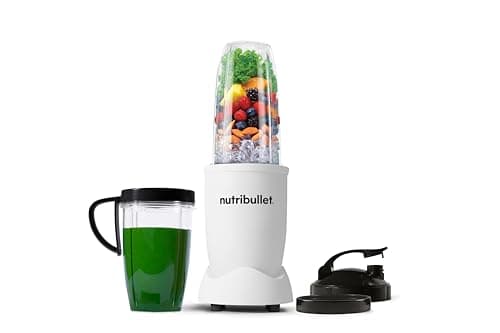 NutriBullet Pro 900 A 900-watt personal blender that blends straight into a to-go cup and stores in almost no space. For single smoothies in a small kitchen, it beats hauling out a full-size pitcher. 32 oz Cup · 900W | Best personal blender | 4.2★★★★★ | $69.99Amazon |
| 02 | 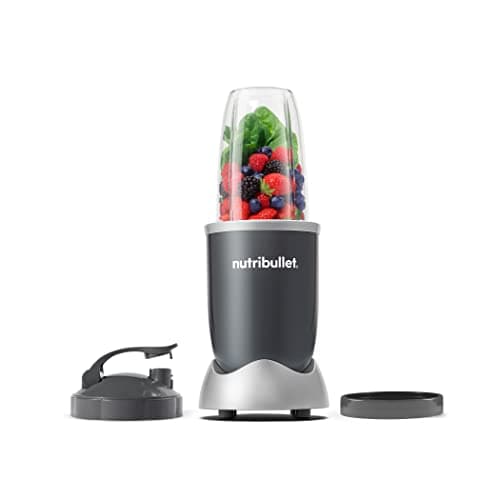 NutriBullet 600 The original 600-watt NutriBullet does one thing: a 24-ounce smoothie in a cup you drink from. It is the cheapest way into blend-and-go without dropping to a 250-watt bullet, and it fits in the gap between the kettle and the toaster. One Cup · 600W | Best cheap personal blender | 4.1★★★★★ | $59.96Amazon |
| 03 | 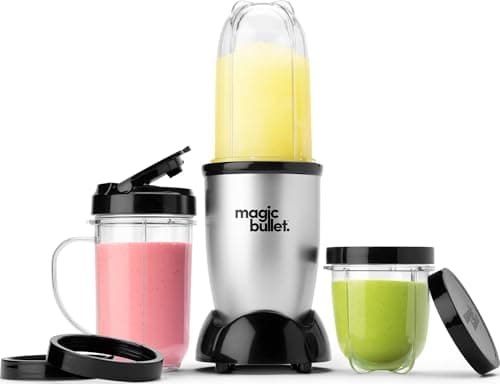 Magic Bullet (11-Piece) A 250-watt motor base, a cross blade, three cups and some lids — the machine that invented this whole category. It is not powerful, but at 3.25 lb and under a foot tall it lives in a dorm cupboard and handles pico, dressings and a soft-fruit smoothie for almost nothing. 11 piece · 250W | Best tiny-budget pick | 3.8★★★★★ | $37.81Amazon |
| 04 | 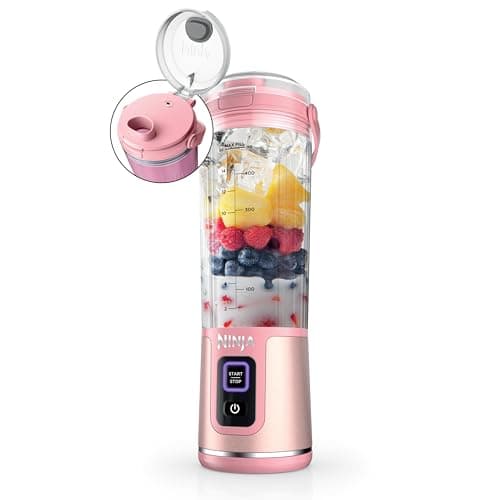 Ninja Blast BC151 A cordless, rechargeable 18-ounce blender with a hinged carry handle and a sip lid, so the vessel you blend in is the bottle you leave with. It self-cleans on a 30-second cycle with water and a drop of soap — the feature that decides whether a portable blender actually gets used. 18 oz | Best cordless / portable | 4.0★★★★★ | $49.99Amazon |
#ad · Live prices from the Amazon Product API, as of October 17, 2026. Where we have no verified live price, we show none — a gap beats a number that has rotted.
The picks, in detail
NutriBullet Pro 900
spec score /5
$99.9930% off
Price as of October 17, 2026. Prices change — Amazon's is the one that counts.
#ad · we may earn a commission from this link to NutriBullet Pro 900
A 900-watt personal blender that blends straight into a to-go cup and stores in almost no space. For single smoothies in a small kitchen, it beats hauling out a full-size pitcher.
- Capacity
- 32 oz Cup
- Footprint (W×D×H)
- 5.5 × 5.5 × 7.9 in
- Power
- 900 W
- Cost per use*
- ≈5¢
- Est. per year*
- ≈$11
- Blend-and-go cup design
- Tiny footprint (5.5 in)
- Rinses clean in seconds
- Single-serve only
- Not for hot or large batches
- Can stall on very thick blends
*Cost-to-run computed from the manufacturer's stated 900W at $0.17/kWh (US average), 20-min sessions, 4×/week. Your rate and use will vary.
NutriBullet 600
spec score /5
Price as of October 17, 2026. Prices change — Amazon's is the one that counts.
#ad · we may earn a commission from this link to NutriBullet 600
The original 600-watt NutriBullet does one thing: a 24-ounce smoothie in a cup you drink from. It is the cheapest way into blend-and-go without dropping to a 250-watt bullet, and it fits in the gap between the kettle and the toaster.
- Capacity
- One Cup
- Footprint (W×D×H)
- 6.85 × 11.61 × 12.28 in
- Power
- 600 W
- Cost per use*
- ≈3¢
- Est. per year*
- ≈$7
- Warranty
- One Year Limited
- Blends straight into the 24-oz cup you drink from
- Under 7 in wide — parks anywhere
- Twist-off blade rinses in seconds
- 600 W stalls on thick frozen loads
- Single-serve only
- One-year limited warranty
*Cost-to-run computed from the manufacturer's stated 600W at $0.17/kWh (US average), 20-min sessions, 4×/week. Your rate and use will vary.
Magic Bullet (11-Piece)
spec score /5
$39.995% off
Price as of October 17, 2026. Prices change — Amazon's is the one that counts.
#ad · we may earn a commission from this link to Magic Bullet (11-Piece)
A 250-watt motor base, a cross blade, three cups and some lids — the machine that invented this whole category. It is not powerful, but at 3.25 lb and under a foot tall it lives in a dorm cupboard and handles pico, dressings and a soft-fruit smoothie for almost nothing.
- Capacity
- 11 piece
- Footprint (W×D×H)
- 4.48 × 4.01 × 11.61 in
- Power
- 250 W
- Weight
- 3.25 lb
- Cost per use*
- ≈1¢
- Est. per year*
- ≈$3
- Warranty
- 5 Year Warranty
- Cheapest real blender here
- 3.25 lb, 11.6 in tall — stores in a cupboard
- Surprising 5-year warranty for the price
- 250 W struggles with ice and frozen fruit
- Cups are small (single-serve)
- Twist-to-run base, no speed control
*Cost-to-run computed from the manufacturer's stated 250W at $0.17/kWh (US average), 20-min sessions, 4×/week. Your rate and use will vary.
Ninja Blast BC151
spec score /5
$69.9929% off
Price as of October 17, 2026. Prices change — Amazon's is the one that counts.
#ad · we may earn a commission from this link to Ninja Blast BC151
A cordless, rechargeable 18-ounce blender with a hinged carry handle and a sip lid, so the vessel you blend in is the bottle you leave with. It self-cleans on a 30-second cycle with water and a drop of soap — the feature that decides whether a portable blender actually gets used.
- Capacity
- 18 oz
- Footprint (W×D×H)
- 3.543 × 3.543 × 10.709 in
- Cordless — blends at a desk, in a car, at the gym
- Sip lid and carry handle; blend and go literally
- 30-second self-clean cycle
- 18 oz is one drink
- Needs charging
- Costs more than a mains-powered bullet with more power
This is one of the most confusing pairings in small appliances, because the two products look almost identical, share a design language, and come from the same manufacturer. The shape is the same — a motor base, a cup that screws onto a blade, and you invert the whole thing to run it. What differs is what is inside the base, and the gap is much larger than the visual similarity suggests.
Every figure below is from each machine's current listing. This is a specification comparison, not a hands-on test — see how we review.
At a glance
| Spec | Magic Bullet | NutriBullet 600 | NutriBullet Pro |
|---|---|---|---|
| Motor | 250 W | 600 W | 900 W |
| Main cup | Tall cup + short cup + party mug | 24 oz | 32 oz |
| Pieces | 11 | Cup, blade, lid | Cup, blade, lid |
| Height | 11.61 in | 12.28 in | 7.9 in (base) |
| Base width | 4.48 in | 6.85 in | 5.5 in |
| Weight | 3.25 lb | — | — |
| Warranty | 5-year | 1-year limited | — |
The 250 vs 600 vs 900 watt gap is the whole story
In full-size blenders we tell you to ignore wattage, because brands measure it incomparably. In this class the opposite applies: these are all the same brand, the same format and the same measurement basis, so the numbers are comparable — and the spread is enormous in relative terms.
A 250-watt Magic Bullet is genuinely a soft-ingredient machine. Pico de gallo, salad dressings, hummus, a smoothie made from banana and yogurt: fine. A cup packed with solid ice or frozen berries: it will labor, stall, and need shaking. That is not a defect, it is the design point — the Magic Bullet was sold as a chopper-blender for small jobs and it does those well.
600 watts is where it becomes a real blender. Frozen fruit works, provided you leave enough liquid. It will still complain at a cup of pure ice.
900 watts is where the complaining stops. This is the first machine in the family that handles the load most people actually want — frozen berries and a splash of milk — without a shake-and-restart. If your smoothie has frozen fruit in it, this is the one to buy, and the extra outlay over the 600 is the best-spent money in the range.
Cup size and what it means
The Magic Bullet ships eleven pieces: a 250-watt motor base, a cross blade, a tall cup, a short cup, a party mug, two lip rings, two stay-fresh resealable lids and a to-go lid. The piece count is the selling point and it is also slightly misleading — count the things with a motor or a blade and it is one and one, like everything else here. The cups are small, suiting dips and single modest drinks.
The NutriBullet 600's 24-ounce cup is a standard smoothie. The Pro's 32-ounce cup is a large one with room for ice. Undersizing is the commonest regret in this category, so buy for the drink you actually make. All three blend into the vessel you drink from and rinse in seconds — the defining virtue of the class, covered fully in best personal blenders.
The warranty surprise
Counter-intuitively, the Magic Bullet carries the longest warranty of the three at five years, against one year limited on the NutriBullet 600. That is unusual and worth knowing.
The likely reason is not that the Magic Bullet is built better but that it is asked to do less — a 250-watt motor running soft ingredients for thirty seconds is under far less stress than a 900-watt motor grinding frozen fruit. Treat the warranty as information about expected duty rather than a straightforward quality signal.
Footprint
All three are small, which is the point. The Magic Bullet is the smallest at 4.48 inches wide and 3.25 lb— genuinely dorm-cupboard sized. The NutriBullet Pro's base is 5.5 inches square and 7.9 inches tall, so it disappears next to a kettle. The 600's base is a little wider at 6.85 inches.
None of these will meaningfully cost you counter space, which is why the whole class features on our small-kitchen shortlist.
The blades are the same idea, differently sized
Both use the same fundamental design: a cross blade that screws onto the cup, which you then invert onto the motor base. Gravity feeds the load down onto the blade, which is why this format punches above its wattage on single servings — a narrow cup keeps the blade in constant contact with the food, where a wide pitcher lets contents ride up the walls.
That is the whole reason a 600-watt bullet can out-blend a 1,000-watt full-size machine on one cup. Format, not power.
The difference across the range is what the motor can drive that blade through. Which is why the wattage ladder maps so cleanly onto ingredients: 250 watts for soft, 600 for moderately frozen, 900 for genuinely frozen and packed.
Cups, lids and the parts that fail
With any bullet-style blender you are buying a system of consumables as much as a motor, and it is worth knowing which parts go first.
The gasket — the rubber seal on the blade assembly — fails first, usually as a slow leak down the side of the base that people misread as a cracked cup. It is cheap and available for both the NutriBullet and Magic Bullet lines precisely because those systems have sold in enormous numbers. Check spare-part availability before buying an off-brand bullet; a $5 seal you cannot buy makes the whole machine landfill.
Lids are the parts you will lose, and a to-go blender with no lid stops traveling. Buying a spare set early is cheaper than replacing the machine. Cups go hazy from dishwasher heat and ice abrasion, which is cosmetic and does not affect performance.
What they share — and where both stop
Both are single-serve and neither is for batches. Neither is rated for hot contents. Both run in short bursts rather than continuously — these motors are designed for roughly a minute at a time with a rest, and holding one down for three minutes to chase a smoother texture is the most common way people burn one out.
And both share the same maintenance trap: never store the blade screwed onto a damp cup. Moisture trapped in the gasket is where the smell people complain about comes from. Twist off, rinse both parts, dry separately.
Why the naming is so confusing
Worth a short explanation, because it causes genuine mistakes at the point of purchase.
Both brands sit under the same parent company, and the ranges have grown by addition rather than by design. "NutriBullet" alone covers the 600, the Pro at 900 watts, the Pro+ at 1200, the Ultra, full-size combo machines with pitchers, and more — all sharing a visual identity and a name.
The practical consequence: the model name tells you very little, and the wattage and cup size tell you almost everything. Two machines both called "NutriBullet Pro" can differ in both. When comparing listings, ignore the marketing name and read the two numbers — watts and ounces — which is the same advice we give for the wider blender market in our buying guide.
The third option worth knowing
If portability rather than power is your actual requirement, the Ninja Blast is cordless with an 18-ounce vessel, a sip lid and a 30-second self-clean cycle — it blends where there is no kitchen at all. It costs more than a mains-powered bullet with more power, so buy it for the cordlessness, not the performance.
The verdict
Buy the Magic Bullet if the real job is dips, dressings, pesto and soft fruit, or if you want the cheapest thing that counts as a blender for a dorm or an office. The five-year warranty is a genuine bonus.
Buy the NutriBullet 600 if you want a proper 24-ounce smoothie and your fruit is mostly fresh or lightly frozen.
Buy the NutriBullet Pro if there is frozen fruit in your smoothie most mornings. It is the one we recommend most often in this family, and the jump from 600 to 900 watts is where the frustration disappears.
If you are blending for more than one person, none of these is right and you want a full-size pitcher — start at best blenders for smoothies.
Cross-shopping outside the family rather than inside it? Ninja vs. NutriBullet is the comparison that matters more for most buyers, because it is a choice between two different workflows — a pitcher you pour from against a cup you drink from — rather than two versions of the same cup.
Frequently asked questions
What is the difference between a NutriBullet and a Magic Bullet?
Power, mostly — they come from the same company and share a format. The Magic Bullet is 250 watts and suits soft fruit, dips and dressings. The NutriBullet 600 is 600 watts with a 24-oz cup, and the NutriBullet Pro is 900 watts with a 32-oz cup and handles frozen fruit properly.
Can a Magic Bullet crush ice?
Not well. At 250 watts it will labor on solid ice or a cup packed with frozen berries, and typically needs shaking and restarting. That is the design point rather than a fault — it was sold as a chopper-blender for small, soft jobs.
Is the NutriBullet Pro worth the extra over the 600?
If there is frozen fruit in your smoothie, yes — it is the best-spent money in the range. The jump from 600 to 900 watts is where the stalling and shake-and-restart routine disappears, and the cup grows from 24 to 32 ounces.
Why does the Magic Bullet have a longer warranty than the NutriBullet?
The Magic Bullet's listing carries a five-year warranty against one year limited on the NutriBullet 600. The likely reason is duty rather than build quality — a 250-watt motor running soft ingredients is under far less stress than a 900-watt motor grinding frozen fruit.
How long can you run a NutriBullet or Magic Bullet for?
In short bursts of around a minute with a rest between cycles. Holding one down for several minutes to chase a smoother texture is the most common way people burn these motors out. Pulse and add liquid instead.
Sources
Keep reading
Blenders
The Best Blenders of 2026
Vitamix, Ninja and personal blenders compared on motor class, jar size, footprint and cleanup.
Roundup
The Best Personal Blenders
Four blend-and-go blenders compared on cup size, footprint, power and cleanup — including a cordless one.
Roundup
The Best Blenders Under $100
Five blenders under $100 ranked on jar size, frozen-load handling and materials, with the trade-offs stated plainly.
Small Kitchen
Best Appliances for Small Kitchens & Apartments
The most compact air fryer, blender, food processor and sous vide, chosen footprint-first for tight kitchens.
Comparison
Ninja vs. NutriBullet
Pitcher vs. cup, 72 oz vs. 32 oz, and the published max-liquid figures — why wattage is the wrong way to compare these two brands.
https://wattandwhisk.com/blenders/nutribullet-vs-magic-bullet