Ninja vs. NutriBullet
The two brands people cross-shop most, and they are not really competing. One sells a pitcher you pour from; the other sells a cup you drink from.
Disclosure:Watt & Whisk is reader-supported. When you buy through links on this page we may earn an Amazon Associates commission, at no extra cost to you. Prices are pulled live from Amazon and shown with the date checked. How this works.
Buy Ninja if you blend for more than one person; buy NutriBullet if you blend for yourself and drink it from the vessel.That is the whole decision, and wattage has almost nothing to do with it. Ninja's center of gravity is a 72-ounce pitcher — the Professional Plus BN701 at 1,400 peak watts with Auto-iQ programs is the one to buy, or the simpler BL610at 1,000 W if you do not want presets. NutriBullet's center of gravity is a single-serve cup that twists onto a blade and becomes your glass: the Pro at 900 W and 32 ounces is the version worth having. One figure neither brand headlines: both Ninja 72-ounce pitchers are marked 64 ounces max liquid, so the number on the box is not the number you can fill. Prices below are pulled live from Amazon.
The short answer
Quick picks
| # | Product | Best for | Score | Price |
|---|---|---|---|---|
| 01 | 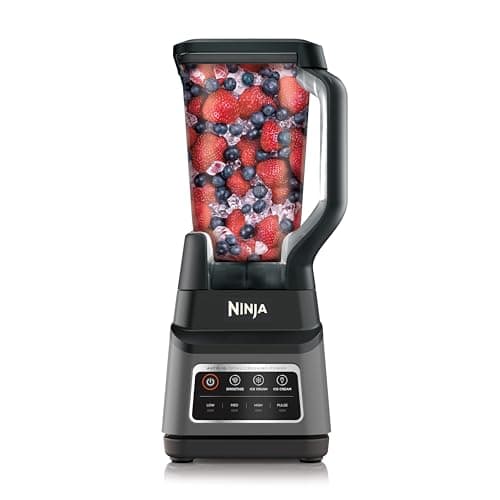 Ninja Professional Plus BN701 The BN701 is the value champion: strong ice-crushing power, Auto-iQ programs, and a big pitcher for a fraction of a Vitamix. It won't self-clean or make hot soup, but for daily smoothies it's plenty. Professional Plus Blender · 1400W | Best value blender | 4.3★★★★★ | $89.99Amazon |
| 02 | 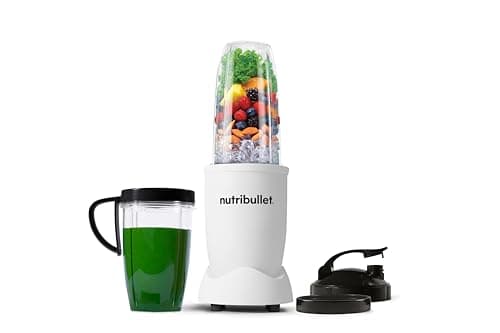 NutriBullet Pro 900 A 900-watt personal blender that blends straight into a to-go cup and stores in almost no space. For single smoothies in a small kitchen, it beats hauling out a full-size pitcher. 32 oz Cup · 900W | Best personal blender | 4.2★★★★★ | $79.99Amazon |
| 03 | 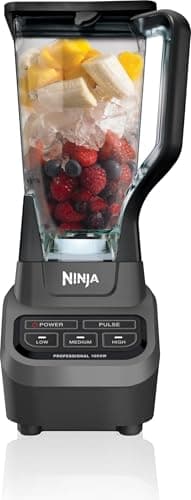 Ninja Professional BL610 The BL610 is the plain, cheap, hard-working Ninja: a 1,000-watt base, a 72-ounce Total Crushing pitcher, and three speeds plus pulse. No Auto-iQ presets, no to-go cups, nothing to break — which is exactly why it's the full-size blender we'd hand someone with a strict budget. 72oz · 1000W | Best full-size blender under $100 | 4.2★★★★★ | $99.00Amazon |
| 04 | 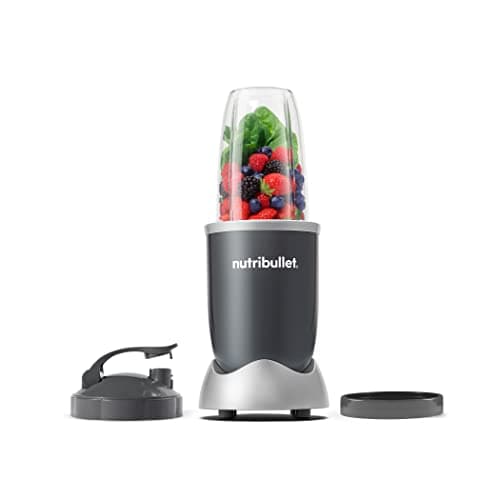 NutriBullet 600 The original 600-watt NutriBullet does one thing: a 24-ounce smoothie in a cup you drink from. It is the cheapest way into blend-and-go without dropping to a 250-watt bullet, and it fits in the gap between the kettle and the toaster. One Cup · 600W | Best cheap personal blender | 4.1★★★★★ | $49.87Amazon |
| 05 | 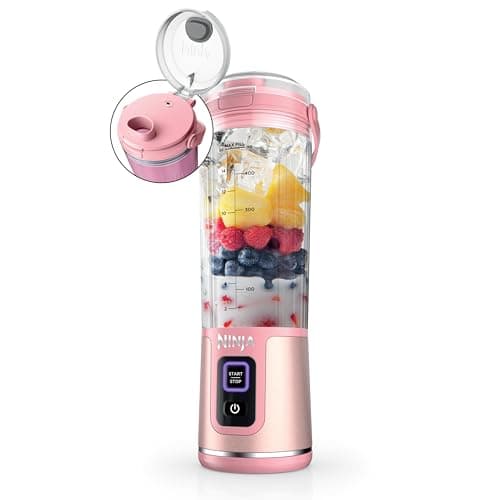 Ninja Blast BC151 A cordless, rechargeable 18-ounce blender with a hinged carry handle and a sip lid, so the vessel you blend in is the bottle you leave with. It self-cleans on a 30-second cycle with water and a drop of soap — the feature that decides whether a portable blender actually gets used. 18 oz | Best cordless / portable | 4.0★★★★★ | $49.99Amazon |
#ad · Live prices from the Amazon Product API, as of October 6, 2026. Where we have no verified live price, we show none — a gap beats a number that has rotted.
Side by side
Ninja and NutriBullet side by side
Vessel wording and every figure below are quoted from each machine's own Amazon listing. Where a maker publishes no warranty term or no wattage, the cell is left empty rather than filled with an estimate.
| Model | Key specs | Cooking surface, as published | Best for | Price |
|---|---|---|---|---|
| Ninja Professional Plus BN701 | 1400 W9 × 6.75 × 17.5 in1-yr warranty | 72 oz pitcher, 64 oz max liquid; BPA-free pitcher and stacked blade assembly | Best overall if you blend for a household | $89.99Check Price |
| NutriBullet Pro 900NB9-0901AWTH | 32 oz Cup900 W5.5 × 5.5 × 7.9 in | 32 oz single-serve cup you drink from; stainless Extractor blades | Best NutriBullet, and best for one person | $79.99Check Price |
| Ninja Professional BL610 | 72oz1000 W8.27 × 10.71 × 15.94 in1-yr warranty | 72 oz pitcher, 64 oz max liquid; BPA-free, dishwasher safe | Same jar, fewer electronics, lower price | $99.00Check Price |
| NutriBullet 600NBR-0601WM | 600 W6.85 × 11.61 × 12.28 in1-yr warranty | 24 oz cup with to-go lid and lip ring; stainless Extractor blade | The cheapest honest way into the format | $49.87Check Price |
| Ninja Blast BC151BC151PK | 18 oz3.543 × 3.543 × 10.709 in | 18 oz cordless vessel with sip lid; BPA-free, 30-second self-clean cycle | Ninja's answer to the single-serve question | $49.99Check Price |
#ad · we may earn a commission · Specs read from each manufacturer's Amazon listing; prices pulled live from the Amazon Product API, as of October 6, 2026. Where a maker publishes no figure (wattage, warranty term) we leave the cell empty rather than estimate one.
The picks, in detail
Ninja Professional Plus BN701
spec score /5
$119.9925% off
Price as of October 6, 2026. Prices change — Amazon's is the one that counts.
#ad · we may earn a commission from this link to Ninja Professional Plus BN701
The BN701 is the value champion: strong ice-crushing power, Auto-iQ programs, and a big pitcher for a fraction of a Vitamix. It won't self-clean or make hot soup, but for daily smoothies it's plenty.
- Capacity
- Professional Plus Blender
- Footprint (W×D×H)
- 9 × 6.75 × 17.5 in
- Power
- 1400 W
- Weight
- 8.1 lb
- Cost per use*
- ≈8¢
- Est. per year*
- ≈$17
- Warranty
- 1 year limited warranty
- Crushes ice easily
- Auto-iQ preset programs
- A quarter of a Vitamix's price
- Stacked blades are fiddly to clean
- Plastic build vs premium blenders
- Not for hot blending
*Cost-to-run computed from the manufacturer's stated 1400W at $0.17/kWh (US average), 20-min sessions, 4×/week. Your rate and use will vary.
NutriBullet Pro 900
spec score /5
$99.9920% off
Price as of October 6, 2026. Prices change — Amazon's is the one that counts.
#ad · we may earn a commission from this link to NutriBullet Pro 900
A 900-watt personal blender that blends straight into a to-go cup and stores in almost no space. For single smoothies in a small kitchen, it beats hauling out a full-size pitcher.
- Capacity
- 32 oz Cup
- Footprint (W×D×H)
- 5.5 × 5.5 × 7.9 in
- Power
- 900 W
- Cost per use*
- ≈5¢
- Est. per year*
- ≈$11
- Blend-and-go cup design
- Tiny footprint (5.5 in)
- Rinses clean in seconds
- Single-serve only
- Not for hot or large batches
- Can stall on very thick blends
*Cost-to-run computed from the manufacturer's stated 900W at $0.17/kWh (US average), 20-min sessions, 4×/week. Your rate and use will vary.
Ninja Professional BL610
spec score /5
$109.9910% off
Price as of October 6, 2026. Prices change — Amazon's is the one that counts.
#ad · we may earn a commission from this link to Ninja Professional BL610
The BL610 is the plain, cheap, hard-working Ninja: a 1,000-watt base, a 72-ounce Total Crushing pitcher, and three speeds plus pulse. No Auto-iQ presets, no to-go cups, nothing to break — which is exactly why it's the full-size blender we'd hand someone with a strict budget.
- Capacity
- 72oz
- Footprint (W×D×H)
- 8.27 × 10.71 × 15.94 in
- Power
- 1000 W
- Weight
- 7.1 lb
- Cost per use*
- ≈6¢
- Est. per year*
- ≈$12
- Warranty
- 1 year limited warranty
- Full 72-oz pitcher at a budget price
- 1,000 W crushes ice without complaint
- Three speeds and pulse — nothing to learn
- No presets or programs
- Stacked blade assembly to wash separately
- Not rated for hot liquids
*Cost-to-run computed from the manufacturer's stated 1000W at $0.17/kWh (US average), 20-min sessions, 4×/week. Your rate and use will vary.
NutriBullet 600
spec score /5
$59.9617% off
Price as of October 6, 2026. Prices change — Amazon's is the one that counts.
#ad · we may earn a commission from this link to NutriBullet 600
The original 600-watt NutriBullet does one thing: a 24-ounce smoothie in a cup you drink from. It is the cheapest way into blend-and-go without dropping to a 250-watt bullet, and it fits in the gap between the kettle and the toaster.
- Capacity
- One Cup
- Footprint (W×D×H)
- 6.85 × 11.61 × 12.28 in
- Power
- 600 W
- Cost per use*
- ≈3¢
- Est. per year*
- ≈$7
- Warranty
- One Year Limited
- Blends straight into the 24-oz cup you drink from
- Under 7 in wide — parks anywhere
- Twist-off blade rinses in seconds
- 600 W stalls on thick frozen loads
- Single-serve only
- One-year limited warranty
*Cost-to-run computed from the manufacturer's stated 600W at $0.17/kWh (US average), 20-min sessions, 4×/week. Your rate and use will vary.
Ninja Blast BC151
spec score /5
$69.9929% off
Price as of October 6, 2026. Prices change — Amazon's is the one that counts.
#ad · we may earn a commission from this link to Ninja Blast BC151
A cordless, rechargeable 18-ounce blender with a hinged carry handle and a sip lid, so the vessel you blend in is the bottle you leave with. It self-cleans on a 30-second cycle with water and a drop of soap — the feature that decides whether a portable blender actually gets used.
- Capacity
- 18 oz
- Footprint (W×D×H)
- 3.543 × 3.543 × 10.709 in
- Cordless — blends at a desk, in a car, at the gym
- Sip lid and carry handle; blend and go literally
- 30-second self-clean cycle
- 18 oz is one drink
- Needs charging
- Costs more than a mains-powered bullet with more power
These are not two versions of the same appliance
The reason this comparison confuses people is that both brands are sold in the same aisle at similar prices with similar marketing, and they are answering different questions.
Ninja is a pitcher company. Its core products are tall jugs that sit on a motor base, hold most of a half gallon, and pour into glasses. You blend, you pour, you wash the pitcher.
NutriBullet is a cup company. Its core product is a cup that you fill, twist a blade assembly onto, invert onto the base, blend, then unscrew and drink straight from. There is no pouring and no separate glass. That is not a smaller pitcher — it is a different workflow.
Once you see it that way the decision gets simple, because the question is not "which brand is better" but "how many people am I blending for, and do I want to wash a jug?" If you are on this page because you are not sure a blender is the right machine at all, start with the blender buying guide instead.
Why wattage is the wrong way to compare them
Wattage is the number both brands lead with, and it is close to useless across this particular pair. Here is what is actually published:
- Ninja Professional Plus BN701— 1,400 peak watts. Ninja's own listing makes the comparison explicit: 1,400 W versus the 1,000 W of the BL610.
- Ninja Professional BL610 — 1,000 watts, and the listing also publishes a 12.5 amp draw.
- NutriBullet Pro — 900 watts.
- NutriBullet 600 — 600 watts.
- Ninja Blast — no wattage published. It is cordless, so there is no mains figure to quote, and we do not estimate one.
Read it as watts-per-vessel rather than watts, and the picture inverts. The NutriBullet Pro puts 900 watts behind a 32-ounce cup; the Ninja BL610 puts 1,000 watts behind a pitcher more than twice the size. Per ounce of contents, the small machine is working the ingredients harder — which is exactly why a single-serve blender can pulverize frozen fruit that a half-full large jug just pushes around. Volume and power have to be read together. The longer version of this argument is how many watts do you need in a blender.
The figure neither brand headlines: max liquid
Both Ninja 72-ounce pitchers are explicitly marked with a 64-ounce maximum liquid capacity. That is in Ninja's own listing copy for the BN701 and the BL610, and it is the honest number: the extra 8 ounces is headroom, because a blender at speed needs somewhere for the vortex to go.
This is not a criticism of Ninja — it publishes the figure, which is more than most makers do, and 64 ounces of smoothie is still a lot of smoothie. But if you are comparing a "72 oz" Ninja against a "32 oz" NutriBullet, the real ratio is 64 to 32, and the NutriBullet cup is a fill-to-the-line vessel you drink from rather than a batch container. Two different numbers measuring two different things.
The warranty picture, which is thinner than you would expect
Nobody in this pairing publishes a long term, and two machines publish nothing at all:
- Ninja BN701 — 1 year limited.
- Ninja BL610 — 1 year limited.
- NutriBullet 600 — one year limited.
- NutriBullet Pro — no term published on the listing.
- Ninja Blast — no term published on the listing.
For context on how modest that is: the Magic Bullet publishes five years, the Hamilton Beach Power Elite three, and Vitamix runs from five to ten depending on the model. So neither Ninja nor NutriBullet is competing on durability cover, and the two newest machines in this group are the two with no published term. Since nobody publishes a lifespan for a blender, the warranty is the only durability figure available — the full table and what actually fails first are in how long do blenders last.
The Ninja side
Ninja Professional Plus BN701 — the one to buy
1,400 peak watts, a 72-ounce Total Crushing pitcher (64 oz max liquid), Total Crushing blades, and three Auto-iQ preset programs that run timed pulse-blend-pause patterns so you are not standing there working the switch. Pitcher and stacked blade assembly are BPA-free and top-rack dishwasher safe. 9 × 6.75 in, 17.5 in tall, 8.1 lb, one-year limited warranty.
The Auto-iQ programs are the real difference over the BL610, not the extra 400 watts. Pulsing is what breaks up a frozen load without cavitating a pocket of air around the blades, and a machine that does the pulsing pattern for you gets a better result from a novice than raw power does. Our longer look is the Ninja BN701 review.
Cons: 17.5 inches tall, which clears few wall cabinets — you will be storing it on the counter or lifting it out each time. One-year warranty. And a 72-ounce pitcher is a lot of jug to wash when you made one smoothie.
Ninja Professional BL610 — same jar, fewer things to break
1,000 watts, the same 72-ounce pitcher and 64-ounce liquid limit, Total Crushing Technology, three speeds and a pulse, BPA-free and dishwasher safe. 8.27 × 10.71 in, 15.94 in tall, 7.1 lb, one-year limited.
Buy this over the BN701 if you do not want presets. It is nearly two inches shorter, which is often the deciding fact in a real kitchen, and there is no program electronics to fail. It is the most jar per dollar in our whole catalog. Detail in the Ninja BL610 review.
Cons: no programs, so frozen loads need you to work the pulse yourself. Same one-year warranty. Same big-jug-to-wash problem.
Ninja Blast — Ninja's answer to the cup question
Cordless, an 18-ounce ribbed vessel with a hinged carry handle and a sip lid, a stainless BlastBlade assembly, separate power and blend buttons so it cannot start in a bag, and a 30-second self-clean cycle. BPA-free lid and vessel, both dishwasher safe. 3.54 × 3.54 in, 10.71 in tall.
This is the machine to compare against a NutriBullet rather than the pitchers — it is the same blend-and-drink idea, made portable. Cons: it is the smallest vessel here at 18 ounces, Ninja publishes no wattage and no warranty term for it, and being cordless means a battery, which is one more thing with a finite life. The portable class in full is best personal blenders.
The NutriBullet side
NutriBullet Pro — the version worth having
900 watts, a 32-ounce cup, stainless Extractor blades that NutriBullet markets for breaking down nuts, seeds, hard fruits and kale. Push, twist, blend; unscrew the blade and the cup is your glass. The blades rinse under the tap and the cups go on the top rack. 5.5 × 5.5 in and 7.9 in tall — by a wide margin the smallest footprint on this page, and short enough to live under any cabinet.
If you are one person making one drink, this is a genuinely better object than a 72-ounce pitcher. Nothing to pour, nothing to decant, one part to wash. The 900 W behind a 32-ounce cup is also a harder-working ratio than either Ninja pitcher.
Cons: NutriBullet publishes no warranty term on this listing, which is the single biggest mark against it. Thirty-two ounces is a ceiling, not a batch size — you cannot make a jug of soup in it. There are no preset programs. And a cup-and-blade system has a gasket that is a consumable, which is the commonest failure point in the format.
NutriBullet 600 — the cheapest honest way in
600 watts, a 24-ounce cup with a to-go lid and lip ring, an Extractor blade, and a recipe book. 6.85 × 11.61 in, 12.28 in tall. One year limited warranty — which, notably, is more cover than the dearer Pro publishes.
It does the same job as the Pro with a third less power and a third less cup. For smoothies with soft fruit and a liquid, that is plenty; for frozen chunks and fibrous greens, the Pro's 900 W is the one to have. Cons: 600 W is the lowest figure here, the 24-ounce cup is small even by single-serve standards, and the to-go lid is a lid, not a sealed travel bottle.
One thing both brands get right
Both publish BPA-free statements on the parts that touch food — Ninja for the BN701 pitcher and stacked blade assembly, the BL610 pitcher and the Blast's lid and vessel; and the whole NutriBullet format is a plastic cup plus stainless Extractor blades. Neither brand has any coating anywhere in the food path, because blenders do not have coatings, which means the whole PFAS question that dominates air fryers is irrelevant here.
If plastic itself is the thing you would rather avoid, neither brand offers a glass jar and you want a different machine — the field is ranked in best non-toxic blenders, and the plastics question is covered properly in are plastic blender jars safe.
The verdict
Buy the Ninja BN701 if you blend for two or more people, want presets that do the pulsing for you, and have somewhere to keep a 17.5-inch machine. Buy the Ninja BL610 for the same jar, nearly two inches shorter, with nothing to go wrong. Buy the NutriBullet Pro if you blend one drink for yourself and want to drink it from the vessel — accepting that no warranty term is published. Buy the NutriBullet 600 if the budget is hard and your smoothies are soft fruit rather than frozen rocks; it is the only single-serve machine here with a published warranty. Buy the Ninja Blast only if portability is the actual requirement.
And if you are cross-shopping further up the market, the comparison that matters is Vitamix vs. Ninja — where the warranty gap, not the wattage gap, is what you are paying for. Within the NutriBullet family, NutriBullet vs. Magic Bullet sorts out the two names that confuse everyone, and if smoothies are the whole use case, best blenders for smoothies ranks the field on how each machine behaves under a frozen load.
Frequently asked questions
Is Ninja or NutriBullet better?
They answer different questions. Ninja's core products are 72-ounce pitchers you pour from, which suits blending for a household. NutriBullet's core product is a single-serve cup that twists onto a blade and becomes your glass, which suits one person making one drink. Pick on how many people you blend for, not on brand.
Does Ninja have more power than NutriBullet?
In absolute terms yes — the Ninja BN701 publishes 1,400 peak watts and the BL610 1,000 W, against 900 W for the NutriBullet Pro and 600 W for the NutriBullet 600. But read it per ounce of contents and it inverts: 900 W behind a 32-ounce cup works ingredients harder than 1,000 W behind a 72-ounce pitcher. Volume and power have to be read together.
How much can you actually put in a 72 oz Ninja pitcher?
64 ounces of liquid. Ninja publishes that figure for both the BN701 and the BL610 — the pitcher is 72 ounces but is marked with a 64-ounce maximum liquid capacity, because a blender at speed needs headroom for the vortex. Ninja is more transparent than most makers here; it is just not the number on the front of the box.
Which Ninja blender should I buy?
The Professional Plus BN701 if you want the three Auto-iQ preset programs, which do the pulse-blend-pause pattern that breaks up frozen loads without you working the switch. The Professional BL610 if you do not — it has the same 72-ounce pitcher, is nearly two inches shorter at 15.94 inches, and has no program electronics to fail.
Which NutriBullet should I buy?
The Pro, for its 900 watts and 32-ounce cup, if your smoothies include frozen fruit or fibrous greens. The 600 is the cheaper route with 600 watts and a 24-ounce cup, and it is the only one of the two with a published warranty term — NutriBullet publishes none for the Pro, which is worth knowing before you buy.
Do Ninja and NutriBullet blenders have long warranties?
No. Both Ninja pitchers and the NutriBullet 600 publish one year, and the NutriBullet Pro and Ninja Blast publish no term at all. For contrast, the Magic Bullet publishes five years, the Hamilton Beach Power Elite three, and Vitamix five to ten depending on model. Neither brand competes on durability cover.
Is a NutriBullet just a small blender?
No — it is a different workflow. You fill the cup, twist a blade assembly onto it, invert it onto the base, blend, then unscrew the blade and drink from the same cup. There is no pouring, no separate glass and one part to wash. That is the real reason to choose it over a pitcher, not its size.
Do Ninja or NutriBullet blenders have nonstick coatings or PFAS?
Neither, and no blender does. A blender's food path is the vessel plus stainless steel blades, with no coating anywhere, so the PFAS question that dominates air fryers does not apply. Both brands publish BPA-free statements for their food-contact parts; neither offers a glass jar.
Keep reading
Blenders
The Best Blenders of 2026
Vitamix, Ninja and personal blenders compared on motor class, jar size, footprint and cleanup.
Comparison
Vitamix vs. Ninja: Which Blender Is Actually Worth It?
Vitamix vs Ninja on motor rating, jar size, hot blending, cleanup and warranty — and who each one is really for.
Comparison
NutriBullet vs. Magic Bullet: What Is the Difference?
NutriBullet vs Magic Bullet on power, cup size, warranty and what each can genuinely handle — plus where each one stops.
Roundup
The Best Personal Blenders
Four blend-and-go blenders compared on cup size, footprint, power and cleanup — including a cordless one.
Guide
How Many Watts Do You Need in a Blender?
Watts by job — smoothies, ice, nut butter, hot soup — why the number misleads, and the real cost to run.
Guide
How Long Do Blenders Last?
The published warranty table for every blender we track, what actually fails first, and which parts you can replace instead of the machine.
https://wattandwhisk.com/blenders/ninja-vs-nutribullet