Ninja AF101 Review
Eight years old, still the air fryer we point most people to. Here is exactly what it gets right, and the three things that would send you elsewhere.
Disclosure:Watt & Whisk is reader-supported. When you buy through links on this page we may earn an Amazon Associates commission, at no extra cost to you. Prices are pulled live from Amazon and shown with the date checked. How this works.
The Ninja AF101 is the value default in this category and has been since 2018. You get a 4-quart ceramic-coated aluminum basket rather than a conventional PTFE one, a 105–400°F range wide enough to genuinely dehydrate, a 1,550-watt element that costs about 9 cents a batch, and dial-and-button controls with nothing to learn — for less money than anything comparable. Skip it if your cabinet gap is tight (it is 15.25 inches tall), if you want presets, or if you need to cook a main and a side at once.
The short answer
Quick picks
| # | Product | Best for | Score | Price |
|---|---|---|---|---|
| 01 | 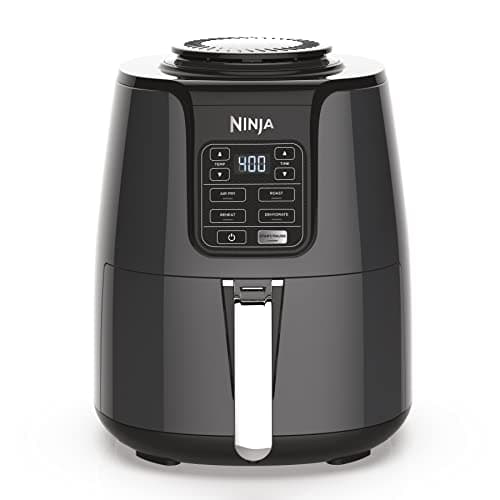 Ninja AF101 The 4-quart Ninja AF101 is the one we point most people to: a genuinely simple dial-and-button air fryer with a ceramic-coated basket, a 105–400°F range, and a footprint that fits a normal counter. It has been the reliable default since 2018 for good reason. 4 QT · 1550W | Best overall on value | 4.6★★★★★ | $104.99Amazon |
| 02 | 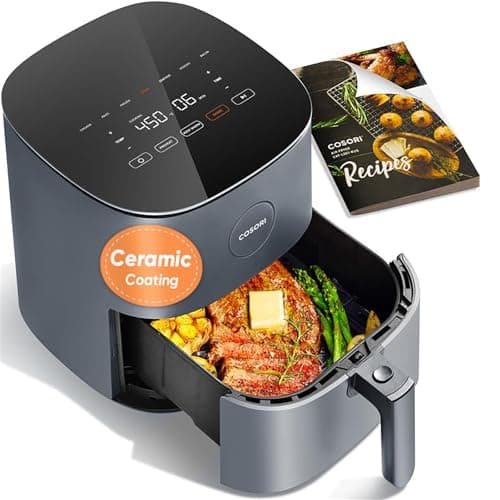 Cosori Pro LE The 5-quart Pro LE is the friendliest first air fryer here: seven clearly labeled presets, a ceramic nonstick basket, and 450°F top heat in a body that doesn't hog the counter. If dials intimidate you, this removes the guesswork. 5 QT | Best presets for beginners | 4.4★★★★★ | $89.95Amazon |
| 03 | 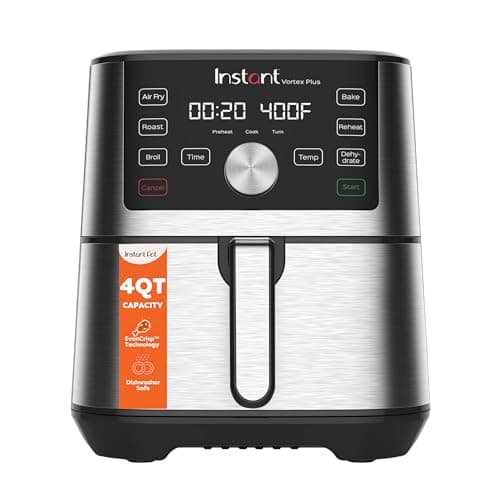 Instant Vortex 4-Qt A 4-quart, digital, single-basket Vortex that stays compact (10.2 in wide) while giving you real preset buttons. It's the middle ground between the bare-bones Dash and a full 6-quart machine. 4 qt | Best small digital | 4.2★★★★★ | $69.99Amazon |
#ad · Live prices from the Amazon Product API, as of October 17, 2026. Where we have no verified live price, we show none — a gap beats a number that has rotted.
The picks, in detail
Ninja AF101
spec score /5
$119.9913% off
Price as of October 17, 2026. Prices change — Amazon's is the one that counts.
#ad · we may earn a commission from this link to Ninja AF101
The 4-quart Ninja AF101 is the one we point most people to: a genuinely simple dial-and-button air fryer with a ceramic-coated basket, a 105–400°F range, and a footprint that fits a normal counter. It has been the reliable default since 2018 for good reason.
- Capacity
- 4 QT
- Footprint (W×D×H)
- 12.25 × 15.1 × 15.25 in
- Power
- 1550 W
- Weight
- 10.58 lb
- Cost per use*
- ≈9¢
- Est. per year*
- ≈$18
- Warranty
- 1 Year Manufacturers
- Ceramic-coated aluminum basket — no PTFE nonstick
- Dead-simple controls; nothing to learn
- Small enough for a normal counter (12 × 15 in)
- 4 qt is tight for a family of 4+
- No preset buttons or window
- Dial isn't the most precise
*Cost-to-run computed from the manufacturer's stated 1550W at $0.17/kWh (US average), 20-min sessions, 4×/week. Your rate and use will vary.
Cosori Pro LE
spec score /5
$99.9910% off
Price as of October 17, 2026. Prices change — Amazon's is the one that counts.
#ad · we may earn a commission from this link to Cosori Pro LE
The 5-quart Pro LE is the friendliest first air fryer here: seven clearly labeled presets, a ceramic nonstick basket, and 450°F top heat in a body that doesn't hog the counter. If dials intimidate you, this removes the guesswork.
- Capacity
- 5 QT
- Footprint (W×D×H)
- 10.8 × 14.4 × 12 in
- Weight
- 10 lb
- Warranty
- 2 year manufacturer
- 7 one-touch presets take the guesswork out
- Ceramic coating, dishwasher-safe basket
- Compact 10.8-in-wide body
- 5 qt still tight for big families
- App is optional and skippable
- No cook window
Instant Vortex 4-Qt
spec score /5
$129.9946% off
Price as of October 17, 2026. Prices change — Amazon's is the one that counts.
#ad · we may earn a commission from this link to Instant Vortex 4-Qt
A 4-quart, digital, single-basket Vortex that stays compact (10.2 in wide) while giving you real preset buttons. It's the middle ground between the bare-bones Dash and a full 6-quart machine.
- Capacity
- 4 qt
- Footprint (W×D×H)
- 10.2 × 13.03 × 11.02 in
- Weight
- 9 lb
- Digital presets in a compact body
- 10.2-in width fits small counters
- Often on sale under $80
- Standard nonstick basket
- 4 qt is single-person to couple sized
- No window
There is something suspicious about an appliance that has been on sale essentially unchanged since 2018 and is still worth recommending. In most categories that means the market stopped caring. Here it means the opposite: the AF101 got the fundamentals right the first time, and eight years of competitors have added features around the edges without displacing it on the thing that matters. This is a specification-and-running-cost review — we have not lab-tested it, and we say so on how we review.
The specifications that matter
- Capacity: 4 quarts. Ninja rates the basket at 2 lb of French fries.
- Power: 1,550 watts.
- Temperature range: 105–400°F.
- Materials: aluminum basket and crisper plate with a nonstick ceramic coating. Both dishwasher safe.
- Footprint: 12.25 × 15.1 × 15.25 inches, 10.58 lb.
- Functions: four — Air Fry, Roast, Reheat, Dehydrate.
- Warranty: 1 year.
The ceramic basket is the real story
At this price you would expect a conventional PTFE nonstick basket, because that is what almost everything cheap uses. Ninja specifies aluminum with a nonstick ceramic coating on both the basket and the crisper plate. That is a genuinely unusual thing to find at the bottom of a category.
Two honest caveats. First, Ninja does not publish a PFAS-free claim for the AF101 the way Cosori does for the TurboBlaze, so we are not going to state one — ceramic-coated is what the spec sheet says, and that is what we will repeat. Second, conventional PTFE coatings are not known to be dangerous at normal air-frying temperatures anyway; we go through the actual evidence in are air fryers toxic? The practical argument for ceramic is durability rather than acute safety — it is a harder surface that tolerates years of use better.
If the coating is the reason you are here, two pages put the AF101 next to the machines that make a stronger claim: best ceramic air fryers ranks the field on exactly what each maker publishes, and best non-toxic air fryers adds the coating-free glass option for anyone who would rather skip the question entirely.
Why the 105°F floor matters more than the 400°F ceiling
Everyone reads the top number. The AF101 stops at 400°F, which is lower than the 450°F you get from a Cosori Pro LE or TurboBlaze, and that costs you a little searing performance on steak. Fine.
The number worth caring about is the bottom one. At 105°Fwith a low fan speed, the AF101 will genuinely dehydrate — dry fruit, make jerky, produce chip-like snacks over hours. A machine whose dehydrate mode bottoms out at 150°F is cooking, not dehydrating, whatever the button says. Very few machines at this price go that low, and it is the AF101's quietest advantage.
The footprint, measured honestly
This is where the AF101 loses points, and it is the thing product photos hide. It is 12.25 inches wide and 15.25 inches tall. A standard counter-to-cabinet gap is about 18 inches, and an air fryer vents hot air upward, so you need clearance above it as well as height for the machine itself. On a lot of kitchens that is workable but tight.
The comparison that stings: the Cosori Pro LE holds a full quart more (5 vs 4) in a body that is narrower (10.8 in) and shorter(12 in). If your constraint is space rather than money, the AF101 is not the efficient choice — its 4 quarts occupy more counter than a competitor's 5. Our air fryer sizing guide lays the measured footprints out side by side.
Weight is fine at 10.58 lb — light enough to move for cleaning without it being a chore.
What it costs to run
The AF101 is one of the few air fryers that publishes its wattage plainly, which makes the math easy. At 1,550 watts for a 20-minute batch: 1.55 kW × 0.33 h = 0.52 kWh, which at the US average residential rate of about $0.17/kWh is roughly 9 cents. Cook five nights a week and you are spending about $2 a month.
That is meaningfully less than heating a full-size oven for the same small portion, because an oven has far more air and metal to bring up to temperature. It is not less than a microwave — but a microwave cannot crisp anything. The full category numbers are in what an air fryer costs to run.
Living with the controls
There is a temperature dial, a time dial, and function buttons. No touchscreen, no presets, no window, no app. Whether that is a pro or a con is genuinely a matter of temperament.
In its favor: there is nothing to learn, nothing to go wrong electronically, and you can operate it with wet hands. Against it: you have to know that most air frying happens between 350 and 400°F, because the machine will not tell you. If you would rather press "chicken" than think about it, the Cosori Pro LE gives you seven presets plus preheat and keep-warm for not much more money — and that is a legitimate reason to buy the other one.
The absence of a window is the more practical loss. You will be pulling the basket out to check food, which drops the cavity temperature every time. On a machine that preheats in two or three minutes this is a minor annoyance rather than a real problem.
Who should buy it — and who shouldn't
Buy it if you are cooking for one or two, you want the least money for a ceramic-coated basket that will still be working in five years, and you are comfortable setting a temperature yourself. It is the most appliance-per-dollar in the category and the reliability record behind it is real.
Don't buy itif your cabinet clearance is under about 17 inches — measure before you order. Don't buy it if you want presets or a window, where the Pro LE is the better machine. And don't buy it if you need a main and a side finishing together, which no single-basket air fryer can do; that is a dual-basket job.
If you are cross-shopping the two big brands rather than these specific models, Ninja vs. Cosori explains why they are competing on completely different things — and whichever you end up with, how to clean an air fryer is worth reading before the first cook rather than after the first time it smokes.
A practical aside on the AF101's 1,550 watts: divided by 120 volts that is about 12.9 amps, which is the lowest published draw of any full-size basket fryer we track and the reason it causes fewer breaker problems than the 1,800-watt ovens. If your kitchen circuit is already busy, the arithmetic is worked through in can you plug an air fryer into a power strip.
Frequently asked questions
Is the Ninja AF101 still worth buying in 2026?
Yes, as the value pick. It has been in continuous production since 2018 and still offers a ceramic-coated basket, a 105-400°F range and 1,550 watts for less than anything comparable. Newer machines beat it on presets, warranty and footprint efficiency, not on fundamentals.
Is the Ninja AF101 basket nonstick or ceramic?
Ninja specifies an aluminum basket and crisper plate with a nonstick ceramic coating, both dishwasher safe. Ninja does not publish a PFAS-free claim for it, unlike Cosori's TurboBlaze, so we do not repeat one — ceramic-coated is what the spec sheet supports.
How big is the Ninja AF101?
12.25 inches wide, 15.1 deep and 15.25 tall, weighing 10.58 lb. The height is the figure to check: a standard counter-to-cabinet gap is about 18 inches and the machine vents hot air upward, so you need clearance above it too.
How much does the Ninja AF101 cost to run?
About 9 cents a batch. At 1,550 watts for 20 minutes it uses 0.52 kWh, which is roughly 9 cents at the US average residential rate of 17 cents per kWh. Cooking five nights a week works out to around $2 a month.
Does the Ninja AF101 really dehydrate?
Yes, and this is its underrated feature. It goes down to 105°F with a low fan speed, which is genuinely low enough to dry fruit and make jerky over hours. Machines whose dehydrate mode bottoms out around 150°F are slow-cooking rather than dehydrating.
Ninja AF101 or Cosori Pro LE?
The Pro LE holds a quart more in a narrower, shorter body, adds seven presets and 450°F top heat, and carries a two-year warranty instead of one. The AF101 costs less and goes lower on temperature for dehydrating. If space or convenience matters, the Cosori; if price matters, the Ninja.
Sources
Keep reading
Air Fryers
The Best Air Fryers of 2026
Our ranked air-fryer picks, compared on capacity, footprint, materials and running cost — with live Amazon prices.
Comparison
Ninja vs. Cosori: Which Air Fryer Brand Is Better?
Ninja vs Cosori on basket materials, capacity, footprint, controls and warranty — and which one suits your kitchen.
Roundup
The Best Ceramic Air Fryers of 2026
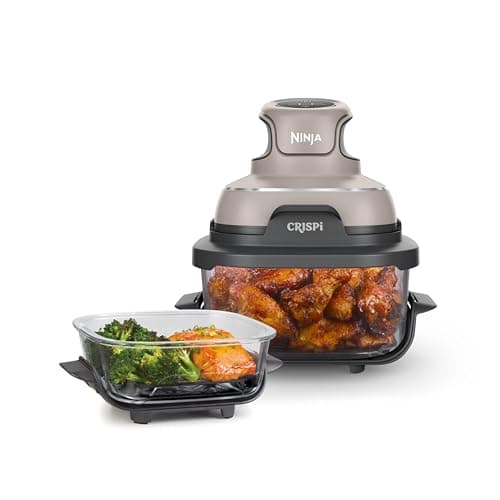
The air fryers with a genuine published ceramic coating, what each maker does and does not claim, and how to make ceramic last.
Roundup
The Best Non-Toxic Air Fryers of 2026
Glass and PFAS-free ceramic air fryers, ranked — with an honest take on coatings.
Roundup
The Best Air Fryers Under $100 of 2026
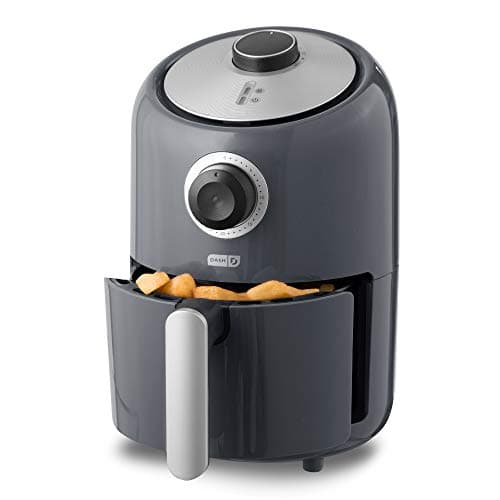
The best-value air fryers, with an honest take on what budget models leave out.
Guide
What Size Air Fryer Do I Need?
Quarts-to-people, why square baskets beat round ones, and the real counter space each size costs you.
Roundup
The Best Air Fryers for 2 People
What 4, 5 and 6 quarts really feed, and the air fryers that cook a two-person dinner in a single batch.
Guide
How to Clean an Air Fryer
The five-minute routine, the monthly deep clean, and how to fix a smoking or smelly air fryer for good.
https://wattandwhisk.com/air-fryers/ninja-af101-review