How to Clean an Air Fryer
Most air fryer problems — smoking, smells, food sticking, things taking longer — are cleaning problems wearing a disguise.
Disclosure:Watt & Whisk is reader-supported. When you buy through links on this page we may earn an Amazon Associates commission, at no extra cost to you. Prices are pulled live from Amazon and shown with the date checked. How this works.
After every use: let it cool, wash the basket and crisper plate in warm soapy water (or the dishwasher if the manual allows), and wipe the inside of the drawer cavity. Once a month: unplug it, turn it upside down or on its back, and clean the heating element and fan guard at the top with a soft brush and a barely damp cloth — that is where the grease that causes smoking and smells actually lives. Never use metal scourers, oven cleaner, or an aerosol degreaser on a coated basket.
The short answer
Quick picks
| # | Product | Best for | Score | Price |
|---|---|---|---|---|
| 01 | 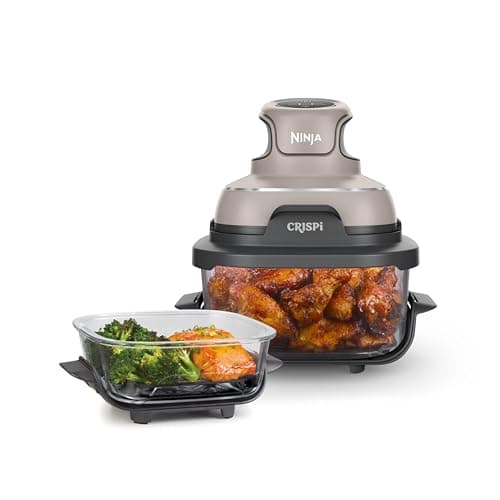 Ninja Crispi The Crispi is the cleanest materials story in air frying: you cook directly in borosilicate glass containers that Ninja lists as PFAS- and PTFE-free — no nonstick coating touching your food at all. A pod-style heater clips on top, and it stores nested. 4 QT | Best non-toxic / glass | 4.3★★★★★ | $152.99Amazon |
| 02 | 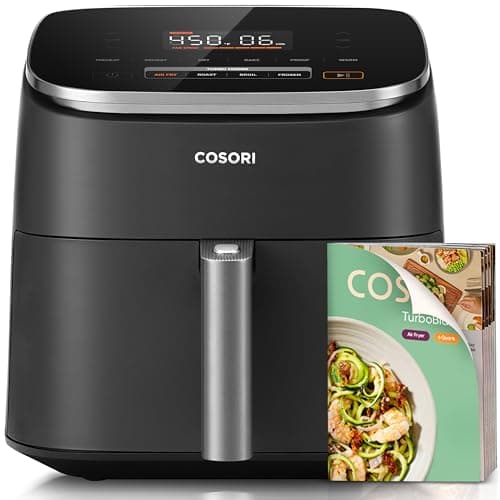 Cosori TurboBlaze Cosori's TurboBlaze pairs a 6-quart square basket with a genuinely PFAS-free ceramic coating and a faster 3,600-rpm fan. It's the pick if you want a modern, roomier air fryer without stepping up to a dual-basket footprint — and the coating claim is on the spec sheet, not marketing. 6QT | Best for most kitchens | 4.5★★★★★ | $99.99Amazon |
#ad · Live prices from the Amazon Product API, as of October 16, 2026. Where we have no verified live price, we show none — a gap beats a number that has rotted.
The picks, in detail
Ninja Crispi
spec score /5
$179.9915% off
Price as of October 16, 2026. Prices change — Amazon's is the one that counts.
#ad · we may earn a commission from this link to Ninja Crispi
The Crispi is the cleanest materials story in air frying: you cook directly in borosilicate glass containers that Ninja lists as PFAS- and PTFE-free — no nonstick coating touching your food at all. A pod-style heater clips on top, and it stores nested.
- Capacity
- 4 QT
- Footprint (W×D×H)
- 11.96 × 13.38 × 13.58 in
- Warranty
- 1 year limited warranty
- Cooks in PFAS/PTFE-free borosilicate glass
- Nests to store; pod is tiny
- Glass containers double as meal prep
- Newer design, shorter track record
- Glass adds weight
- Not the cheapest per quart
Cosori TurboBlaze
spec score /5
$119.9917% off
Price as of October 16, 2026. Prices change — Amazon's is the one that counts.
#ad · we may earn a commission from this link to Cosori TurboBlaze
Cosori's TurboBlaze pairs a 6-quart square basket with a genuinely PFAS-free ceramic coating and a faster 3,600-rpm fan. It's the pick if you want a modern, roomier air fryer without stepping up to a dual-basket footprint — and the coating claim is on the spec sheet, not marketing.
- Capacity
- 6QT
- Footprint (W×D×H)
- 11.8 × 14.4 × 11.9 in
- Weight
- 13.2 lb
- Warranty
- 2 Year Manufacturer
- PFAS-free ceramic basket (per spec sheet)
- 6-qt square basket fits more than round baskets
- Quieter, faster fan; 2-year warranty
- Pricier than a basic basket fryer
- Taller than a compact model
- Digital panel is a small learning curve
Air fryers are the appliance people clean least thoroughly, because the basket comes out and looks fine and the rest is out of sight. But nearly every complaint people bring to us — "it smokes now," "everything smells like fish," "food sticks even though the coating looks OK," "it takes longer than it used to" — traces back to grease somewhere you have not looked.
This guide covers the routine, the deep clean, and the specific fixes for the specific problems. It is written for basket-style machines, which is nearly all of them; the notes on glass-based machines like the Ninja Crispi are called out where they differ.
The after-every-use routine (five minutes)
- Unplug it and let it cool. Not optional. Plunging a hot basket into water can warp thin aluminum and will damage a nonstick coating faster than anything else you can do to it. Ten to fifteen minutes is enough.
- Separate the basket and the crisper plate. The perforated plate that sits in the bottom lifts out on almost every machine. Food debris and fat collect underneath it, in the gap between plate and basket, and that gap is where the smell starts.
- Wash both in warm soapy waterwith a soft sponge or a nylon brush. Most baskets and plates are dishwasher-safe — Ninja lists dishwasher-safe crisper plates on the DualZone, and Cosori's baskets are dishwasher-safe — but check your manual, and be aware that repeated dishwasher cycles are harder on any coating than hand washing.
- Wipe out the drawer cavity. The metal housing the basket slides into collects splatter. A damp cloth, then a dry one.
- Dry everything completely before reassembling. Moisture trapped against a warm element is how you get the musty smell people blame on the food.
The monthly deep clean (the bit everyone skips)
The heating element and fan sit in the roof of the cooking chamber, directly above the food. Every time you cook something fatty, aerosolized grease lands on them. It bakes on over successive cooks, and then it burns — which is exactly what smoking and persistent smells are.
To reach it: unplug the machine, let it cool fully, remove the basket, and then turn the whole unit upside down or lay it on its back so you can see up into the chamber. You will find a metal coil or plate and, behind or above it, a fan guard.
Clean it with a soft brush — an old toothbrush or a soft pastry brush is ideal — and a cloth that is barely damp, wrung out until it will not drip. You are wiping electrical components; water must not run down into the housing. For baked-on deposits, a paste of bicarbonate of soda and a little water, applied with the brush and left for a few minutes, lifts most of it without solvents. Wipe the residue away with a damp cloth and then a dry one, and leave the machine open to air for an hour before using it.
Do this once a month with normal use, or after any cook that produced a lot of smoke.
What never to use
- Metal scourers, steel wool or scouring powder. These will scratch through a nonstick or ceramic coating, and once the coating is scored, food sticks permanently and the damage cannot be undone.
- Oven cleaner or caustic degreaser. Designed for bare enamel and steel, not for coated aluminum, and aggressive enough to damage both coating and seals.
- Aerosol cooking spray, as a habit. This one surprises people. Many aerosol sprays contain lecithin and propellants that polymerize onto coated surfaces at air-fryer temperatures, building an invisible sticky film that makes food stick and cannot be washed off. Brush or drizzle oil on the food instead of spraying the basket.
- Submerging the main unit. The housing contains the element, the fan and the controls. Only the removable parts go in water.
Fixing an air fryer that smokes
Work through these in order — the first is the cause about eight times out of ten.
1. Baked-on grease on the element. Do the monthly deep clean above. If your machine has started smoking and it did not used to, this is almost certainly it.
2. Fat pooling under the crisper plate. Cooking bacon, sausages, burgers or chicken thighs renders a lot of fat, which collects in the drawer, gets hot and smokes. The fix is to add a tablespoon or two of water to the bottom of the drawer under the crisper plate before cooking fatty food. The fat drips into the water instead of onto hot metal. This is a standard technique and it works completely.
3. Too much oil, or the wrong oil. Air fryers run to 400°F and above. Extra-virgin olive oil smokes at around 375°F, so it will smoke in an air fryer regardless of how clean the machine is. Use a higher-smoke-point oil — avocado, refined sunflower, light olive — for high-temperature cooks.
4. Light food being blown into the element. Loose bread, cheese or a sheet of parchment with nothing weighing it down gets lifted by the fan onto the heating element, where it burns. Never preheat with empty parchment in the basket, and always weight paper down with the food.
Fixing an air fryer that smells
Smells are almost always retained fat that has oxidized, and they concentrate in three places: under the crisper plate, on the element, and in the rubber or silicone feet and seals inside the drawer.
The fix is a full deep clean followed by a lemon deodorizing run: rub the inside of the cool, clean basket with a cut lemon, or put a few lemon slices and a tablespoon of water in the basket and run the machine at around 350°F for three or four minutes. Let it cool, wipe it dry, and leave the drawer open overnight. Vinegar works too but tends to trade one smell for another.
If the smell persists after all of that, check whether your machine has a replaceable odor filter — some models, including the Instant Vortex Plus with its odor-erase system, use a consumable filter that eventually saturates and needs replacing. That is a part, not a cleaning problem.
Fixing food that sticks
Three causes, in order of likelihood. Polymerized spray residue — the invisible film described above; scrub gently with a bicarbonate paste and stop using aerosol spray. A cold basket — protein sticks to cool metal and releases from hot metal, so preheat for three minutes before adding food. Genuine coating damage — if the surface is visibly scratched or flaking, the basket needs replacing; many manufacturers sell them separately, and if yours does not, that is a reason to consider a machine with no coating at all.
That last case is why cooking-surface materials are worth thinking about at purchase rather than after. The Ninja Crispi sidesteps the whole issue by cooking directly in borosilicate glass that Ninja lists as PFAS- and PTFE-free, and glass cleans with anything and cannot be scratched by a sponge. The Cosori TurboBlaze uses a PFAS-free ceramic coating that is more scratch- tolerant than a standard nonstick. Our non-toxic air fryer guide covers that field, and are air fryers toxic covers the underlying chemistry honestly.
If it seems slower than it used to be
A clogged fan guard restricts airflow, and airflow is the entire cooking mechanism in an air fryer — it is a small convection oven, and a fan moving less air cooks more slowly and less evenly. If cook times have crept up and browning has become patchy, clean the fan guard during your next deep clean and check that the vents on the back of the unit are not blocked by a wall or a splashback. Manufacturers specify clearance behind and above these machines for exactly this reason.
The mechanism is explained in more detail in how air fryers work, which is worth reading if you want to understand why airflow matters more than wattage.
Is the basket dishwasher-safe?
Usually yes, and it is still worth hand washing. Most current machines list dishwasher-safe baskets and crisper plates, but dishwasher detergent is alkaline and abrasive, and repeated cycles dull and degrade coatings faster than warm soapy water and a soft sponge. If you use the dishwasher, use it for the heavily soiled cooks and hand wash the rest — and never put the main housing anywhere near it.
The whole routine, summarized
Every cook: cool, separate basket and plate, wash, wipe the cavity, dry fully. Every month: unplug, invert, brush the element and fan guard with a barely damp cloth and bicarbonate paste if needed. When cooking fatty food: a tablespoon of water under the crisper plate. Never: metal scourers, oven cleaner, aerosol spray on the coating, or the housing in water.
Do that and an air fryer stays as fast and as odorless as it was on day one — which, given how cheap they are to run, makes it one of the lowest-maintenance appliances in the kitchen. If yours is past saving, our best air fryers guide and the dual-basket roundup are the places to start again.
Cleaning is not only about the smell. Grease baked onto the heating element is one of the three things that ends an air fryer, and it is the only one you fully control — how long do air fryers last sets out the other two and the published warranty terms across every machine we track. Some of the worst messes are avoidable in the first place: what not to cook in an air fryer covers the foods that cause them.
If the damage is already done and the coating has started to lift, air fryer coating coming off: what to do is the next page: what the FDA publishes about swallowing a flake, which of the five usual causes did it, and whether to replace the basket or the machine.
The obvious shortcut to all of this is a liner, and it works for the two messes worth avoiding — sugary glazes and crumb-heavy reheats — at a real cost in browning, because covering the perforated crisper plate is covering the mechanism. The three rules for using one safely, including the one with an actual fire risk attached, are in are air fryer liners safe.
Frequently asked questions
How do you clean an air fryer properly?
After every use, let it cool, separate the basket and crisper plate, wash both in warm soapy water, wipe the drawer cavity and dry everything fully. Once a month, unplug it, turn it on its back, and brush the heating element and fan guard with a barely damp cloth — that is where the grease that causes smoking lives.
Why does my air fryer smoke?
Usually baked-on grease on the heating element, which needs the monthly deep clean. The other causes are fat pooling under the crisper plate when cooking bacon or sausages — add a tablespoon of water to the drawer to fix it — using an oil with a low smoke point like extra-virgin olive oil, or loose parchment being blown onto the element.
How do you get the smell out of an air fryer?
Deep clean it, then run a lemon cycle: put a few lemon slices and a tablespoon of water in the clean basket and run it at about 350°F for three or four minutes. Cool, wipe dry, and leave the drawer open overnight. If the smell persists, check whether your model uses a replaceable odor filter.
Can you put an air fryer basket in the dishwasher?
Most are dishwasher-safe, but hand washing is gentler. Dishwasher detergent is alkaline and abrasive, and repeated cycles dull nonstick and ceramic coatings faster than warm soapy water and a soft sponge. Never put the main housing in water at all.
Why does food stick to my air fryer basket?
Most often an invisible film left by aerosol cooking spray, which polymerizes onto the coating at air-fryer temperatures and cannot simply be washed off — scrub gently with a bicarbonate paste and switch to brushing oil onto the food. Otherwise it is a cold basket (preheat three minutes) or genuine coating damage.
Can you use oven cleaner on an air fryer?
No. Oven cleaners are caustic and designed for bare enamel and steel, not coated aluminum, and they will damage both the coating and the seals. Warm soapy water, a soft brush, and a bicarbonate-of-soda paste for baked-on deposits are all you need.
Sources
Keep reading
Air Fryers
The Best Air Fryers of 2026
Our ranked air-fryer picks, compared on capacity, footprint, materials and running cost — with live Amazon prices.
Guide
Are Air Fryers Toxic? The Honest, Sourced Answer
PTFE, PFOA, PFAS and acrylamide explained plainly — plus how ceramic and glass baskets avoid coatings.
Roundup
The Best Non-Toxic Air Fryers of 2026
Glass and PFAS-free ceramic air fryers, ranked — with an honest take on coatings.
Guide
How Air Fryers Work — and What a Batch Really Costs
Convection heat, a fast fan, Maillard browning — and the real watts-to-cents cost of a batch.
Guide
Air Fryer Not Crisping? Here Is Why
The eight real reasons air fryer food comes out soggy, in order of likelihood, with the fix for each.
Guide
Are Air Fryer Liners Safe?
The three rules for parchment, silicone and foil in an air fryer, checked against each machine's published maximum temperature.
https://wattandwhisk.com/air-fryers/how-to-clean-an-air-fryer