What You Should Not Cook in an Air Fryer
Some foods don't just come out badly — they can't work at all. Here is the physics behind each failure, so you can predict the next one yourself.
Disclosure:Watt & Whisk is reader-supported. When you buy through links on this page we may earn an Amazon Associates commission, at no extra cost to you. Prices are pulled live from Amazon and shown with the date checked. How this works.
Do not put wet batter, loose leafy greens, plain cheese, raw rice or dried pasta, or popcorn kernels in an air fryer. The reasons come down to one mechanism: an air fryer is a small convection oven with a very fast fan and no liquid. Anything that needs to be suspended in oil, anything light enough to fly, anything that melts and drips, and anything that needs to boil in water is outside what the machine physically does.
The short answer
Quick picks
| # | Product | Best for | Score | Price |
|---|---|---|---|---|
| 01 | 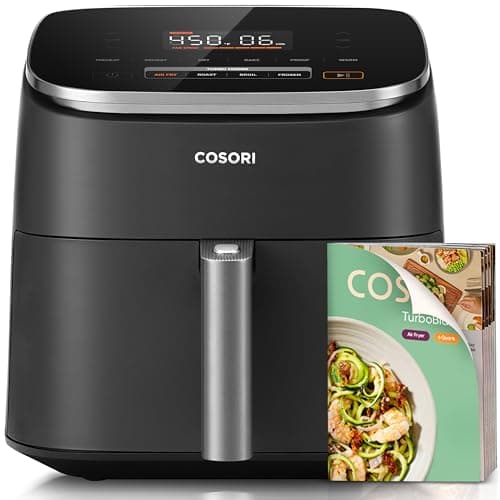 Cosori TurboBlaze Cosori's TurboBlaze pairs a 6-quart square basket with a genuinely PFAS-free ceramic coating and a faster 3,600-rpm fan. It's the pick if you want a modern, roomier air fryer without stepping up to a dual-basket footprint — and the coating claim is on the spec sheet, not marketing. 6QT | Best for most kitchens | 4.5★★★★★ | $99.99Amazon |
| 02 | 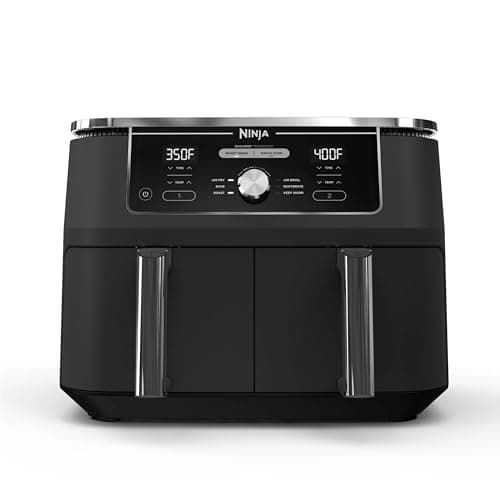 Ninja Foodi DualZone XL DZ401 The DZ401 is the 10-quart version of the dual-basket idea: two independent 5-quart drawers, Smart Finish to make two foods land together, Match Cook to run both the same, and a nonstick surface Ninja lists as 100% PFAS-free. It's the two-basket fryer to buy if a family meal is the actual job. 10 Quart | Best dual-basket overall | 4.5★★★★★ | $199.99Amazon |
#ad · Live prices from the Amazon Product API, as of October 16, 2026. Where we have no verified live price, we show none — a gap beats a number that has rotted.
The picks, in detail
Cosori TurboBlaze
spec score /5
$119.9917% off
Price as of October 16, 2026. Prices change — Amazon's is the one that counts.
#ad · we may earn a commission from this link to Cosori TurboBlaze
Cosori's TurboBlaze pairs a 6-quart square basket with a genuinely PFAS-free ceramic coating and a faster 3,600-rpm fan. It's the pick if you want a modern, roomier air fryer without stepping up to a dual-basket footprint — and the coating claim is on the spec sheet, not marketing.
- Capacity
- 6QT
- Footprint (W×D×H)
- 11.8 × 14.4 × 11.9 in
- Weight
- 13.2 lb
- Warranty
- 2 Year Manufacturer
- PFAS-free ceramic basket (per spec sheet)
- 6-qt square basket fits more than round baskets
- Quieter, faster fan; 2-year warranty
- Pricier than a basic basket fryer
- Taller than a compact model
- Digital panel is a small learning curve
Ninja Foodi DualZone XL DZ401
spec score /5
$229.9913% off
Price as of October 16, 2026. Prices change — Amazon's is the one that counts.
#ad · we may earn a commission from this link to Ninja Foodi DualZone XL DZ401
The DZ401 is the 10-quart version of the dual-basket idea: two independent 5-quart drawers, Smart Finish to make two foods land together, Match Cook to run both the same, and a nonstick surface Ninja lists as 100% PFAS-free. It's the two-basket fryer to buy if a family meal is the actual job.
- Capacity
- 10 Quart
- Footprint (W×D×H)
- 13.9 × 17.1 × 12.8 in
- Weight
- 19.8 lb
- Warranty
- 1 Year Limited Warranty
- 10 qt across two independent baskets — a whole meal at once
- Cooking surface listed as 100% PFAS-free
- Smart Finish syncs two different foods to the same finish time
- Deep 17.1-in footprint eats counter depth
- 19.8 lb — not a lift-and-store machine
- Overkill for one or two people
Most "don't air fry this" lists are just lists. They are more useful if you understand the four failure modes underneath them, because then you can look at any food and predict the outcome without needing someone to have written it down. An air fryer is a small cavity, a heating element, and a fan moving air fast. That is it. Every failure below traces back to one of those three facts.
1. Wet batter — the one it genuinely cannot do
This is the big one, and it is the honest limit of the whole appliance. A traditional beer-battered fish or a buttermilk-dipped fried chicken works because the item is lowered into 350°F oil that surrounds it completely and sets the batter in seconds. Hot air cannot do that. Air has a fraction of oil's heat capacity, so the batter does not set on contact — it runs off the food, drips through the crisper plate, and bakes onto the bottom of the drawer in a mess you will be scrubbing later. What is left on the food dries into pale, patchy scabs.
There is no technique that fixes this. It is not a skill problem. If you want wet-battered food, you need oil — we lay out exactly where the two methods part company in air fryer vs. deep fryer.
What to do instead: use a dry dredge. Flour, egg wash, then breadcrumbs or panko, pressed on firmly and misted with oil, browns properly in an air fryer because it is already a solid coating rather than a liquid one.
2. Anything light enough to fly
The fan in an air fryer is genuinely powerful — Cosori quotes 3,600 rpm for the TurboBlaze — and it is aimed straight down into a small cavity. Loose spinach, kale, herbs, rice paper, shredded cheese, and unweighted parchment paper all get picked up and thrown around. At best this means burnt leaves welded to the heating element. At worst, paper against a glowing element is a genuine fire risk, which is why every manufacturer tells you not to run the machine with parchment in it and no food on top.
What to do instead: weigh light things down with the food itself, or skip the liner. If you want kale chips, toss them in oil first — the oil adds enough weight and surface tack that they stay put — and check them early, because they go from crisp to carbon in under a minute.
3. Plain cheese and anything that melts before it browns
Cheese on top of something is fine. Cheese on its own is a puddle. In a conventional oven a slow rise in temperature lets the surface of cheese dry and brown as it melts; in an air fryer the surface hits melting point long before it dries, so it liquefies and pours straight through the crisper plate onto the heating surface below. Mozzarella sticks are the classic casualty — frozen ones with a solid crumb coating can work, but a homemade one with a soft coating will empty itself into the drawer.
What to do instead: freeze breaded cheese hard before cooking, use a fully set crumb coating, and cook at a higher temperature for less time so the crust sets before the middle goes liquid.
4. Anything that needs to boil
Raw rice, dried pasta, dried beans and lentils all need to absorb water at a rolling boil. An air fryer has no water and its whole design goal is to drive moisture off the surface of food. Putting a pan of water inside one to work around this is worse than useless: you are asking a machine optimized for dry, fast air to do a slow, wet job, badly, while steam wrecks the crisping that is its only advantage.
Popcorn belongs here too, for a different reason: kernels need a burst of very intense localized heat, most kernels never reach popping temperature in circulating air, and the ones that do pop get flung into the element.
What to do instead: a pot. Genuinely. Cook the rice or pasta conventionally, then use the air fryer for the thing it is good at — crisping the finished dish, reheating leftovers, or browning a topping.
The borderline cases people argue about
A few foods are not impossible, just worse than you would expect:
- Whole roasts and large birds. Not a physics problem, a geometry one. The outside is close to the element and the inside is far from it, so a large item browns hard before the center is safe. Stick to items that fit in a single layer with airflow around them.
- Delicate fish fillets. They cook fine but stick badly and fall apart when lifted. A perforated liner or a light coat of oil on the plate solves most of it.
- Raw broccoli and other dense vegetables. They come out browned outside and hard inside. Par-boil or steam for two minutes first, then air fry to finish.
- Big saucy dishes. Sauce does not reduce in an air fryer, it splatters and bakes onto the cavity. Add sauce in the last two minutes, or after.
The failure that is not the food's fault
Before you conclude a food "can't be air fried", rule out the real culprit: overcrowding. Air frying works because fast-moving hot air reaches every exposed surface. Pile the basket two deep and the pieces in the middle are shielded — they steam in their own moisture and come out pale and soft, which looks exactly like the food being unsuitable. It is the single most common reason a batch disappoints, and we go through the rest of the diagnostics in why your air fryer isn't crisping.
If you are hitting that limit constantly, the fix is capacity rather than technique — and this is the one place on this page where the machine genuinely matters. A larger square basket gives you more single-layer floor area for the same counter space than a round one does, which is why the 6-quart Cosori TurboBlaze is our default recommendation for people who keep running out of room. If the actual problem is that you want a main and a side cooked at once — and are crowding one basket to do it — a dual-basket machine like the 10-quart Ninja DZ401 removes the constraint entirely, with two independent zones and a sync function so both finish together. Neither is a fix for wet batter, and we are not going to pretend otherwise.
A note on cleanup
Several of the failures above end with something baked onto the bottom of the drawer or the heating element, and that residue is what causes the next session to smoke. If you have already had a batter or cheese incident, deal with it before the next cook rather than after — how to clean an air fryer covers the element and the drawer, which are the two places people skip.
One more thing that belongs on the do-not list: a loose liner in an empty basket. These machines move air fast enough to lift an unweighted sheet of parchment into the heating element, so the liner goes in with the food and never during a preheat. The rest of the rules, for parchment, silicone and foil alike, are in are air fryer liners safe.
Frequently asked questions
What should you not put in an air fryer?
Wet batter, loose leafy greens and herbs, plain cheese, raw rice or dried pasta, popcorn kernels, and unweighted parchment paper. Each fails for a different reason, but all trace back to the same thing: an air fryer is dry, fast-moving hot air in a small cavity.
Why can't you use wet batter in an air fryer?
Deep frying sets a wet batter in seconds because 350°F oil surrounds the food completely. Hot air has a fraction of that heat capacity, so the batter runs off before it sets, drips through the crisper plate, and bakes onto the drawer. No technique fixes it — use a dry breadcrumb dredge instead.
Can you put aluminum foil or parchment in an air fryer?
Only weighed down by food, and never during preheat. The fan is strong enough to lift a loose liner into the heating element, which is a genuine fire risk. Manufacturers say the same thing, and it is the one safety rule in this category worth being strict about.
Can you cook rice or pasta in an air fryer?
No. Both need to absorb water at a rolling boil, and an air fryer has no water — its entire design goal is driving moisture off the surface of food. Cook them in a pot, then use the air fryer to crisp or reheat the finished dish.
Why does my food come out soggy instead of crisp?
Almost always overcrowding. Food piled above a single layer shields the pieces underneath from the airflow, so they steam in their own moisture. Two smaller batches genuinely beat one crowded one, and a larger square basket beats a round one of the same capacity.
Can you make popcorn in an air fryer?
Not reliably. Kernels need intense localized heat to pop, most never reach that temperature in circulating air, and the few that do pop get thrown into the heating element. A pot or a microwave does it better and more safely.
Sources
Keep reading
Air Fryers
The Best Air Fryers of 2026
Our ranked air-fryer picks, compared on capacity, footprint, materials and running cost — with live Amazon prices.
Guide
Air Fryer Not Crisping? Here Is Why
The eight real reasons air fryer food comes out soggy, in order of likelihood, with the fix for each.
Comparison
Air Fryer vs. Deep Fryer: Which One Belongs on Your Counter?
Air fryer vs deep fryer on batter, oil cost, electricity, footprint, cleanup and safety — including what an air fryer genuinely cannot do.
Guide
How Air Fryers Work — and What a Batch Really Costs
Convection heat, a fast fan, Maillard browning — and the real watts-to-cents cost of a batch.
Guide
How to Clean an Air Fryer
The five-minute routine, the monthly deep clean, and how to fix a smoking or smelly air fryer for good.
Guide
What Size Air Fryer Do I Need?
Quarts-to-people, why square baskets beat round ones, and the real counter space each size costs you.
https://wattandwhisk.com/air-fryers/what-not-to-cook-in-an-air-fryer