Air Fryer vs. Deep Fryer: Which One Belongs on Your Counter?
They share a word and almost nothing else. One circulates hot air, one submerges food in oil, and there is a specific list of foods only the second one can cook.
Disclosure:Watt & Whisk is reader-supported. When you buy through links on this page we may earn an Amazon Associates commission, at no extra cost to you. Prices are pulled live from Amazon and shown with the date checked. How this works.
Buy an air fryer unless you specifically want to cook wet batter. That is the honest dividing line. An air fryer cooks with circulating hot air and half a teaspoon of oil; a deep fryer submerges food in roughly a gallon of it. For frozen fries, breaded chicken, wings, vegetables and reheating, the air fryer wins on cost, cleanup and daily convenience. For tempura, beer-battered fish, doughnuts and anything dipped in a loose liquid coating, a deep fryer is not merely better — it is the only one of the two that works at all.
The short answer
Quick picks
| # | Product | Best for | Score | Price |
|---|---|---|---|---|
| 01 | 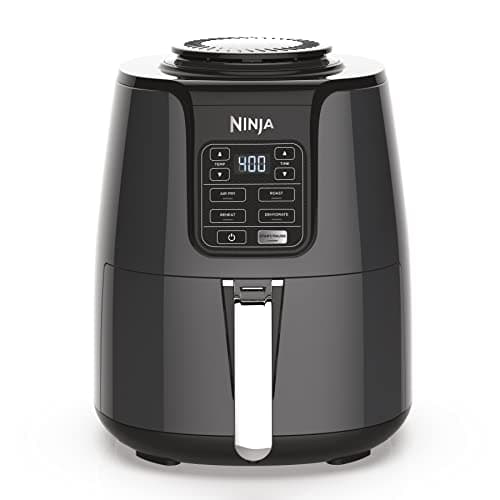 Ninja AF101 The 4-quart Ninja AF101 is the one we point most people to: a genuinely simple dial-and-button air fryer with a ceramic-coated basket, a 105–400°F range, and a footprint that fits a normal counter. It has been the reliable default since 2018 for good reason. 4 QT · 1550W | Best overall on value | 4.6★★★★★ | $104.99Amazon |
| 02 | 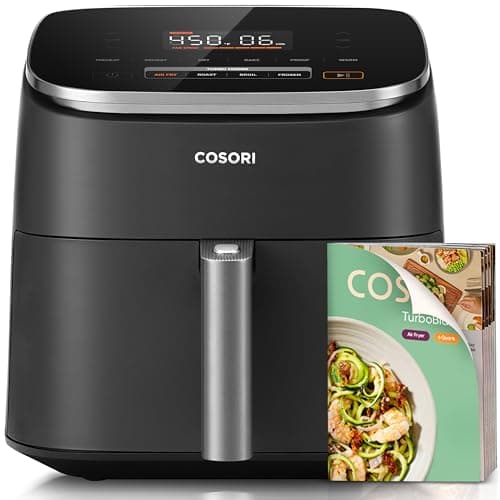 Cosori TurboBlaze Cosori's TurboBlaze pairs a 6-quart square basket with a genuinely PFAS-free ceramic coating and a faster 3,600-rpm fan. It's the pick if you want a modern, roomier air fryer without stepping up to a dual-basket footprint — and the coating claim is on the spec sheet, not marketing. 6QT | Best for most kitchens | 4.5★★★★★ | $99.99Amazon |
| 03 | 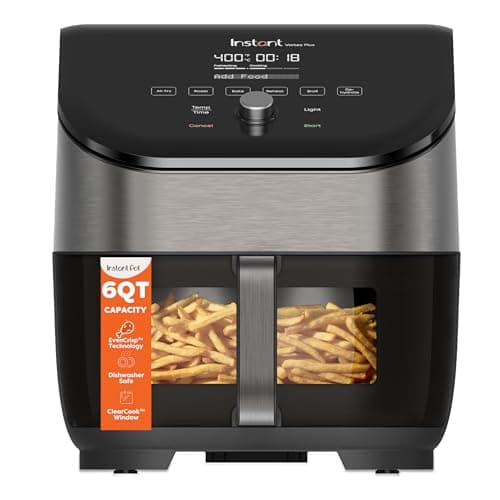 Instant Vortex Plus The 6-quart Vortex Plus draws a stated 1,700 W, runs six functions, and adds a ClearCook window and interior light so you can watch food crisp without pulling the basket. It's the most feature-complete pick under most sale prices. 6 Qt · 1700W | Best with a cook window | 4.4★★★★★ | $119.95Amazon |
#ad · Live prices from the Amazon Product API, as of October 17, 2026. Where we have no verified live price, we show none — a gap beats a number that has rotted.
The picks, in detail
Ninja AF101
spec score /5
$119.9913% off
Price as of October 17, 2026. Prices change — Amazon's is the one that counts.
#ad · we may earn a commission from this link to Ninja AF101
The 4-quart Ninja AF101 is the one we point most people to: a genuinely simple dial-and-button air fryer with a ceramic-coated basket, a 105–400°F range, and a footprint that fits a normal counter. It has been the reliable default since 2018 for good reason.
- Capacity
- 4 QT
- Footprint (W×D×H)
- 12.25 × 15.1 × 15.25 in
- Power
- 1550 W
- Weight
- 10.58 lb
- Cost per use*
- ≈9¢
- Est. per year*
- ≈$18
- Warranty
- 1 Year Manufacturers
- Ceramic-coated aluminum basket — no PTFE nonstick
- Dead-simple controls; nothing to learn
- Small enough for a normal counter (12 × 15 in)
- 4 qt is tight for a family of 4+
- No preset buttons or window
- Dial isn't the most precise
*Cost-to-run computed from the manufacturer's stated 1550W at $0.17/kWh (US average), 20-min sessions, 4×/week. Your rate and use will vary.
Cosori TurboBlaze
spec score /5
$119.9917% off
Price as of October 17, 2026. Prices change — Amazon's is the one that counts.
#ad · we may earn a commission from this link to Cosori TurboBlaze
Cosori's TurboBlaze pairs a 6-quart square basket with a genuinely PFAS-free ceramic coating and a faster 3,600-rpm fan. It's the pick if you want a modern, roomier air fryer without stepping up to a dual-basket footprint — and the coating claim is on the spec sheet, not marketing.
- Capacity
- 6QT
- Footprint (W×D×H)
- 11.8 × 14.4 × 11.9 in
- Weight
- 13.2 lb
- Warranty
- 2 Year Manufacturer
- PFAS-free ceramic basket (per spec sheet)
- 6-qt square basket fits more than round baskets
- Quieter, faster fan; 2-year warranty
- Pricier than a basic basket fryer
- Taller than a compact model
- Digital panel is a small learning curve
Instant Vortex Plus
spec score /5
$159.9925% off
Price as of October 17, 2026. Prices change — Amazon's is the one that counts.
#ad · we may earn a commission from this link to Instant Vortex Plus
The 6-quart Vortex Plus draws a stated 1,700 W, runs six functions, and adds a ClearCook window and interior light so you can watch food crisp without pulling the basket. It's the most feature-complete pick under most sale prices.
- Capacity
- 6 Qt
- Footprint (W×D×H)
- 11.8 × 12.8 × 14.9 in
- Power
- 1700 W
- Cost per use*
- ≈10¢
- Est. per year*
- ≈$20
- ClearCook window + interior light
- 6 functions incl. broil, bake, dehydrate
- Frequently the best-value 6-qt on sale
- Basket coating is standard nonstick
- 1,700 W is thirstier than most (see cost math)
- Odor filter is a consumable
*Cost-to-run computed from the manufacturer's stated 1700W at $0.17/kWh (US average), 20-min sessions, 4×/week. Your rate and use will vary.
"Air fryer" is a marketing name, not a description. There is no frying happening inside one: no oil bath, no immersion, no conduction through hot fat. What there is, is a fan and a heating element moving air fast enough to brown a surface — which is convection cooking, and which we take apart in how air fryers work. A deep fryer does the thing the name describes.
That distinction is not pedantry. It decides which foods each machine can physically cook, and it is the reason people who buy an air fryer expecting deep-fried results are sometimes disappointed by it. Below, both machines on published manufacturer numbers, and a clear statement of where each one stops.
At a glance
Air-fryer figures are from our catalog; the deep-fryer column uses two mainstream home machines with published specs — the Cuisinart CDF-200 and the Hamilton Beach 35032 — so the comparison is against real products rather than a category average.
| Spec | Air fryer (Ninja AF101) | Deep fryer (Cuisinart CDF-200) |
|---|---|---|
| How it cooks | Circulating hot air | Immersion in heated oil |
| Oil per use | Around half a teaspoon, on the food | 1 gallon per fill (stated reservoir) |
| Stated power | 1,550 W | 1,800 W |
| Temperature range | 105–400°F | 250–375°F (Hamilton Beach 35032) |
| Food capacity | 4 qt basket; fits 2 lb of fries | 2.3 lb stated food capacity |
| Footprint (W × D) | 12.25 × 15.1 in (≈185 sq in) | 16.5 × 11.0 in (≈182 sq in) |
| Height | 15.25 in | 12.25 in |
| Weight | 10.58 lb | 11.5 lb |
| Warranty (as listed) | 1 year | 3 years |
| Can cook wet batter | No | Yes |
The mechanism is genuinely different
Oil is a far better carrier of heat than air. When food goes into a 350°F oil bath, every square millimeter of its surface is in contact with something hot and dense, and the surface water boils off almost instantly, all over, at once. That simultaneous dehydration is what produces the specific texture people mean by "deep fried" — a thin, uniform, brittle crust with a steamed interior directly behind it.
An air fryer moves hot air across the food instead. Air carries much less heat per unit volume, so the browning happens where the airflow actually reaches — which is why every air-fryer instruction ever written tells you to cook in a single layer and shake the basket. Get that right and the result is very good. It is not the same result.
Anyone telling you an air fryer produces deep-fried food is overselling. What it produces is excellent roasted-and-crisped food, from a machine that does not require you to keep a gallon of oil in the house.
What a deep fryer does that an air fryer cannot
This is the section worth reading before you buy either. The limitation is not about quality, it is about physics: an air fryer cannot cook a wet batter.
A loose liquid coating — tempura, beer batter, a doughnut, a corn-dog, funnel cake, a buttermilk-dipped fried chicken — needs to be surrounded by hot oil to set within a second or two of being submerged. In an air fryer there is nothing to set it. The batter runs off the food, drips through the crisper plate into the drawer, and bakes into a mess on the bottom while the food above it stays pale.
The specific foods that need the oil bath:
- Tempura and beer-battered fish. Both are defined by a wet batter. There is no air-fryer version of them.
- Doughnuts and other fried doughs. A raised doughnut needs oil on all sides simultaneously to puff and set. An air-fried one is a baked ring — perfectly nice, not a doughnut.
- Buttermilk fried chicken. The dredge-and-rest method builds a craggy wet-then-dry coating designed for immersion. A dry-breaded air-fryer version works well; it is a different dish.
- Anything you want cooked in genuine volume, fast. A deep fryer recovers temperature and takes the next batch. An air fryer needs the basket emptied and the single-layer rule respected each time.
Dry-breaded food is the opposite case and belongs to the air fryer — press the crumb on firmly and oil the coating rather than the basket, which we cover in why your air fryer isn't crisping.
What an air fryer does that a deep fryer cannot
The list is longer, and it is why one of these sells in the millions and the other does not. An air fryer roasts vegetables, cooks chicken thighs and salmon, reheats pizza and leftover fries better than a microwave does, bakes, and on most models dehydrates — the Ninja AF101 runs down to 105°F specifically for that. A deep fryer does one thing.
The temperature ceilings say the same thing from another direction. Hamilton Beach publishes a 250–375°F range on its 12-cup fryer; the AF101 runs 105–400°F. The deep fryer has a narrow band because oil above roughly that point starts to break down. The air fryer spans everything from drying herbs to hard roasting.
And then there is the thing nobody mentions in a spec table: you can start an air fryer at 6pm on a weeknight without deciding to Have An Oil Evening. There is no fill, no heat-up of a gallon of fat, no filtering afterwards. The machine that gets used is the one that is easy to start.
The oil is the whole cost story
The Cuisinart's stated reservoir is one gallon. Hamilton Beach's 12-cup model holds three liters. That volume has to be bought, stored somewhere, kept from going rancid, filtered between uses if you want more than one session out of it, and eventually taken out of your kitchen — not down the sink, which is how drains block.
We are not going to print an oil price, for the same reason we do not print appliance prices in prose: it moves, and a number written today is wrong by the time you read it. Do the sum yourself with the number in front of you. Look at what a gallon of neutral oil costs where you shop, decide honestly how many sessions you would get before you changed it, and put that figure against a purchase price. For most households the oil, over a couple of years, is the larger number.
On the air-fryer side of that ledger there is nothing. Half a teaspoon of oil brushed onto the food — and it should be brushed, not sprayed, because aerosol cans wreck basket coatings, as covered in how to clean an air fryer.
Electricity is a wash
This one surprises people who assume the deep fryer is the expensive machine to run. It is not, particularly.
At the U.S. average residential rate of about 17 cents per kWh, a 1,550-watt air fryer running 20 minutes costs about 9 cents. The 1,800-watt Cuisinart over the same 20 minutes is about 10 cents. The deep fryer's real disadvantage is that it has a gallon of oil to bring up to temperature first — allow 35 minutes end to end and it is about 18 cents, or roughly 1.05 kWh.
Twice nothing is still nothing. Neither machine is a meaningful line on your electricity bill, and anyone choosing between them on running watts is optimizing the wrong variable. The full method behind these figures is in what an air fryer costs to run.
The deep fryer is not the smaller machine
A reasonable assumption, and wrong. The Cuisinart CDF-200 measures 16.5 by 11.0 inches — about 182 square inches of counter. The Ninja AF101 is 12.25 by 15.1, about 185. They are, to within a rounding error, the same size on your worktop.
The deep fryer is shorter, at 12.25 inches against the Ninja's 15.25, so it clears low cabinets more easily. But it is also deeper front-to-back in the sense that matters: you cannot slide a fryer full of oil out of the way, and you should not carry one warm. An air fryer weighing 10.58 lb goes in a cupboard between uses. Where an appliance lives when you are not using it is a real buying factor, and it is the organizing idea of our small-kitchen appliance guide.
If counter space is genuinely tight, note that neither of these is small. Our best small air fryers page covers the machines that measurably are.
Cleanup, smell, and the parts nobody warns you about
An air fryer basket and crisper plate go in the dishwasher on most models, and the machine itself gets a wipe. Ten minutes a month keeps the element and fan guard clear.
A deep fryer has a cool-down wait before you can touch it, a gallon of used oil to filter or decant, a reservoir to degrease, and a basket that has been sitting in fat. The Cuisinart's removable stainless reservoir and dishwasher-safe parts make this as civilized as it gets, and it is still a longer job than wiping a basket.
Smell is the underrated one. Deep frying puts aerosolized oil into the air of the room, and it settles on cabinet doors and soft furnishings. Air fryers do this far less, though they are not odorless — Instant sells a replaceable odor filter on some models precisely because fish and bacon still announce themselves.
Safety, stated plainly
A gallon of oil at 350°F is the most dangerous thing in a domestic kitchen. It scalds on contact, it is heavy to move while hot, and if it is ever overheated to its smoke point and beyond it can ignite — a fire that water makes catastrophically worse. Modern home fryers are lidded and thermostatically controlled, which is exactly why a purpose-built fryer is far safer than a pan of oil on a hob, but the hazard does not disappear.
If there are small children in the house, or the machine would live somewhere it could be knocked, that is a legitimate reason to choose the air fryer and stop reading here. An air fryer's worst case is a burn from a hot basket.
Who should buy which
Buy an air fryer if you are cooking on weeknights, want frozen and dry-breaded food to come out well, care about oil handling and smell, and want a machine you will use several times a week. That is most people, and the best air fryers page is where to start. If two things need to be done at once, dual-basket models are the answer.
Buy a deep fryer if there is a specific battered dish you want to make properly and repeatedly — you cook fish and chips, you make doughnuts, you fry for gatherings. That is a real reason and no air fryer will satisfy it.
Buy both only if you have the counter for two 180-square-inch machines, which most kitchens do not. If you are choosing one and you are on the fence, choose the one that will be switched on more often. It is the air fryer, almost always.
The verdict
These are not competing versions of the same appliance, and the shared word in their names is the only thing that makes them look like they are. The air fryer is a small convection oven that happens to be very good at crisping — a general-purpose machine. The deep fryer is a specialist that does one thing better than anything else on earth and nothing else at all.
Decide on the batter question and the rest follows. If the food you daydream about is dipped in something wet before it cooks, you want a deep fryer. If it is not, you want an air fryer, and you will use it four times a week. For the wider comparison set, we also cover air fryer vs. convection oven and air fryer vs. toaster oven, which are the two comparisons where the machines genuinely do overlap.
Frequently asked questions
Can an air fryer replace a deep fryer?
For dry-breaded and frozen foods, yes — frozen fries, breaded chicken, wings and vegetables come out very well. For wet batter it cannot: tempura, beer-battered fish and doughnuts need to be submerged in oil to set, and in an air fryer the batter simply drips off the food into the drawer.
Does an air fryer taste the same as deep frying?
No, and it is worth being honest about that. Oil transfers heat to every part of the surface at once, which creates the thin uniform brittle crust people mean by deep fried. Hot air browns where the airflow reaches. The air-fryer result is excellent roasted-and-crisped food rather than a replica of frying.
Which costs more to run, an air fryer or a deep fryer?
On electricity they are close. At about 17 cents per kWh a 1,550-watt air fryer costs roughly 9 cents for 20 minutes; a 1,800-watt deep fryer is about 10 cents for the same run, or around 18 cents once you allow 35 minutes for heating a full oil reservoir. The real cost difference is the oil, not the electricity.
How much oil does a home deep fryer use?
A gallon on the Cuisinart CDF-200's stated reservoir, and three liters on Hamilton Beach's 12-cup model. That oil has to be bought, stored, filtered if you want to reuse it, and disposed of properly rather than poured down the sink. An air fryer uses about half a teaspoon brushed onto the food.
Does a deep fryer take up less counter space than an air fryer?
No. The Cuisinart CDF-200 is 16.5 by 11.0 inches, about 182 square inches, and the Ninja AF101 is 12.25 by 15.1, about 185 — effectively identical. The fryer is shorter at 12.25 inches versus 15.25, but you cannot move it or store it while it holds oil.
Is a deep fryer dangerous at home?
It carries a real hazard that an air fryer does not: a gallon of oil at frying temperature scalds badly, is heavy to move while hot, and can ignite if seriously overheated. A lidded thermostatically controlled fryer is much safer than a pan of oil on the hob, but if small children are around, that is a fair reason to choose the air fryer.
Why do air fryers get hotter than deep fryers?
Because oil breaks down above frying temperature, so fryers are capped — Hamilton Beach publishes 250 to 375°F on its 12-cup model. Air has no such limit, so the Ninja AF101 runs 105 to 400°F, which is why an air fryer can also roast hard and dehydrate while a deep fryer cannot.
Sources
Keep reading
Air Fryers
The Best Air Fryers of 2026
Our ranked air-fryer picks, compared on capacity, footprint, materials and running cost — with live Amazon prices.
Comparison
Air Fryer vs. Convection Oven: Which One Should You Buy?
An air fryer is a small convection oven. We compare speed, capacity, footprint and running cost.
Comparison
Air Fryer vs. Toaster Oven: Which One Fits Your Kitchen?
Basket-style crisping vs. an oven-style box that toasts and bakes — compared on shape, capacity and cost.
Guide
Are Air Fryers Healthy? An Honest Look
Less oil than deep frying, the acrylamide nuance, and why the food you choose matters most.
Guide
How Air Fryers Work — and What a Batch Really Costs
Convection heat, a fast fan, Maillard browning — and the real watts-to-cents cost of a batch.
Roundup
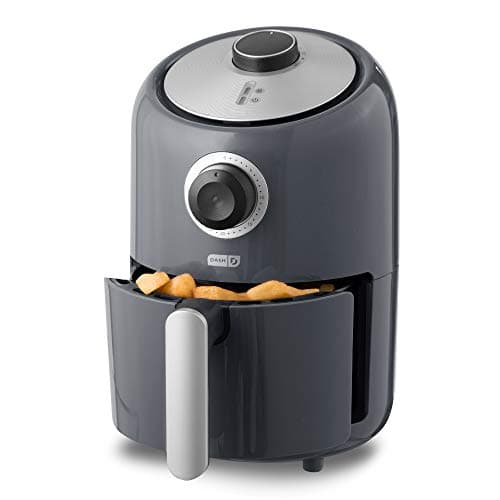
The Best Small Air Fryers of 2026
The smallest-footprint air fryers for apartments, dorms and RVs, ranked by real width.
https://wattandwhisk.com/air-fryers/air-fryer-vs-deep-fryer