Are Blenders Worth It?
A blender does one thing no other appliance does. Whether that's worth counter space depends on which one thing you actually want.
Disclosure:Watt & Whisk is reader-supported. When you buy through links on this page we may earn an Amazon Associates commission, at no extra cost to you. Prices are pulled live from Amazon and shown with the date checked. How this works.
A blender is worth it if you want liquids made smooth — smoothies, soups, sauces, frozen drinks — because nothing else in a kitchen does that. Running cost is negligible: a 1,000-watt machine blending 90 seconds uses about 0.4 cents of electricity. It is genuinely not worth it if what you actually need is chopping and slicing (that is a food processor), if you make one smoothie a month, or if you have no counter or cabinet space — a Vitamix 5200 is 20.5 inches tall and will not fit under most cabinets.
The short answer
Quick picks
| # | Product | Best for | Score | Price |
|---|---|---|---|---|
| 01 | 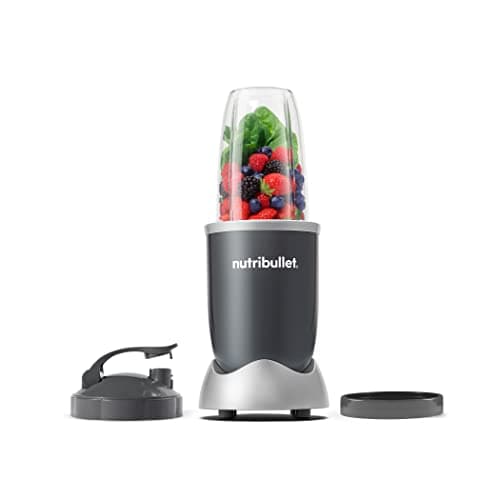 NutriBullet 600 The original 600-watt NutriBullet does one thing: a 24-ounce smoothie in a cup you drink from. It is the cheapest way into blend-and-go without dropping to a 250-watt bullet, and it fits in the gap between the kettle and the toaster. One Cup · 600W | Best cheap personal blender | 4.1★★★★★ | $59.96Amazon |
| 02 | 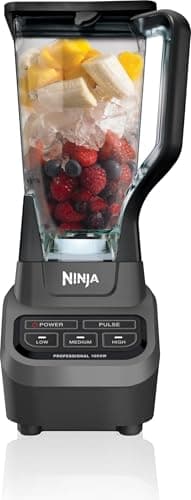 Ninja Professional BL610 The BL610 is the plain, cheap, hard-working Ninja: a 1,000-watt base, a 72-ounce Total Crushing pitcher, and three speeds plus pulse. No Auto-iQ presets, no to-go cups, nothing to break — which is exactly why it's the full-size blender we'd hand someone with a strict budget. 72oz · 1000W | Best full-size blender under $100 | 4.2★★★★★ | $99.00Amazon |
| 03 | 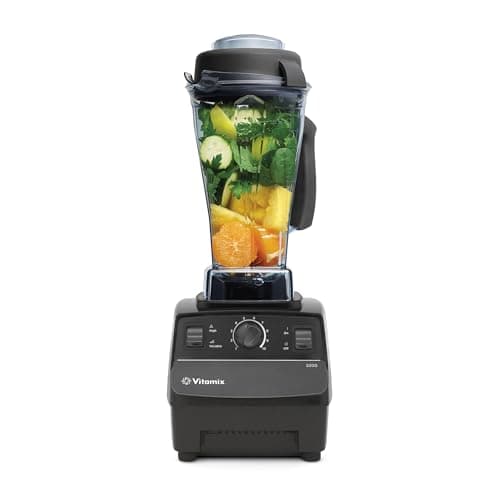 Vitamix 5200 The 5200 is the workhorse Vitamix — a tall 64-oz jar, an aircraft-grade blade, and a variable dial that takes it from a silky smoothie to hot soup by friction. Expensive, but it's the one people keep for 15 years. Self-Cleaning 64 oz | Best overall blender | 4.6★★★★★ | $479.00Amazon |
#ad · Live prices from the Amazon Product API, as of October 17, 2026. Where we have no verified live price, we show none — a gap beats a number that has rotted.
The picks, in detail
NutriBullet 600
spec score /5
Price as of October 17, 2026. Prices change — Amazon's is the one that counts.
#ad · we may earn a commission from this link to NutriBullet 600
The original 600-watt NutriBullet does one thing: a 24-ounce smoothie in a cup you drink from. It is the cheapest way into blend-and-go without dropping to a 250-watt bullet, and it fits in the gap between the kettle and the toaster.
- Capacity
- One Cup
- Footprint (W×D×H)
- 6.85 × 11.61 × 12.28 in
- Power
- 600 W
- Cost per use*
- ≈3¢
- Est. per year*
- ≈$7
- Warranty
- One Year Limited
- Blends straight into the 24-oz cup you drink from
- Under 7 in wide — parks anywhere
- Twist-off blade rinses in seconds
- 600 W stalls on thick frozen loads
- Single-serve only
- One-year limited warranty
*Cost-to-run computed from the manufacturer's stated 600W at $0.17/kWh (US average), 20-min sessions, 4×/week. Your rate and use will vary.
Ninja Professional BL610
spec score /5
$109.9910% off
Price as of October 17, 2026. Prices change — Amazon's is the one that counts.
#ad · we may earn a commission from this link to Ninja Professional BL610
The BL610 is the plain, cheap, hard-working Ninja: a 1,000-watt base, a 72-ounce Total Crushing pitcher, and three speeds plus pulse. No Auto-iQ presets, no to-go cups, nothing to break — which is exactly why it's the full-size blender we'd hand someone with a strict budget.
- Capacity
- 72oz
- Footprint (W×D×H)
- 8.27 × 10.71 × 15.94 in
- Power
- 1000 W
- Weight
- 7.1 lb
- Cost per use*
- ≈6¢
- Est. per year*
- ≈$12
- Warranty
- 1 year limited warranty
- Full 72-oz pitcher at a budget price
- 1,000 W crushes ice without complaint
- Three speeds and pulse — nothing to learn
- No presets or programs
- Stacked blade assembly to wash separately
- Not rated for hot liquids
*Cost-to-run computed from the manufacturer's stated 1000W at $0.17/kWh (US average), 20-min sessions, 4×/week. Your rate and use will vary.
Vitamix 5200
spec score /5
Price as of October 17, 2026. Prices change — Amazon's is the one that counts.
#ad · we may earn a commission from this link to Vitamix 5200
The 5200 is the workhorse Vitamix — a tall 64-oz jar, an aircraft-grade blade, and a variable dial that takes it from a silky smoothie to hot soup by friction. Expensive, but it's the one people keep for 15 years.
- Capacity
- Self-Cleaning 64 oz
- Footprint (W×D×H)
- 7.25 × 8.75 × 20.5 in
- Weight
- 10.9 lb
- Warranty
- 7-Year Limited Warranty
- Blends anything to a genuinely smooth texture
- Runs for years; 7-year warranty class
- Self-cleans with soap and warm water
- Premium price
- Tall — may not fit under cabinets
- Loud at full speed
The blender is one of the most-bought and most-abandoned appliances in the kitchen. It gets used enthusiastically for a month, then lives at the back of a cupboard because it is awkward to clean and only does one thing. That failure pattern is worth understanding before you spend money, because it is entirely predictable from what you intend to make.
What only a blender does
A blender makes things smooth and liquid. It does this by spinning blades fast enough to create a vortex that pulls everything down through the blade path repeatedly, breaking cell walls and emulsifying. That is a genuinely distinct job:
- Smoothies. Frozen fruit and greens into a drinkable texture. No other appliance does it.
- Puréed soups. Smooth in a way a stick blender or a masher will not match.
- Emulsified sauces and dressings. Mayonnaise, vinaigrettes, hollandaise.
- Crushed ice and frozen drinks. Covered in best blenders for crushing ice.
- Hot soup by friction. A high-powered machine run five or six minutes at full speed heats soup with no element at all.
What a blender does not do is chop, slice, shred, or make dough. Those are food processor jobs, and the single most common mis-purchase in this category is buying a blender when the thing you needed was a food processor. We separate them properly in blender vs food processor.
What it costs to run
Effectively nothing, and it is worth saying plainly because people assume a big motor means a big bill. Blenders run in seconds. Using watts ÷ 1,000 × hours × rate at the US average of $0.17/kWh:
- NutriBullet 600 W, 45 seconds: 0.0075 kWh ≈ 0.13 cents
- Ninja BL610 1,000 W, 90 seconds: 0.025 kWh ≈ 0.4 cents
- Ninja BN701 1,400 W, 90 seconds: 0.035 kWh ≈ 0.6 cents
A daily smoothie on the thirstiest machine here costs about 22 cents a year. Electricity is not a factor in this decision — the full method is on how we review, and the wattage question is unpacked in how many watts you need.
The costs that actually matter
Counter and cabinet space. This is the real price. The Vitamix 5200 is 20.5 inches tall assembled — it does not fit under a standard 18-inch cabinet gap, so it either lives on the counter permanently or gets taken apart every time. The Ninja BL610 at 15.94 inches and the BN701 at 17.5 are more manageable. A NutriBullet 600 at 12.28 inches tall and a Magic Bullet at 11.61 fit anywhere.
Cleaning friction.The single best predictor of whether a blender keeps getting used. Anything you have to disassemble and hand-wash after every smoothie will lose the argument with a busy morning. Vitamix's self-cleaning cycle — warm water, a drop of soap, 30–60 seconds, no disassembly — is not a gimmick; it is the feature that keeps the machine in service. Personal blenders sidestep the problem differently: you blend in the cup you drink from, twist off the blade, and rinse. Our how to clean a blender guide covers the rest.
Noise. Rarely mentioned and genuinely relevant if you make breakfast while someone else is asleep. Higher-powered machines are louder, and no manufacturer in this category publishes a decibel figure — so we cannot give you numbers, only the warning.
Who it is worth it for
- Daily or near-daily smoothie drinkers. The strongest case by far. A personal blender at 600–900 watts pays for itself in convenience within weeks.
- People who cook soups from scratch. A full-size jar blender makes a smoothness a stick blender cannot.
- Anyone making frozen drinks regularly. 1,000 watts and up.
- People with dietary needs requiring purée. A genuinely functional rather than optional appliance.
Who should skip it
- You need chopping, slicing or shredding. Buy a food processor. A blender will do a bad job of all three and you will be disappointed.
- You would make a smoothie once a month. The cleaning friction will win and it will end up in a cupboard.
- You already own a good stick blender. For soups in the pot, an immersion blender does most of the job with far less cleaning — and if you do not own one yet, our best immersion blenders guide is the cheaper place to start.
- You have no room. A 20.5-inch Vitamix is a permanent counter resident. Be honest about whether that is acceptable.
How much to spend if the answer is yes
Buy for the hardest thing you will actually ask of it. For soft-fruit smoothies in single servings, the NutriBullet 600 is enough machine and takes almost no space. For a family, ice, and general kitchen use, the Ninja BL610 at 1,000 watts with a 72-oz pitcher is the value pick. For daily heavy use over years, the Vitamix 5200 — 2 HP, self-cleaning, and a seven-year warranty that is the most honest durability signal any manufacturer in this category gives.
The warranty is the number to compare, not the wattage: one year is the Ninja norm, Hamilton Beach gives three, Vitamix gives five on the Propel 510 and seven on the 5200. The full reasoning is in our blender buying guide and Vitamix vs Ninja.
The other half of that calculation is how long the machine lasts. How long do blenders last publishes the warranty term for every blender we track — from no published term at all up to ten years — and sets out which of the five usual failure modes are a replaceable part rather than a reason to buy again.
Frequently asked questions
Are blenders worth the money?
If you want liquids made smooth — smoothies, puréed soups, emulsified sauces, frozen drinks — yes, because nothing else in the kitchen does that job. If what you actually want is chopping, slicing or shredding, you need a food processor and a blender will disappoint you.
Do blenders use a lot of electricity?
No. They run for seconds, not hours. A 1,000-watt blender blending 90 seconds uses 0.025 kWh — about 0.4 cents at the US average of 17 cents per kWh. A daily smoothie costs roughly 22 cents a year even on a 1,400-watt machine.
Is an expensive blender worth it over a cheap one?
It depends on frequency. For occasional soft-fruit smoothies, a 600-watt personal blender is genuinely enough. For daily use, the money buys a motor that does not bog down, a self-cleaning cycle that keeps it in service, and a seven-year warranty instead of one.
Should I buy a blender or a food processor?
A blender makes things smooth and liquid; a food processor chops, slices, shreds and makes dough. They are not substitutes. Buying a blender when you needed a food processor is the most common mis-purchase in this category.
Why do so many blenders end up unused?
Cleaning friction and height. A machine you have to disassemble and hand-wash after every use loses the argument with a busy morning, and a 20.5-inch Vitamix will not fit under a standard cabinet so it has to live on the counter. Both are predictable before you buy.
Is a personal blender enough?
For one person making smoothies from soft or frozen fruit, usually yes — and you blend in the cup you drink from, which removes most of the cleaning. What it will not do is crush ice cubes repeatedly or handle family batches.
Sources
Keep reading
Blenders
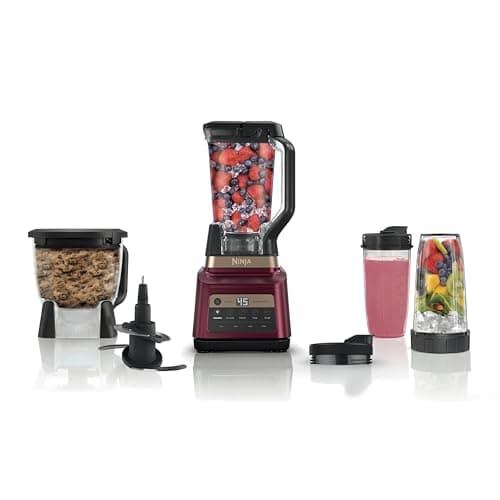
The Best Blenders of 2026
Vitamix, Ninja and personal blenders compared on motor class, jar size, footprint and cleanup.
Comparison
Blender vs. Food Processor: Which Do You Actually Need?
The honest line between a blender and a food processor, which to buy first, and when a combo machine is the right answer.
Roundup
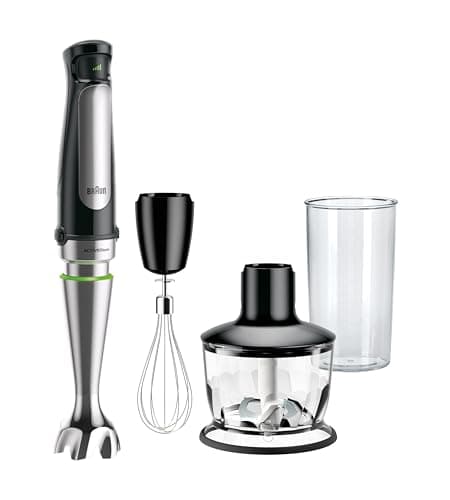
The Best Immersion Blenders of 2026
Stick blenders ranked on immersion depth, anti-suction guard design, speed control and warranty.
Guide
Blender Buying Guide: The Specs That Actually Matter
Why blender wattage misleads, what jar shape and blade design really do, and the six specs worth checking before you buy.
Guide
How Many Watts Do You Need in a Blender?
Watts by job — smoothies, ice, nut butter, hot soup — why the number misleads, and the real cost to run.
Roundup
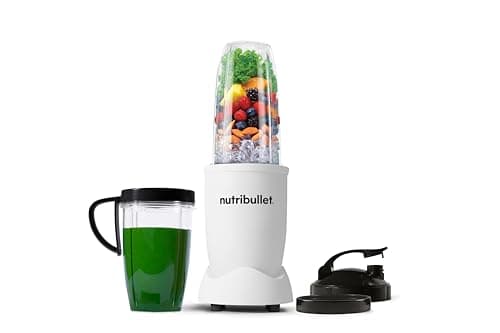
The Best Personal Blenders
Four blend-and-go blenders compared on cup size, footprint, power and cleanup — including a cordless one.
Guide
How Long Do Blenders Last?
The published warranty table for every blender we track, what actually fails first, and which parts you can replace instead of the machine.
https://wattandwhisk.com/blenders/are-blenders-worth-it