Air Fryer vs. Microwave: What Each One Is Really For
One crisps and browns; the other reheats fast. They're not rivals — most kitchens want both.
Disclosure:Watt & Whisk is reader-supported. When you buy through links on this page we may earn an Amazon Associates commission, at no extra cost to you. Prices are pulled live from Amazon and shown with the date checked. How this works.
An air fryer and a microwave do opposite jobs. A microwave excites water inside food to reheat it fast and gently — unbeatable for soup, vegetables, and rice. An air fryer blows hot air to brown and crisp the outside, which a microwave physically cannot do. For pure reheating the microwave is faster and cheaper; for anything you want crispy, the air fryer wins. Neither uses the ionizing radiation linked to cancer, so most kitchens keep both.
The short answer
Quick picks
| # | Product | Best for | Score | Price |
|---|---|---|---|---|
| 01 | 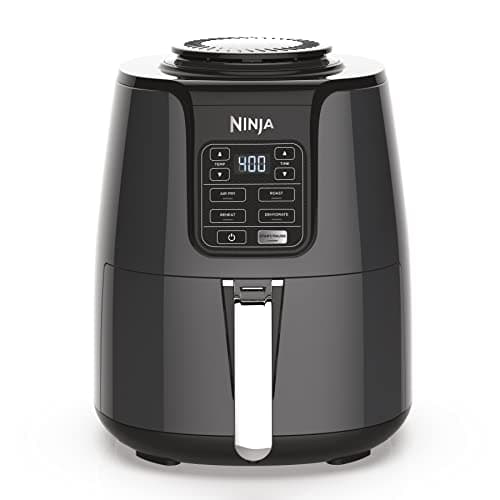 Ninja AF101 The 4-quart Ninja AF101 is the one we point most people to: a genuinely simple dial-and-button air fryer with a ceramic-coated basket, a 105–400°F range, and a footprint that fits a normal counter. It has been the reliable default since 2018 for good reason. 4 QT · 1550W | Best overall on value | 4.6★★★★★ | $104.99Amazon |
| 02 | 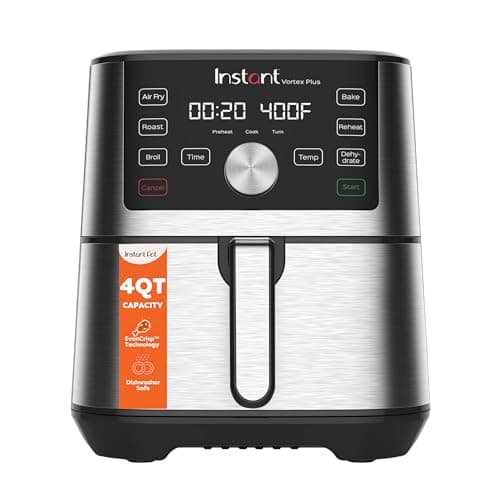 Instant Vortex 4-Qt A 4-quart, digital, single-basket Vortex that stays compact (10.2 in wide) while giving you real preset buttons. It's the middle ground between the bare-bones Dash and a full 6-quart machine. 4 qt | Best small digital | 4.2★★★★★ | $69.99Amazon |
#ad · Live prices from the Amazon Product API, as of October 16, 2026. Where we have no verified live price, we show none — a gap beats a number that has rotted.
The picks, in detail
Ninja AF101
spec score /5
$119.9913% off
Price as of October 16, 2026. Prices change — Amazon's is the one that counts.
#ad · we may earn a commission from this link to Ninja AF101
The 4-quart Ninja AF101 is the one we point most people to: a genuinely simple dial-and-button air fryer with a ceramic-coated basket, a 105–400°F range, and a footprint that fits a normal counter. It has been the reliable default since 2018 for good reason.
- Capacity
- 4 QT
- Footprint (W×D×H)
- 12.25 × 15.1 × 15.25 in
- Power
- 1550 W
- Weight
- 10.58 lb
- Cost per use*
- ≈9¢
- Est. per year*
- ≈$18
- Warranty
- 1 Year Manufacturers
- Ceramic-coated aluminum basket — no PTFE nonstick
- Dead-simple controls; nothing to learn
- Small enough for a normal counter (12 × 15 in)
- 4 qt is tight for a family of 4+
- No preset buttons or window
- Dial isn't the most precise
*Cost-to-run computed from the manufacturer's stated 1550W at $0.17/kWh (US average), 20-min sessions, 4×/week. Your rate and use will vary.
Instant Vortex 4-Qt
spec score /5
$129.9946% off
Price as of October 16, 2026. Prices change — Amazon's is the one that counts.
#ad · we may earn a commission from this link to Instant Vortex 4-Qt
A 4-quart, digital, single-basket Vortex that stays compact (10.2 in wide) while giving you real preset buttons. It's the middle ground between the bare-bones Dash and a full 6-quart machine.
- Capacity
- 4 qt
- Footprint (W×D×H)
- 10.2 × 13.03 × 11.02 in
- Weight
- 9 lb
- Digital presets in a compact body
- 10.2-in width fits small counters
- Often on sale under $80
- Standard nonstick basket
- 4 qt is single-person to couple sized
- No window
An air fryer and a microwave both reheat leftovers, but they are not really competitors — they are for opposite jobs. A microwave excites the water molecules in food to heat it fast and from the inside out, which is unbeatable for warming soup, steaming vegetables, or reheating rice. An air fryer blows hot air around the food to brown and crisp the outside, which a microwave physically cannot do. Most kitchens want both. Here is how to decide which to reach for.
Air fryer vs. microwave at a glance
| Factor | Air fryer | Microwave |
|---|---|---|
| How it heats | Hot air (convection) around the food | Microwaves excite water inside the food |
| Best at | Crisping, browning, reheating fried food | Fast reheating, soup, veg, defrosting |
| Texture | Crispy exterior | Soft, sometimes soggy |
| Speed | A few minutes, short or no preheat | Seconds to a couple of minutes |
| Power draw | ~1,400–1,800 W | ~700–1,200 W |
| Energy per use | ~9¢ per 20-min batch | A penny or two per short reheat |
| Radiation | None — just hot air | Non-ionizing microwaves, sealed inside |
Crisping vs. reheating
This is the whole story. A microwave heats food by making its water molecules vibrate, which warms it quickly but leaves the surface soft — great for a bowl of chili, terrible for yesterday's fries, which come out limp. An air fryer does the reverse: it drives hot, dry air over the surface to re-crisp it, so reheated pizza, fried chicken, and roasted vegetables come back close to fresh. If texture matters, the air fryer wins every time; if you just need something hot and you do not care about crunch, the microwave is quicker.
The difference is physical, not a matter of settings. Microwaves pass through the food and agitate the water inside it, so heating happens from within and the dry, crisping surface never forms — that is why bread goes rubbery and leftover fries go soft in a microwave. An air fryer only ever touches the outside with hot air, which is exactly what browning and crisping need, but it means the center of a dense item warms more slowly. That is the whole trade-off in one sentence: microwave heats the inside fast, air fryer crisps the outside well.
What each one is best for
Reach for the microwave when you want:
- Soup, stew, oatmeal, or anything liquid heated fast.
- Steamed vegetables and reheated rice or pasta.
- Defrosting frozen meat or softening butter and cream cheese.
- A quick reheat when texture does not matter.
Reach for the air fryer when you want:
- Fresh fries, wings, nuggets, and other crispy foods.
- Leftover pizza, fried chicken, or egg rolls brought back to crunchy.
- Roasted vegetables with caramelized, browned edges.
- Frozen breaded items cooked crisp instead of soggy.
Speed
For raw speed, the microwave is unbeatable — seconds to a minute or two, no preheat, and it works straight from a container. An air fryer takes a few minutes plus a short preheat, and it works best when food is in a single layer. So the microwave is the tool for "I want this warm now," and the air fryer is the tool for "I want this warm andcrispy, and I can wait five minutes."
Energy and running cost
A microwave draws less power (roughly 700–1,200 watts) and runs for a fraction of the time, so for pure reheating it is the cheaper option — often just a penny or two per use. An air fryer draws more and runs longer: the 1,550-watt Ninja AF101 over 20 minutes uses about 0.52 kWh, which is roughly 9 cents at the U.S. average rate of about 17 cents per kWh (per the U.S. Energy Information Administration). Neither is expensive, but the honest takeaway is simple: for reheating alone the microwave wins on both speed and cost; you pay a few extra cents with the air fryer to buy back the crispy texture. Our full method is in what an air fryer costs to run.
Can you use them together?
Yes — and it is often the best of both. For a thick item you want hot in the middle andcrisp on the outside — say, a frozen breaded chicken breast or a big portion of leftover fried food — microwave it briefly first to warm the center, then finish it in the air fryer for a few minutes to re-crisp the surface. The microwave does the fast interior heating it excels at, and the air fryer does the browning it excels at, so you skip the air fryer's slower heat-through and the microwave's soggy finish. It is the clearest proof that these two are partners, not rivals.
Do air fryers or microwaves cause cancer?
This fear comes up for both appliances, so here is the factual answer. An air fryer uses no radiation at all — it is just a fan and a hot metal element, the same as your oven. A microwave does use radiation, but it is non-ionizing microwave radiation, the same family as radio waves and visible light — not the ionizing radiation (X-rays, gamma rays) that is linked to cancer. As the U.S. FDA puts it, "microwaves are non-ionizing radiation, so they do not have the same risks as x-rays or other types of ionizing radiation," and the energy is sealed inside the oven's metal enclosure and door screen. The one real cooking-chemistry note applies to the air fryer, not the microwave: browning starchy foods at high heat forms acrylamide, so cook to golden rather than dark. We cover that fully in are air fryers toxic? and are air fryers healthy?
A related worry — that microwaving makes food itself dangerous or strips out all its nutrients — does not hold up either. Every cooking method changes food and can reduce some heat-sensitive or water-soluble vitamins; because microwaving is fast and uses little water, it often preserves nutrients about as well as, or better than, boiling. The only genuine microwave safety points are mundane: use microwave-safe containers rather than random plastic, and stop using a unit whose door is damaged or will not latch, since a broken door is the one realistic way energy could leak.
Can a microwave air fry? Convection and combo models
This is the question that follows the comparison, and the answer is a qualified yes. A plain microwave cannot brown food, full stop — microwaves heat water inside the food and never create the dry, hot surface that browning needs. What some higher-end microwaves add is a second, separate heat source: a convection microwavebolts a heating element and a fan into the cavity, and a few go further and market an "air fry" mode, which is that same element and fan run hard with the food raised on a rack.
So when a combo unit air fries, it is not doing it with microwaves. It is being a small convection oven for that part of the job, and it inherits the strengths and limits of one. The practical catch is airflow and elevation: a microwave cavity is a box built around a turntable, not around a perforated basket, so air circulates less freely underneath the food than it does in a dedicated fryer. Expect it to brown, and expect it to brown less evenly than a basket machine at the same temperature.
Two honest reasons to consider one anyway: it is a single appliance instead of two, and it keeps your microwave function intact. Two honest reasons not to: combo units cost more than a plain microwave plus a good air fryer usually do together, and when one function fails you lose both. We do not currently track a convection-microwave model, so we will not name picks we have not verified. If the appeal is one machine that browns, toasts and holds a rack, the format we do track is the oven-style air fryer — best air fryer toaster ovens ranks those on interior height and real countertop depth, and air fryer vs. toaster oven covers the trade directly.
Counter space: what adding an air fryer really costs
Most people asking this question already own a microwave, so the practical decision is not "which one" but "where does the second one go." That is a footprint question, and it is the one number air-fryer boxes are quietest about — they print the quart rating, not the width.
For the two picks on this page we can be exact, because we take the figures off the manufacturer's listing. The 4-quart Ninja AF101 occupies 12.25 × 15.1 in of counter and stands 15.25 in tall, which is enough to be a problem under a standard 18-inch upper cabinet once you allow clearance for the hot air coming off the top. The compact digital Instant Vortex 4-Qt is the same capacity in a much smaller body: 10.2 × 13.03 in and only 11.02 in tall, at 9 lb. Same four quarts, four inches less height.
Depth is the figure that catches people out. A standard kitchen counter is about 25 inches deep, and a microwave already eats a large share of that. Measure what is actually free before you buy, not the width of the gap between two appliances — and if the honest answer is "not much," size down rather than compromise: our best small air fryers ranks the field on real width instead of quart rating, and small-kitchen appliances covers what earns counter space at all.
If the microwave is not the machine you are weighing
The microwave is only one of the appliances an air fryer gets compared against, and the answer changes with each. If the other machine in your kitchen is a countertop oven, read air fryer vs. toaster oven; if it is your wall oven, air fryer vs. convection oven settles whether the small one is redundant. If you are choosing between crisping and pressure cooking, air fryer vs. Instant Pot covers two appliances with almost no overlap at all. And air fryer vs. deep fryer is the honest version of the texture question.
The verdict
This is not an either/or. Keep the microwave for what it is best at — fast reheating, soup, steaming vegetables, softening butter, defrosting — and add an air fryer for everything you want crispy and browned. If you genuinely have room for only one and you already own a microwave, the air fryer adds the capability you are missing. If you are starting from nothing and mostly reheat, the microwave is the more essential first buy.
For most households the honest recommendation is to own both and stop thinking of it as a contest: the microwave handles the fast, wet jobs (soup, steaming, defrosting, quick reheats), and the air fryer handles the crisp, dry ones (fresh fries, wings, and reviving leftovers). A compact air fryer plus a small microwave still take up less room than a full-size oven, so even a tight kitchen can usually fit the pair.
For a first air fryer we point most people to the 4-quart Ninja AF101 on value; if counter space is tight, the compact digital Instant Vortex 4-Qt is the small step up. Both are below with live Amazon prices — and the full field is in our best air fryers of 2026 roundup, or the best small air fryers if space is the constraint.
Frequently asked questions
Can an air fryer replace a microwave?
Not really — they do different jobs. An air fryer crisps and browns but is slower and can't gently heat liquids like soup the way a microwave does. A microwave reheats fast but leaves food soft. Most people keep both and use the air fryer when they want crispy results.
Is it cheaper to reheat food in an air fryer or a microwave?
A microwave, for pure reheating. It draws less power and runs for far less time, so a quick reheat costs a penny or two, versus roughly 9 cents for a 20-minute air-fryer batch. You pay the air fryer's extra cents to get crispy texture back.
Do microwaves or air fryers give off dangerous radiation?
No. An air fryer uses no radiation at all — just a fan and a hot element. A microwave uses non-ionizing radiation, the same family as radio waves and visible light, which the FDA notes does not carry the cancer risks of ionizing radiation like X-rays; that energy stays sealed inside the oven.
What is an air fryer best for that a microwave isn't?
Anything you want crispy or browned: fresh fries and wings, reheating fried chicken or pizza so it's crunchy again, roasting vegetables, and cooking frozen breaded foods. A microwave can heat all of those, but it can't crisp them.
Can a microwave air fry?
A plain microwave cannot, because microwaves heat the water inside food and never create the dry hot surface browning needs. Convection microwaves and 'air fry' combo models add a separate heating element and fan, so that mode is really a small convection oven rather than a microwave function. Expect it to brown, and to brown less evenly than a basket air fryer.
How much counter space does an air fryer add next to a microwave?
More than the quart rating suggests, and depth is what catches people out. The 4-quart Ninja AF101 takes 12.25 by 15.1 inches of counter and stands 15.25 inches tall; the same-capacity Instant Vortex 4-Qt is 10.2 by 13.03 inches and only 11.02 inches tall. Measure the free depth on your counter before you buy, since a standard counter is about 25 inches deep and the microwave already uses much of it.
Sources
Keep reading
Comparison
Air Fryer vs. Convection Oven: Which One Should You Buy?
An air fryer is a small convection oven. We compare speed, capacity, footprint and running cost.
Comparison
Air Fryer vs. Toaster Oven: Which One Fits Your Kitchen?
Basket-style crisping vs. an oven-style box that toasts and bakes — compared on shape, capacity and cost.
Comparison
Air Fryer vs. Instant Pot: Which One Do You Actually Need?
Crisping vs. pressure cooking, compared on real specs — and an honest look at the Duo Crisp combo.
Guide
Are Air Fryers Toxic? The Honest, Sourced Answer
PTFE, PFOA, PFAS and acrylamide explained plainly — plus how ceramic and glass baskets avoid coatings.
Guide
How Air Fryers Work — and What a Batch Really Costs
Convection heat, a fast fan, Maillard browning — and the real watts-to-cents cost of a batch.
https://wattandwhisk.com/air-fryers/air-fryer-vs-microwave