The Best Food Processors for Dough
Most food processors cannot knead. The spec that decides it — a dough blade in the box — is the one nobody puts in a comparison table.
Disclosure:Watt & Whisk is reader-supported. When you buy through links on this page we may earn an Amazon Associates commission, at no extra cost to you. Prices are pulled live from Amazon and shown with the date checked. How this works.
For dough, buy the Cuisinart DFP-14BCNY: a 720-watt motor under a 14-cup bowl, and the only machine we track whose own listing names kneading dough as a job it is built for. The Ninja BN601 is the cheaper answer — a dough blade and a one-touch dough program in a 9-cup bowl — and the Cuisinart Pro Custom 11 sits between them with a combined chopping/mixing/dough blade at 625 watts. Every other processor we track ships a chopping blade and discs and no dough blade at all, which is the spec that actually decides this. Prices below are pulled live from Amazon.
The short answer
Quick picks
| # | Product | Best for | Score | Price |
|---|---|---|---|---|
| 01 | 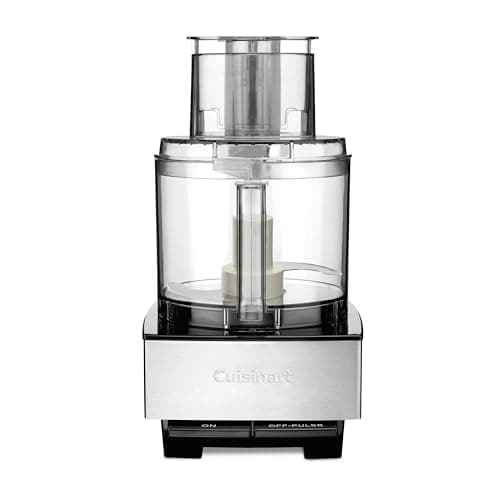 Cuisinart DFP-14BCNY (14-Cup) The 14-cup, 720-watt DFP-14 is the long-running benchmark: a big bowl, a strong motor, and a simple three-button interface that just works. It's the food processor most test kitchens keep on the counter. 14-Cup · 720W | Best overall food processor | 4.6★★★★★ | $249.95Amazon |
| 02 | 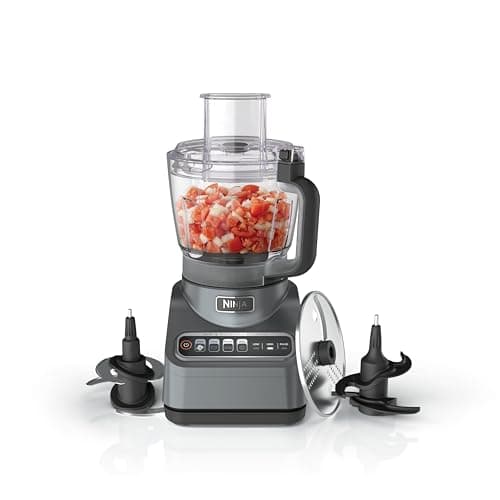 Ninja Professional Plus BN601 A 1,000-peak-watt motor under a 9-cup (72-ounce) bowl with four Auto-iQ programs and a dough blade in the box. It's the processor for people who want to press one button — and the only one here that ships with a dedicated dough blade as standard. 72 Oz · 1000W | Best for dough and presets | 4.3★★★★★ | $129.99Amazon |
| 03 | 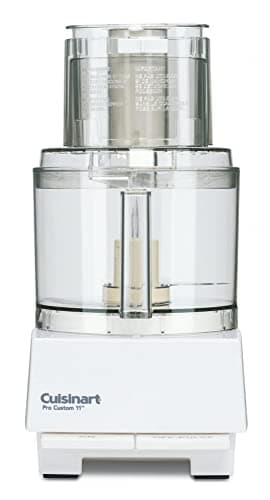 Cuisinart Pro Custom 11 (DLC-8SY) An 11-cup bowl on a 625-watt motor, with the chopping/mixing/dough blade, a medium shredding disc and a 4mm slicing disc all in the box — the closest thing Cuisinart makes to the 14-cup benchmark, for less money and, honestly, barely any less counter. 11 Cup · 625W | Best value full-size | 4.5★★★★★ | $199.95Amazon |
#ad · Live prices from the Amazon Product API, as of Sep 17, 2026. Where we have no verified live price, we show none — a gap beats a number that has rotted.
The picks, in detail
Cuisinart DFP-14BCNY (14-Cup)
spec score /5
$299.9517% off
Price as of Sep 17, 2026. Prices change — Amazon's is the one that counts.
#ad · we may earn a commission from this link to Cuisinart DFP-14BCNY (14-Cup)
The 14-cup, 720-watt DFP-14 is the long-running benchmark: a big bowl, a strong motor, and a simple three-button interface that just works. It's the food processor most test kitchens keep on the counter.
- Capacity
- 14-Cup
- Footprint (W×D×H)
- 7.9 × 11 × 14.8 in
- Power
- 720 W
- Weight
- 18 lb
- Cost per use*
- ≈4¢
- Est. per year*
- ≈$8
- Warranty
- Warranty
- Big 14-cup bowl for batch prep
- 720 W handles dough and hard veg
- Simple, durable, long track record
- Large to store
- Only slicing/shredding + chopping blades included
- Feed tube pusher can be fiddly
*Cost-to-run computed from the manufacturer's stated 720W at $0.17/kWh (US average), 20-min sessions, 4×/week. Your rate and use will vary.
Ninja Professional Plus BN601
spec score /5
Price as of Sep 17, 2026. Prices change — Amazon's is the one that counts.
#ad · we may earn a commission from this link to Ninja Professional Plus BN601
A 1,000-peak-watt motor under a 9-cup (72-ounce) bowl with four Auto-iQ programs and a dough blade in the box. It's the processor for people who want to press one button — and the only one here that ships with a dedicated dough blade as standard.
- Capacity
- 72 Oz
- Footprint (W×D×H)
- 7.76 × 9.88 × 16.02 in
- Power
- 1000 W
- Weight
- 7.65 lb
- Cost per use*
- ≈6¢
- Est. per year*
- ≈$12
- Warranty
- 1
- Dough blade included, not an upsell
- 4 Auto-iQ presets — chop, puree, dough, more
- All removable parts BPA-free and dishwasher-safe
- 9 cups is smaller than the 13–14-cup benchmarks
- 16 in tall assembled
- Presets can over-process if you walk away
*Cost-to-run computed from the manufacturer's stated 1000W at $0.17/kWh (US average), 20-min sessions, 4×/week. Your rate and use will vary.
Cuisinart Pro Custom 11 (DLC-8SY)
spec score /5
$219.959% off
Price as of Sep 17, 2026. Prices change — Amazon's is the one that counts.
#ad · we may earn a commission from this link to Cuisinart Pro Custom 11 (DLC-8SY)
An 11-cup bowl on a 625-watt motor, with the chopping/mixing/dough blade, a medium shredding disc and a 4mm slicing disc all in the box — the closest thing Cuisinart makes to the 14-cup benchmark, for less money and, honestly, barely any less counter.
- Capacity
- 11 Cup
- Footprint (W×D×H)
- 11.25 × 7 × 14.5 in
- Power
- 625 W
- Weight
- 17 lb
- Cost per use*
- ≈4¢
- Est. per year*
- ≈$7
- Warranty
- 1 Year Manufacturer
- 625 W — nearly the 14-cup's motor, well under its price
- Dough blade plus slicing and shredding discs included
- Extra-large feed tube takes whole fruit and vegetables
- Only ~1 lb and 0.3 in smaller than the 14-cup — it saves no shelf
- 4mm slicing disc is fixed, not adjustable
- Amazon's warranty field says 1 year; Cuisinart's own bullet on the same listing says 3-year limited plus 5-year motor
*Cost-to-run computed from the manufacturer's stated 625W at $0.17/kWh (US average), 20-min sessions, 4×/week. Your rate and use will vary.
The dough blade is the whole decision
Food-processor listings are written around cup counts, wattage and how many discs come in the box. None of those tell you whether the machine can knead. The thing that does is a single accessory: a blunt plastic dough blade, shaped to fold and stretch a stiff mass instead of slicing through it. Of the nine food processors in our catalog, only three list one as included — the Cuisinart DFP-14BCNY, the Cuisinart Pro Custom 11 and the Ninja BN601 — plus the KitchenAid KFP1318, which we cover below but cannot currently recommend.
You can technically knead with the sharp metal S-blade every processor ships with, and plenty of recipes tell you to. It works for slack, wet doughs and for pastry, where you want the fat cut into the flour and not developed at all. It is the wrong tool for a stiff bread or pizza dough: a sharp blade cuts the gluten strands it is supposed to be building, and it heats the dough faster because it is fighting the mass rather than folding it. The blunt blade is not marketing. It is the difference between a machine that kneads and a machine that shreds your dough.
Why a processor kneads differently from a mixer
A stand mixer kneads the way hands do, slowly: a hook drags dough around a bowl for eight or ten minutes, stretching and folding it while air and time do their work. A food processor does the same job in 45 to 90 seconds by brute speed. That has two consequences worth knowing before you buy.
The first is friction heat. A processor bowl warms noticeably during a knead, and warm dough proofs faster and can over-ferment if you are not paying attention — which is why processor bread recipes call for cold or ice water where a mixer recipe does not. The second is that you get very little feedback. With a mixer you watch the dough come together and clean the bowl; in a sealed processor bowl at 1,700 rpm you are going by the sound of the motor and a timer. Neither is a reason to avoid a processor. They are reasons the method is different, and they are why we would not tell a daily bread baker that a processor replaces a mixer — a case we lay out in full in stand mixer vs. food processor.
Bowl size is a flour limit, not a convenience
On a chopping job, bowl size decides how often you stop and empty it. On a dough job it is a hard ceiling. Dough climbs the blade and packs the bowl, and a bowl filled past roughly half its rated volume will bind the motor or push dough up under the lid. That reframes the cup counts:
- Cuisinart DFP-14BCNY — 14 cups. The largest bowl we track with a documented kneading role. This is the one to buy if you want a double batch of pizza dough in one go rather than two.
- KitchenAid KFP1318 — 13 cups. Ships a dough blade, but see the section below on why it is not a pick right now.
- Cuisinart Pro Custom 11 — 11 cups. Comfortable for a single loaf or one large pizza base.
- Ninja BN601 — 9 cups (72 oz). The smallest bowl here that is still a genuine dough bowl, and the cheapest way in.
Watts per cup, and the peak-watt trap
Stiff dough is the only job that genuinely loads a food-processor motor, so this is the one page where wattage matters. But it only means something relative to the bowl it has to turn. Across the three picks, on each maker's own published figure:
- Cuisinart DFP-14BCNY — 720 W across 14 cups ≈ 51 W per cup
- Cuisinart Pro Custom 11 — 625 W across 11 cups ≈ 57 W per cup
- Ninja BN601 — 1,000 peak watts across 9 cups
That last one needs the asterisk Ninja's own listing puts on it. Ninja publishes peak watts — the instantaneous figure the motor draws under momentary load — while Cuisinart publishes a continuous motor rating. They are not the same measurement and lining them up as if they were would tell you the Ninja has twice the motor of the Cuisinart, which is not a claim its listing makes or that we will make for it. KitchenAid publishes no wattage for the KFP1318 at all. We say so rather than filling in a number. The honest reading is that all three picks have enough motor for home dough, and that bowl size, not watts, is what separates them.
Running cost is genuinely a non-issue and we would rather say so than pad the page with it. A 45-second knead on the 720-watt Cuisinart uses about 0.009 kWh — roughly 0.15 cents at the US average residential rate. You could knead every day for a year for well under a dollar. If running cost is what you are weighing across the counter, our cross-category running-cost reference is the page for it.
Which doughs a processor is genuinely best at
A processor is not a lesser mixer. On two jobs it is the better machine, and on one it is the wrong one.
Pastry and pie dough — the processor wins outright
Short pastry wants cold butter cut into flour in discrete pieces and as little gluten development as possible. Pulsing with the metal S-blade does that in about ten seconds with almost no warmth transferred from your hands. A stand mixer takes longer and works the dough more. If pie is why you are buying, you do not even need the dough blade — the standard blade that comes with every machine here is the right tool.
Pizza and flatbread — the processor is the fast answer
A 60 to 90 second processor knead produces a smooth, extensible pizza dough that rests fine and stretches well. Cold water and a short rest afterwards handle the friction heat. This is where the 14-cup bowl earns its money: enough room for a double batch without packing the bowl.
Enriched and high-hydration bread — use a mixer
Brioche, sourdough and anything with a long, slow gluten build want time and gentleness, not speed. A processor can do a basic white loaf perfectly well, but for the doughs that reward patience, a bowl-lift mixer is the right machine — the case we make in best stand mixers for bread.
The models we left off, and why
Four processors we track and recommend elsewhere are deliberately not picks here, and it is worth being explicit about the reason in each case, because their listings do not make it obvious:
- KitchenAid KFP1318 (13-cup). It genuinely ships a dough blade, and on capacity it would sit second on this page. It is left off for a commercial reason, not an editorial one: at our last price check the listing returned no buyable offer, so we cannot show you a live price or send you to a working buy box. If that changes it belongs here.
- Cuisinart FP-8GMP1 (8-cup, 350 W). A good mid-size machine — covered in Cuisinart food processors compared — but its included-accessories list is a chopping blade and reversible shredding and slicing discs. No dough blade, and the least motor per cup in the Cuisinart line.
- Hamilton Beach 70733J (10-cup, 450 W). Ships a processor blade and one reversible slicing/shredding disc. No dough blade.
- Cuisinart FP-5 (5-cup). A universal chopping blade and a reversible shredding disc, no dough blade, and no published wattage at all.
The point is not that those machines are bad. It is that "food processor" is not a capability, and that four of the seven full-size processors we track cannot knead properly no matter how many watts the box claims.
One warranty conflict, published both ways
The Pro Custom 11 is listed two different ways on the same Amazon page. Amazon's structured warranty field reads 1 Year Manufacturer; Cuisinart's own feature bullet on that listing reads FULL 5-YEAR on MOTOR – LIMITED 3-YEAR WARRANTY, which matches the terms Cuisinart publishes on the DFP-14. We are not going to resolve that quietly in the brand's favor — we are telling you the conflict exists so you can check it at the buy box. The DFP-14 publishes the 3-year unit / 5-year motor terms consistently. The Ninja BN601 publishes one year.
Which one to buy
Buy the Cuisinart DFP-14BCNY if dough is a real part of why you are buying a processor. Biggest bowl, the strongest published continuous motor per cup in the group, the best warranty terms, and a listing that names kneading as a designed function. It is also our overall pick in the category, so it is not a single-purpose purchase — the long version is in our DFP-14 review.
Buy the Ninja BN601 if you want dough capability without spending full-size Cuisinart money. Dough blade in the box, a dedicated one-touch dough program, and the lightest machine here at 7.65 lb, which matters more than people expect if it lives in a cupboard between uses. Details in our Ninja BN601 review.
Buy the Cuisinart Pro Custom 11 if 14 cups is more bowl than your counter or your recipes want. Its combined chipping/mixing/dough blade covers the same ground in a bowl that is easier to fill properly for a single loaf, on a footprint within a third of an inch of the 14-cup machine. And if you have not settled on a size yet, start with what size food processor do I need — dough is one of only two jobs where the answer is genuinely "bigger".
Frequently asked questions
Can a food processor really knead bread dough?
Yes, for straightforward doughs like pizza, flatbread and a basic white loaf. A processor kneads in 45 to 90 seconds instead of the eight to ten minutes a stand mixer takes. It is the wrong tool for enriched doughs like brioche or for long, slow sourdough builds, where time and gentleness matter more than speed.
Do I need a dough blade, or can I use the normal blade?
For pastry and pie dough the standard metal S-blade is the right tool — you want the fat cut in and almost no gluten developed. For stiff bread and pizza dough you want the blunt plastic dough blade, which folds and stretches the mass instead of cutting the gluten strands you are trying to build.
Which food processors come with a dough blade?
Of the machines we track, the Cuisinart DFP-14BCNY, the Cuisinart Pro Custom 11 and the Ninja BN601 all list a dough blade as included, as does the KitchenAid KFP1318. The Cuisinart FP-8, the Cuisinart FP-5 and the Hamilton Beach 70733J do not.
How much dough can a 14-cup food processor handle?
Treat roughly half the rated bowl volume as the working limit for dough, because it climbs the blade and packs the bowl. A 14-cup bowl comfortably takes a double batch of pizza dough where a 9-cup bowl takes a single one.
Is a food processor or a stand mixer better for dough?
A processor is faster and better at pastry; a stand mixer is better at enriched and high-hydration bread doughs and gives you far more feedback while it works. If you bake bread most days, buy the mixer. If you make pizza and pastry and want one machine that also chops and slices, buy the processor.
Does a food processor overheat the dough?
It warms it, noticeably. A processor does in under 90 seconds what a mixer does in ten minutes, and that friction goes into the dough. Use cold or ice water in processor bread recipes and give the dough a short rest afterwards; it is a change of method, not a fault.
Sources
Keep reading
Food Processors
The Best Food Processors of 2026
Cuisinart 14-cup, KitchenAid 13-cup and a 3-cup mini compared on bowl size, power and discs.
Comparison
Cuisinart Food Processors Compared
The current Cuisinart line decoded — 14, 11, 8, 5 and 3 cups compared on motor, footprint, discs and warranty.
Guide
What Size Food Processor Do I Need?
3 to 14 cups mapped to real jobs, why minis can't slice, and the footprint and weight each size costs.
Comparison
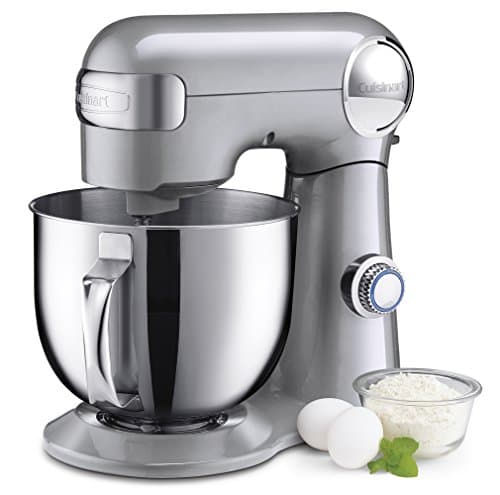
Stand Mixer vs. Food Processor
One builds structure slowly, one destroys it in seconds. Which to buy first, and where the overlap actually is.
Roundup
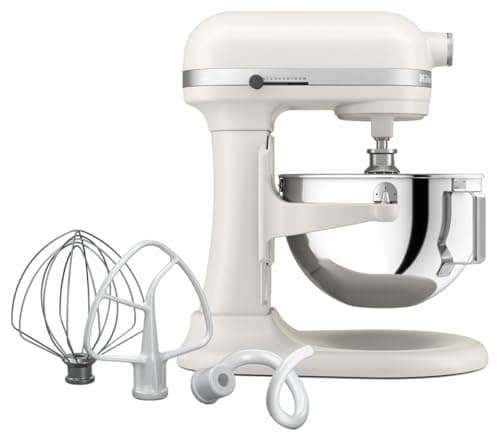
The Best Stand Mixers for Bread Dough
Four mixers ranked for bread: bowl-lift rigidity, stated dough capacity and what kneading does to a machine built for cake.
Review
Cuisinart DFP-14 Review
The Cuisinart DFP-14 on its 720 W motor, 14-cup bowl, warranty split and the discs it deliberately does not adjust.
https://wattandwhisk.com/food-processors/best-food-processors-for-dough