Stand Mixer vs. Food Processor
They overlap on exactly one job — dough — and the machine that wins it is not the one most people assume.
Disclosure:Watt & Whisk is reader-supported. When you buy through links on this page we may earn an Amazon Associates commission, at no extra cost to you. Prices are pulled live from Amazon and shown with the date checked. How this works.
These machines are not alternatives to each other. A stand mixer builds structure slowly — creaming air into butter, whipping egg whites, developing gluten over ten minutes. A food processor destroys structure quickly — chopping, slicing, shredding, cutting fat into flour. They overlap on dough alone. If you bake bread, cakes and cookies, buy the mixer first; the Cuisinart SM-50 is the value pick and the KitchenAid bowl-lift is the bread specialist. If you cook savoury food and want prep speed, buy the processor first — the Cuisinart DFP-14. Prices below are pulled live from Amazon.
The short answer
Quick picks
| # | Product | Best for | Score | Price |
|---|---|---|---|---|
| 01 | 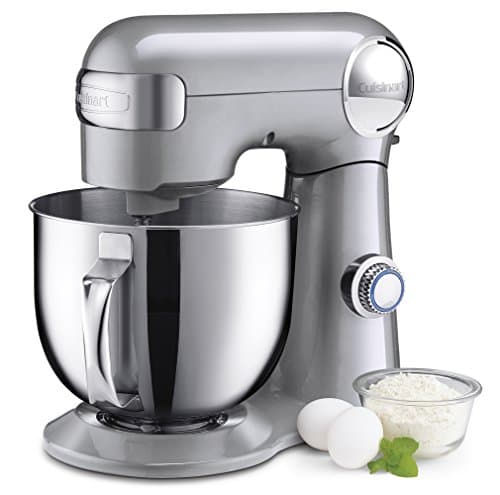 Cuisinart Precision Master SM-50 The 5.5-quart, 500-watt Precision Master gives you a bigger bowl and a stated higher wattage than a same-price KitchenAid. The trade-off is a smaller accessory ecosystem, but for straight mixing it's a lot of machine for the money. 5.5 Qt · 500W | Best big bowl for the money | 4.2★★★★★ | $229.95Amazon |
| 02 | 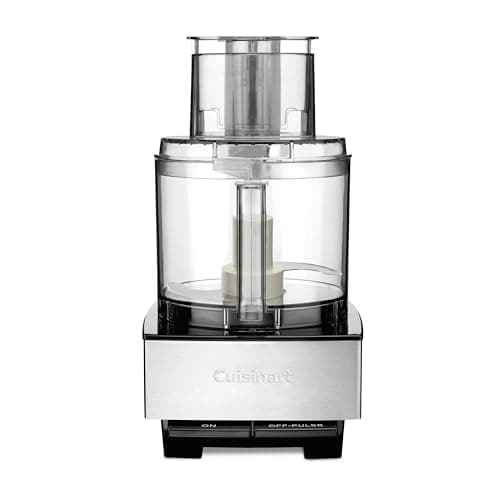 Cuisinart DFP-14BCNY (14-Cup) The 14-cup, 720-watt DFP-14 is the long-running benchmark: a big bowl, a strong motor, and a simple three-button interface that just works. It's the food processor most test kitchens keep on the counter. 14-Cup · 720W | Best overall food processor | 4.6★★★★★ | $249.95Amazon |
| 03 | 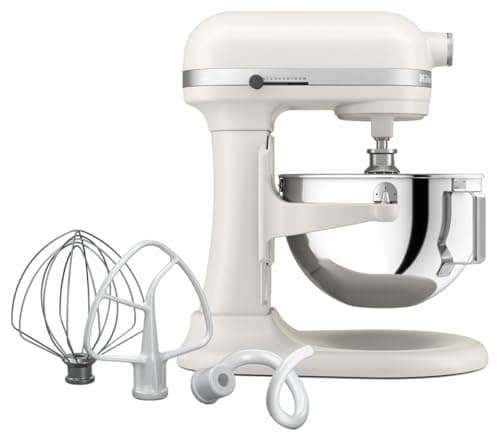 KitchenAid 5.5-Qt Bowl-Lift KSM55 This is the answer to the one thing the tilt-head Artisan genuinely struggles with. KitchenAid rates the bowl-lift KSM55 at twice the power in the bowl of a KSM150 tilt-head and lists it as kneading over 7 lb of bread dough, with a 3-point locking bowl that doesn't walk when the hook loads up. 5.5 Q | Best for bread dough | 4.6★★★★★ | $499.99Amazon |
| 04 | 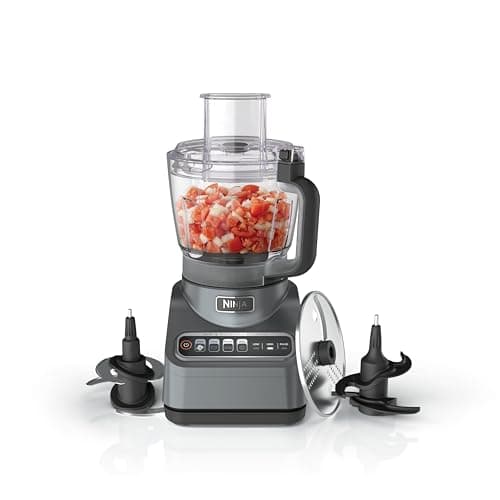 Ninja Professional Plus BN601 A 1,000-peak-watt motor under a 9-cup (72-ounce) bowl with four Auto-iQ programs and a dough blade in the box. It's the processor for people who want to press one button — and the only one here that ships with a dedicated dough blade as standard. 72 Oz · 1000W | Best for dough and presets | 4.3★★★★★ | $129.99Amazon |
#ad · Live prices from the Amazon Product API, as of Sep 17, 2026. Where we have no verified live price, we show none — a gap beats a number that has rotted.
The picks, in detail
Cuisinart Precision Master SM-50
spec score /5
$319.9528% off
Price as of Sep 17, 2026. Prices change — Amazon's is the one that counts.
#ad · we may earn a commission from this link to Cuisinart Precision Master SM-50
The 5.5-quart, 500-watt Precision Master gives you a bigger bowl and a stated higher wattage than a same-price KitchenAid. The trade-off is a smaller accessory ecosystem, but for straight mixing it's a lot of machine for the money.
- Capacity
- 5.5 Qt
- Footprint (W×D×H)
- 11.2 × 16.5 × 15.9 in
- Power
- 500 W
- Weight
- 17 lb
- Cost per use*
- ≈3¢
- Est. per year*
- ≈$6
- Warranty
- Limited 3-Year Warranty
- Bigger 5.5-qt bowl
- 500 W stated motor
- Often cheaper than KitchenAid
- Smaller attachment ecosystem
- Less iconic resale value
- Plastic trim in places
*Cost-to-run computed from the manufacturer's stated 500W at $0.17/kWh (US average), 20-min sessions, 4×/week. Your rate and use will vary.
Cuisinart DFP-14BCNY (14-Cup)
spec score /5
$299.9517% off
Price as of Sep 17, 2026. Prices change — Amazon's is the one that counts.
#ad · we may earn a commission from this link to Cuisinart DFP-14BCNY (14-Cup)
The 14-cup, 720-watt DFP-14 is the long-running benchmark: a big bowl, a strong motor, and a simple three-button interface that just works. It's the food processor most test kitchens keep on the counter.
- Capacity
- 14-Cup
- Footprint (W×D×H)
- 7.9 × 11 × 14.8 in
- Power
- 720 W
- Weight
- 18 lb
- Cost per use*
- ≈4¢
- Est. per year*
- ≈$8
- Warranty
- Warranty
- Big 14-cup bowl for batch prep
- 720 W handles dough and hard veg
- Simple, durable, long track record
- Large to store
- Only slicing/shredding + chopping blades included
- Feed tube pusher can be fiddly
*Cost-to-run computed from the manufacturer's stated 720W at $0.17/kWh (US average), 20-min sessions, 4×/week. Your rate and use will vary.
KitchenAid 5.5-Qt Bowl-Lift KSM55
spec score /5
Price as of Sep 17, 2026. Prices change — Amazon's is the one that counts.
#ad · we may earn a commission from this link to KitchenAid 5.5-Qt Bowl-Lift KSM55
This is the answer to the one thing the tilt-head Artisan genuinely struggles with. KitchenAid rates the bowl-lift KSM55 at twice the power in the bowl of a KSM150 tilt-head and lists it as kneading over 7 lb of bread dough, with a 3-point locking bowl that doesn't walk when the hook loads up.
- Capacity
- 5.5 Q
- Footprint (W×D×H)
- 11.31 × 14.63 × 16.5 in
- Warranty
- 1 Year Replacement Plan - Stand Mixer - $19.95
- Listed at 2× the in-bowl power of a KSM150 tilt-head
- Rated to knead over 7 lb of bread dough
- 3-point locking bowl stays put under a heavy hook
- The priciest mixer we list
- 16.5 in tall with the bowl raised — check your cabinets
- Bowl-lift is slower to load than a tilt-head
Ninja Professional Plus BN601
spec score /5
Price as of Sep 17, 2026. Prices change — Amazon's is the one that counts.
#ad · we may earn a commission from this link to Ninja Professional Plus BN601
A 1,000-peak-watt motor under a 9-cup (72-ounce) bowl with four Auto-iQ programs and a dough blade in the box. It's the processor for people who want to press one button — and the only one here that ships with a dedicated dough blade as standard.
- Capacity
- 72 Oz
- Footprint (W×D×H)
- 7.76 × 9.88 × 16.02 in
- Power
- 1000 W
- Weight
- 7.65 lb
- Cost per use*
- ≈6¢
- Est. per year*
- ≈$12
- Warranty
- 1
- Dough blade included, not an upsell
- 4 Auto-iQ presets — chop, puree, dough, more
- All removable parts BPA-free and dishwasher-safe
- 9 cups is smaller than the 13–14-cup benchmarks
- 16 in tall assembled
- Presets can over-process if you walk away
*Cost-to-run computed from the manufacturer's stated 1000W at $0.17/kWh (US average), 20-min sessions, 4×/week. Your rate and use will vary.
Two machines doing opposite things
The clearest way to hold these apart is to think about what each one does to structure.
A stand mixer builds. A flat beater forces air into butter and sugar over five to eight minutes so a cake has lift. A whisk stretches egg-white protein into a foam that holds. A dough hook stretches and folds gluten strands until a dough becomes elastic. Every one of those is a slow, gentle, additive process, and the planetary action — Hamilton Beach calls it a beater rotating around the bowl; KitchenAid publishes 59 touchpoints around the bowl — is what lets it happen hands-free and evenly.
A food processor breaks down. A blade at 1,700 rpm reduces onions to dice in four pulses, a disc shreds a block of cheese in eight seconds, and the same speed cuts cold butter into flour before it has time to warm. There is no version of a processor whipping a meringue or creaming butter for a cake; the blade throws the mixture to the wall of the sealed bowl and the speed knocks air out rather than folding it in.
That is why "which one should I buy" is almost always answered by what you cook, not by which machine is better.
The overlap: dough, and the processor is faster
Dough is the one job both machines genuinely do, and the surprise is that the processor is not the compromise option. A mixer with a dough hook kneads in eight to twelve minutes; a processor with a dough blade does it in 45 to 90 seconds. For pizza, flatbread and a basic white loaf the processor result is good, and it is done before the mixer has finished its first minute.
Two things narrow that advantage. The first is friction heat: a processor bowl warms during a knead, which is why processor bread recipes specify cold or iced water. The second is feedback — in a mixer you watch dough come together and clean the bowl; in a sealed processor bowl you are going by sound and a timer. For enriched doughs like brioche and for long, slow sourdough builds, the mixer is the right machine and it is not close.
Capacity cuts the other way, too. KitchenAid publishes that the bowl-lift KSM55SXXX kneads over 7 lb of bread dough and claims twice the power in the bowl of a tilt-head machine, measured as peak horsepower in the bowl against the KSM150 Artisan. No processor we track states a dough weight at all, and processor bowls should not be filled past about half their rated volume for dough. Full detail on the processor side is in best food processors for dough — note that only three of the machines we track ship a dough blade at all.
Pastry is the processor's clearest win
Short pastry wants cold butter cut into flour in discrete pieces, with as little gluten development as possible. Ten seconds of pulsing with the standard metal blade does that better than a mixer does, because the mixer's job — working the mixture — is the exact thing you are trying to avoid. If pie and tart dough is a regular part of your baking, that alone is an argument for owning a processor even if you already have a mixer.
What the published specs actually say
Compared honestly, on each maker's own figures:
- Cuisinart SM-50 — 5.5-qt bowl, 500 W published, 12 speeds, die-cast metal, 11.2 × 16.5 in and 15.9 in tall, 17 lb, limited 3-year warranty, with a power outlet on the head for attachments.
- KitchenAid KSM55SXXX bowl-lift — 5.5-qt bowl, no published wattage, 11 speeds including a half speed for folding, a 3-point locking bowl, 11.31 × 14.63 in and 16.5 in tall, stated at 11 dozen cookies or over 7 lb of bread dough per batch.
- Cuisinart DFP-14BCNY — 14-cup bowl, 720 W published, 7.9 × 11 in and 14.8 in tall, 18 lb, 3-year unit and 5-year motor cover, extra-large feed tube, 4 mm slicing disc, medium shredding disc, chopping/mixing blade.
- Ninja BN601 — 9-cup (72 oz) bowl, 1,000 peak watts, 7.76 × 9.88 in and 16.02 in tall, 7.65 lb, 1-year warranty, with a dough blade and a one-touch dough program among its four Auto-iQ presets.
Two honesty notes on those numbers. KitchenAid publishes no wattage on any of its mixers, so there is no comparable figure to put beside Cuisinart's 500 W. And Ninja publishes peak watts while Cuisinart publishes a continuous rating — different measurements, and lining them up would imply a motor comparison neither listing supports.
Footprint, weight and which one you will actually use
Both are counter machines, but not equally. The Ninja is 7.65 lb and the lightest thing here by a distance, so it can genuinely live in a cupboard. The Cuisinart processor is 18 lb and the Cuisinart mixer 17 lb — both effectively permanent. Height is the specification that catches people: the processor is 14.8 in and the bowl-lift mixer 16.5 in, and a bowl-lift needs vertical clearance to raise the bowl, which a tilt-head needs behind it instead to tip the head back. Measure for the motion, not the box. We cover that trade-off directly in tilt-head vs. bowl-lift.
Running cost is not a differentiator
Neither machine runs long enough to matter. A 45-second knead on the 720-watt processor is about 0.15 cents at the US average residential electricity rate; ten minutes on a 500-watt mixer is roughly 1.4 cents. You could use either daily for a year for the price of a coffee. If you are weighing running costs across the whole counter, that is what our cross-category cost reference is for.
Which one to buy first
Buy the mixer first if you bake — cakes, cookies, meringue, bread. Nothing else creams butter or whips whites, and those are not optional steps in the recipes that need them. The Cuisinart SM-50 is the most machine for the money and the longest warranty here; the KitchenAid bowl-lift is the one to buy if bread is the point, and best stand mixers for bread makes that case in full.
Buy the processor first if you cook savoury food in volume — a machine that dices an onion in four pulses and shreds a block of cheese in eight seconds saves more minutes per week than a mixer does for most households. The Cuisinart DFP-14 is our overall pick in the category and the Ninja BN601 is the cheaper route that still kneads. Sizing is covered in what size food processor do I need, and if the machine you are actually weighing is a blender rather than a mixer, start at blender vs. food processor.
If you are deciding between a stand mixer and no mixer at all, the format question is a different one — hand mixer vs. stand mixer settles that job by job.
Frequently asked questions
Can a food processor replace a stand mixer?
Only for dough and pastry. A processor cannot cream butter and sugar or whip egg whites — the blade throws the mixture to the wall of a sealed bowl and the speed knocks air out rather than folding it in. If you bake cakes, cookies or meringue, the mixer is not optional.
Can a stand mixer replace a food processor?
Not for chopping, slicing or shredding. A mixer has no blade at speed and no feed tube. KitchenAid sells attachments that add some of those jobs to the mixer's power hub, which is a reasonable route if counter space is the constraint.
Which is faster for bread dough?
The food processor, by a wide margin: 45 to 90 seconds against eight to twelve minutes in a mixer. The mixer still wins on enriched doughs like brioche and on long sourdough builds, where gentleness and feedback matter more than speed.
Which should I buy first?
Buy on what you cook. Bakers should buy the stand mixer first because nothing else creams or whips. Savoury cooks should buy the food processor first because chopping, slicing and shredding are the jobs that eat the most weekday minutes.
Is a food processor better for pastry?
Yes, clearly. Short pastry wants cold butter cut into flour with minimal gluten development, and ten seconds of pulsing does that better than a mixer, whose whole job is to work the mixture.
Do I need both a stand mixer and a food processor?
Only if you both bake and cook in volume. They overlap on one job out of many, so owning both is not redundant — but it is two large machines that need permanent counter space, at 17 lb and 18 lb for the Cuisinart pair.
Sources
Keep reading
Stand Mixers
The Best Stand Mixers of 2026
KitchenAid Artisan, KitchenAid Classic and Cuisinart compared on bowl size, build and attachments.
Food Processors
The Best Food Processors of 2026
Cuisinart 14-cup, KitchenAid 13-cup and a 3-cup mini compared on bowl size, power and discs.
Roundup
The Best Food Processors for Dough
Pizza, bread and pastry dough in a processor: which machines ship a dough blade, and how much flour each bowl really takes.
Roundup
The Best Stand Mixers for Bread Dough
Four mixers ranked for bread: bowl-lift rigidity, stated dough capacity and what kneading does to a machine built for cake.
Comparison
Tilt-Head vs. Bowl-Lift: Which Stand Mixer Design?
Tilt-head vs bowl-lift on rigidity, dough capacity, loading, height and cost — and which design your baking needs.
Comparison
Blender vs. Food Processor: Which Do You Actually Need?
The honest line between a blender and a food processor, which to buy first, and when a combo machine is the right answer.
https://wattandwhisk.com/stand-mixers/stand-mixer-vs-food-processor