What Size Food Processor Do I Need?
The cup number decides more than capacity — below about 8 cups a processor physically cannot slice or shred. Here is where every line falls.
Disclosure:Watt & Whisk is reader-supported. When you buy through links on this page we may earn an Amazon Associates commission, at no extra cost to you. Prices are pulled live from Amazon and shown with the date checked. How this works.
3–3.5 cups chops herbs, nuts, garlic and small batches of salsa — but it cannot slice or shred at all, because a disc needs a wide bowl and a feed tube. 8–10 cups is the sweet spot for most households: full disc functions, real slicing and shredding, and a footprint you can store. 13–14 cups is for batch cooking and dough — the Cuisinart DFP-14 is rated 720 watts and weighs 18 lb. Most people who buy 14 cups needed 10.
The short answer
Quick picks
| # | Product | Best for | Score | Price |
|---|---|---|---|---|
| 01 | 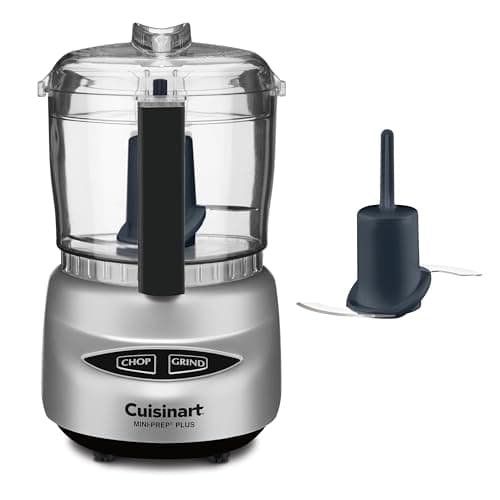 Cuisinart Mini-Prep Plus A 3-cup, 250-watt chopper that lives in a cabinet and comes out for pesto, dressings, nuts, and a single onion. For small kitchens that don't need a 14-cup monster, it does 80% of the jobs at a fraction of the size. 3 Cup · 250W | Best mini / small kitchen | 4.1★★★★★ | $29.29Amazon |
| 02 | 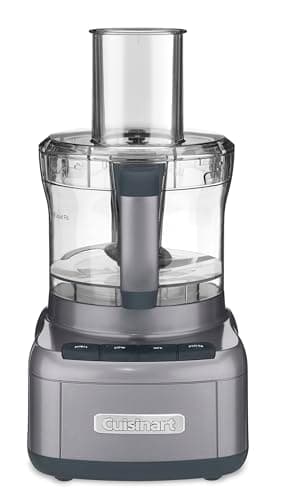 Cuisinart 8-Cup FP-8 The sensible middle of the Cuisinart line: an 8-cup bowl with measurement markings, a 350-watt motor, and a reversible shredding and slicing disc included — so unlike every mini here, it actually does the knife work, not just the chopping. 8 Cup · 350W | Best mid-size with discs | 4.2★★★★★ | $129.95Amazon |
| 03 | 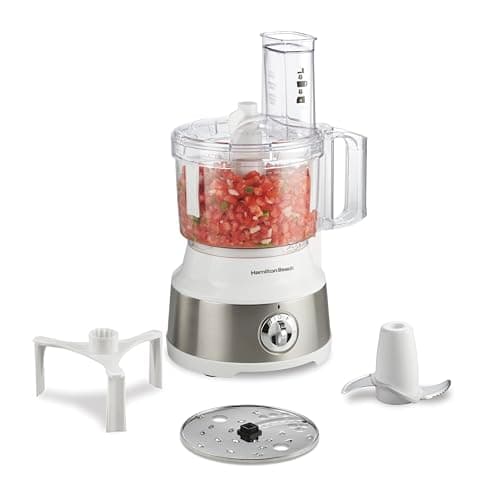 Hamilton Beach 10-Cup A 450-watt, 10-cup processor with the one feature nobody else at this price bothers with: a built-in bowl scraper you sweep side to side without stopping the machine or reaching for a spatula. Two speeds, pulse, suction feet, everything dishwasher-safe. 10 Cup · 450W | Best budget full-size | 4.1★★★★★ | $69.95Amazon |
| 04 | 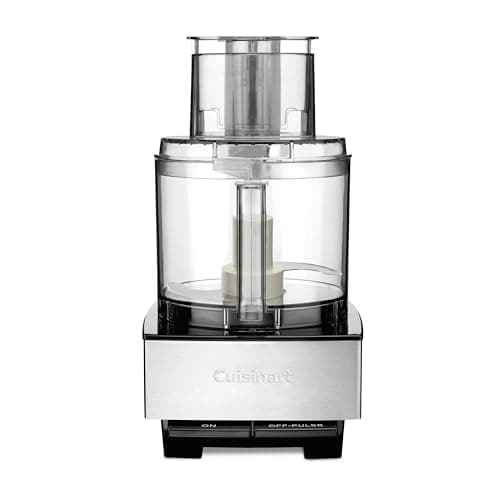 Cuisinart DFP-14BCNY (14-Cup) The 14-cup, 720-watt DFP-14 is the long-running benchmark: a big bowl, a strong motor, and a simple three-button interface that just works. It's the food processor most test kitchens keep on the counter. 14-Cup · 720W | Best overall food processor | 4.6★★★★★ | $229.95Amazon |
#ad · Live prices from the Amazon Product API, as of October 16, 2026. Where we have no verified live price, we show none — a gap beats a number that has rotted.
The picks, in detail
Cuisinart Mini-Prep Plus
spec score /5
$39.9527% off
Price as of October 16, 2026. Prices change — Amazon's is the one that counts.
#ad · we may earn a commission from this link to Cuisinart Mini-Prep Plus
A 3-cup, 250-watt chopper that lives in a cabinet and comes out for pesto, dressings, nuts, and a single onion. For small kitchens that don't need a 14-cup monster, it does 80% of the jobs at a fraction of the size.
- Capacity
- 3 Cup
- Footprint (W×D×H)
- 7 × 5 × 9.25 in
- Power
- 250 W
- Weight
- 2.2 lb
- Cost per use*
- ≈1¢
- Est. per year*
- ≈$3
- Warranty
- 18 months
- Tiny — stores in a cabinet
- Perfect for herbs, nuts, dressings
- Very inexpensive
- 3 cups is small
- Chop/grind only — no slicing disc
- Not for big batches
*Cost-to-run computed from the manufacturer's stated 250W at $0.17/kWh (US average), 20-min sessions, 4×/week. Your rate and use will vary.
Cuisinart 8-Cup FP-8
spec score /5
Price as of October 16, 2026. Prices change — Amazon's is the one that counts.
#ad · we may earn a commission from this link to Cuisinart 8-Cup FP-8
The sensible middle of the Cuisinart line: an 8-cup bowl with measurement markings, a 350-watt motor, and a reversible shredding and slicing disc included — so unlike every mini here, it actually does the knife work, not just the chopping.
- Capacity
- 8 Cup
- Footprint (W×D×H)
- 9.58 × 7.6 × 15.19 in
- Power
- 350 W
- Weight
- 6 lb
- Cost per use*
- ≈2¢
- Est. per year*
- ≈$4
- Warranty
- Limited 2-year
- Reversible slicing/shredding disc in the box
- 8-cup bowl with measurement markings
- 2-year limited warranty
- 350 W is half the 14-cup DFP-14's motor
- Not for stiff bread dough
- Fewer discs than the KitchenAid 13-cup
*Cost-to-run computed from the manufacturer's stated 350W at $0.17/kWh (US average), 20-min sessions, 4×/week. Your rate and use will vary.
Hamilton Beach 10-Cup
spec score /5
Price as of October 16, 2026. Prices change — Amazon's is the one that counts.
#ad · we may earn a commission from this link to Hamilton Beach 10-Cup
A 450-watt, 10-cup processor with the one feature nobody else at this price bothers with: a built-in bowl scraper you sweep side to side without stopping the machine or reaching for a spatula. Two speeds, pulse, suction feet, everything dishwasher-safe.
- Capacity
- 10 Cup
- Footprint (W×D×H)
- 10.25 × 8.43 × 15.47 in
- Power
- 450 W
- Weight
- 4.7 lb
- Cost per use*
- ≈3¢
- Est. per year*
- ≈$5
- Built-in bowl scraper — genuinely useful
- 10-cup bowl at a budget price
- Suction feet stop it walking on the counter
- 450 W is modest for stiff dough
- Two speeds only
- One-year limited warranty
*Cost-to-run computed from the manufacturer's stated 450W at $0.17/kWh (US average), 20-min sessions, 4×/week. Your rate and use will vary.
Cuisinart DFP-14BCNY (14-Cup)
spec score /5
$299.9523% off
Price as of October 16, 2026. Prices change — Amazon's is the one that counts.
#ad · we may earn a commission from this link to Cuisinart DFP-14BCNY (14-Cup)
The 14-cup, 720-watt DFP-14 is the long-running benchmark: a big bowl, a strong motor, and a simple three-button interface that just works. It's the food processor most test kitchens keep on the counter.
- Capacity
- 14-Cup
- Footprint (W×D×H)
- 7.9 × 11 × 14.8 in
- Power
- 720 W
- Weight
- 18 lb
- Cost per use*
- ≈4¢
- Est. per year*
- ≈$8
- Warranty
- Warranty
- Big 14-cup bowl for batch prep
- 720 W handles dough and hard veg
- Simple, durable, long track record
- Large to store
- Only slicing/shredding + chopping blades included
- Feed tube pusher can be fiddly
*Cost-to-run computed from the manufacturer's stated 720W at $0.17/kWh (US average), 20-min sessions, 4×/week. Your rate and use will vary.
Food processor sizing is unusual because the cup number is not just a capacity figure — it is a capabilityfigure. Below a certain bowl width the machine physically cannot hold a slicing disc or a feed tube, so a "small food processor" and a "large" one are not the same appliance at different scales. They do different jobs. That is the thing to understand before comparing anything else.
The line that matters: minis cannot slice
A slicing or shredding disc is a flat plate that spins near the top of the bowl while food is pushed onto it through a feed tube. That requires three things: a bowl wide enough for a meaningful disc, a lid with a feed tube, and a plunger. Mini choppers have none of them.
The Cuisinart Mini-Prep Plus is a 3-cup (24-oz) machine with a 250-watt motor and a patented reversible stainless blade with sharp and blunt edges, auto-reversing so one side chops and the other grinds. The KitchenAid 3.5-Cup Food Chopper has a locking blade, a handle and a pour spout. The BLACK+DECKER 3-Cup has bi-level stainless blades and oil holes for adding oil to hummus or vinaigrette while it runs. All three are genuinely useful. None of them will ever slice a cucumber.
So if what you pictured was uniform potato slices for a gratin, or a block of cheese shredded in ten seconds, no mini at any price does that. You need 8 cups or more. This is the single most common sizing mistake in the category.
The size ladder, with real specs
3–3.5 cups — the chopper tier
Herbs, garlic, nuts, hard cheese, small batches of pesto, salsa, dips, dressings and baby food. It lives in a cupboard and comes out for two-minute jobs.
Footprints are tiny: the Cuisinart Mini-Prep Plus is 7 × 5 × 9.25 in at 2.2 lb, the KitchenAid 3.5-cup is 7 × 5.6 × 8.74 in at 2.7 lb, and the BLACK+DECKER is 5 × 6.5 × 7 in at just 1.8 lb. One warranty note worth knowing: KitchenAid backs its 3.5-cup chopper with a 9-year limited warranty, against 18 months on the Cuisinart Mini-Prep — an enormous gap at this end of the market. Full field in best mini food processors.
8–10 cups — where most people should land
This is the first tier with full disc functions, and for the majority of households it is the right answer.
The Cuisinart FP-8 is 8 cups with a 350-watt motor, reversible shredding and slicing discs, an integrated feed tube, measurement markings on the bowl, and rubberized high/low/off/pulse controls — in a 9.58 × 7.6 × 15.19-inch body weighing 6 lb, with a 2-year warranty.
The Hamilton Beach 10-cup steps up to a 450-watt motor with two speeds plus pulse, and adds the feature nobody else here has: a built-in bowl scraper you slide from side to side without stopping the machine or reaching for a spatula. At 10.25 × 8.43 × 15.47 in and 4.7 lb it is the lightest full-size processor we track.
The Ninja BN601 sits at 9 cups (72 oz) with a 1,000-peak-watt motor and four Auto-iQ preset programs for chopping, slicing and puréeing. Note the wording — peakwatts, which is the maximum momentary draw rather than sustained output, so it is not directly comparable with Cuisinart's 720-watt continuous figure. Detail in our Ninja BN601 review.
13–14 cups — batch cooking and dough
The full-size tier. This is what you buy if you make dough, process a whole cabbage for coleslaw, or prep vegetables for a week at a time.
The Cuisinart DFP-14 is the reference: 14 cups, a 720-watt motor, an extra-large feed tube with a bowl sleeve assembly sized for both large and small items, and a stainless 4 mm slicing disc plus a medium shredding disc. Cuisinart is explicit in its own listing that the discs are not adjustable, so you get 4 mm and nothing else unless you buy more discs. It weighs 18 lb.
The KitchenAid KFP1318 is 13 cups and answers exactly that limitation with an externally adjustable Exact Slice disc you can dial from thick to thin while it is assembled, plus a 3-in-1 feed tube for different ingredient shapes and an in-bowl storage caddy that keeps blades and discs inside the machine rather than loose in a drawer. At 10.25 × 8.7 × 17.43 in and 9.7 lb it is taller but half the weight of the Cuisinart. The two go head to head in Cuisinart vs KitchenAid.
The 11 vs 14 cup question
This comes up constantly and the honest answer is that the difference matters far less than the gap in the numbers suggests, for one specific reason: you cannot fill a food processor to its rated capacity with liquid. The cup figure is a dry-capacity measure. Add soup or a batter and the working limit is roughly half that, because the bowl leaks around the center column above the fill line.
Where the extra 3 cups genuinely shows up is dough — a 14-cup bowl handles a larger flour weight without the mixture climbing the blade — and bulk slicing, where a bigger bowl means fewer stops to empty it. For everyday chopping, puréeing and shredding for a family of four, an 11 and a 14 behave nearly identically.
What is not identical is the footprint and the weight, covered next.
The footprint each size costs
- BLACK+DECKER 3-cup — 5 × 6.5 × 7 in, 1.8 lb
- Cuisinart Mini-Prep 3-cup — 7 × 5 × 9.25 in, 2.2 lb
- KitchenAid 3.5-cup — 7 × 5.6 × 8.74 in, 2.7 lb
- Hamilton Beach 10-cup — 10.25 × 8.43 × 15.47 in, 4.7 lb
- Cuisinart FP-8, 8-cup — 9.58 × 7.6 × 15.19 in, 6 lb
- Ninja BN601, 9-cup — 7.76 × 9.88 × 16.02 in, 7.65 lb
- KitchenAid KFP1318, 13-cup — 10.25 × 8.7 × 17.43 in, 9.7 lb
- Cuisinart DFP-14, 14-cup — 7.9 × 11 × 14.8 in, 18 lb
Two counter-intuitive results in that list. The 14-cup Cuisinart is the narrowest full-size machine at 7.9 inches and the shortest at 14.8 — but it is 18 lb, nearly double the 13-cup KitchenAid. And the 13-cup KitchenAid is the tallest thing here at 17.43 inches, which is close to the limit under a standard 18-inch counter-to-cabinet gap.
Weight is the spec that decides whether a food processor gets used, because unlike a stand mixer these usually live in a cupboard. An 18-lb machine is a genuine commitment to lift out for a five-minute job; a 4.7-lb Hamilton Beach is not.
The recommendation
Most households: 8–10 cups. You get real slicing and shredding, a machine light enough to take out of a cupboard, and enough bowl for a family meal. The Hamilton Beach 10-cup at 4.7 lb with a built-in scraper is the easiest to live with; the Cuisinart FP-8 has the better warranty at two years.
Add a mini if you chop herbs often. A 3-cup chopper at under 3 lb costs little, stores anywhere, and stops you dirtying a big bowl for a clove of garlic. Owning a mini and a 10-cup is a better setup than owning one 14-cup for most people.
Go to 13–14 cupsonly if you make dough or batch-prep. And if you do, weigh Cuisinart's fixed 4 mm disc against KitchenAid's externally adjustable one — that is a bigger practical difference than the single cup between them. See best budget food processors and blender vs food processor if you are still deciding which appliance you need at all.
One sizing trap is specific to a single brand and worth naming here: within Cuisinart's own range the bowl size does not track the motor. The 8-cup Elemental runs 350 watts while the 11-cup one rung above it runs 625, and the 11-cup takes up the same counter space as the 14-cup. Cuisinart food processors compared has the whole line in a single table if that is the brand you have settled on.
One last thing capacity does not decide: whether the machine can shred at all. A shredding disc mounts above the bowl on a stem, and the mini machines at the bottom of this ladder have no stem and no feed tube, so they chop and grate but never produce strands. If cheese is what prompted the question, the disc-by-disc ranking is best food processors for shredding cheese.
Bowl size bites hardest on one particular job. Chopping is batched — food in, run, food out — but slicing is continuous, so the bowl fills while the machine runs and every emptying means unlocking the lid and lifting the disc out. Sliced vegetables are loose and airy too, so a bowl fills faster with them than its cup rating suggests. If slicing in quantity is the reason you are sizing up, start with best food processors for slicing vegetables.
Two notes for anyone who has landed at the top of the ladder. The cup figure is dry capacity, so treat roughly half of it as the safe liquid line — no maker in this category publishes a separate liquid figure. And these machines are tall: 14.5 to 17.4 inches, against about 18 inches of clearance under a standard upper cabinet. The big-bowl field is ranked in best large food processors.
Frequently asked questions
What size food processor is best for a family?
Eight to ten cups covers most families. That is the smallest tier with real slicing and shredding discs, and the machines stay light enough to lift out of a cupboard — 4.7 lb for the Hamilton Beach 10-cup against 18 lb for a 14-cup Cuisinart.
Can a mini food processor slice or shred?
No, and this is the most common sizing mistake. A slicing disc needs a wide bowl, a feed tube and a plunger, and 3 to 3.5-cup choppers have none of them. They chop, grind and purée small quantities only — for slicing you need 8 cups or more.
Is an 11-cup or 14-cup food processor better?
The difference matters less than the numbers suggest, because the cup rating is a dry-capacity figure — with liquid the working limit is roughly half either way. The extra capacity shows up mainly in dough and bulk slicing. For everyday family prep they behave nearly identically.
How many cups do I need to make dough?
13 to 14 cups. A larger bowl handles a bigger flour weight without the mixture climbing the blade. The Cuisinart DFP-14 is the reference at 14 cups and 720 watts, though at 18 lb it is the heaviest machine we track.
Why can't I fill a food processor to its rated capacity?
The cup figure is a dry-capacity measure. Liquids leak around the central column above a fill line well below the rated capacity, so soups and batters cap out at roughly half the number on the box. Plan liquid work around that, not the headline figure.
Should I buy one big food processor or two smaller ones?
For most people, a 10-cup plus a 3-cup mini beats a single 14-cup. The mini handles herbs and garlic without dirtying a big bowl, and the 10-cup does everything else at a weight you will actually lift out of the cupboard.
Sources
Keep reading
Food Processors
The Best Food Processors of 2026
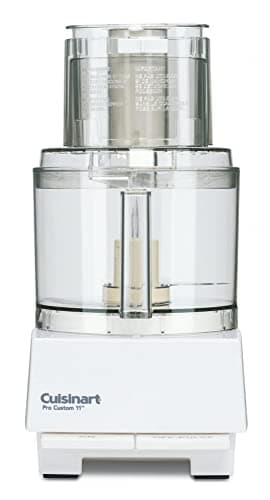
Cuisinart 14-cup, KitchenAid 13-cup and a 3-cup mini compared on bowl size, power and discs.
Comparison
Cuisinart Food Processors Compared
The current Cuisinart line decoded — 14, 11, 8, 5 and 3 cups compared on motor, footprint, discs and warranty.
Roundup
The Best Mini Food Processors
Four mini choppers ranked on bowl size, footprint, warranty and capability — plus what a mini genuinely cannot do.
Comparison
Cuisinart vs. KitchenAid: Which Food Processor Wins?
Cuisinart vs KitchenAid food processors on bowl size, motor, included discs, dicing and footprint — and who each suits.
Roundup
The Best Budget Food Processors
Five budget processors ranked on bowl size, motor, discs and warranty — and the three jobs where cheap machines genuinely fall short.
Comparison
Blender vs. Food Processor: Which Do You Actually Need?
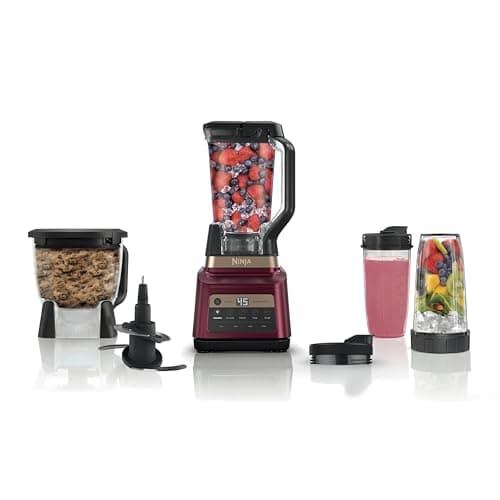
The honest line between a blender and a food processor, which to buy first, and when a combo machine is the right answer.
Review
Cuisinart DFP-14 Review
The Cuisinart DFP-14 on its 720 W motor, 14-cup bowl, warranty split and the discs it deliberately does not adjust.
Roundup
The Best Food Processors for Slicing Vegetables
Which processors ship a slicing disc, what thickness it cuts, and which feed tubes take a vegetable whole. Four picks, with the honest limits of each.
https://wattandwhisk.com/food-processors/what-size-food-processor-do-i-need