Cuisinart vs. KitchenAid: Which Food Processor Wins?
One is the durable benchmark with a big motor and simple controls. The other does more of your knife work out of the box. The right answer depends on what you actually chop.
Disclosure:Watt & Whisk is reader-supported. When you buy through links on this page we may earn an Amazon Associates commission, at no extra cost to you. Prices are pulled live from Amazon and shown with the date checked. How this works.
Buy the Cuisinart DFP-14 if you want the durable benchmark: a 14-cup bowl, a 720-watt motor and a three-button interface that has been in test kitchens for decades. Buy the KitchenAid 13-cup if you want the machine to do more of the knife work — it adds an adjustable slicing disc, a dicing kit and a 3-in-1 feed tube that Cuisinart leaves out. The deciding question is whether you want raw capacity and simplicity, or versatility and more parts.
The short answer
Quick picks
| # | Product | Best for | Score | Price |
|---|---|---|---|---|
| 01 | 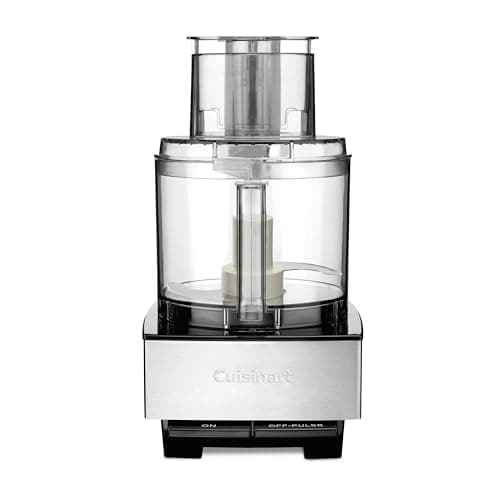 Cuisinart DFP-14BCNY (14-Cup) The 14-cup, 720-watt DFP-14 is the long-running benchmark: a big bowl, a strong motor, and a simple three-button interface that just works. It's the food processor most test kitchens keep on the counter. 14-Cup · 720W | Best overall food processor | 4.6★★★★★ | $229.95Amazon |
| 02 | 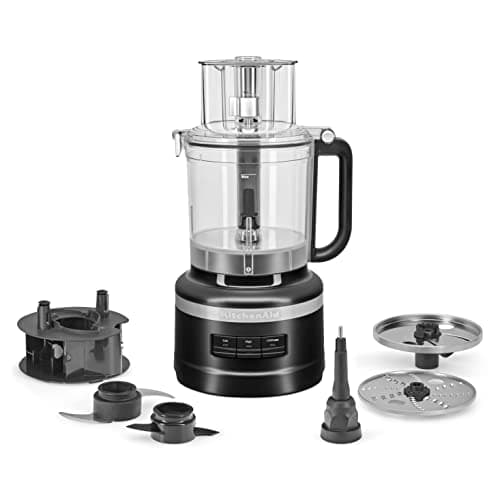 KitchenAid 13-Cup KitchenAid's 13-cup adds an adjustable slicing disc and a dicing kit that most rivals leave out, plus a 3-in-1 feed tube. If you want the machine to do more of the knife work, this is the pick. 13 Cup | Best for dicing | 4.3★★★★★ | Check price → |
| 03 | 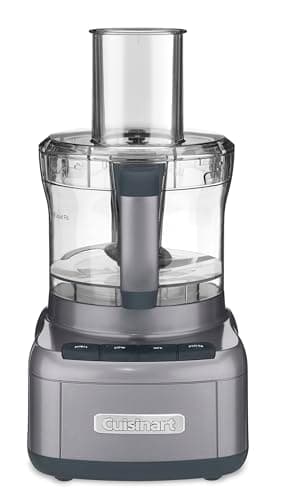 Cuisinart 8-Cup FP-8 The sensible middle of the Cuisinart line: an 8-cup bowl with measurement markings, a 350-watt motor, and a reversible shredding and slicing disc included — so unlike every mini here, it actually does the knife work, not just the chopping. 8 Cup · 350W | Best mid-size with discs | 4.2★★★★★ | $129.95Amazon |
| 04 | 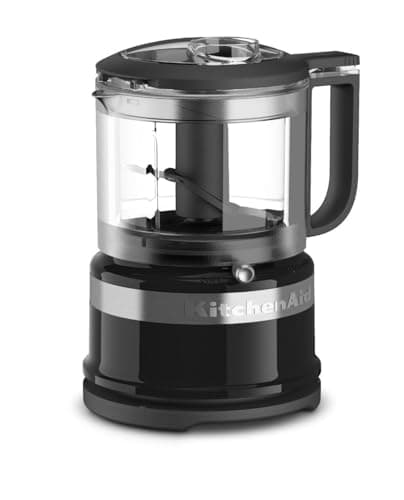 KitchenAid 3.5-Cup Chopper A 3.5-cup chopper with a locking blade, a proper handle and a pour spout — so you can tip a dressing straight out without fishing the blade from the bowl first. The listing carries a 9-year limited warranty, which is extraordinary for a $70 appliance. 3.5 Cup | Best mini for the long run | 4.3★★★★★ | Check price → |
#ad · Live prices from the Amazon Product API, as of October 17, 2026. Where we have no verified live price, we show none — a gap beats a number that has rotted.
The picks, in detail
Cuisinart DFP-14BCNY (14-Cup)
spec score /5
$299.9523% off
Price as of October 17, 2026. Prices change — Amazon's is the one that counts.
#ad · we may earn a commission from this link to Cuisinart DFP-14BCNY (14-Cup)
The 14-cup, 720-watt DFP-14 is the long-running benchmark: a big bowl, a strong motor, and a simple three-button interface that just works. It's the food processor most test kitchens keep on the counter.
- Capacity
- 14-Cup
- Footprint (W×D×H)
- 7.9 × 11 × 14.8 in
- Power
- 720 W
- Weight
- 18 lb
- Cost per use*
- ≈4¢
- Est. per year*
- ≈$8
- Warranty
- Warranty
- Big 14-cup bowl for batch prep
- 720 W handles dough and hard veg
- Simple, durable, long track record
- Large to store
- Only slicing/shredding + chopping blades included
- Feed tube pusher can be fiddly
*Cost-to-run computed from the manufacturer's stated 720W at $0.17/kWh (US average), 20-min sessions, 4×/week. Your rate and use will vary.
KitchenAid 13-Cup
spec score /5
No buyable offer at the last price check (October 17, 2026). We show nothing rather than a stale number.
#ad · we may earn a commission from this link to KitchenAid 13-Cup
KitchenAid's 13-cup adds an adjustable slicing disc and a dicing kit that most rivals leave out, plus a 3-in-1 feed tube. If you want the machine to do more of the knife work, this is the pick.
- Capacity
- 13 Cup
- Footprint (W×D×H)
- 10.25 × 8.7 × 17.43 in
- Weight
- 9.7 lb
- Warranty
- 1 Year
- Dicing kit and adjustable slicer included
- 3-in-1 feed tube
- Big 13-cup work bowl
- More parts to wash and store
- Pricier than a basic model
- Dicing kit takes practice
Cuisinart 8-Cup FP-8
spec score /5
Price as of October 17, 2026. Prices change — Amazon's is the one that counts.
#ad · we may earn a commission from this link to Cuisinart 8-Cup FP-8
The sensible middle of the Cuisinart line: an 8-cup bowl with measurement markings, a 350-watt motor, and a reversible shredding and slicing disc included — so unlike every mini here, it actually does the knife work, not just the chopping.
- Capacity
- 8 Cup
- Footprint (W×D×H)
- 9.58 × 7.6 × 15.19 in
- Power
- 350 W
- Weight
- 6 lb
- Cost per use*
- ≈2¢
- Est. per year*
- ≈$4
- Warranty
- Limited 2-year
- Reversible slicing/shredding disc in the box
- 8-cup bowl with measurement markings
- 2-year limited warranty
- 350 W is half the 14-cup DFP-14's motor
- Not for stiff bread dough
- Fewer discs than the KitchenAid 13-cup
*Cost-to-run computed from the manufacturer's stated 350W at $0.17/kWh (US average), 20-min sessions, 4×/week. Your rate and use will vary.
KitchenAid 3.5-Cup Chopper
spec score /5
No buyable offer at the last price check (October 17, 2026). We show nothing rather than a stale number.
#ad · we may earn a commission from this link to KitchenAid 3.5-Cup Chopper
A 3.5-cup chopper with a locking blade, a proper handle and a pour spout — so you can tip a dressing straight out without fishing the blade from the bowl first. The listing carries a 9-year limited warranty, which is extraordinary for a $70 appliance.
- Capacity
- 3.5 Cup
- Footprint (W×D×H)
- 7 × 5.6 × 8.74 in
- Weight
- 2.7 lb
- Warranty
- 9 Year Limited
- 9-year limited warranty per the listing
- Locking blade lets you pour without removing it
- 8.7 in tall — lives in a cabinet
- 3.5 cups chops for one or two
- Chop only — no slicing or shredding discs
- Costs double a basic mini chopper
These two brands have been the serious answer in home food processing for a very long time, and they have specialized in opposite directions. Cuisinart essentially invented the category in the US and has spent forty years refining one idea: a big bowl, a strong motor, and as few controls as possible. KitchenAid came later and competed on capability — more discs, more adjustment, more things the machine can do without you reaching for a knife.
Every figure below comes from each machine's current manufacturer listing. This is a specification comparison, not a hands-on bake-off — see how we review for what that means.
At a glance
| Spec | Cuisinart DFP-14 | KitchenAid 13-Cup | Cuisinart 8-Cup FP-8 |
|---|---|---|---|
| Bowl capacity | 14 cups | 13 cups | 8 cups |
| Stated motor | 720 W | — | 350 W |
| Slicing disc | Yes (fixed) | Yes (adjustable) | Yes (reversible) |
| Dicing kit | No | Yes | No |
| Feed tube | Standard | 3-in-1 | Integrated |
| Footprint (W × D) | 7.9 × 11 in | 10.25 × 8.7 in | 9.58 × 7.6 in |
| Height | 14.8 in | 17.43 in | 15.19 in |
| Weight | 18 lb | 9.7 lb | 6 lb |
| Warranty (as listed) | Warranty (see listing) | 1 year | Limited 2-year |
The motor gap is real, and it is the Cuisinart's argument
Cuisinart publishes 720 watts on the DFP-14. KitchenAid does not publish a wattage on the 13-cup listing at all. In blenders we would tell you to ignore that, because brands measure wattage differently — but food processors are a genuine exception, and the reason is what the motor is being asked to do.
A blender spins fast against liquid. A food processor grinds slowly against resistance: hard carrots, a block of parmesan, a stiff pastry dough. That is a torque-at-low-speed problem, and it is the load that stalls under-powered processors. The DFP-14's 720 watts is the highest published figure of any machine we track in this category, and it shows up specifically on hard vegetables, dough, and large batches where the bowl is full and the blade has to keep moving.
The 18-pound weight is part of the same story. Mass is what stops a processor jumping when the blade catches something hard, and the DFP-14 is nearly double the KitchenAid's 9.7 lb. It is the least portable machine here and the most planted.
The disc gap is real, and it is the KitchenAid's argument
Where KitchenAid wins is everything that happens at the top of the bowl. The 13-cup ships with an adjustable slicing disc — you set the thickness rather than accepting the one thickness the disc was cut for — a dicing kit, which almost nothing else at this price includes, and a 3-in-1 feed tube that takes a whole tomato, a narrow carrot, or something in between without a separate attachment.
Those three features matter enormously or not at all depending on what you cook. If your processor use is hummus, pesto, breadcrumbs and chopped onion, the discs sit in a drawer and the Cuisinart's stronger motor is the better purchase. If you make gratins, slaws, salads and anything that wants uniformly diced vegetables, the KitchenAid is doing work the Cuisinart cannot do at all — and the dicing kit in particular replaces genuinely tedious knife time.
The honest cost is parts. The KitchenAid has more of them to wash, store and eventually lose, and the dicing kit takes some practice to assemble and use well. Nobody enjoys a cupboard full of discs.
Controls and the feel of using them
The Cuisinart interface is three buttons: on, off, pulse. That is it, and after forty years it is hard to argue it needs more. The FP-8 adds a high/low split with rubberized controls. KitchenAid's 13-cup gives you speed options alongside the adjustment on the disc.
In practice, most food processing is done on pulse rather than continuous run, because pulse is what gives you control over texture — the difference between chopped onion and onion purée is about four pulses. Any machine with a responsive pulse button is fine here, and both of these are.
Footprint: an unexpected result
The intuitive assumption is that the 14-cup machine is the bigger one. On the counter it is not. The DFP-14 is 7.9 inches wide by 11 deep and 14.8 tall; the KitchenAid 13-cup is 10.25 by 8.7 and 17.43 tall. The Cuisinart is narrower and shorter; the KitchenAid is wider and noticeably taller.
That height is worth checking. At 17.43 inches the KitchenAid is close to the standard 18-inch gap between counter and upper cabinet, and you need clearance above to lift the bowl lid off. Measure before you commit — this is the single most common post-purchase complaint about tall processors, and our small-kitchen appliance guide is organized entirely around this problem.
Noise, stability and the counter
Food processors are the loudest appliance in most kitchens, and the noise is different in kind from a blender's — it is a low grind punctuated by sharp cracks as the blade hits something hard, rather than a steady whine. Neither brand publishes a decibel figure, so there is nothing to compare, but weight predicts the experience: the DFP-14's 18 lb absorbs the shock of a blade catching a carrot, while lighter machines transmit it into the worktop and hop.
That is a real usability difference over a long prep session, and it is one of the few places where a heavy appliance is unambiguously better. If you have a wobbly or hollow counter, mass matters more than it would otherwise; if your machine still moves, a damp tea towel folded under the base kills most of it.
The other practical note is lid clearance. Both machines need vertical space above the stated height to lift the lid off and remove the blade, and the KitchenAid at 17.43 inches assembled is already close to a standard 18-inch cabinet gap. Plan to pull it forward, or give it a spot with nothing above.
How much bowl do you actually need?
Thirteen versus fourteen cups is not a meaningful difference — do not let one cup decide this. What matters is whether you need that class at all. A 13-to-14-cup processor is a batch-cooking machine: a double batch of hummus, a full food-prep session, pastry for several pies. It is oversized for chopping an onion, and using a huge bowl for a small job means the food sits outside the blade's sweep and comes out unevenly cut.
The honest middle is the Cuisinart 8-cup FP-8: a 350-watt motor, a reversible shredding and slicing disc, measurement markings in the bowl and a 2-year limited warranty, in a 6 lb machine that is far easier to store than either flagship. For most households cooking for two to four, that is the right size, and the money saved is real. We cover that tier in best budget food processors.
And if the real job is herbs, garlic, dressings and a single onion, both flagships are wrong and you want a mini — the KitchenAid 3.5-cup chopper carries a 9-year limited warranty on its listing and stores in a cabinet at 8.74 inches tall. That whole class is in best mini food processors.
What about dough?
Both machines will bring pastry and pizza dough together, and the Cuisinart's 720 watts gives it the edge on stiff mixtures. Neither is a substitute for a stand mixer on bread, because a processor develops gluten by shear in about a minute rather than by stretching over ten, which suits pizza and pastry and does not suit an open-crumb loaf.
If dough is a primary use, the machine worth knowing about is the Ninja Professional Plus BN601, which includes a dedicated dough blade in the box alongside a 1,000-peak-watt motor and four presets — the only processor we track that treats dough as a first-class function rather than an afterthought.
The verdict
Buy the Cuisinart DFP-14 if you batch-cook, work with hard vegetables and stiff doughs, and want the machine most likely to still be working in fifteen years. It has the strongest published motor, the most mass, the narrowest footprint and the simplest controls, and its long track record is not marketing — it is why it is still the default in professional-adjacent kitchens.
Buy the KitchenAid 13-cup if slicing, shredding and dicing are the reason you want a processor at all. The adjustable disc, dicing kit and 3-in-1 feed tube are real capability the Cuisinart does not have at any setting, and if you make slaws, gratins and salads weekly they will save you more time than a bigger motor ever will.
If neither feels right, the category overview is on our best food processors page, and blender vs. food processor is worth reading first if you are not certain a processor is the machine you need.
And if it is the Cuisinart side you are still weighing, the DFP-14 is not the only option worth a look — the 11-cup Pro Custom runs a 625-watt motor on the same footprint for less money, and the 8-cup Elemental runs only 350. Cuisinart food processors compared puts all five current models in one table, including the warranty terms, which are not the same across the line.
One job splits these two more cleanly than anything above: shredding. Both brands ship a shredding disc, but only KitchenAid's is paired with an externally adjustable slicing disc, and only Cuisinart warrants the motor for five years. Which matters more depends on what you shred and how often — best food processors for shredding cheese ranks the whole field on the disc in the box, and how long do food processors last has the full published warranty table.
This page is a two-brand comparison, which leaves out three makers that genuinely change the answer at particular sizes — Ninja at 9 cups with presets, Hamilton Beach at 10 cups on price, and BLACK+DECKER at the 3-cup chopper end. All five are set against each other on motor warranty, watt measurement and disc adjustability in food processor brands compared.
Frequently asked questions
Is Cuisinart or KitchenAid better for food processors?
Cuisinart's DFP-14 has the stronger published motor at 720 watts, more mass at 18 lb and a narrower footprint, which suits hard vegetables, stiff dough and batch cooking. KitchenAid's 13-cup includes an adjustable slicing disc, a dicing kit and a 3-in-1 feed tube, which Cuisinart does not — better if slicing and dicing are the point.
Does food processor wattage actually matter?
Yes, more than it does for blenders. A processor grinds slowly against resistance — hard carrots, parmesan, stiff pastry — which is a torque-at-low-speed problem. The Cuisinart DFP-14's 720 watts is the highest published figure we track, and it shows on hard vegetables and full bowls.
How big a food processor do I need?
A 13-to-14-cup machine is for batch cooking and food prep sessions. For most households cooking for two to four, an 8-cup like the Cuisinart FP-8 is the right size and much easier to store. If the real job is herbs, garlic and dressings, a 3-to-3.5-cup mini is the correct tool.
Will a food processor fit under my kitchen cabinets?
Check the height. The KitchenAid 13-cup is 17.43 inches tall against a standard 18-inch counter-to-cabinet gap, and you also need clearance above to lift the lid off. The Cuisinart DFP-14 is shorter at 14.8 inches despite having the larger bowl.
Can a food processor make bread dough?
It can bring pastry and pizza dough together quickly, but it develops gluten by shear in about a minute rather than by stretching over ten, so it suits pizza and pastry rather than open-crumb bread. If dough is a primary use, the Ninja BN601 includes a dedicated dough blade.
What is a 3-in-1 feed tube?
It is KitchenAid's adjustable feed chute, which takes a whole tomato, a narrow carrot, or something in between without changing attachments. Cuisinart's machines use a standard feed tube with a pusher, which works but needs more prep cutting before food goes in.
Sources
Keep reading
Food Processors
The Best Food Processors of 2026
Cuisinart 14-cup, KitchenAid 13-cup and a 3-cup mini compared on bowl size, power and discs.
Comparison
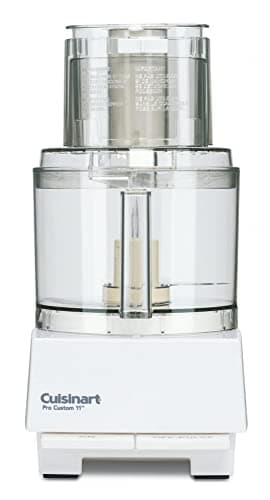
Cuisinart Food Processors Compared
The current Cuisinart line decoded — 14, 11, 8, 5 and 3 cups compared on motor, footprint, discs and warranty.
Roundup
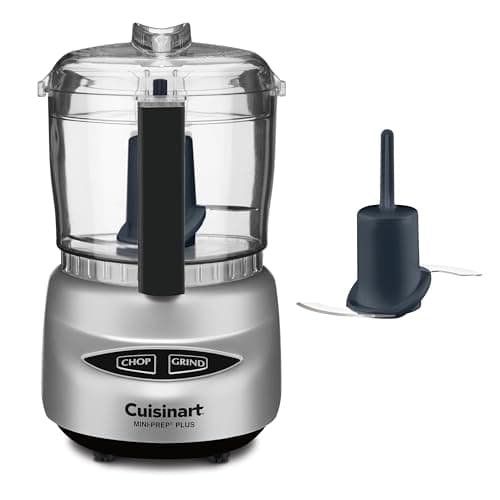
The Best Mini Food Processors
Four mini choppers ranked on bowl size, footprint, warranty and capability — plus what a mini genuinely cannot do.
Roundup
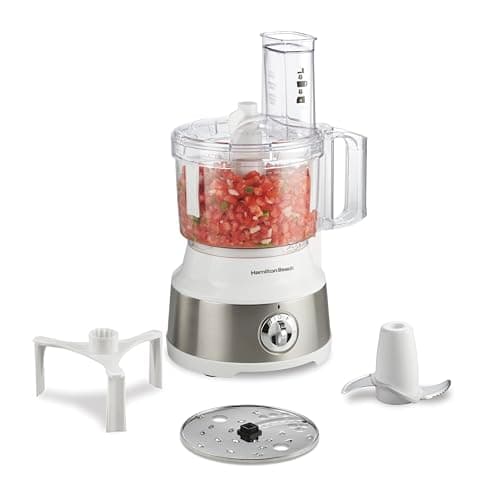
The Best Budget Food Processors
Five budget processors ranked on bowl size, motor, discs and warranty — and the three jobs where cheap machines genuinely fall short.
Comparison
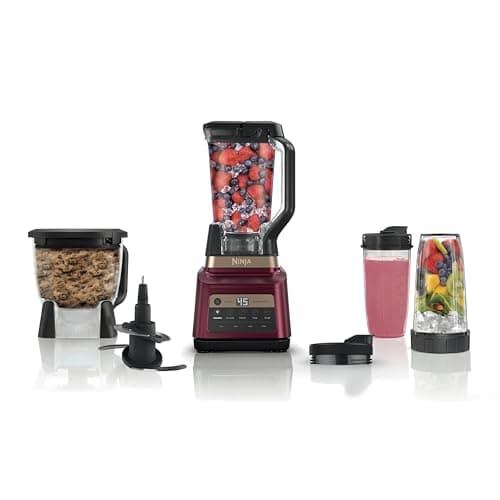
Blender vs. Food Processor: Which Do You Actually Need?
The honest line between a blender and a food processor, which to buy first, and when a combo machine is the right answer.
Review
Cuisinart DFP-14 Review
The Cuisinart DFP-14 on its 720 W motor, 14-cup bowl, warranty split and the discs it deliberately does not adjust.
Guide
How to Clean a Food Processor
The 60-second routine, safe blade handling, the parts people forget, and the habits that make a processor last.
https://wattandwhisk.com/food-processors/cuisinart-vs-kitchenaid