Do You Need a Special Sous Vide Container?
No. Anova says so on its own box. What you do need to check is three numbers — and two of them are about the cooker, not the pot.
Disclosure:Watt & Whisk is reader-supported. When you buy through links on this page we may earn an Amazon Associates commission, at no extra cost to you. Prices are pulled live from Amazon and shown with the date checked. How this works.
No. Anova states it plainly in its own listing: the Precision Cooker's adjustable clamp "makes it an ideal fit on nearly any pot that is deep enough to meet the minimum water depth requirements". A stockpot you already own is the standard answer, and the biggest one you own is usually the right one. What actually decides it is three published numbers: how tall the circulator is (that sets the minimum pot depth), whether its clamp adjusts or is fixed (that sets which pot rims it will grip), and the min and max water lines on the device itself. The Anova Precision Cooker is the pick if you want the clamp that fits the most vessels; the Joule Turbo is the pick if your pot is small, because at 1.65 inches square it takes up almost no room in the water.
The short answer
Quick picks
| # | Product | Best for | Score | Price |
|---|---|---|---|---|
| 01 | 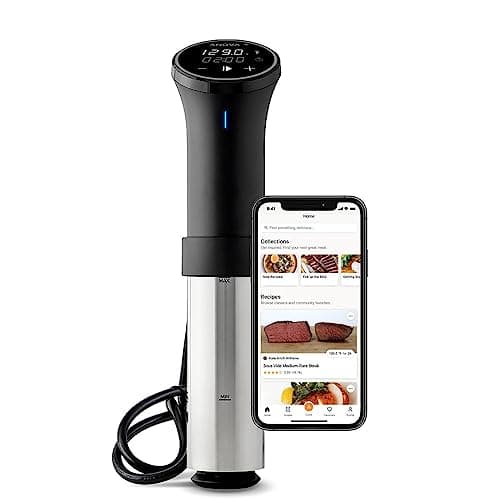 Anova Precision Cooker Anova's Precision Cooker is the category default: a 1,100-watt immersion circulator with a clip, a clear display, and a mature app. It clamps to any pot and holds temperature tightly, which is the entire job. 1100 watts · 1100W | Best overall sous vide | 4.4★★★★★ | $169.99Amazon |
| 02 | 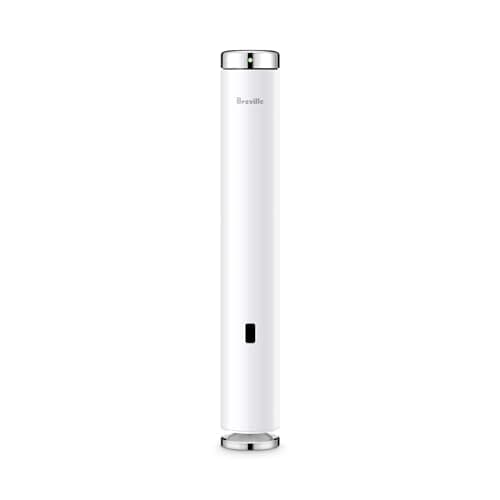 Breville Joule Turbo The Joule Turbo is the app-first circulator: at 1.65 inches across and 2.09 lb it's the smallest wand here, and its Turbo mode runs a cloud-computed variable-temperature curve that Breville states reaches precise results in half the time. You pick doneness by picture, not by number. Small | Best app experience | 4.4★★★★★ | $228.52Amazon |
| 03 | 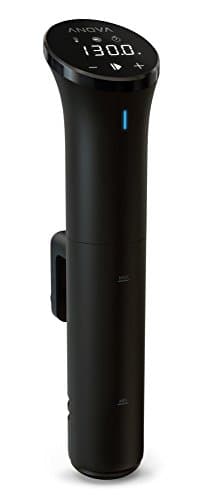 Anova Precision Cooker Nano 2.0 The Nano is the sensible middle: a 12.8-inch, 1.7 lb wand that stows in a kitchen drawer, runs from the unit itself or the free app, and carries Anova's 2-year warranty. It costs a fraction of the flagship and holds temperature just as tightly for a home-sized pot. 12.8" x 2.2" x 4.1" | Best value sous vide | 4.3★★★★★ | $71.99Amazon |
| 04 | 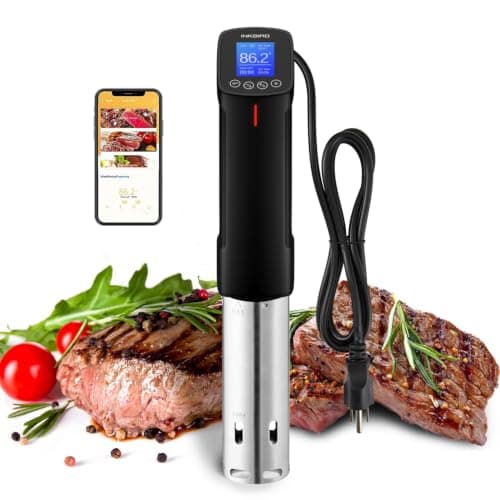 Inkbird ISV-100W The Inkbird undercuts the name brands while still giving you Wi-Fi and tight temperature control in a slim wand. It's the low-risk way to find out whether sous vide earns a place in your kitchen. 1 WIFI Sous Vide Machine · 100W | Best budget sous vide | 4.0★★★★★ | $95.99Amazon |
#ad · Live prices from the Amazon Product API, as of October 16, 2026. Where we have no verified live price, we show none — a gap beats a number that has rotted.
The picks, in detail
Anova Precision Cooker
spec score /5
$229.0026% off
Price as of October 16, 2026. Prices change — Amazon's is the one that counts.
#ad · we may earn a commission from this link to Anova Precision Cooker
Anova's Precision Cooker is the category default: a 1,100-watt immersion circulator with a clip, a clear display, and a mature app. It clamps to any pot and holds temperature tightly, which is the entire job.
- Capacity
- 1100 watts
- Footprint (W×D×H)
- 3.07 × 12.79 × 5.51 in
- Power
- 1100 W
- Weight
- 1.92 lb
- Cost per use*
- ≈6¢
- Est. per year*
- ≈$13
- Warranty
- 2 year manufacturer
- Holds temperature precisely
- 1,100 W heats water quickly
- Mature, reliable app
- Needs a container and a bag/clip
- App-dependent for some features
- Not silent
*Cost-to-run computed from the manufacturer's stated 1100W at $0.17/kWh (US average), 20-min sessions, 4×/week. Your rate and use will vary.
Breville Joule Turbo
spec score /5
$249.959% off
Price as of October 16, 2026. Prices change — Amazon's is the one that counts.
#ad · we may earn a commission from this link to Breville Joule Turbo
The Joule Turbo is the app-first circulator: at 1.65 inches across and 2.09 lb it's the smallest wand here, and its Turbo mode runs a cloud-computed variable-temperature curve that Breville states reaches precise results in half the time. You pick doneness by picture, not by number.
- Capacity
- Small
- Footprint (W×D×H)
- 1.65 × 1.65 × 11.97 in
- Weight
- 2.09 lb
- Warranty
- 1 year limited product warranty
- Turbo mode cuts cook time roughly in half (per Breville)
- Smallest wand here — 1.65 in across, fits a drawer
- Visual Doneness and Prime Time make timing forgiving
- Leans hard on the app — no full standalone control
- 1-year limited warranty vs Anova's 2
- Premium price for a circulator
Anova Precision Cooker Nano 2.0
spec score /5
$149.0052% off
Price as of October 16, 2026. Prices change — Amazon's is the one that counts.
#ad · we may earn a commission from this link to Anova Precision Cooker Nano 2.0
The Nano is the sensible middle: a 12.8-inch, 1.7 lb wand that stows in a kitchen drawer, runs from the unit itself or the free app, and carries Anova's 2-year warranty. It costs a fraction of the flagship and holds temperature just as tightly for a home-sized pot.
- Capacity
- 12.8" x 2.2" x 4.1"
- Footprint (W×D×H)
- 2.2 × 4.1 × 12.8 in
- Weight
- 1.7 lb
- Warranty
- 2 year warranty
- Fits in a drawer — 12.8 in, 1.7 lb
- 2-year warranty
- Full control on the unit; app is optional
- Slower than 1,100 W wands on a big pot
- Best suited to smaller containers
- Some app content sits behind a subscription
Inkbird ISV-100W
spec score /5
Price as of October 16, 2026. Prices change — Amazon's is the one that counts.
#ad · we may earn a commission from this link to Inkbird ISV-100W
The Inkbird undercuts the name brands while still giving you Wi-Fi and tight temperature control in a slim wand. It's the low-risk way to find out whether sous vide earns a place in your kitchen.
- Capacity
- 1 WIFI Sous Vide Machine
- Footprint (W×D×H)
- 2.362204722 × 2.362204722 × 16.141732267 in
- Power
- 100 W
- Cost per use*
- ≈1¢
- Est. per year*
- ≈$1
- Warranty
- 365
- Much cheaper than premium wands
- Wi-Fi with a usable app
- Slim, easy to store
- Slower to heat large pots
- Less polished app
- Shorter brand track record
*Cost-to-run computed from the manufacturer's stated 100W at $0.17/kWh (US average), 20-min sessions, 4×/week. Your rate and use will vary.
The three numbers that decide it
A sous vide circulator is a heater, a pump and a thermometer on a stick. It does not care what the water is in. What it cares about is being able to pull water in at the bottom, push it out at the top, and stay clamped to something while it does. That gives you three checks, and all three are published.
- The cooker's height, which sets your minimum pot depth. This is the spec people skip and then discover in the kitchen. The spread is large: the Joule Turbo is 11.97 inches tall, the Anova Nano 2.0 is 12.8, the Anova Precision Cooker is 12.79, and the Inkbird ISV-100W is 16.14 inches — more than four inches taller than the Joule. A standard 8-quart stockpot is around 7 to 8 inches deep, which is fine for all of them because the cooker sticks out of the water; the number that matters is whether the submerged portion reaches past the device's minimum water line while the pot is still safely below its own rim.
- Clamp type: adjustable or fixed. Anova publishes this difference explicitly, and it is the single most useful distinction on this page. The Precision Cooker has an adjustable clamp described as fitting nearly any pot deep enough. The Nano 2.0 has a fixed clamp — Anova says it "easily attaches to any stock pot or container", but a fixed clamp has one opening width, so a thick-walled plastic container or a pot with a rolled, reinforced rim can be outside it. If you already own the vessel you intend to use, measure the rim thickness before buying a fixed-clamp cooker.
- The min and max fill lines on the cooker. Every circulator has them marked on the body. Below the minimum the pump cavitates and the heater can cut out; above the maximum you are risking the electronics. These lines, not the pot's capacity, are the real constraint on how much water you can use.
What a dedicated container actually buys you
Polycarbonate sous vide containers exist and sell well, and they are not a scam — they just are not necessary. There is no container in our product registry, so we have nothing to sell you here and no reason to oversell the idea. What they genuinely do:
- They insulate better than steel. Plastic conducts heat far less readily than a thin stainless pot, so the cooker cycles less to hold temperature. On a one-hour steak this is irrelevant. On a 24-hour short rib it is a real, if small, saving — the arithmetic is on what sous vide costs to run.
- They are transparent. You can see whether a bag has floated or a seal has failed without lifting the lid, which matters more than it sounds for food safety on long cooks.
- They come with a cut lid. A lid shaped around the cooker is the convenient version of the evaporation fix below.
- They are rectangular. Flat bags lie better in a rectangle than in a round pot, which helps when you are cooking six portions at once.
None of that is worth buying before you have cooked sous vide a dozen times. Start with a pot, find out whether you actually do long cooks, then decide.
The one problem a pot genuinely has
Evaporation on long cooks. An open water bath at 135°F loses water steadily, and if the level drops below the cooker's minimum line the machine stops. This is not hypothetical: Inkbird publishes a timer that runs up to 99 hours, and nobody designs a 99-hour timer for a bath that will still be full at hour 12.
Two fixes, both free. Cover the pot with foil, pressed around the cooker shaft and the bag necks — this is the standard answer and it works. Or float ping-pong balls on the surface, which breaks up the open water area while letting the cooker move freely; this is a real technique, not a joke. For anything over four hours, do one of the two and top up the water when you walk past.
A related note on the cooker body: the Precision Cooker's removable stainless skirt comes off with a twist for cleaning, which is worth knowing because mineral scale builds up on the heating element in hard water and a scaled element holds temperature less well over time.
You do not need a vacuum sealer either
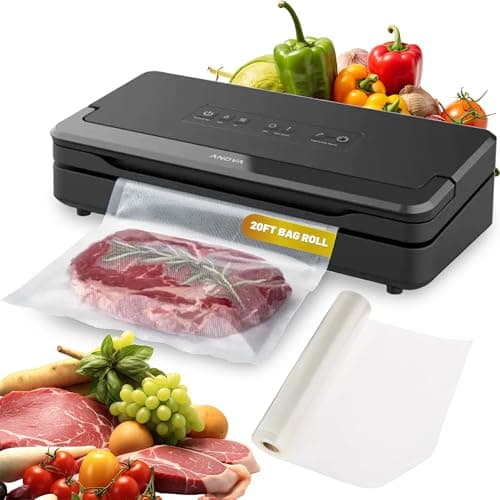
The same question gets asked about bags, and the answer has the same shape. The water-displacement method — zip-top bag, lower it into the water until the water pressure pushes the air out, seal the last corner above the surface — gets you close enough to a vacuum for almost every cook, and it costs nothing. A sealer earns its place if you batch-cook and freeze, or if you cook anything for more than about 12 hours where a zip-top seal can creep. We go through exactly where the line falls in do you need a vacuum sealer for sous vide, and rank the machines in best vacuum sealers.
One thing to get right regardless of vessel or bag: bags must stay submerged. Floating is the most common cause of an undercooked sous vide result, and it has nothing to do with the cooker. Clip the bag to the side, weigh it with a spoon, or use a rack. The safety side of this is covered in is sous vide safe.
Which cooker fits the most vessels
Anova Precision Cooker 3.0 — the adjustable clamp
If you do not yet know what you will be cooking in, this is the safe buy, and the clamp is the reason. Anova describes it as adjustable and fitting nearly any pot deep enough, which is the broadest compatibility claim anyone in the category makes. It draws 1,100 watts — the only published wattage among the full-size cookers we track, so it is the only one we can compute a running cost for — measures 3.07 × 12.79 × 5.51 inches, weighs 1.92 lb, has the removable stainless skirt, and carries a 2-year manufacturer warranty. Full detail in our Anova Precision Cooker review.
Breville Joule Turbo — the one for a small pot
At 1.65 × 1.65 inches in cross-section and 11.97 inches tall it is by far the least intrusive cooker here — it displaces almost no water and leaves the most room for bags, which is exactly what you want in a 6-quart pot rather than a 12-quart tub. It is also the shortest, so it needs the least depth.
The trade is that it is the most app-dependent machine in the category: Breville's Turbo mode, Visual Doneness and Prime Time features all live in the Joule app, and Breville publishes no wattage. The warranty is one year limited. Our Joule Turbo review covers what you give up by having no controls on the device, and Anova vs Joule sets the two philosophies side by side.
Anova Precision Cooker Nano 2.0 — check your rim first
The Nano is the value pick in the range and the one place the container question bites. Anova publishes a fixed clamp, so unlike its bigger sibling there is one opening width. It fits stock pots happily; a thick-walled container may not. It is 12.8 inches tall, 1.7 lb, holds ±0.2°F across a 32–197°F range, is built from what Anova calls durable plastic, and carries a 2-year warranty. Anova publishes no wattage for it. It stows in a drawer, which is the actual reason most people buy it.
Inkbird ISV-100W — the one that needs a deep vessel
The Inkbird is the budget WiFi cooker and the single most important vessel check on this page: at 16.14 inches tall it is more than four inches taller than the Joule, so a shallow pan will leave too little submerged. In a tall stockpot it is excellent value — ±0.2°F accuracy over 77–210°F, a timer to 99 hours, 2.4 GHz WiFi with app control, and a self-calibration function adjustable ±10°F so you can true it against a known thermometer. Its listing title states 1,000 watts. The warranty reads as 365 days. Compared head to head in Anova vs Inkbird.
The short version
Use the biggest pot you own, cover it with foil for anything over four hours, and spend the container money on better meat. If you have not bought a cooker yet, buy the Anova Precision Cooker for the adjustable clamp that fits nearly anything, or the Joule Turbo if your pots are small and you want the slimmest device in the water. If you are buying the Nano, measure the rim of the vessel you plan to use, because its clamp does not adjust. And if you are buying the Inkbird, make sure the pot is deep — that is the one pairing on this page that can genuinely go wrong.
Frequently asked questions
Do you need a special container for sous vide?
No. Anova's own listing says the Precision Cooker's adjustable clamp fits nearly any pot deep enough to meet the minimum water depth requirement. A stockpot you already own is the standard vessel, and the largest one you own is usually the best choice.
What container can I use for sous vide?
Any pot or heatproof container deep enough for the cooker's minimum water line, with a rim the clamp can grip. Stainless stockpots are the default. Avoid anything with a rolled or reinforced rim thicker than a fixed clamp's opening, and check the cooker's height first — they range from about 12 to over 16 inches.
Can you use a plastic container for sous vide?
Yes, provided it is rated for the temperature you are cooking at and the clamp fits its wall. Polycarbonate containers insulate better than thin steel, so the cooker cycles less on long cooks, and being transparent you can see whether a bag has floated. They are a convenience, not a requirement.
How deep does a sous vide container need to be?
Deep enough that the water sits between the cooker's marked minimum and maximum fill lines with the bags submerged. The practical constraint is the cooker you own: the Joule Turbo is 11.97 inches tall and the Inkbird ISV-100W is 16.14, so the same pot can be fine for one and too shallow for the other.
How do I stop the water evaporating on a long sous vide cook?
Cover the pot with foil pressed around the cooker shaft and the bag necks, or float ping-pong balls on the surface to break up the open water area. Both are free and both work. For any cook over about four hours, do one of them and top up the water when you pass the kitchen.
Does the sous vide clamp fit every pot?
Not always. Anova publishes an adjustable clamp on the Precision Cooker and a fixed clamp on the Nano 2.0, and a fixed clamp has one opening width. Stock pots are generally fine; thick-walled plastic containers and heavily rolled rims are where a fixed clamp can fail to close.
Do I need a vacuum sealer as well as a container?
No. The water-displacement method — lowering a zip-top bag into the water so pressure forces the air out, then sealing the last corner above the surface — is good enough for nearly every cook. A sealer earns its place for batch-cooking and freezing, or for cooks beyond about 12 hours where a zip-top seal can creep.
Keep reading
Sous Vide
The Best Sous Vide Machines of 2026
Anova and Inkbird immersion circulators compared on wattage, precision, app and running cost.
Guide
Do You Need a Vacuum Sealer for Sous Vide?
Why zip-top bags work for most sous vide, the water displacement method, and the four cases where a sealer earns its money.
Guide
What Is Sous Vide?
How sous vide works, what you need to start, the temperatures that matter, and what the technique genuinely cannot do.
Comparison
Anova vs. Joule: Which Sous Vide Circulator Should You Buy?
Anova vs Breville Joule on standalone control, size, speed, app dependence and warranty — and who each one suits.
Comparison
Anova vs Inkbird: Which Sous Vide Circulator?
Anova Precision Cooker 3.0 vs Inkbird ISV-100W on power, range, accuracy, app and warranty.
Guide
What Does Sous Vide Actually Cost to Run?
Worked electricity math for 2, 8 and 48-hour sous vide cooks, and the two habits that cut it most.
Guide
Is Sous Vide Safe?
Bacteria, bags and unattended cooking: what is settled, what the FDA actually says, and what to buy if plastic is your worry.
https://wattandwhisk.com/sous-vide/do-you-need-a-sous-vide-container