Is Sous Vide Safe?
People asking this mean one of three different things — bacteria, plastic, or leaving a heater running overnight. They have different answers.
Disclosure:Watt & Whisk is reader-supported. When you buy through links on this page we may earn an Amazon Associates commission, at no extra cost to you. Prices are pulled live from Amazon and shown with the date checked. How this works.
Sous vide is safe when you respect all three parts of it. Bacteria: pasteurization is a function of temperature and time, so food held for hours at 131°F can be as safe as food flashed to 165°F — but that only holds if the bath is genuinely at the temperature it claims. Plastic:the FDA's current position is that BPA is safe at the levels occurring in food, and sous vide bags are not made of the polycarbonate BPA is associated with anyway; vacuum bags are typically polyethylene and sold BPA-free. Unattended running:the real risk is not the heater, it is the water level dropping below the machine's minimum — cover the bath.
The short answer
Quick picks
| # | Product | Best for | Score | Price |
|---|---|---|---|---|
| 01 | 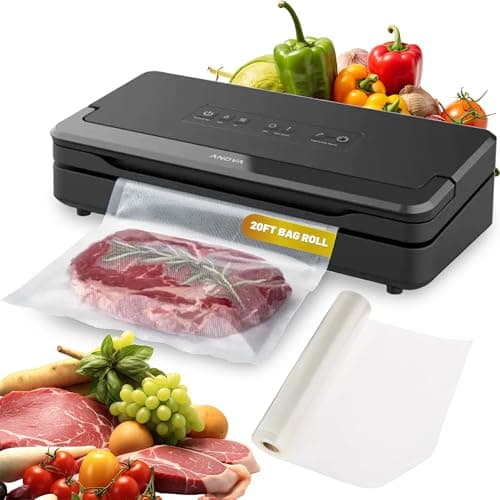 Anova Precision Vacuum Sealer Pro The sealer built by the people who make the circulator, and it shows in the details: a wet mode with low-pressure suction and a double seal for marinades and brines, one-handed operation, a full bag roll stored inside the hinge, and an accessory port for canning jar lids. Medium | Best sealer for sous vide | 4.5★★★★★ | $100.99Amazon |
| 02 | 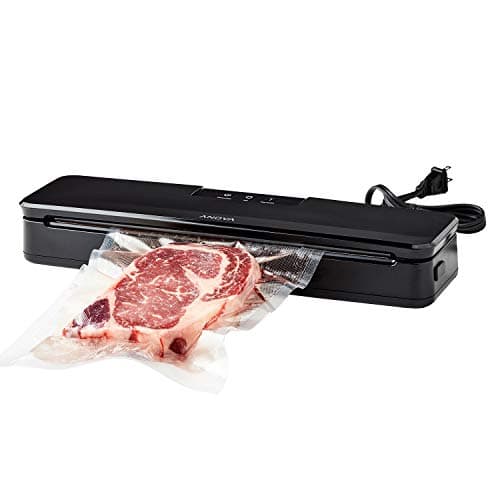 Anova Precision Vacuum Sealer The slim, minimalist version: wet and dry modes, ten pre-cut BPA-free bags in the box, and a 2-year manufacturer warranty, at 2.31 lb. If you have decided you want a sealer rather than zip-top bags, this is the sensible amount to spend on one. Includes 10 Precut Bags | Best value sealer | 4.3★★★★★ | $74.00Amazon |
| 03 | 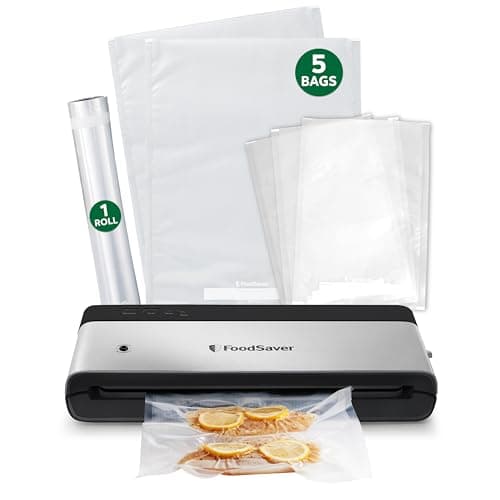 FoodSaver PowerVac Compact FoodSaver is the incumbent in this category and the PowerVac is its compact, vertically-storing model at 2.95 lb. If your main use is freezing meat in bulk rather than sous vide specifically, the bag ecosystem here is the largest and cheapest to feed. Compact | Best for freezer storage | 4.2★★★★★ | $99.99Amazon |
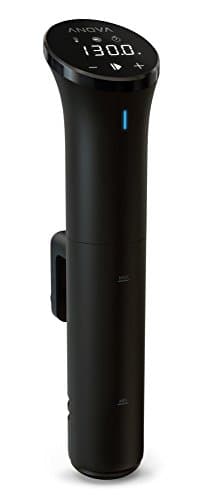
| 04 | 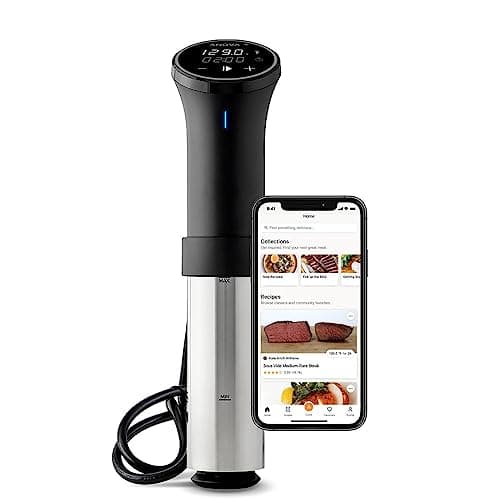 Anova Precision Cooker Anova's Precision Cooker is the category default: a 1,100-watt immersion circulator with a clip, a clear display, and a mature app. It clamps to any pot and holds temperature tightly, which is the entire job. 1100 watts · 1100W | Best overall sous vide | 4.4★★★★★ | $169.00Amazon |
#ad · Live prices from the Amazon Product API, as of Sep 17, 2026. Where we have no verified live price, we show none — a gap beats a number that has rotted.
The picks, in detail
Anova Precision Vacuum Sealer Pro
spec score /5
$154.9935% off
Price as of Sep 17, 2026. Prices change — Amazon's is the one that counts.
#ad · we may earn a commission from this link to Anova Precision Vacuum Sealer Pro
The sealer built by the people who make the circulator, and it shows in the details: a wet mode with low-pressure suction and a double seal for marinades and brines, one-handed operation, a full bag roll stored inside the hinge, and an accessory port for canning jar lids.
- Capacity
- Medium
- Footprint (W×D×H)
- 7 × 14.75 × 4.3 in
- Weight
- 5 lb
- Warranty
- 5 year manufacturer
- Wet mode with double seal handles marinades and brines properly
- Stores a full bag roll and cutter inside the housing
- Accessory port for jar lids and vacuum containers
- Overkill if you only seal dry food occasionally
- Takes real counter or cupboard space at 14.75 in deep
- The listing's warranty statements are inconsistent — check before you rely on a term
Anova Precision Vacuum Sealer
spec score /5
$89.9918% off
Price as of Sep 17, 2026. Prices change — Amazon's is the one that counts.
#ad · we may earn a commission from this link to Anova Precision Vacuum Sealer
The slim, minimalist version: wet and dry modes, ten pre-cut BPA-free bags in the box, and a 2-year manufacturer warranty, at 2.31 lb. If you have decided you want a sealer rather than zip-top bags, this is the sensible amount to spend on one.
- Capacity
- Includes 10 Precut Bags
- Footprint (W×D×H)
- 4.8 × 16.73 × 3.14 in
- Weight
- 2.31 lb
- Warranty
- 2 year manufacturer
- Slim enough to store in a drawer at 2.31 lb
- Wet and dry modes
- 2-year manufacturer warranty
- No internal bag storage
- Less suction than the Pro on dense loads
- Bags are an ongoing cost
FoodSaver PowerVac Compact
spec score /5
Price as of Sep 17, 2026. Prices change — Amazon's is the one that counts.
#ad · we may earn a commission from this link to FoodSaver PowerVac Compact
FoodSaver is the incumbent in this category and the PowerVac is its compact, vertically-storing model at 2.95 lb. If your main use is freezing meat in bulk rather than sous vide specifically, the bag ecosystem here is the largest and cheapest to feed.
- Capacity
- Compact
- Footprint (W×D×H)
- 5.5905511754 × 17.9133858085 × 10.236220462 in
- Weight
- 2.9541943108 lb
- Stores vertically, so it takes almost no shelf
- The widest and cheapest bag ecosystem
- 2.95 lb — easy to move
- No published warranty on the listing
- Compact body means a shorter seal bar
- Aimed at freezer storage more than sous vide
Anova Precision Cooker
spec score /5
$229.0026% off
Price as of Sep 17, 2026. Prices change — Amazon's is the one that counts.
#ad · we may earn a commission from this link to Anova Precision Cooker
Anova's Precision Cooker is the category default: a 1,100-watt immersion circulator with a clip, a clear display, and a mature app. It clamps to any pot and holds temperature tightly, which is the entire job.
- Capacity
- 1100 watts
- Footprint (W×D×H)
- 3.07 × 12.79 × 5.51 in
- Power
- 1100 W
- Weight
- 1.92 lb
- Cost per use*
- ≈6¢
- Est. per year*
- ≈$13
- Warranty
- 2 year manufacturer
- Holds temperature precisely
- 1,100 W heats water quickly
- Mature, reliable app
- Needs a container and a bag/clip
- App-dependent for some features
- Not silent
*Cost-to-run computed from the manufacturer's stated 1100W at $0.17/kWh (US average), 20-min sessions, 4×/week. Your rate and use will vary.
Three questions wearing one costume
"Is sous vide safe" is asked by three different people. One has read that chicken must reach 165°F and is looking at a recipe that says 145°F. One is worried about cooking in plastic. One wants to know whether they can start a brisket on Friday night and go to bed. Each has a real answer and they are not related to each other, so this page takes them one at a time.
1. Bacteria: temperature is only half of it
The number most people know — 165°F for poultry — is the temperature at which pathogen reduction is effectively instantaneous. It is the right advice for conventional cooking because a roast passes through that point briefly and nobody is timing it. It is not the only temperature at which food becomes safe.
Pasteurization is a relationship between heat and duration. Lower temperatures achieve the same reduction in pathogens if the food is held there long enough — minutes at one temperature, hours at another. Sous vide is the only domestic technique that can hold a precise temperature for that long, which is exactly why it can produce chicken at a texture a 165°F roast can never have while still being pasteurized. The USDA publishes the conventional safe minimum internal temperatures, and our own sous vide times and temperatures guide covers the practical settings.
Three rules make that relationship reliable rather than theoretical:
- The bath has to actually be at temperature. Everything above depends on it. This is why an accurate, circulating machine is a food-safety component and not an indulgence, and why a still pot heated from the base is the wrong tool — the case we make in sous vide vs. Instant Pot.
- Time starts when the center of the food reaches temperature, not when the bag goes in. Thickness, not weight, drives that.
- Do not hold food below about 130°F for extended periods. Below that range you are incubating rather than pasteurizing. Every sous vide recipe worth following sits above it.
One more practical point: chill or serve promptly. Food that comes out of a bath and sits at room temperature is in the same position as any other cooked food. Either eat it, or cool it fast and refrigerate it.
2. Plastic: what is actually in a sous vide bag
This is the question the search data says people are most anxious about, and most of the anxiety is aimed at the wrong material.
BPA is a structural component of polycarbonate — the hard, clear plastic used in drink bottles — and of the epoxy resins that line some metal cans. Vacuum-sealer bags are not polycarbonate. They are typically multi-layer polyethylene and nylon, chosen because they are flexible, sealable and stable in hot water. The bags Anova ships with the Precision Vacuum Sealer are listed as BPA-free on the product listing.
On BPA itself, the FDA's published position is worth quoting rather than paraphrasing: its current perspective, based on its most recent safety assessment, is that BPA is safe at the current levels occurring in foods. The FDA has amended its regulations to no longer provide for BPA-based polycarbonate in baby bottles, sippy cups and infant-formula packaging — but it is explicit that this change was made because those uses had been abandoned by industry, not because of a safety finding. We are reporting the regulator's stated position; we are not in a position to adjudicate the wider scientific debate, and we will not pretend otherwise.
The temperature context matters too. Sous vide runs roughly 130–185°F. That is below the boiling point of water and far below the 350–450°F a frying pan or an air-fryer basket sees. Whatever your view on hot food and plastics, sous vide is at the gentle end of the range, not the aggressive one.
If you would rather not use plastic at all
There are two honest routes, and one of them we cannot help you shop for.
The first is glass: canning jars work in a water bath for custards, eggs, yoghurt, oats and infusions, and they are the standard answer for anything liquid. They do not work for a steak. The second is reusable silicone bags, which we do not stock and will not recommend blind — we only publish specs we can read off a listing we have checked.
What we would say is this: if avoiding plastic is your priority, the same instinct probably applies to the rest of your counter, and the material question is far more consequential in air frying, where surfaces run hot enough for coatings to matter. That is covered in best non-toxic air fryers and best glass air fryers.
3. Leaving it running: the real risk is water level
Long cooks are the point of the technique — brisket and short rib are measured in tens of hours — so unattended running is not an edge case.
The failure mode people imagine is a heater left on. The failure mode that actually happens is evaporation. An open pot loses water over twelve hours; when the level drops below the machine's minimum depth, the circulator stops, and the food coasts down into the temperature range you spent the whole cook staying above. Anova's clamp is designed around meeting a minimum water depth for exactly this reason, and the fix is trivial: cover the bath with a lid, cling film or foil, start with the level well above the minimum mark, and use the deepest pot you own for anything over a few hours.
The second precaution is more prosaic. Put the pot on a heat-tolerant surface, not directly against a wall or a cabinet edge, and route the cable so it cannot be pulled. Wi-Fi models — the Anova Precision Cooker 3.0 and the Inkbird ISV-100W both have it — will alert you on a phone if something changes, which is worth having on an overnight cook.
What to look for if the bag is your concern
Before the picks, the three specifications that actually matter for a sealer used for sous vide rather than for freezing:
- A wet or moist mode. Marinated and brined food defeats a dry-only sealer — liquid gets drawn into the seal and the bag fails mid-cook. Anova publishes wet-and-dry dual modes on both its sealers; FoodSaver publishes dry and moist settings on the PowerVac.
- Bag supply and stated bag material. The Anova slim sealer ships ten pre-cut BPA-free bags; the Sealer Pro ships a 19 ft roll and stores it inside the machine with a built-in cutter; the FoodSaver PowerVac ships an 11 in × 8 ft roll plus three quart and two gallon bags.
- Whether you need a sealer at all. You do not, for most cooks — water displacement in a zip-top bag works, and we go through when it does and does not in do you need a vacuum sealer.
One warranty conflict, published rather than smoothed over.Anova's own listing text disagrees with itself on both sealers: the Precision Vacuum Sealer Pro title says a 2-year warranty while Amazon's structured warranty field and Anova's own feature bullet both say 5 years. We publish the shorter figure and suggest you check it at the buy box. FoodSaver publishes no warranty term on the PowerVac listing at all, and its "up to 5x longer" freshness figure and "35% less bag waste" claim are FoodSaver's own comparisons against its previous models, not measurements we have made.
The bottom line
Sous vide is not a risky technique. It is a technique with a tighter dependency on equipment than most, because the safety case rests on the bath being at the temperature the display claims. Buy a machine that publishes what it does — the Anova Precision Cooker 3.0 for power and a two-year warranty, or the Inkbird ISV-100W if a published ±0.1°C figure and a calibration function matter more to you than brand. Then cover the pot, mind the water level, and use bags sold for the job. If you are still weighing the whole idea, is sous vide worth it makes the case both ways, and our sous vide hub ranks the machines.
Frequently asked questions
Is it safe to cook in plastic bags at sous vide temperatures?
Vacuum-sealer bags are typically multi-layer polyethylene and nylon, not the polycarbonate that BPA is associated with, and are commonly sold BPA-free — the bags Anova ships with its Precision Vacuum Sealer are listed as BPA-free. Sous vide also runs roughly 130 to 185 degrees Fahrenheit, well below boiling and far below frying temperatures.
What does the FDA say about BPA in food packaging?
The FDA's stated current perspective, based on its most recent safety assessment, is that BPA is safe at the current levels occurring in foods. It has amended its regulations to no longer provide for BPA-based polycarbonate in baby bottles, sippy cups and infant formula packaging, but says that change reflects industry abandonment of those uses rather than a safety finding.
Is chicken safe at 145 degrees in a sous vide?
Pasteurization depends on temperature and time together, not temperature alone. The familiar 165 degree figure is the point at which pathogen reduction is effectively instant; lower temperatures achieve the same reduction when the food is held there long enough. That only works if the bath is genuinely at the temperature it claims, which is why machine accuracy is a food-safety issue.
Can I leave a sous vide running overnight?
Yes, and long cooks are the point of the technique. The real risk is evaporation rather than the heater: if the water drops below the machine's minimum depth the circulator stops. Cover the bath with a lid or foil, start well above the minimum mark and use a deep pot.
Can you sous vide in glass jars instead of bags?
Yes, for anything liquid or semi-liquid — custards, eggs, yoghurt, oats and infusions all work in canning jars in the bath. Glass does not work for a steak, where you need the bag pressed against the food.
Do I need a vacuum sealer for sous vide to be safe?
No. Water displacement in a zip-top bag removes enough air for most cooks. A sealer matters most for long cooks, for marinated or brined food where you need a wet mode, and if you also want to freeze in the same bags.
Sources
Keep reading
Sous Vide
The Best Sous Vide Machines of 2026
Anova and Inkbird immersion circulators compared on wattage, precision, app and running cost.
Guide
Sous Vide Times and Temperatures Explained
Why temperature sets doneness and time sets texture, how thickness drives timing, and where to get safe pasteurization tables.
Guide
Do You Need a Vacuum Sealer for Sous Vide?
Why zip-top bags work for most sous vide, the water displacement method, and the four cases where a sealer earns its money.
Guide
What Is Sous Vide?
How sous vide works, what you need to start, the temperatures that matter, and what the technique genuinely cannot do.
Comparison
Sous Vide vs. Instant Pot
Whether a multicooker can genuinely sous vide, what circulation buys you, and which machine to own if you only have room for one.
Review
Anova Precision Cooker 3.0 Review
The Anova Precision Cooker 3.0 on power, on-unit control, the clamp, Wi-Fi and what the optional subscription covers.
https://wattandwhisk.com/sous-vide/is-sous-vide-safe