Is Sous Vide Worth It?
A cheap machine, a real technique, and a completely honest answer about who should not bother.
Disclosure:Watt & Whisk is reader-supported. When you buy through links on this page we may earn an Amazon Associates commission, at no extra cost to you. Prices are pulled live from Amazon and shown with the date checked. How this works.
Sous vide is worth it if you cook expensive steak, eat a lot of chicken breast, like tough cuts cooked to a tender texture, or cook for people at unpredictable times. It is not worth it if you cook mostly quick weeknight meals, want crisp results, or already cook meat well by feel. The entry cost is low — an Anova Mini costs about the same as one restaurant dinner — so the question is really whether the technique matches how you eat, not whether the machine is good.
The short answer
Quick picks
| # | Product | Best for | Score | Price |
|---|---|---|---|---|
| 01 | 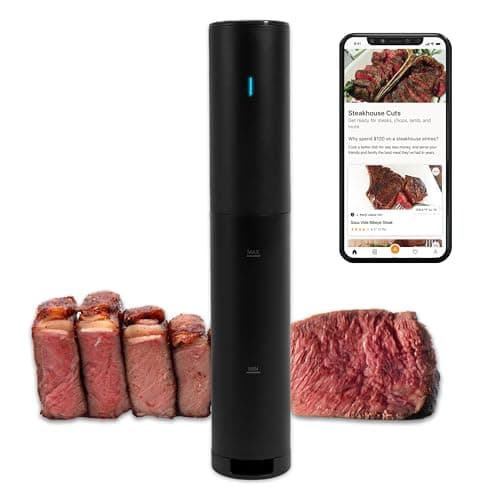 Anova Precision Cooker Mini Anova's most affordable circulator: 850 watts, 1.83 lb, Bluetooth control from the free app. It is the low-stakes way to find out whether you'll actually cook this way twice a month, and it costs less than the steak you'd ruin learning on the hob. Mini · 850W | Best cheapest way to try sous vide | 4.0★★★★★ | $26.99Amazon |
| 02 | 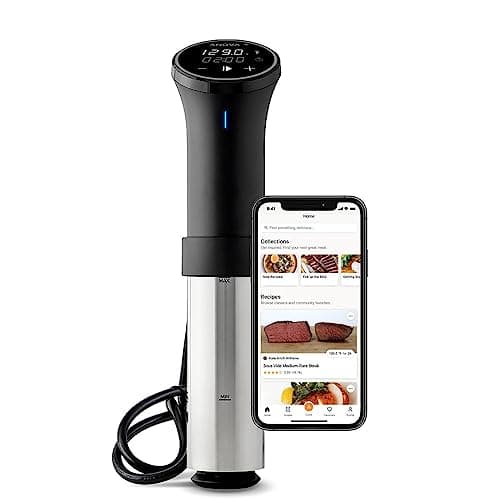 Anova Precision Cooker Anova's Precision Cooker is the category default: a 1,100-watt immersion circulator with a clip, a clear display, and a mature app. It clamps to any pot and holds temperature tightly, which is the entire job. 1100 watts · 1100W | Best overall sous vide | 4.4★★★★★ | $169.99Amazon |
| 03 | 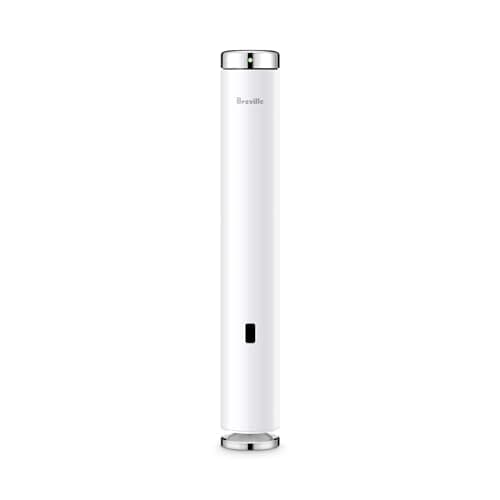 Breville Joule Turbo The Joule Turbo is the app-first circulator: at 1.65 inches across and 2.09 lb it's the smallest wand here, and its Turbo mode runs a cloud-computed variable-temperature curve that Breville states reaches precise results in half the time. You pick doneness by picture, not by number. Small | Best app experience | 4.4★★★★★ | $228.52Amazon |
#ad · Live prices from the Amazon Product API, as of October 16, 2026. Where we have no verified live price, we show none — a gap beats a number that has rotted.
The picks, in detail
Anova Precision Cooker Mini
spec score /5
$29.007% off
Price as of October 16, 2026. Prices change — Amazon's is the one that counts.
#ad · we may earn a commission from this link to Anova Precision Cooker Mini
Anova's most affordable circulator: 850 watts, 1.83 lb, Bluetooth control from the free app. It is the low-stakes way to find out whether you'll actually cook this way twice a month, and it costs less than the steak you'd ruin learning on the hob.
- Capacity
- Mini
- Footprint (W×D×H)
- 2.2 × 4.13 × 12.2 in
- Power
- 850 W
- Weight
- 1.83 lb
- Cost per use*
- ≈5¢
- Est. per year*
- ≈$10
- Cheapest circulator we'd actually recommend
- 850 W is plenty for a stockpot
- 1.83 lb — stores anywhere
- Bluetooth only on the free app; Wi-Fi needs a subscription
- Slowest to bring a big bath up to temperature
- No published warranty on the listing
*Cost-to-run computed from the manufacturer's stated 850W at $0.17/kWh (US average), 20-min sessions, 4×/week. Your rate and use will vary.
Anova Precision Cooker
spec score /5
$229.0026% off
Price as of October 16, 2026. Prices change — Amazon's is the one that counts.
#ad · we may earn a commission from this link to Anova Precision Cooker
Anova's Precision Cooker is the category default: a 1,100-watt immersion circulator with a clip, a clear display, and a mature app. It clamps to any pot and holds temperature tightly, which is the entire job.
- Capacity
- 1100 watts
- Footprint (W×D×H)
- 3.07 × 12.79 × 5.51 in
- Power
- 1100 W
- Weight
- 1.92 lb
- Cost per use*
- ≈6¢
- Est. per year*
- ≈$13
- Warranty
- 2 year manufacturer
- Holds temperature precisely
- 1,100 W heats water quickly
- Mature, reliable app
- Needs a container and a bag/clip
- App-dependent for some features
- Not silent
*Cost-to-run computed from the manufacturer's stated 1100W at $0.17/kWh (US average), 20-min sessions, 4×/week. Your rate and use will vary.
Breville Joule Turbo
spec score /5
$249.959% off
Price as of October 16, 2026. Prices change — Amazon's is the one that counts.
#ad · we may earn a commission from this link to Breville Joule Turbo
The Joule Turbo is the app-first circulator: at 1.65 inches across and 2.09 lb it's the smallest wand here, and its Turbo mode runs a cloud-computed variable-temperature curve that Breville states reaches precise results in half the time. You pick doneness by picture, not by number.
- Capacity
- Small
- Footprint (W×D×H)
- 1.65 × 1.65 × 11.97 in
- Weight
- 2.09 lb
- Warranty
- 1 year limited product warranty
- Turbo mode cuts cook time roughly in half (per Breville)
- Smallest wand here — 1.65 in across, fits a drawer
- Visual Doneness and Prime Time make timing forgiving
- Leans hard on the app — no full standalone control
- 1-year limited warranty vs Anova's 2
- Premium price for a circulator
Most appliance questions are about which model to buy. This one is genuinely about whether to buy at all, because sous vide is a technique before it is a machine, and the technique fits some kitchens beautifully and others not at all. The good news is that the entry price has collapsed — Anova positions the Mini as costing about the same as a night out at a steakhouse — so the financial risk is small. The real cost is different, and it is worth being upfront about it.
The case for
It removes the risk from expensive meat
The single strongest argument. A thick ribeye costs real money, and the way home cooks ruin one is overcooking the middle while chasing a crust. Sous vide makes that mechanically impossible — the meat cannot exceed the bath temperature — so a $30 steak becomes a repeatable result rather than a gamble. If you buy good steak more than a few times a year, the machine pays for itself in salvaged dinners quite quickly.
It transforms chicken breast
The most underrated benefit and the one that changes weekly eating rather than special occasions. Chicken breast is unforgiving because the window between safe and dry is narrow in an oven. Holding it in a bath at a lower temperature for longer achieves the same pasteurization while leaving it genuinely juicy — a texture most people have only encountered in restaurants. If chicken breast is a staple in your house, this is the single biggest quality change any kitchen appliance will make to your week.
It makes timing forgiving
Because food cannot overcook in terms of doneness, dinner can sit at perfect readiness for an hour while someone is late. Breville built a feature around exactly this — the Joule app's Prime Time gives you a window during which the food is at its best rather than a single moment. For households where meal times move, this is a bigger practical benefit than the food quality.
It makes cheap cuts behave like expensive ones
Short rib, brisket, pork shoulder and lamb shank held at a moderate temperature for 24 to 72 hours come out with the texture of a tender cut rather than a braised, shredded one. That is a genuinely different result from anything an oven or a slow cooker produces, and it is where sous vide stops being a convenience and becomes a technique with no substitute.
The case against
It demands planning you may not do
This is the reason most circulators end up in cupboards. A steak is an hour, minimum, from a standing start. Chicken is longer. Short ribs are two to three days. If your cooking decision happens at 6:30pm when you open the fridge, sous vide is structurally incompatible with your life, and no amount of enthusiasm fixes that. Breville's Turbo mode — stated to reach precise results in about half the time — is the only meaningful answer anyone has offered, and even halved, an hour is still an hour.
There is always a second step
Water cannot brown. Everything that comes out of the bag needs a hard sear in a hot pan or a pass with a torch, which means the sous vide bath replaces the middle of cooking rather than the whole of it. You still get out a cast-iron pan, still generate smoke, still wash it. People imagine sous vide as set-and-forget and are surprised by the ten minutes of actual work at the end.
The list of things it improves is shorter than it looks
It does very little for anything you want crisp — roast potatoes, chips, wings, anything breaded. Those are an air fryer job, and it is worth being blunt that an air fryer will change more weeknight meals than a circulator will. Most vegetables need temperatures above what circulators comfortably run at to break down properly. Fish works but is unforgiving of over-long holds. Realistically the technique transforms steak, chicken breast, eggs and tough cuts, and leaves the rest of your cooking untouched.
The machine is not the whole purchase
You will also want a container with a lid, bags, and a pan you can get genuinely hot. None of it is expensive, and a stockpot and zip-top bags will get you started, but the wand alone is not a complete setup and the extras add up to more than people budget for.
What it costs to run — the surprising part
People assume a machine that runs for three hours must be expensive to operate, and the opposite is true. A circulator draws its rated wattage only while the element is actually firing, and once a bath is at temperature it fires intermittently to top up losses. The water is insulated by the pot; if you put a lid on it, the losses are small.
Take the 1,100-watt Anova as the worst case. It draws near full power for the first ten to fifteen minutes bringing the bath up, then cycles at a low duty for the rest. A three-hour steak cook realistically lands somewhere around a third of a kilowatt-hour in total, which at the U.S. average residential rate of roughly 17 cents per kilowatt-hour is a few cents. Even a 48-hour short-rib cook, which sounds alarming, is a small number because the holding phase draws so little.
For comparison, an oven at 2 to 3 kilowatts run for one hour costs several times a whole sous vide cook. So running cost is genuinely not a reason to avoid this — and if you want it lower still, a lid is the single highest-return accessory you can add.
Three cooks who should skip it
- The improviser. If you decide what to cook when you are hungry, a technique with a one-hour floor will not survive contact with your habits.
- The crisp-food cook. If most of what you make is roasted, fried or breaded, an air fryer is a far better use of the same money and counter space.
- The confident meat cook. If you already cook steak by feel and it comes out how you like it, sous vide is solving a problem you do not have. It will make your steak more consistent, not better.
Who should buy one today
Anyone who buys good steak regularly. Anyone who eats a lot of chicken breast and finds it dull. Anyone who meal-preps proteins for the week. Anyone who entertains and hates the timing pressure of serving eight people at once. And anyone who has ever thrown away an overcooked expensive piece of meat and been genuinely annoyed about it.
How much to spend on finding out
Very little, and this is what makes the decision easy. The Anova Precision Cooker Miniis 850 watts in a 1.83 lb wand and is Anova's most affordable cooker; it does everything described on this page. If you already know you will keep at it, the Anova Precision Cooker 3.0 at 1,100 watts with Wi-Fi and a 2-year warranty handles bigger containers, and the Breville Joule Turbo is the pick if the software and Turbo mode appeal.
Our advice is to buy the cheap one first. The circulator is the least important variable in this technique — the water does the cooking, and every machine holds temperature closely enough that the difference does not appear on a plate. Spend the difference on a decent cast-iron pan for the sear, which genuinely does change the result. Full shortlists are in best budget sous vide and Anova vs. Joule, and if the mechanics are still fuzzy, start at what is sous vide.
Where it will actually live
One last practical point in the machine's favor, and it is the reason a circulator survives in kitchens where other appliances do not. It is a wand — 12 or 13 inches long and under two pounds — so it goes in a drawer next to the whisk. It costs you no counter space at all.
That matters more than it sounds, because the appliances people abandon are usually the ones that demand a permanent spot and then fail to earn it. A circulator makes no such demand: if you use it twice a month it is still not in your way, and the same cannot be said of a stand mixer or a large air fryer. The container is the only bulky part, and for the first year a stockpot you already own does the job.
The verdict
Sous vide is worth it for a specific and identifiable kind of cook: one who plans ahead, eats a lot of steak or chicken breast, and values consistency over speed. For that person it is the highest-impact cheap appliance in the kitchen. For everyone else it is a fascinating machine that will be used four times and then live under the sink — and given how many of those we have all owned, the honest recommendation is to check yourself against the three cases above before buying anything.
If the machine you are weighing this against is one you already own, two comparisons cover it directly: sous vide vs. Instant Poton why a multicooker's still water bath is not the same thing, and sous vide vs. slow cooker on the older low-and-slow alternative.
There is one honest comparison that belongs in any "is it worth it" answer: the free alternative. A reverse sear in a low oven gets you most of the way to the same steak, costs nothing, and produces a better crust because the meat comes out dry rather than wet. Where each method wins is set out in sous vide vs reverse sear.
Frequently asked questions
Is sous vide worth it for a home cook?
It is worth it if you cook expensive steak, eat a lot of chicken breast, like tough cuts cooked tender, or serve people at unpredictable times. It is not worth it if you decide what to cook when you are already hungry, want crisp results, or already cook meat well by feel.
What are the disadvantages of sous vide?
It needs planning — a steak is an hour minimum and short ribs can be two to three days. It cannot brown anything, so every cook ends with a hard sear in a hot pan. And the list of foods it genuinely transforms is short: steak, chicken breast, eggs and tough cuts.
Does sous vide actually taste better?
For chicken breast and thick steak, noticeably — because nothing gets hotter than your target, there is no dry outer band. For food you already cook well, it makes results more consistent rather than better. For anything you want crisp, it does not help at all.
How much should I spend on a sous vide machine?
Start cheap. The circulator is the least important variable in this technique because the water does the cooking, and every machine holds temperature closely enough that the difference does not appear on a plate. Spend the difference on a cast-iron pan for the sear, which genuinely changes the result.
Is an air fryer or a sous vide machine more useful?
For most households, the air fryer — it changes far more weeknight meals, because it handles everything crisp, roasted or breaded, which sous vide cannot touch. Buy a circulator when the specific things it transforms, like steak and chicken breast, are what you actually eat.
Sources
Keep reading
Sous Vide
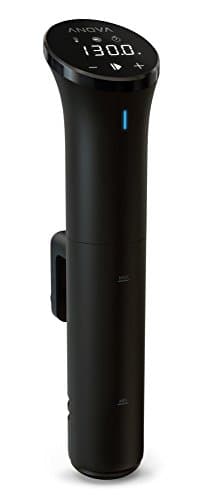
The Best Sous Vide Machines of 2026
Anova and Inkbird immersion circulators compared on wattage, precision, app and running cost.
Guide
What Is Sous Vide?
How sous vide works, what you need to start, the temperatures that matter, and what the technique genuinely cannot do.
Roundup
The Best Budget Sous Vide Machines
Four budget circulators ranked on power, app access, size and warranty — and the three things extra money actually buys.
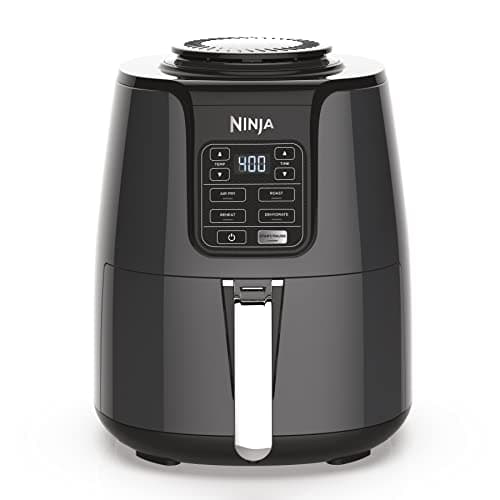
Air Fryers
The Best Air Fryers of 2026
Our ranked air-fryer picks, compared on capacity, footprint, materials and running cost — with live Amazon prices.
Review
Breville Joule Turbo Review
The Joule Turbo on Turbo mode, Visual Doneness, Prime Time, its 1.65-inch body and the app-dependence trade-off.
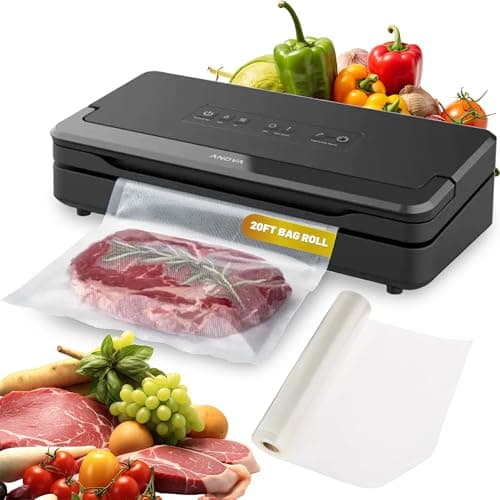
Guide
Do You Need a Vacuum Sealer for Sous Vide?
Why zip-top bags work for most sous vide, the water displacement method, and the four cases where a sealer earns its money.
https://wattandwhisk.com/sous-vide/is-sous-vide-worth-it