Sous Vide vs Slow Cooker
Both cook low and slow, and they are not substitutes. One holds an exact temperature; the other pushes past it on purpose.
Disclosure:Watt & Whisk is reader-supported. When you buy through links on this page we may earn an Amazon Associates commission, at no extra cost to you. Prices are pulled live from Amazon and shown with the date checked. How this works.
A slow cooker holds food at roughly 190–210°F for hours, which breaks down collagen into gelatin — that is what makes pot roast and pulled pork work. A sous vide circulator holds water at an exact temperature, typically 129–140°F for steak, so food reaches one doneness edge to edge and cannot overcook. Slow cooker for tough cuts you want falling apart; sous vide for tender cuts you want cooked precisely. They solve different problems.
The short answer
Quick picks
| # | Product | Best for | Score | Price |
|---|---|---|---|---|
| 01 | 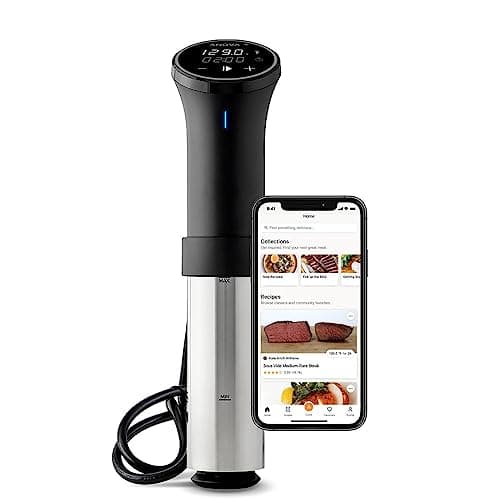 Anova Precision Cooker Anova's Precision Cooker is the category default: a 1,100-watt immersion circulator with a clip, a clear display, and a mature app. It clamps to any pot and holds temperature tightly, which is the entire job. 1100 watts · 1100W | Best overall sous vide | 4.4★★★★★ | $169.99Amazon |
| 02 | 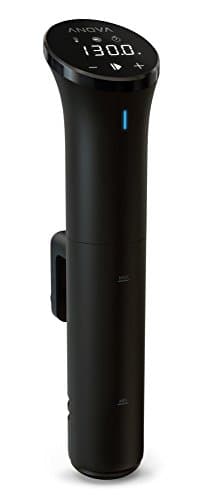 Anova Precision Cooker Nano 2.0 The Nano is the sensible middle: a 12.8-inch, 1.7 lb wand that stows in a kitchen drawer, runs from the unit itself or the free app, and carries Anova's 2-year warranty. It costs a fraction of the flagship and holds temperature just as tightly for a home-sized pot. 12.8" x 2.2" x 4.1" | Best value sous vide | 4.3★★★★★ | $71.99Amazon |
| 03 | 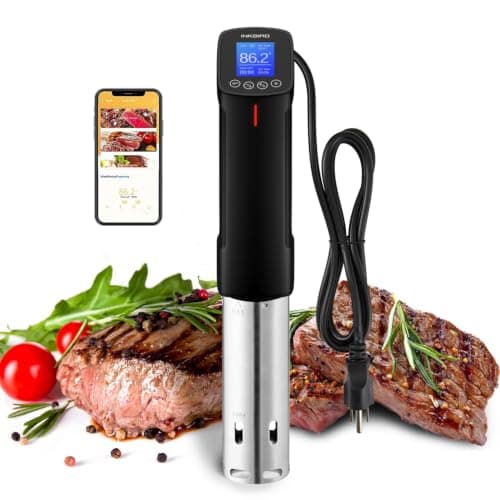 Inkbird ISV-100W The Inkbird undercuts the name brands while still giving you Wi-Fi and tight temperature control in a slim wand. It's the low-risk way to find out whether sous vide earns a place in your kitchen. 1 WIFI Sous Vide Machine · 100W | Best budget sous vide | 4.0★★★★★ | $95.99Amazon |
#ad · Live prices from the Amazon Product API, as of October 16, 2026. Where we have no verified live price, we show none — a gap beats a number that has rotted.
The picks, in detail
Anova Precision Cooker
spec score /5
$229.0026% off
Price as of October 16, 2026. Prices change — Amazon's is the one that counts.
#ad · we may earn a commission from this link to Anova Precision Cooker
Anova's Precision Cooker is the category default: a 1,100-watt immersion circulator with a clip, a clear display, and a mature app. It clamps to any pot and holds temperature tightly, which is the entire job.
- Capacity
- 1100 watts
- Footprint (W×D×H)
- 3.07 × 12.79 × 5.51 in
- Power
- 1100 W
- Weight
- 1.92 lb
- Cost per use*
- ≈6¢
- Est. per year*
- ≈$13
- Warranty
- 2 year manufacturer
- Holds temperature precisely
- 1,100 W heats water quickly
- Mature, reliable app
- Needs a container and a bag/clip
- App-dependent for some features
- Not silent
*Cost-to-run computed from the manufacturer's stated 1100W at $0.17/kWh (US average), 20-min sessions, 4×/week. Your rate and use will vary.
Anova Precision Cooker Nano 2.0
spec score /5
$149.0052% off
Price as of October 16, 2026. Prices change — Amazon's is the one that counts.
#ad · we may earn a commission from this link to Anova Precision Cooker Nano 2.0
The Nano is the sensible middle: a 12.8-inch, 1.7 lb wand that stows in a kitchen drawer, runs from the unit itself or the free app, and carries Anova's 2-year warranty. It costs a fraction of the flagship and holds temperature just as tightly for a home-sized pot.
- Capacity
- 12.8" x 2.2" x 4.1"
- Footprint (W×D×H)
- 2.2 × 4.1 × 12.8 in
- Weight
- 1.7 lb
- Warranty
- 2 year warranty
- Fits in a drawer — 12.8 in, 1.7 lb
- 2-year warranty
- Full control on the unit; app is optional
- Slower than 1,100 W wands on a big pot
- Best suited to smaller containers
- Some app content sits behind a subscription
Inkbird ISV-100W
spec score /5
Price as of October 16, 2026. Prices change — Amazon's is the one that counts.
#ad · we may earn a commission from this link to Inkbird ISV-100W
The Inkbird undercuts the name brands while still giving you Wi-Fi and tight temperature control in a slim wand. It's the low-risk way to find out whether sous vide earns a place in your kitchen.
- Capacity
- 1 WIFI Sous Vide Machine
- Footprint (W×D×H)
- 2.362204722 × 2.362204722 × 16.141732267 in
- Power
- 100 W
- Cost per use*
- ≈1¢
- Est. per year*
- ≈$1
- Warranty
- 365
- Much cheaper than premium wands
- Wi-Fi with a usable app
- Slim, easy to store
- Slower to heat large pots
- Less polished app
- Shorter brand track record
*Cost-to-run computed from the manufacturer's stated 100W at $0.17/kWh (US average), 20-min sessions, 4×/week. Your rate and use will vary.
These two get compared because both are described as "low and slow" and both run for hours unattended. That is where the similarity stops. The difference is not really speed or convenience — it is what temperature they hold, and why.
The temperature difference is the whole thing
A slow cooker sits somewhere around 190–210°F on low, just under boiling. That is deliberately above the temperature at which meat proteins fully contract and well past any doneness you would want in a steak — because the goal is not doneness, it is collagen breakdown. Connective tissue in shoulder, shin and brisket converts to gelatin at those temperatures over hours, and that conversion is what turns a tough cut tender and gives the sauce its body.
A sous vide circulator holds water at whatever temperature you set, to a fine tolerance — the Inkbird ISV-100W states ±0.1°C accuracy across a 77–210°F range. You set 131°F for a medium-rare steak and the food cannot go past it, no matter how long it stays in. There is no window to miss, because the target temperature and the maximum temperature are the same number.
So: a slow cooker overshoots doneness on purpose to destroy connective tissue. A sous vide machine refuses to overshoot at all. Neither approach substitutes for the other. If you want the full explanation of the technique, what is sous vide covers it.
Which cuts each one is for
Slow cooker territory:chuck roast, brisket, pork shoulder, lamb shank, oxtail, beef shin, whole chicken for shredding, dried beans, chilli, stews and curries. Anything where "falling apart" is the goal and a lot of liquid is involved.
Sous vide territory: steak, pork chops, chicken breast, duck breast, salmon and other fish, eggs, and vegetables you want cooked through but not collapsed. Anything where overcooking by five minutes ruins it.
The overlap: tough cuts can be done sous vide, at higher temperatures for far longer — 24 to 48 hours at around 135–155°F gives you short rib that is tender and still pink, which a slow cooker fundamentally cannot produce. That is the one genuinely impressive thing sous vide does in the slow cooker's own territory, and it costs you a day of waiting.
What each one does to texture
A slow cooker gives you shreddable, saucy, uniform. Everything ends up the same texture, moisture comes out of the meat into the liquid, and the result is comfort food.
Sous vide gives you edge-to-edge uniform doneness with retained moisture, because the food is sealed and nothing evaporates. A sous vide chicken breast is noticeably juicier than a pan-cooked one. The trade-off is that sous vide produces no browning at all — no Maillard reaction happens at 131°F — so almost every sous vide protein needs a hard sear in a pan or with a torch afterwards. That is an extra step and an extra pan, and it is the part people forget when they imagine sous vide as set-and-forget.
Effort and timing, honestly
Slow cooker: put everything in, turn it on, come back in eight hours. Genuinely one pot, and the pot is the serving vessel. The timing is forgiving by an hour or two either way.
Sous vide: season, seal in a bag, clip the circulator to a pot of water, wait, then dry the food thoroughly and sear it. More steps, more washing up, and you need bags — see do you need a vacuum sealer?
Where sous vide wins on flexibility is the holding window. Once the food is at temperature it can stay there for an extra hour or three without degrading, which is why Breville built its Prime Time feature around telling you when food is at its prime and how long it stays there. A slow cooker left running four hours past done gives you dry, stringy meat.
Counter and storage space
This one is not close, and it is the most under-rated argument for sous vide. A circulator is a stick. The Anova Nano 2.0 is 12.8 inches long, weighs 1.7 lb, and Anova specifically points out that it stows in a kitchen drawer next to the whisk. The Precision Cooker 3.0 is 1.92 lb; the Breville Joule Turbo is 1.65 inches across.
A slow cooker is a large ceramic-lined appliance that lives in a cupboard and is heavy to move. If storage is your constraint, the circulator wins outright — you already own the pot it uses.
What each costs to run
Both are cheap, and sous vide is cheaper than people assume. The circulator draws full power only while heating the bath from cold, then cycles at a low duty to replace heat lost to the room.
For an upper bound on an Anova Precision Cooker 3.0 at 1,100 watts: if it somehow drew full power continuously for a 2-hour cook, that would be 2.2 kWh, or about 37 cents at the US average of $0.17/kWh. It does not — actual consumption is a fraction of that, because holding temperature needs far less power than reaching it. We do not have a measured duty cycle for these machines and will not invent one, so treat 37 cents as a worst case that reality sits well below.
Two things genuinely reduce it: start with hot tap water, which removes most of the heat-up draw, and cover the pot with a lid or foil, which cuts evaporative heat loss and therefore the holding duty. Our full method is on how we review, with the category breakdown in what sous vide costs to run.
So which should you buy?
Buy a slow cooker if you cook stews, chilli, pulled pork and pot roast, you want one pot and no second step, and you like being able to walk away for eight hours.
Buy a sous vide circulator if you cook steak, chicken breast or fish and are tired of guessing, if you want the food to be impossible to overcook, or if you have no storage space for another appliance. Start with best budget sous vide machines — the entry-level models do the same job as the expensive ones, since holding a temperature is not a premium feature.
Buy bothonly if you genuinely cook both ways. They overlap far less than the shared "low and slow" label implies, and is sous vide worth it? is the honest read on whether the second one earns its place.
The same comparison is worth running against a multicooker, and the answer is not the same one: an Instant Pot heats a still inner pot from the base rather than circulating the water, and several models do not list a sous vide program at all. Sous vide vs. Instant Pot works through what circulation actually buys you.
Frequently asked questions
What is the difference between sous vide and a slow cooker?
Temperature control and purpose. A slow cooker holds food at roughly 190-210°F to break collagen down into gelatin, which makes tough cuts fall apart. A sous vide circulator holds water at an exact set temperature — typically 129-140°F for steak — so food reaches one doneness edge to edge and cannot overcook.
Can a sous vide replace a slow cooker?
Partly. Sous vide can do tough cuts at 135-155°F over 24 to 48 hours, giving short rib that is tender and still pink — something a slow cooker cannot produce. But it takes a day, needs bags, and does not give you the saucy one-pot result a slow cooker does.
Is sous vide better than slow cooking for steak?
Yes, decisively. A slow cooker runs far above any steak doneness, so it cooks steak past well done. Sous vide holds 131°F for medium-rare and the food cannot go past it. You do have to sear afterwards, because no browning happens at sous vide temperatures.
Does sous vide use a lot of electricity?
No. A circulator draws full power only while heating the bath, then cycles at a low duty to hold temperature. A 1,100-watt Anova drawing full power continuously for two hours would cost about 37 cents at the US average rate — and real consumption sits well below that upper bound.
Do you have to sear food after sous vide?
For almost any protein, yes. The Maillard reaction that browns and flavors meat does not happen at 131°F, so sous vide food comes out gray. Dry it thoroughly and sear hard in a pan or with a torch. That extra step is what people forget when they picture sous vide as set-and-forget.
Which takes up less space, sous vide or a slow cooker?
Sous vide, by a lot. The Anova Nano 2.0 is 12.8 inches long, weighs 1.7 lb and stows in a kitchen drawer; you use a pot you already own. A slow cooker is a large appliance that needs cupboard space of its own.
Sources
Keep reading
Sous Vide
The Best Sous Vide Machines of 2026
Anova and Inkbird immersion circulators compared on wattage, precision, app and running cost.
Guide
What Is Sous Vide?
How sous vide works, what you need to start, the temperatures that matter, and what the technique genuinely cannot do.
Guide
Is Sous Vide Worth It?
What sous vide genuinely transforms, what it does not, and the three types of cook who should skip it.
Guide
What Does Sous Vide Actually Cost to Run?
Worked electricity math for 2, 8 and 48-hour sous vide cooks, and the two habits that cut it most.
Roundup
The Best Budget Sous Vide Machines
Four budget circulators ranked on power, app access, size and warranty — and the three things extra money actually buys.
Guide
Sous Vide Times and Temperatures Explained
Why temperature sets doneness and time sets texture, how thickness drives timing, and where to get safe pasteurization tables.
https://wattandwhisk.com/sous-vide/sous-vide-vs-slow-cooker