Sous Vide Times and Temperatures Explained
Two numbers do two completely different jobs. Once you know which is which, you can work out any cook without a chart.
Disclosure:Watt & Whisk is reader-supported. When you buy through links on this page we may earn an Amazon Associates commission, at no extra cost to you. Prices are pulled live from Amazon and shown with the date checked. How this works.
Temperature sets doneness. Time sets texture and safety. A steak at 133°F is medium-rare whether it sits for one hour or three, because it cannot exceed the water temperature — what extra time does is break down connective tissue. Time is driven by thickness, not weight. For safety, pasteurization depends on temperature and time together, which is why sous vide chicken can be cooked lower than an oven and still be safe. Use the tested tables in your app or the USDA guidance — never a half-remembered number.
The short answer
Quick picks
| # | Product | Best for | Score | Price |
|---|---|---|---|---|
| 01 | 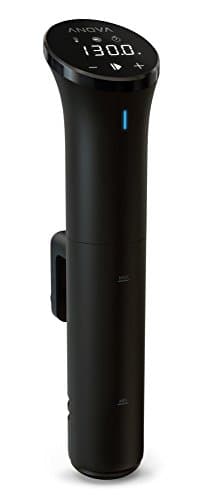 Anova Precision Cooker Nano 2.0 The Nano is the sensible middle: a 12.8-inch, 1.7 lb wand that stows in a kitchen drawer, runs from the unit itself or the free app, and carries Anova's 2-year warranty. It costs a fraction of the flagship and holds temperature just as tightly for a home-sized pot. 12.8" x 2.2" x 4.1" | Best value sous vide | 4.3★★★★★ | $71.99Amazon |
| 02 | 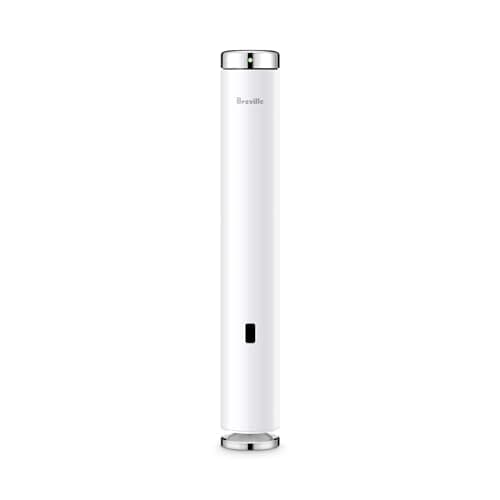 Breville Joule Turbo The Joule Turbo is the app-first circulator: at 1.65 inches across and 2.09 lb it's the smallest wand here, and its Turbo mode runs a cloud-computed variable-temperature curve that Breville states reaches precise results in half the time. You pick doneness by picture, not by number. Small | Best app experience | 4.4★★★★★ | $227.95Amazon |
#ad · Live prices from the Amazon Product API, as of October 17, 2026. Where we have no verified live price, we show none — a gap beats a number that has rotted.
The picks, in detail
Anova Precision Cooker Nano 2.0
spec score /5
$149.0052% off
Price as of October 17, 2026. Prices change — Amazon's is the one that counts.
#ad · we may earn a commission from this link to Anova Precision Cooker Nano 2.0
The Nano is the sensible middle: a 12.8-inch, 1.7 lb wand that stows in a kitchen drawer, runs from the unit itself or the free app, and carries Anova's 2-year warranty. It costs a fraction of the flagship and holds temperature just as tightly for a home-sized pot.
- Capacity
- 12.8" x 2.2" x 4.1"
- Footprint (W×D×H)
- 2.2 × 4.1 × 12.8 in
- Weight
- 1.7 lb
- Warranty
- 2 year warranty
- Fits in a drawer — 12.8 in, 1.7 lb
- 2-year warranty
- Full control on the unit; app is optional
- Slower than 1,100 W wands on a big pot
- Best suited to smaller containers
- Some app content sits behind a subscription
Breville Joule Turbo
spec score /5
$249.959% off
Price as of October 17, 2026. Prices change — Amazon's is the one that counts.
#ad · we may earn a commission from this link to Breville Joule Turbo
The Joule Turbo is the app-first circulator: at 1.65 inches across and 2.09 lb it's the smallest wand here, and its Turbo mode runs a cloud-computed variable-temperature curve that Breville states reaches precise results in half the time. You pick doneness by picture, not by number.
- Capacity
- Small
- Footprint (W×D×H)
- 1.65 × 1.65 × 11.97 in
- Weight
- 2.09 lb
- Warranty
- 1 year limited product warranty
- Turbo mode cuts cook time roughly in half (per Breville)
- Smallest wand here — 1.65 in across, fits a drawer
- Visual Doneness and Prime Time make timing forgiving
- Leans hard on the app — no full standalone control
- 1-year limited warranty vs Anova's 2
- Premium price for a circulator
Almost every sous vide chart online presents time and temperature as a single pair of numbers to copy, which hides the fact that they control completely different things. Once you understand the split, charts become a convenience rather than a necessity, and you can reason about a cut nobody wrote a chart for.
A note on how to use this page: we give you the principles and point you to tested tables for the specific numbers. We are countertop-cooking enthusiasts, not a food-safety laboratory, and pasteurization figures are exactly the place where you should be reading a primary source rather than a buying guide. Our method is on how we review.
Temperature sets doneness — and that is all it sets
This is the foundational idea of the whole technique. In a sous vide bath, food asymptotically approaches the water temperature and physically cannot exceed it. So the temperature you dial in is the final internal temperature of the food.
That is why there is no carryover to guess at, no window to catch, and no gray overcooked band under the surface — the failure mode of a pan-seared steak, where the outer layers hit 160°F and beyond while you wait for the middle to come up.
It also means the temperature dial is a doneness dial, directly. Want it a little more done? Add two degrees. There is no interpretation required, and this is why sous vide is the most repeatable cooking method there is.
Time sets texture — and it is driven by thickness
Time does two jobs, and neither of them is doneness.
The first is simply getting the middle up to temperature, and that is a function of thickness, not weight. A 1-inch steak and a 2-inch steak of the same total weight need very different times, because heat travels inward from all surfaces and the distance to the center is what matters. This is the single most common charting mistake — people look up "steak" rather than "1.5-inch steak."
The second job is texture. Held for hours, collagen in connective tissue slowly converts to gelatin, which is what turns a tough cut tender without shredding it. This is why short rib is cooked for 24 to 72 hours at a temperature that would be medium-rare in a steak: the temperature keeps it pink and the time makes it tender. No other method separates those two variables.
The corollary is the famous forgiveness of sous vide: a steak that needs an hour is genuinely fine at ninety minutes, because doneness is locked by temperature. Leave it for six hours and it will still be medium-rare, but the texture will have gone soft and slightly mealy. That is the outer limit, and it is a texture failure rather than an overcooking one.
Pasteurization: why chicken can be cooked lower
The idea people find hardest to accept, and the one worth understanding properly because it is the source of most sous vide anxiety.
Food safety is not a temperature threshold. It is a temperature-and-time relationship: pathogens are reduced by a given factor faster at higher temperatures and slower at lower ones. The familiar "cook chicken to 165°F" figure is the temperature at which that reduction is effectively instantaneous — which is convenient for an oven, where you cannot hold a precise temperature for a controlled duration.
A circulator can. Holding chicken at a lower temperature for long enough achieves the same pasteurization, which is exactly why sous vide chicken breast is juicy rather than dry — you are not overshooting to guarantee safety. The same logic underlies sous vide eggs and low-temperature pork.
This is the part to look up rather than estimate.Both Anova and Breville build tested time-and-temperature guides into their apps — Breville's listing describes Cook Guides with presets tested by its test kitchen — and the USDA publishes the underlying safety guidance. Use those. A guide page is the wrong place to get a pasteurization number, including this one.
Four rules that replace most of a chart
- Look up thickness, not weight. Measure the thickest part of the piece. Doubling thickness roughly quadruples the time to core temperature.
- Longer is safe for doneness, risky for texture. Overshooting a time by 50% is almost always fine. Overshooting by 500% will turn the texture soft.
- Tender cuts want short times, tough cuts want long ones. A fillet needs only to reach temperature. A shin or a shoulder needs hours of collagen conversion.
- From frozen, add roughly 50% to the time.You do not need to thaw first — in fact cooking from frozen is one of sous vide's genuine conveniences.
Four timing mistakes people make
Using a chart written for a different thickness. Covered above, and it is the commonest one by far.
Starting the timer before the bath is up to temperature. The cook time begins when the water reaches your target, not when you press start. Most machines will notify you; wait for it.
Overlapping or floating bags. If bags touch or float, parts of the food are not in circulating water and the timing no longer applies. Weight the bags down with a plate or a heavy spoon, and give each one room.
Forgetting evaporation on long cooks.Over 24 hours an uncovered bath can drop below the machine's minimum water line and shut off. A lid, foil, or ping-pong balls prevents it — and reduces running cost, since the element fires less often.
How the main food groups behave
Rather than reproduce a chart, here is how each category responds — which is what lets you reason about something you have no chart for.
Tender red meat(steak, lamb chops, fillet). Temperature is everything, time is just "long enough to reach the middle." These have little connective tissue, so extra hours do nothing good and eventually soften the texture.
Tough cuts (short rib, brisket, shin, shoulder). Temperature keeps them pink; time — 24 to 72 hours — converts collagen to gelatin. This is the combination no other method achieves, and it is why sous vide short rib is a signature dish of the technique.
Poultry. The category where the time-and-temperature safety relationship does real work, and where you should use tested tables rather than reasoning from principles. The payoff is the biggest of any food: chicken breast that is genuinely juicy.
Fish. Fast and unforgiving in a different way — the flesh becomes very soft over long holds, so this is the one category where overshooting the time is a real problem rather than a mild one. Treat fish timings as ceilings, not suggestions.
Eggs. Pure temperature control, and the thing no other method can do — holding an egg at a precise temperature for an hour produces textures a hob cannot reproduce.
Vegetables. The awkward one. Plant cell walls need higher temperatures than meat to break down — well above where most sous vide cooking happens — so vegetables are cooked hot and separately, or better, in an air fryer.
The step no chart includes
Time and temperature get you a perfectly cooked interior and nothing else. Water cannot brown, because the Maillard reaction needs temperatures well above the boiling point and a bath tops out around 195°F.
So every meat cook ends with a hard sear — a screaming-hot cast-iron pan for about a minute a side, or a torch. And the one instruction that matters most: dry the surface completely with kitchen paper before searing. A wet surface steams instead of browning, and that single mistake accounts for most disappointing first attempts. Keep the sear short so you do not cook a gray band into the meat you just spent hours avoiding.
Where to get the actual numbers
Three good sources, in order of convenience. The guides built into your app — Breville's Cook Guides are tested by its test kitchen, and Anova's app carries equivalents; both are free to use for cooking. The USDA tablesfor the underlying safety guidance. And the manufacturer's own documentation for your specific machine.
If you are still choosing a circulator, the software difference matters here more than the hardware: the Joule Turbo lets you pick doneness from pictures rather than numbers, which is the friendliest way in for a beginner, while the Anova Precision Cooker gives you on-unit control. We compare them in Anova vs. Joule, and if the technique is new, what is sous vide walks through a first cook step by step.
These settings only work because the bath actually holds the temperature it claims, which is why accuracy is a food-safety specification rather than a luxury one. The wider question — pasteurization at low temperatures, cooking in plastic, and leaving a machine running overnight — is answered in is sous vide safe.
Every temperature in the tables above assumes something an oven cannot offer: that the cooking medium never gets hotter than the target, so the food cannot climb past it. Anova and Inkbird both publish a tolerance of plus or minus 0.2°F; no oven maker publishes one at all. That difference is the whole case in sous vide vs reverse sear.
Frequently asked questions
Does time or temperature control doneness in sous vide?
Temperature. Food cannot exceed the water temperature, so the number you dial in is the final internal temperature — a steak at 133°F is medium-rare whether it sits for one hour or three. Time controls texture, by slowly converting collagen to gelatin, and contributes to safety.
How do you work out sous vide cooking time?
From thickness, not weight. Heat travels inward from all surfaces, so the distance to the center is what matters — doubling thickness roughly quadruples the time to core temperature. Looking up 'steak' rather than '1.5-inch steak' is the most common charting mistake.
Can you leave food in a sous vide too long?
For doneness, no — it cannot get hotter than the bath. For texture, yes: held far beyond the intended time, proteins soften and the texture becomes mealy. Overshooting by 50% is almost always fine; overshooting by several hundred percent is a texture problem.
Why can sous vide chicken be cooked below 165°F?
Because pasteurization depends on temperature and time together, not temperature alone. 165°F is the point at which pathogen reduction is effectively instantaneous, which suits an oven. A circulator can hold a lower temperature for long enough to achieve the same result — which is why the chicken is not dry.
Do you need to thaw food before sous vide?
No — cooking from frozen is one of the technique's genuine conveniences. Add roughly 50% to the cooking time. Thawing first is not only unnecessary but gives you a wetter surface to dry before searing.
When does the sous vide timer start?
When the water reaches your target temperature, not when you press start. Most machines notify you when the bath is up to temperature — wait for that before timing the cook, or you will under-cook by the length of the preheat.
Sources
Keep reading
Sous Vide
The Best Sous Vide Machines of 2026
Anova and Inkbird immersion circulators compared on wattage, precision, app and running cost.
Guide
What Is Sous Vide?
How sous vide works, what you need to start, the temperatures that matter, and what the technique genuinely cannot do.
Guide
Do You Need a Vacuum Sealer for Sous Vide?
Why zip-top bags work for most sous vide, the water displacement method, and the four cases where a sealer earns its money.
Review
Breville Joule Turbo Review
The Joule Turbo on Turbo mode, Visual Doneness, Prime Time, its 1.65-inch body and the app-dependence trade-off.
https://wattandwhisk.com/sous-vide/sous-vide-times-and-temperatures