Do You Need a Vacuum Sealer for Sous Vide?
No — and the free alternative works for most cooking. Here is exactly when a sealer stops being optional.
Disclosure:Watt & Whisk is reader-supported. When you buy through links on this page we may earn an Amazon Associates commission, at no extra cost to you. Prices are pulled live from Amazon and shown with the date checked. How this works.
No. Zip-top freezer bags plus the water displacement method work for the large majority of home sous vide, and buying a sealer alongside your first circulator is the most common way people over-spend on this hobby. A sealer genuinely earns its place in four cases: cooks over about 12 hours, batch-freezing, marinades and liquids, and fatty or bony cuts that puncture bags.
The short answer
Quick picks
| # | Product | Best for | Score | Price |
|---|---|---|---|---|
| 01 | 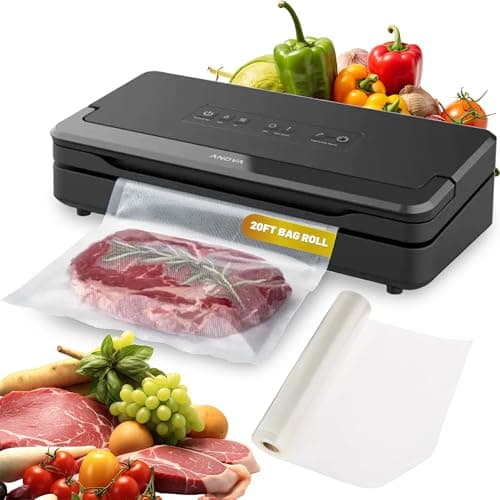 Anova Precision Vacuum Sealer Pro The sealer built by the people who make the circulator, and it shows in the details: a wet mode with low-pressure suction and a double seal for marinades and brines, one-handed operation, a full bag roll stored inside the hinge, and an accessory port for canning jar lids. | Best sealer for sous vide | 4.5★★★★★ | $100.99Amazon |
| 02 | 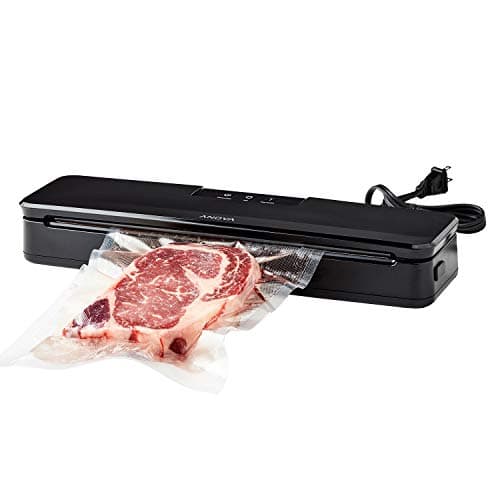 Anova Precision Vacuum Sealer The slim, minimalist version: wet and dry modes, ten pre-cut BPA-free bags in the box, and a 2-year manufacturer warranty, at 2.31 lb. If you have decided you want a sealer rather than zip-top bags, this is the sensible amount to spend on one. | Best value sealer | 4.3★★★★★ | $66.40Amazon |
| 03 | 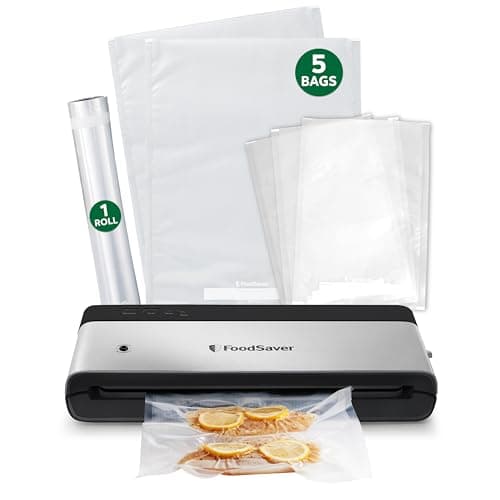 FoodSaver PowerVac Compact FoodSaver is the incumbent in this category and the PowerVac is its compact, vertically-storing model at 2.95 lb. If your main use is freezing meat in bulk rather than sous vide specifically, the bag ecosystem here is the largest and cheapest to feed. | Best for freezer storage | 4.2★★★★★ | $99.50Amazon |
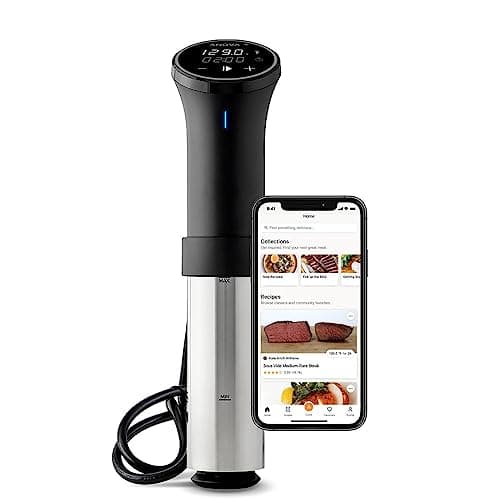
| 04 | 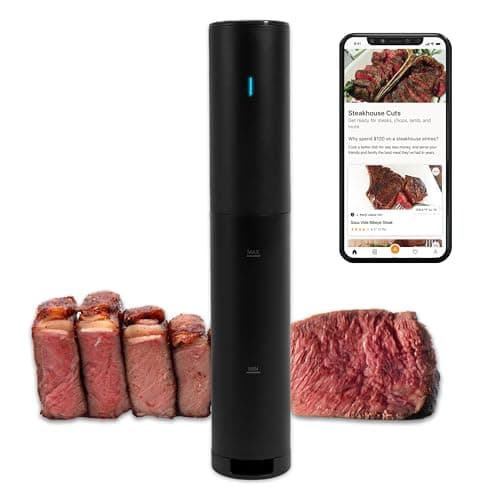 Anova Precision Cooker Mini Anova's most affordable circulator: 850 watts, 1.83 lb, Bluetooth control from the free app. It is the low-stakes way to find out whether you'll actually cook this way twice a month, and it costs less than the steak you'd ruin learning on the hob. Mini · 850W | Best cheapest way to try sous vide | 4.0★★★★★ | $26.99Amazon |
#ad · Live prices from the Amazon Product API, as of October 16, 2026. Where we have no verified live price, we show none — a gap beats a number that has rotted.
The picks, in detail
Anova Precision Vacuum Sealer Pro
spec score /5
$154.9935% off
Price as of October 16, 2026. Prices change — Amazon's is the one that counts.
#ad · we may earn a commission from this link to Anova Precision Vacuum Sealer Pro
The sealer built by the people who make the circulator, and it shows in the details: a wet mode with low-pressure suction and a double seal for marinades and brines, one-handed operation, a full bag roll stored inside the hinge, and an accessory port for canning jar lids.
- Footprint (W×D×H)
- 7 × 14.75 × 4.3 in
- Weight
- 5 lb
- Warranty
- 5 year manufacturer
- Wet mode with double seal handles marinades and brines properly
- Stores a full bag roll and cutter inside the housing
- Accessory port for jar lids and vacuum containers
- Overkill if you only seal dry food occasionally
- Takes real counter or cupboard space at 14.75 in deep
- The listing's warranty statements are inconsistent — check before you rely on a term
Anova Precision Vacuum Sealer
spec score /5
$89.9926% off
Price as of October 16, 2026. Prices change — Amazon's is the one that counts.
#ad · we may earn a commission from this link to Anova Precision Vacuum Sealer
The slim, minimalist version: wet and dry modes, ten pre-cut BPA-free bags in the box, and a 2-year manufacturer warranty, at 2.31 lb. If you have decided you want a sealer rather than zip-top bags, this is the sensible amount to spend on one.
- Footprint (W×D×H)
- 4.8 × 16.73 × 3.14 in
- Weight
- 2.31 lb
- Warranty
- 2 year manufacturer
- Slim enough to store in a drawer at 2.31 lb
- Wet and dry modes
- 2-year manufacturer warranty
- No internal bag storage
- Less suction than the Pro on dense loads
- Bags are an ongoing cost
FoodSaver PowerVac Compact
spec score /5
Price as of October 16, 2026. Prices change — Amazon's is the one that counts.
#ad · we may earn a commission from this link to FoodSaver PowerVac Compact
FoodSaver is the incumbent in this category and the PowerVac is its compact, vertically-storing model at 2.95 lb. If your main use is freezing meat in bulk rather than sous vide specifically, the bag ecosystem here is the largest and cheapest to feed.
- Footprint (W×D×H)
- 5.59 × 17.91 × 10.24 in
- Weight
- 2.95 lb
- Stores vertically, so it takes almost no shelf
- The widest and cheapest bag ecosystem
- 2.95 lb — easy to move
- No published warranty on the listing
- Compact body means a shorter seal bar
- Aimed at freezer storage more than sous vide
Anova Precision Cooker Mini
spec score /5
$29.007% off
Price as of October 16, 2026. Prices change — Amazon's is the one that counts.
#ad · we may earn a commission from this link to Anova Precision Cooker Mini
Anova's most affordable circulator: 850 watts, 1.83 lb, Bluetooth control from the free app. It is the low-stakes way to find out whether you'll actually cook this way twice a month, and it costs less than the steak you'd ruin learning on the hob.
- Capacity
- Mini
- Footprint (W×D×H)
- 2.2 × 4.13 × 12.2 in
- Power
- 850 W
- Weight
- 1.83 lb
- Cost per use*
- ≈5¢
- Est. per year*
- ≈$10
- Cheapest circulator we'd actually recommend
- 850 W is plenty for a stockpot
- 1.83 lb — stores anywhere
- Bluetooth only on the free app; Wi-Fi needs a subscription
- Slowest to bring a big bath up to temperature
- No published warranty on the listing
*Cost-to-run computed from the manufacturer's stated 850W at $0.17/kWh (US average), 20-min sessions, 4×/week. Your rate and use will vary.
"Sous vide" is French for "under vacuum," which has convinced a great many people that a vacuum sealer is part of the equipment list. It is not. The name describes how restaurants do it at scale, not what the physics requires.
What the technique actually needs is for the food to be in good thermal contact with the water and for air to be out of the way, because air insulates and makes bags float. A sealed zip-top bag with the air pushed out achieves both. This guide explains how, and then makes the honest case for when you should buy a sealer anyway.
The water displacement method
Free, takes fifteen seconds, and works with bags you probably already own.
- Put the food in a zip-top freezer bag and seal all but one corner of the top.
- Lower the bag slowly into the water bath, holding the open corner above the surface. Water pressure presses in on the bag from all sides and forces the air up and out through the gap.
- When the water level reaches just below the opening, seal the last corner. The bag is now effectively vacuum-packed by atmospheric pressure.
- Clip the bag to the side of the pot with a bulldog clip so it cannot slide under and block the circulator intake.
Use freezer-grade bags from a major brand rather than thin sandwich bags, and do not reuse packaging that was not intended for cooking. That is the whole technique, and it produces results indistinguishable from a sealer for a steak, a chicken breast or a bag of vegetables.
Fixing bags that float
The one problem worth knowing how to solve, because a floating bag means part of the food is not in circulating water and your timing no longer applies.
Floating has two causes: trapped air, which the displacement method removes, and air released by the food itself during a long cook — vegetables in particular give off gas as they heat.
The fixes are free: rest a heavy plate or a small ceramic dish on top of the bag, drop a couple of butter knives or a spoon into the bag alongside the food as ballast, or clip the bag to the side of the pot so it cannot rise. A proper sous vide rack is worth buying only if you routinely run four or more bags at once and they keep touching, which does cause uneven results.
When a sealer genuinely earns its money
Four cases, and if none applies to you then a sealer is a purchase you can comfortably defer indefinitely.
1. Long cooks. Over roughly twelve hours — short rib, brisket, pork shoulder — a zip-top seal can slowly admit water, and a bag that fills is a ruined cook. A double-sealed vacuum bag is far more reliable for a 24-to-72-hour hold. This is the strongest argument.
2. Batch prep and freezing. If you portion and freeze proteins to cook later, a vacuum seal genuinely prevents freezer burn in a way a zip-top bag does not, and you can cook straight from frozen. This is the case where a sealer pays for itself outside sous vide entirely.
3. Marinades and liquids.Displacement struggles with anything wet, because liquid rises with the air and you end up sealing marinade into the closure. This is exactly what "wet mode" on a good sealer is for — the Anova Precision Vacuum Sealer Pro switches to low-pressure suction with a double seal specifically to handle it.
4. Bones and sharp edges. Rib bones and fatty cuts puncture thin bags. The thicker material used by vacuum sealers is more puncture-resistant, and double-bagging a zip-top is the free workaround.
If you are buying one
Three machines, chosen for the three reasons people actually end up buying one. If you want the full field ranked — five machines compared on wet-mode suction, maximum bag width, what a roll works out to per bag and which maker publishes a warranty term — best vacuum sealers does that, including two machines not listed here.
Anova Precision Vacuum Sealer Pro — best for sous vide
Built by the people who make the circulator, and the details show it. A wet mode with low-pressure suction and a reliable double seal handles marinades and brines — the exact failure case of the free method. One-handed operation means clamping, vacuuming and sealing without a second pair of hands. It stores a full bag roll and cutter inside the hinge, so the consumable lives with the machine rather than in a drawer. And an accessory port and hose open it up to canning jar lids and vacuum containers.
Cons: overkill if you only seal dry food occasionally, and at 14.75 inches deepit takes real storage space. Note also that the listing's warranty statements are inconsistent — the title and the feature text disagree — so check before relying on a specific term.
Anova Precision Vacuum Sealer — best value
The slim, minimalist version: wet and dry modes, ten pre-cut BPA-free bags in the box, a 2-year manufacturer warranty, and just 2.31 lb so it stores in a drawer. If you have decided you want a sealer rather than zip-top bags, this is the sensible amount to spend.
Cons: no internal bag storage, and less suction than the Pro on dense loads.
FoodSaver PowerVac Compact — best for freezer storage
FoodSaver is the incumbent in this category and the PowerVac is its compact model, storing vertically at 2.95 lb. If your main use is freezing meat in bulk rather than sous vide specifically, the FoodSaver bag ecosystem is the widest and cheapest to feed — and bags are the real ongoing cost of owning a sealer.
Cons: no published warranty on the listing, a shorter seal bar because of the compact body, and it is aimed at freezer storage more than at sous vide.
Edge sealers vs chamber sealers
Worth knowing so you can ignore most of what you will read. Everything sold for home use — including all three picks above — is an edge sealer: the bag sits with its open end in a channel, air is drawn out of the bag, and a heated bar melts it shut.
Chamber sealers work differently: the whole bag goes inside a sealed chamber, and the machine evacuates the chamber rather than the bag. Because there is no pressure difference across the bag, they handle liquids effortlessly — soups, marinades, brines — which is exactly what edge sealers struggle with.
They are also large, heavy and expensive, and they belong in restaurants rather than home kitchens. If you find yourself frustrated that your sealer sucks marinade into the seal, the answer is not to buy a chamber machine — it is to use wet mode, freeze the liquid into a block first, or simply use a zip-top bag and displacement for wet items. That last option is free and works well.
The cost nobody budgets for
Bags. A vacuum sealer is a razor-and-blades product: the machine is a one-off, the bags are forever. Rolls are cheaper per bag than pre-cut pouches because you cut to size and waste less, which is a real argument for a machine that stores a roll internally.
Zip-top bags, by contrast, can often be washed and reused for the same kind of food, which makes the free method cheaper in consumables as well as in hardware. Factor that in before assuming a sealer saves money.
A note on reusing bags
Sensible for zip-top bags used with dry or lightly-seasoned food — wash in hot soapy water, dry thoroughly inside out, and reuse for the same category of food. It makes the free method cheaper still.
Do not reuse bags that held raw meat, poultry or fish, and do not reuse vacuum-sealed bags that have been cut open, since the cut edge no longer seals reliably. If a bag has been through a very long cook, retire it — repeated heat cycles gradually weaken the seams.
The verdict
Start without one. Buy the circulator, use zip-top bags and the displacement method, and find out whether sous vide earns a place in your cooking at all — the honest version of that question is in is sous vide worth it. If you would rather spend the money on something that improves results immediately, buy a cast-iron pan you can get properly hot for the sear, which is half the result and the half a cheap setup does not compromise.
Then buy a sealer once you find yourself doing long cooks, batch-freezing, or fighting with marinades. At that point the Anova Precision Vacuum Sealer is the sensible pick, the Pro if wet mode and the internal bag roll appeal, and the FoodSaver if freezing is really the job. The entry-level machines are in best budget sous vide, and times and temperatures covers what to do once the bag is in the water.
One thing worth checking whichever route you take is what the bag is actually made of, and what the FDA says about it. Is sous vide safe covers the plastic question properly, along with the bacteria question and the practicalities of leaving a bath running overnight.
The same question gets asked about the vessel, and the answer has the same shape: no, a stockpot you already own is the standard choice, and Anova says as much on its own listing. What does need checking is the cooker's height and whether its clamp adjusts — the Nano's is fixed. Worked through in do you need a sous vide container.
Frequently asked questions
Do you need a vacuum sealer for sous vide?
No. Zip-top freezer bags plus the water displacement method work for most home sous vide, and buying a sealer alongside your first circulator is the commonest way people over-spend. A sealer earns its place for cooks over about 12 hours, batch-freezing, marinades and bony cuts.
What is the water displacement method?
Put food in a zip-top freezer bag and seal all but one corner. Lower the bag slowly into the water so pressure forces the air up and out through the gap, then seal the last corner just below the water line. The bag is then effectively vacuum-packed by atmospheric pressure.
Why does my sous vide bag keep floating?
Either trapped air, which the displacement method removes, or gas released by the food itself during a long cook — vegetables are the usual culprits. Weight it with a plate, drop a couple of butter knives in the bag as ballast, or clip the bag to the side of the pot.
Can you use regular zip-top bags for sous vide?
Freezer-grade bags from a major brand, yes — they are widely used for this. Avoid thin sandwich bags and never reuse packaging that was not intended for cooking. For cooks longer than about twelve hours, a vacuum seal is more reliable because zip-top closures can slowly admit water.
Which vacuum sealer is best for sous vide?
The Anova Precision Vacuum Sealer Pro, because its wet mode uses low-pressure suction with a double seal to handle marinades and brines — the exact case where the free displacement method struggles. The slim Anova sealer is the better value if you mostly seal dry food.
Are vacuum sealer bags expensive to keep buying?
They are the real ongoing cost — a sealer is a razor-and-blades product. Rolls work out cheaper per bag than pre-cut pouches because you cut to size. Zip-top bags can often be washed and reused for the same kind of food, so the free method is cheaper in consumables too.
Sources
Keep reading
Sous Vide
The Best Sous Vide Machines of 2026
Anova and Inkbird immersion circulators compared on wattage, precision, app and running cost.
Roundup
The Best Vacuum Sealers of 2026
Five vacuum sealers compared on wet-mode suction, bag width, roll storage and cost per bag, and the warranty each maker will put in writing.
Guide
What Is Sous Vide?
How sous vide works, what you need to start, the temperatures that matter, and what the technique genuinely cannot do.
Guide
Sous Vide Times and Temperatures Explained
Why temperature sets doneness and time sets texture, how thickness drives timing, and where to get safe pasteurization tables.
Roundup
The Best Budget Sous Vide Machines
Four budget circulators ranked on power, app access, size and warranty — and the three things extra money actually buys.
https://wattandwhisk.com/sous-vide/do-you-need-a-vacuum-sealer