What Is Sous Vide?
Cooking food in a bag, in water, at exactly the temperature you want it to end up. The simplicity is the whole point — and so is the catch.
Disclosure:Watt & Whisk is reader-supported. When you buy through links on this page we may earn an Amazon Associates commission, at no extra cost to you. Prices are pulled live from Amazon and shown with the date checked. How this works.
Sous vide(pronounced "soo-veed", French for "under vacuum") means sealing food in a bag and cooking it in water held at exactly the temperature you want the food to reach. A steak in a 133°F bath cannot go past 133°F no matter how long it stays there — so it comes out edge-to-edge medium-rare, every time. You need a circulator, a pot, a bag, and a hot pan to brown it at the end, because water will not.
The short answer
Quick picks
| # | Product | Best for | Score | Price |
|---|---|---|---|---|
| 01 | 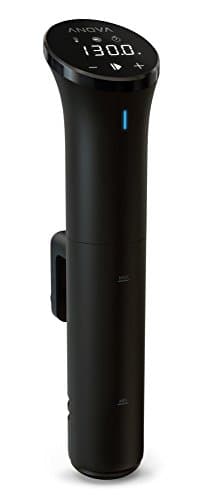 Anova Precision Cooker Nano 2.0 The Nano is the sensible middle: a 12.8-inch, 1.7 lb wand that stows in a kitchen drawer, runs from the unit itself or the free app, and carries Anova's 2-year warranty. It costs a fraction of the flagship and holds temperature just as tightly for a home-sized pot. 12.8" x 2.2" x 4.1" | Best value sous vide | 4.3★★★★★ | $71.99Amazon |
| 02 | 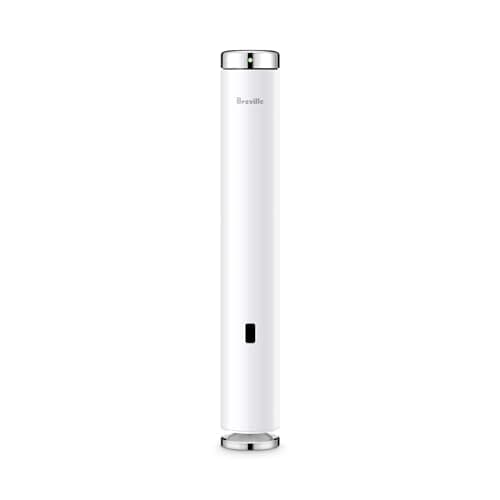 Breville Joule Turbo The Joule Turbo is the app-first circulator: at 1.65 inches across and 2.09 lb it's the smallest wand here, and its Turbo mode runs a cloud-computed variable-temperature curve that Breville states reaches precise results in half the time. You pick doneness by picture, not by number. Small | Best app experience | 4.4★★★★★ | $228.52Amazon |
| 03 | 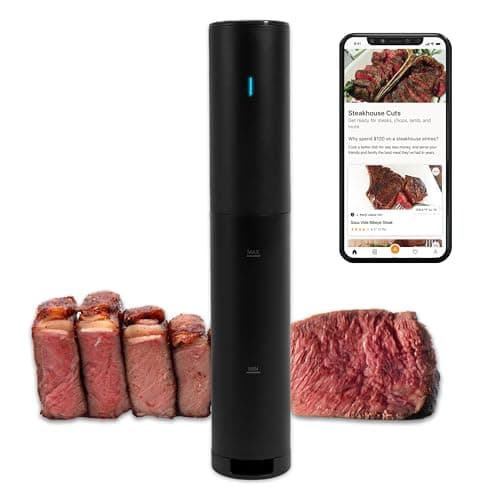 Anova Precision Cooker Mini Anova's most affordable circulator: 850 watts, 1.83 lb, Bluetooth control from the free app. It is the low-stakes way to find out whether you'll actually cook this way twice a month, and it costs less than the steak you'd ruin learning on the hob. Mini · 850W | Best cheapest way to try sous vide | 4.0★★★★★ | $26.99Amazon |
#ad · Live prices from the Amazon Product API, as of October 16, 2026. Where we have no verified live price, we show none — a gap beats a number that has rotted.
The picks, in detail
Anova Precision Cooker Nano 2.0
spec score /5
$149.0052% off
Price as of October 16, 2026. Prices change — Amazon's is the one that counts.
#ad · we may earn a commission from this link to Anova Precision Cooker Nano 2.0
The Nano is the sensible middle: a 12.8-inch, 1.7 lb wand that stows in a kitchen drawer, runs from the unit itself or the free app, and carries Anova's 2-year warranty. It costs a fraction of the flagship and holds temperature just as tightly for a home-sized pot.
- Capacity
- 12.8" x 2.2" x 4.1"
- Footprint (W×D×H)
- 2.2 × 4.1 × 12.8 in
- Weight
- 1.7 lb
- Warranty
- 2 year warranty
- Fits in a drawer — 12.8 in, 1.7 lb
- 2-year warranty
- Full control on the unit; app is optional
- Slower than 1,100 W wands on a big pot
- Best suited to smaller containers
- Some app content sits behind a subscription
Breville Joule Turbo
spec score /5
$249.959% off
Price as of October 16, 2026. Prices change — Amazon's is the one that counts.
#ad · we may earn a commission from this link to Breville Joule Turbo
The Joule Turbo is the app-first circulator: at 1.65 inches across and 2.09 lb it's the smallest wand here, and its Turbo mode runs a cloud-computed variable-temperature curve that Breville states reaches precise results in half the time. You pick doneness by picture, not by number.
- Capacity
- Small
- Footprint (W×D×H)
- 1.65 × 1.65 × 11.97 in
- Weight
- 2.09 lb
- Warranty
- 1 year limited product warranty
- Turbo mode cuts cook time roughly in half (per Breville)
- Smallest wand here — 1.65 in across, fits a drawer
- Visual Doneness and Prime Time make timing forgiving
- Leans hard on the app — no full standalone control
- 1-year limited warranty vs Anova's 2
- Premium price for a circulator
Anova Precision Cooker Mini
spec score /5
$29.007% off
Price as of October 16, 2026. Prices change — Amazon's is the one that counts.
#ad · we may earn a commission from this link to Anova Precision Cooker Mini
Anova's most affordable circulator: 850 watts, 1.83 lb, Bluetooth control from the free app. It is the low-stakes way to find out whether you'll actually cook this way twice a month, and it costs less than the steak you'd ruin learning on the hob.
- Capacity
- Mini
- Footprint (W×D×H)
- 2.2 × 4.13 × 12.2 in
- Power
- 850 W
- Weight
- 1.83 lb
- Cost per use*
- ≈5¢
- Est. per year*
- ≈$10
- Cheapest circulator we'd actually recommend
- 850 W is plenty for a stockpot
- 1.83 lb — stores anywhere
- Bluetooth only on the free app; Wi-Fi needs a subscription
- Slowest to bring a big bath up to temperature
- No published warranty on the listing
*Cost-to-run computed from the manufacturer's stated 850W at $0.17/kWh (US average), 20-min sessions, 4×/week. Your rate and use will vary.
Sous vide has a reputation for being fussy and technical, and that reputation is undeserved. The technique is the simplest form of cooking there is — arguably simpler than a frying pan, because there is no moment at which you have to judge anything. What makes it feel complicated is the vocabulary and the equipment, so this guide deals with both in plain terms.
How it actually works
All conventional cooking is a race. You apply heat far hotter than your target — a 400°F pan for a steak you want at 133°F — and try to pull the food off at the exact moment the center arrives, before the outside overcooks. That is why a pan-seared steak has a gray band under the crust: those layers got to 160°F and beyond while you waited for the middle.
Sous vide removes the race. You put the food in water held at your target temperature, and then physics does the rest: heat flows from hot to cold until they equalize, and stops. The food asymptotically approaches the water temperature and cannot exceed it. There is no moment of judgment, no carryover to guess at, and no gray band, because no part of the steak was ever hotter than the part you were aiming for.
The consequence people find hardest to believe is the timing tolerance. A steak that needs an hour is also fine at ninety minutes. Not "acceptable" — genuinely the same, because it cannot get hotter. Time changes texture eventually, as connective tissue breaks down, but it does not change doneness. That is why sous vide suits a dinner schedule that moves, and it is what the Breville+ app calls Prime Time.
What a circulator is
An immersion circulator is a wand you clip to the side of a pot. Inside it there is a heating element, a pump, a thermometer and a controller. The pump moves water past the element and around the pot so the whole bath is one temperature rather than hot at the bottom, and the controller cycles the element to hold the number you set. That is the entire machine.
Which is why cheap circulators cook as well as expensive ones — the physics is not negotiable, and holding water at 133°F is not a hard engineering problem in 2026. What separates models is heat-up speed, app software, and how big a container they can drive. The Anova Nano at 12.8 inches and 1.7 lb stows in a utensil drawer; the Breville Joule Turbo is slimmer still at 1.65 inches across and adds software that picks doneness from a picture and a Turbo mode Breville states reaches results in half the time; the Anova Mini at 850 watts is the cheapest entry. We put the flagships head to head in Anova vs. Joule.
What you actually need to start
- A circulator. Any of the machines in our budget guide will do. Check its minimum and maximum water lines against the pot you own.
- A pot or container. A stockpot works. A polycarbonate tub with a lid is better for long cooks because it insulates and stops evaporation. Deep matters more than wide.
- Bags. Zip-top freezer bags are fine. Use the water-displacement method: seal all but one corner, lower the bag into the water so the pressure pushes the air out, then seal the last corner. A vacuum sealer is a convenience, not a requirement.
- Something to finish in. A cast-iron pan you can get properly hot, or a blowtorch. This is not optional for meat.
- A lid or covering. Foil, a fitted lid, or ping-pong balls. Long cooks evaporate, and if the water drops below the minimum line the machine shuts off.
The temperatures that matter
You only need to remember the ones you cook. For steak, the numbers most cooks work to are around 129–133°F for medium-rare, 135–140°F for medium, and upward from there. Chicken breast is commonly cooked far lower than the oven temperatures people are used to — in the 145–155°F range — because food safety is a function of time and temperature, not temperature alone. Holding poultry at a lower temperature for longer achieves the same pasteurization as a brief blast at a higher one, which is exactly why sous vide chicken is not dry.
That last point is the one worth understanding rather than memorizing, and it is also the one where you should use a real reference rather than a blog. Both Anova and Breville build tested time-and-temperature guides into their apps — Breville's listing describes Cook Guides with presets tested by its test kitchen — and the USDA publishes the underlying safety tables. Use those, not a number you half-remember.
Your first cook, step by step
A steak is the right first thing to make, because it takes an hour and demonstrates everything the technique does. The whole process is five steps.
- Fill a pot with hot tap water and clip the circulator to the side, between its minimum and maximum lines. Starting hot rather than cold saves most of the preheat.
- Set the temperature to your target doneness and let it come up. Most machines beep or notify when the bath is ready.
- Season the steak and bag it. Salt, pepper, and optionally a little fat or a herb. Seal all but one corner of a zip-top bag, lower it into the water so the pressure pushes the air out, then seal the last corner and clip the bag to the side of the pot so it does not slide under.
- Wait. An hour for a normal steak. There is nothing to check and nothing to adjust — this is the part that feels wrong the first time and is the entire point.
- Dry it thoroughly and sear it hard. Take the steak out, pat it completely dry with kitchen paper — moisture is what stops a crust forming — and sear it in a screaming-hot cast-iron pan for about a minute a side. Rest it briefly and serve.
That is the technique. Everything else — long cooks, eggs, vegetables, the app recipe libraries — is a variation on those five steps. The one instruction worth repeating is dry it before searing, because a wet steak steams instead of browning and that single mistake accounts for most disappointing first attempts.
The two things sous vide cannot do
It cannot brown anything.The Maillard reaction — the browning that produces crust, color and most of what we think of as "cooked" flavor — needs temperatures well above the boiling point of water. A sous vide bath tops out around 195°F. So every piece of meat comes out of the bag pale and unappealing, and needs a hard sear in a screaming-hot pan or a pass with a torch. Skipping this step is the single most common reason people are disappointed the first time.
It cannot make things fast.A steak is an hour minimum. Short ribs are 48 to 72. Sous vide is a technique for people who plan a few hours ahead or who want dinner held at perfect doneness while they do other things — it is not a weeknight speed improvement, which is precisely what makes Breville's Turbo mode interesting.
What it is genuinely brilliant at
Expensive steak, because the failure mode of a $30 ribeye is overcooking it and this removes that possibility entirely. Chicken breast, which sous vide transforms more than any other ingredient — the difference between 150°F chicken and oven-baked chicken is not subtle. Tough cuts like short rib, brisket and pork shoulder, held for 24 to 72 hours, which come out with the texture of a tender cut rather than a shredded one. Eggs, at temperatures no other method can hold. And cooking for a crowd, because everything can sit at perfect doneness until you are ready to sear it.
Where it is pointless: anything you want crisp, anything already easy to cook well, and most vegetables — which need temperatures above what most circulators reach to break down properly, and which an air fryer does far better.
A note on safety
Two things are worth knowing. First, use bags rated for cooking; ordinary zip-top freezer bags from a major brand are widely used for this, but avoid thin sandwich bags and reused packaging. Second, the temperature-and-time relationship is a real food-safety rule, not a culinary preference — chilling and reheating a long cook, or holding food in the danger zone below 130°F for extended periods, are the two places where sous vide genuinely requires you to follow guidance rather than improvise. The USDA tables are the reference.
Where to go next
If this sounds like how you want to cook, the cheapest sensible entry is in our best budget sous vide guide, and the flagship decision is settled in Anova vs. Joule. If you are not sure it fits your kitchen, is sous vide worth it is the more skeptical read. The whole category sits on our best sous vide machines page.
The most common follow-up to all of the above is about equipment, and the answer is cheaper than people expect: beyond the circulator you need a pot deep enough and some bags. There is no special container, no vacuum sealer for most cooks, and no accessory kit. What to check before you use the pot you own is in do you need a sous vide container.
Frequently asked questions
What does sous vide mean?
It is French for 'under vacuum', and it describes sealing food in a bag and cooking it in water held at exactly the temperature you want the food to reach. Because the food cannot exceed the water temperature, it comes out evenly cooked edge to edge with no overcooked outer band.
Do you need a vacuum sealer for sous vide?
No. Zip-top freezer bags work using the water-displacement method: seal all but one corner, lower the bag into the water so pressure pushes the air out, then seal the last corner. A vacuum sealer is a convenience for long cooks and freezer storage, not a requirement.
Why does sous vide food need to be seared afterwards?
Because water cannot brown anything. The Maillard reaction needs temperatures well above boiling, and a sous vide bath tops out around 195°F, so meat comes out of the bag pale. A hard sear in a very hot pan or a pass with a torch is what produces the crust and most of the roasted flavor.
Can you overcook food with sous vide?
You cannot overcook it in terms of doneness — food cannot exceed the water temperature, so a steak at 133°F stays medium-rare whether it sits for an hour or ninety minutes. You can change texture over very long cooks, as connective tissue breaks down and some proteins become soft.
What temperature do you sous vide a steak?
Most cooks work to around 129–133°F for medium-rare and 135–140°F for medium, then sear hard at the end. Use the tested guides built into the Anova and Breville apps rather than a half-remembered number, since time and temperature together also govern food safety.
Is sous vide safe for chicken at low temperatures?
Yes, when you follow tested time-and-temperature tables. Pasteurization depends on time as well as temperature, so holding chicken at around 145–155°F for long enough achieves the same safety as a brief blast at a higher temperature — which is why sous vide chicken is not dry. Use the USDA tables or the app guides as the reference.
Sources
Keep reading
Sous Vide
The Best Sous Vide Machines of 2026
Anova and Inkbird immersion circulators compared on wattage, precision, app and running cost.
Guide
Is Sous Vide Worth It?
What sous vide genuinely transforms, what it does not, and the three types of cook who should skip it.
Roundup
The Best Budget Sous Vide Machines
Four budget circulators ranked on power, app access, size and warranty — and the three things extra money actually buys.
Comparison
Anova vs. Joule: Which Sous Vide Circulator Should You Buy?
Anova vs Breville Joule on standalone control, size, speed, app dependence and warranty — and who each one suits.
Guide
Sous Vide Times and Temperatures Explained
Why temperature sets doneness and time sets texture, how thickness drives timing, and where to get safe pasteurization tables.
Guide
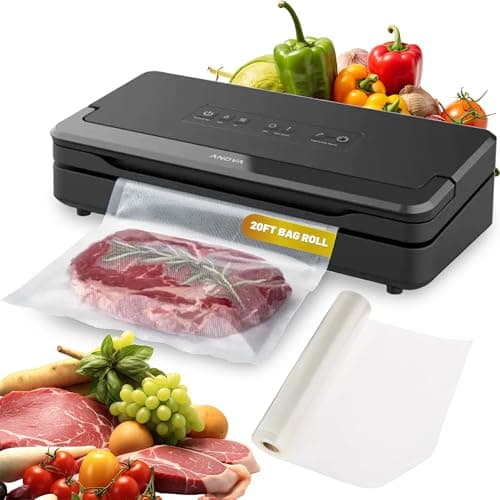
Do You Need a Vacuum Sealer for Sous Vide?
Why zip-top bags work for most sous vide, the water displacement method, and the four cases where a sealer earns its money.
https://wattandwhisk.com/sous-vide/what-is-sous-vide