What to Cook First in an Air Fryer
Most first batches fail for the same four reasons. Here is the order to cook in, why each food teaches you something the next one needs, and what the spec sheet tells you about week one.
Disclosure:Watt & Whisk is reader-supported. When you buy through links on this page we may earn an Amazon Associates commission, at no extra cost to you. Prices are pulled live from Amazon and shown with the date checked. How this works.
Cook frozen fries first, because they are the one food engineered to survive a cook you are getting wrong. Then bone-in chicken thighs, then halved potatoes and broccoli, then bacon, then reheated pizza. The order is not arbitrary: each food teaches one habit the next one needs — loading in a single layer, shaking the basket, drying food before it goes in, and trusting a thermometer over the timer. Jump straight to anything battered or cheese-topped and you will spend week one scrubbing.
The short answer
Quick picks
| # | Product | Best for | Score | Price |
|---|---|---|---|---|
| 01 | 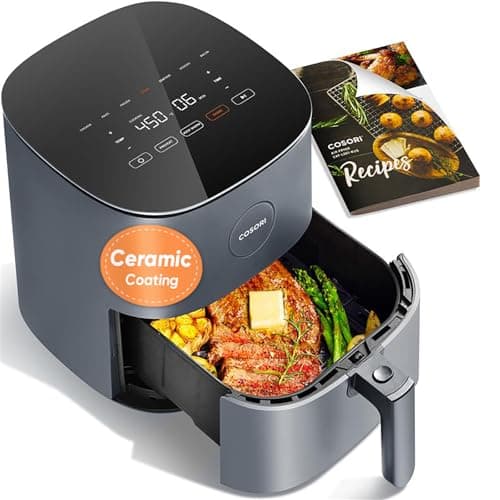 Cosori Pro LE The 5-quart Pro LE is the friendliest first air fryer here: seven clearly labeled presets, a ceramic nonstick basket, and 450°F top heat in a body that doesn't hog the counter. If dials intimidate you, this removes the guesswork. 5 QT | Best presets for beginners | 4.4★★★★★ | $89.95Amazon |
| 02 | 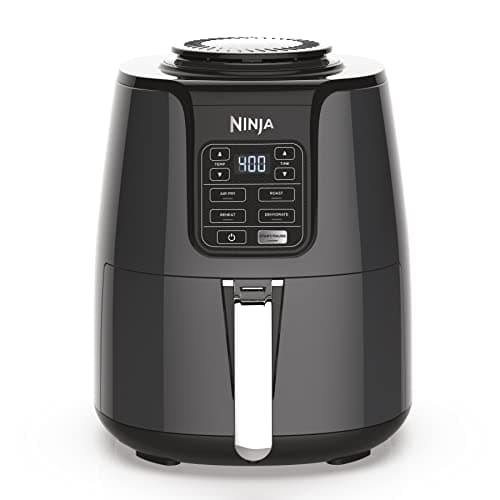 Ninja AF101 The 4-quart Ninja AF101 is the one we point most people to: a genuinely simple dial-and-button air fryer with a ceramic-coated basket, a 105–400°F range, and a footprint that fits a normal counter. It has been the reliable default since 2018 for good reason. 4 QT · 1550W | Best overall on value | 4.6★★★★★ | $119.99Amazon |
| 03 | 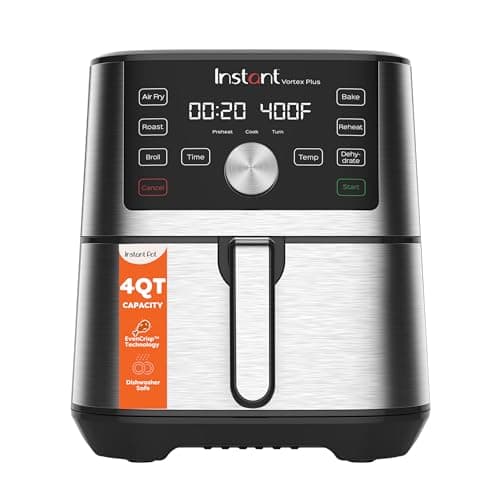 Instant Vortex 4-Qt A 4-quart, digital, single-basket Vortex that stays compact (10.2 in wide) while giving you real preset buttons. It's the middle ground between the bare-bones Dash and a full 6-quart machine. 4 qt | Best small digital | 4.2★★★★★ | $69.99Amazon |
| 04 | 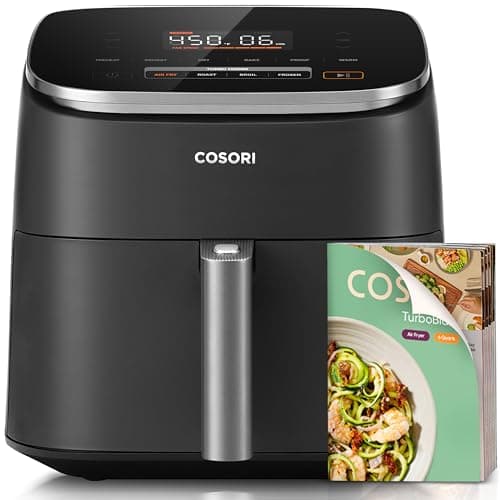 Cosori TurboBlaze Cosori's TurboBlaze pairs a 6-quart square basket with a genuinely PFAS-free ceramic coating and a faster 3,600-rpm fan. It's the pick if you want a modern, roomier air fryer without stepping up to a dual-basket footprint — and the coating claim is on the spec sheet, not marketing. 6QT | Best for most kitchens | 4.5★★★★★ | $99.99Amazon |
#ad · Live prices from the Amazon Product API, as of November 12, 2026. Where we have no verified live price, we show none — a gap beats a number that has rotted.
The picks, in detail
Cosori Pro LE
spec score /5
$99.9910% off
Price as of November 12, 2026. Prices change — Amazon's is the one that counts.
#ad · we may earn a commission from this link to Cosori Pro LE
The 5-quart Pro LE is the friendliest first air fryer here: seven clearly labeled presets, a ceramic nonstick basket, and 450°F top heat in a body that doesn't hog the counter. If dials intimidate you, this removes the guesswork.
- Capacity
- 5 QT
- Footprint (W×D×H)
- 10.8 × 14.4 × 12 in
- Weight
- 10 lb
- Warranty
- 2 year manufacturer
- 7 one-touch presets take the guesswork out
- Ceramic coating, dishwasher-safe basket
- Compact 10.8-in-wide body
- 5 qt still tight for big families
- App is optional and skippable
- No cook window
Ninja AF101
spec score /5
Price as of November 12, 2026. Prices change — Amazon's is the one that counts.
#ad · we may earn a commission from this link to Ninja AF101
The 4-quart Ninja AF101 is the one we point most people to: a genuinely simple dial-and-button air fryer with a ceramic-coated basket, a 105–400°F range, and a footprint that fits a normal counter. It has been the reliable default since 2018 for good reason.
- Capacity
- 4 QT
- Footprint (W×D×H)
- 12.25 × 15.1 × 15.25 in
- Power
- 1550 W
- Weight
- 10.58 lb
- Cost per use*
- ≈9¢
- Est. per year*
- ≈$18
- Warranty
- 1 Year Manufacturers
- Ceramic-coated aluminum basket — no PTFE nonstick
- Dead-simple controls; nothing to learn
- Small enough for a normal counter (12 × 15 in)
- 4 qt is tight for a family of 4+
- No preset buttons or window
- Dial isn't the most precise
*Cost-to-run computed from the manufacturer's stated 1550W at $0.17/kWh (US average), 20-min sessions, 4×/week. Your rate and use will vary.
Instant Vortex 4-Qt
spec score /5
$129.9946% off
Price as of November 12, 2026. Prices change — Amazon's is the one that counts.
#ad · we may earn a commission from this link to Instant Vortex 4-Qt
A 4-quart, digital, single-basket Vortex that stays compact (10.2 in wide) while giving you real preset buttons. It's the middle ground between the bare-bones Dash and a full 6-quart machine.
- Capacity
- 4 qt
- Footprint (W×D×H)
- 10.2 × 13.03 × 11.02 in
- Weight
- 9 lb
- Digital presets in a compact body
- 10.2-in width fits small counters
- Often on sale under $80
- Standard nonstick basket
- 4 qt is single-person to couple sized
- No window
Cosori TurboBlaze
spec score /5
$119.9917% off
Price as of November 12, 2026. Prices change — Amazon's is the one that counts.
#ad · we may earn a commission from this link to Cosori TurboBlaze
Cosori's TurboBlaze pairs a 6-quart square basket with a genuinely PFAS-free ceramic coating and a faster 3,600-rpm fan. It's the pick if you want a modern, roomier air fryer without stepping up to a dual-basket footprint — and the coating claim is on the spec sheet, not marketing.
- Capacity
- 6QT
- Footprint (W×D×H)
- 11.8 × 14.4 × 11.9 in
- Weight
- 13.2 lb
- Warranty
- 2 Year Manufacturer
- PFAS-free ceramic basket (per spec sheet)
- 6-qt square basket fits more than round baskets
- Quieter, faster fan; 2-year warranty
- Pricier than a basic basket fryer
- Taller than a compact model
- Digital panel is a small learning curve
A new air fryer arrives with a recipe booklet and an app, and both make the same mistake: they are organized by what sounds appealing rather than by what is forgiving. So the first thing many people attempt is wings in a wet sauce, or something battered, and it sticks to the basket, comes out pale, or burns on one side. The machine then gets blamed for a loading error.
This is the order we would actually cook in, and the reasoning behind it. We have not run these machines in a test kitchen and we are not going to imply we have — every spec quoted below comes from the maker's current listing, and our method is documented on how we review. What we can do is read what makers publish, and the published specs explain most of week one.
What makes a food a good first cook
Before the order, the criteria it comes from. A food is forgiving in an air fryer when it has all four of these traits, and gets harder to the degree it is missing them.
1. It starts dry. An air fryer is a small convection oven with a fast fan, and a fan can only brown a surface that is already dry. Until the surface water has evaporated, food is steaming rather than frying. Anything that arrives wet — marinated chicken, rinsed vegetables, defrosted shrimp — spends its first several minutes drying out instead of cooking, which is why it reads as underdone at the moment the recipe says it should be ready.
2. It fits in a single layer. This is the biggest cause of a disappointing first batch, and the spec sheets quantify it better than the recipe booklets do. Ninja publishes that the 4-quart AF101 basket fits 2 lb of French fries, and 4 lb for the 8-quart DualZone — the same half-pound per quart in both machines. So a "4-quart" basket is roughly two servings of fries in one layer. Instant describes its own 4-quart Vortex Plus as "perfect for up to 4 servings". Two makers, the same 4 quarts, two different answers. Believe the pounds, not the servings.
3. It tolerates the machine's top temperature. Most beginner recipes are written for 400°F, and some machines stop exactly there. The Ninja AF101 publishes a range of 105°F to 400°F; the Instant Vortex Plus 4-Qt publishes 95°F to 400°F. Both Cosoris here reach 450°F. On a 400°F machine a 400°F recipe is the machine at full tilt with nothing in reserve — if food is not browning you cannot turn it up, only leave it longer.
4. It is hard to overcook by two minutes. Week one is spent miscalibrating, and a food with a wide done window absorbs that. A potato wedge two minutes long is a slightly darker potato wedge; a chicken breast two minutes long is dry. That is the whole reason thighs come before breasts below.
Night one: frozen fries
Frozen fries are the correct first cook, and not because they are impressive. They are par-fried and coated at the factory specifically to brown from frozen in dry heat, so they already satisfy the first criterion and are close to indestructible on the fourth. They also fail visibly: a pale fry tells you the basket was overloaded, a scorched edge tells you it was underloaded. You learn to read your own machine in one batch.
Cook them from frozen — do not thaw — in a single layer, and shake the basket once about halfway through. The shake is the entire lesson of night one. Food sits on a perforated plate with air moving mostly past it, so the pieces touching the plate brown and the ones on top do not. Shaking redistributes them. Only the Cosori Pro LE among the picks here publishes a Shake Reminder as a feature, which is a slightly absurd thing to put on a spec sheet and genuinely the most useful beginner feature in this group, because the shake is exactly what a new owner does not know to do.
One warning that applies to every machine and every night: nothing goes under the basket. The space beneath the crisper plate is where fat drains, and a slice of bread or a liner put there to catch it blocks the airflow the machine depends on. Are air fryer liners safe covers what the makers themselves say about liners, which is more restrictive than the internet suggests.
Night two: bone-in chicken thighs
Thighs are the best protein for a beginner, for a reason that has nothing to do with flavor: dark meat has a wide done window. Chicken is safe at 165°F and thigh meat is still good well above that, so a thigh forgives a timer being wrong by several minutes in a way a breast does not. Put them skin up in a single layer, dry the skin first with a paper towel, and use no sauce until they come out.
This is also the night to buy an instant-read thermometer if you do not own one. It costs less than a basket of wings and it is the only honest way to know when poultry is done in a machine whose presets were calibrated on someone else's food at someone else's starting temperature. Every machine here runs hotter in some part of the basket than another; a thermometer is how you find out where yours does it.
Sauce comes at the end, in a bowl. Sugar in a sauce burns at air-fryer temperatures long before chicken is done, and that is the mechanism behind most "the air fryer ruined my wings" stories.
Night three: halved potatoes, then broccoli
Vegetables teach the first criterion, because they are the first thing you cook that arrives genuinely wet. Halve small potatoes, toss them in a thin film of oil, and cook them cut-side down. Then do broccoli — and dry it aggressively first, because washed broccoli holds enough water in its florets to steam itself grey.
Oil deserves a note, because air fryers are sold on using less of it and beginners often read that as none. A dry vegetable surface with no fat at all does not brown; it dehydrates. Every machine here is sold on an oil-reduction claim — Cosori states up to 95% less oil on the TurboBlaze with the figure attributed to an SGS lab analysis, and up to 85% less on the Pro LE with no comparable citation; Ninja states up to 75% less fat than deep frying, tested against hand-cut deep-fried fries; Instant states 95% less oil than deep frying. All of those are comparisons against a deep fryer, not against an oven, and none is a claim that zero oil beats a teaspoon.
This is where the 400°F ceiling starts to matter, because browning a potato before its interior overcooks is a race and roasting is the job that most wants the extra 50°F. If you are still shopping, best air fryers for beginners ranks the field on controls and forgiveness rather than on peak numbers.
Night four: bacon, and the cleaning lesson
Bacon is on this list for an unglamorous reason: it teaches you how your machine handles fat, and it is better to learn that on bacon than on a pork belly. Lay it flat without overlapping and expect the drawer under the plate to collect a meaningful amount of grease. Pour that off while the machine is still warm — cooled fat is a much worse job.
Bacon also tends to produce the first smoke, which is almost always rendered fat reaching the hot element rather than a fault. Every machine here is sold on dishwasher-safe parts, and the coating is what you are protecting when you avoid metal tools and abrasive pads. Two of these four publish what their coating is made of: Ninja lists the AF101 basket as aluminum with a nonstick ceramic coating, and Cosori describes the TurboBlaze basket and crisper tray as a PFAS-free nonstick ceramic coating. The Pro LE describes a "premium ceramic coating" and makes no PFAS-free claim; Instant describes the Vortex basket only as non-stick. How to clean an air fryer covers the routine, and air fryer coating coming off covers what to do when a surface starts to fail.
Week two: reheating, which is what you will actually use it for
The honest ending to this guide is that most owners settle into using an air fryer less as a fryer than as a very fast reheater, and it is excellent at it. Day-old pizza, cold fries, leftover roast chicken — anything that was once crisp comes back genuinely crisp rather than microwave-limp, because the fan drives off the surface moisture a microwave adds.
All four picks publish a Reheat function and all of them are doing the same thing: moderate heat, high fan. You do not need the preset — 350°F for a few minutes is the whole technique — and do air fryers need preheating explains why reheating is the one case where a cold start costs you nothing.
The one mode nobody touches in week one is Dehydrate, and three of these four list it. It runs a low fan at a low temperature for hours, and it is the reason the AF101 publishes a 105°F floor and the Vortex a 95°F one. If you bought a machine partly for that, it is worth knowing it is a multi-hour mode rather than a dinner one.
What to leave until you trust the machine
Four categories cause most early failures, and none of them is the machine's fault.
Wet batter. Beer batter and any thin pourable coating drips through the crisper plate before it can set, because there is no hot oil to seize it. Breadcrumb coatings work; batter does not. That is a structural limit of the format, not a technique you have yet to learn.
Loose, light leaves. Spinach, kale chips and anything a fan can lift will be redistributed onto the heating element. If you want kale chips, weigh them down or accept the cleanup.
Cheese on its own. Melted cheese placed directly on the plate goes through the holes and welds. Cheese on top of something else, added in the last two minutes, is fine.
A full recipe scaled to the quart figure. Go back to the second criterion: where a maker publishes a weight, that is the real capacity. What size air fryer do I need works the capacity ladder through properly, and air fryer not crisping is the diagnostic page for when a batch comes out pale anyway. For the full list of things the format simply cannot do, see what not to cook in an air fryer.
Which machines make week one easier
None of this requires a particular machine, but three published specs genuinely reduce the number of bad batches: a ceiling above 400°F, so a 400°F recipe is not the machine at its limit; presets you can ignore, so it works as a plain dial on night one; and a basket whose coating the maker will describe, because that is the part beginners damage.
The Cosori Pro LE leads the picks above on exactly that basis — 450°F, presets with preheat and keep-warm, and the shake reminder — with the honest caveats that its listing contradicts itself on function count (the title says 9-in-1 while the feature bullet says seven presets, and we use the number attached to a described behavior), it publishes no wattage and no minimum temperature, and it makes no PFAS-free claim. The Ninja AF101 is the simplest machine here and the one we point most cost-conscious first-timers at, with the trade that it stops at 400°F. The Instant Vortex Plus 4-Qt is the most compact of the four at 10.2 by 13 inches, and publishes neither wattage nor a warranty term. The Cosori TurboBlaze is the step up in capacity and the only pick with a published noise figure — under 53 dB at its highest fan speed — plus a 2-year warranty, though it too publishes no wattage.
Whichever you own, the order is the same. Fries to learn the shake, thighs to learn the thermometer, vegetables to learn that dry browns and wet steams, bacon to learn the fat, and then reheating forever. If you are still choosing between machines rather than cooking on one, how to read air fryer reviews explains which of the claims above are measured and which are marketing, and the best air fryers hub has the full field.
Frequently asked questions
What should I cook first in a new air fryer?
Frozen fries, cooked from frozen in a single layer with one shake halfway through. They are par-fried and coated at the factory to brown in dry heat, so they survive a cook you are getting slightly wrong, and they fail visibly - pale means the basket was overloaded, scorched means it was underloaded.
Do I need to put oil in an air fryer?
A little, on anything not already coated in fat. Vegetables and lean proteins need a thin film of oil to brown rather than dehydrate; frozen fries, wings and bacon do not. The makers' oil-reduction claims - up to 95% less on Cosori's TurboBlaze, up to 75% less fat on Ninja, 95% less on Instant - are all comparisons against a deep fryer, not instructions to use none.
How full can I fill an air fryer basket?
One layer, with gaps. Where makers publish a weight it beats the quart figure as a guide: Ninja states 2 lb of French fries for the 4-quart AF101 and 4 lb for the 8-quart DualZone, which is the same half-pound per quart. A 4-quart basket is about two servings of fries in a single layer.
Why is my first air fryer batch not crispy?
Almost always one of three things: the basket was overloaded so the food steamed instead of browning, the food went in wet, or it was never shaken. Air moves mostly past a pile rather than through it, so the pieces on top never brown. Dry the food, load one layer, shake once halfway.
What should you not cook in an air fryer when you are new to it?
Wet batter, which drips through the crisper plate before it can set because there is no hot oil to seize it; loose light leaves, which the fan lifts onto the element; cheese placed directly on the plate; and sugary sauces applied before cooking, which burn long before the food is done. Sauce goes on after, in a bowl.
Do I need to preheat an air fryer for my first cook?
Usually not, and never for reheating. Instant states its Vortex needs little to no preheating, and Cosori lists preheat as a selectable function on the Pro LE rather than a required step. The exception is anything you want to sear quickly, where a few minutes of preheat helps.
Is an air fryer good for reheating leftovers?
It is what most owners end up using it for most. The fan drives off surface moisture rather than adding it, so pizza, fries and roast chicken come back crisp instead of limp. All four picks here publish a Reheat preset, but 350 degrees for a few minutes is the whole technique.
Sources
Keep reading
Air Fryers
The Best Air Fryers of 2026
Our ranked air-fryer picks, compared on capacity, footprint, materials and running cost — with live Amazon prices.
Roundup
The Best Air Fryers for Beginners of 2026
The easiest air fryers to learn on, with presets that take out the guesswork.
Guide
Air Fryer Not Crisping? Here Is Why
The eight real reasons air fryer food comes out soggy, in order of likelihood, with the fix for each.
Guide
What You Should Not Cook in an Air Fryer
Wet batter, loose greens, cheese, rice and popcorn: what fails in an air fryer, why, and what to do instead.
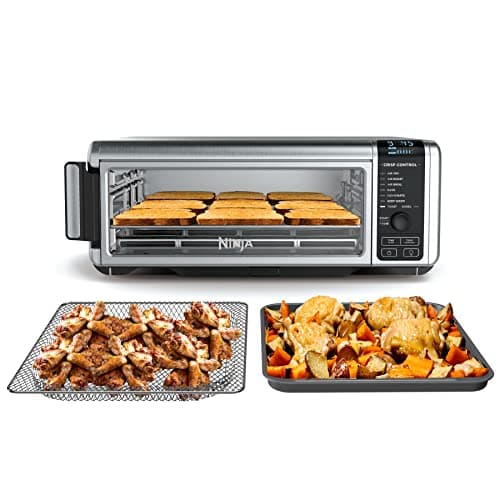
Guide
Do Air Fryers Need Preheating?
What Ninja, Instant, Cosori and Breville actually publish about preheating, the four cooks where two minutes matters, and the one machine with a stated preheat time.
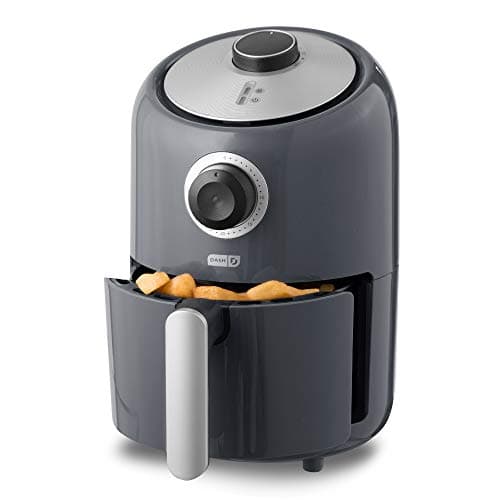
Guide
What Size Air Fryer Do I Need?
Quarts-to-people, why square baskets beat round ones, and the real counter space each size costs you.
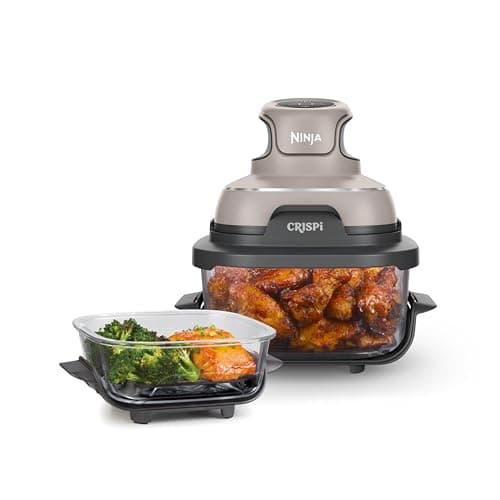
Guide
How to Clean an Air Fryer
The five-minute routine, the monthly deep clean, and how to fix a smoking or smelly air fryer for good.
https://wattandwhisk.com/air-fryers/what-to-cook-first-in-an-air-fryer