Are Stand Mixers Worth It?
The most expensive appliance on most kitchen counters, doing a job a $25 hand mixer also does. Here is the honest case for and against.
Disclosure:Watt & Whisk is reader-supported. When you buy through links on this page we may earn an Amazon Associates commission, at no extra cost to you. Prices are pulled live from Amazon and shown with the date checked. How this works.
A stand mixer is worth it if you bake at least a few times a month, make anything that needs sustained beating (meringue, Swiss buttercream, enriched dough), or bake while doing something else. It is not worth it if you bake a few times a year, have no permanent counter space, or mostly make things a hand mixer or a wooden spoon finishes in ninety seconds. The honest test is frequency plus whether your hands currently limit what you make.
The short answer
Quick picks
| # | Product | Best for | Score | Price |
|---|---|---|---|---|
| 01 | 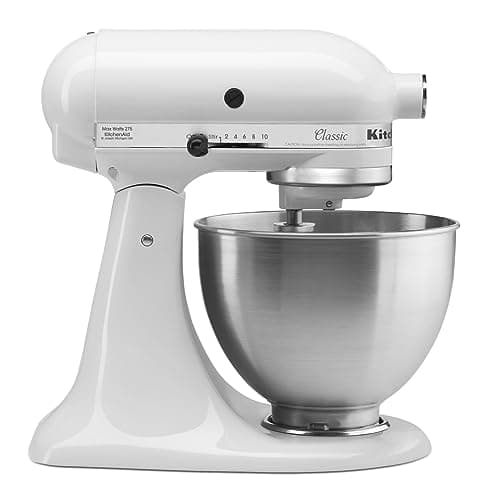 KitchenAid Classic (4.5 Qt) The 4.5-quart Classic is the cheapest way into the KitchenAid ecosystem and takes the same attachments as the Artisan. A slightly smaller bowl and fewer colors, but the same fundamentals. 4.5 Q | Best budget KitchenAid | 4.3★★★★★ | $322.99Amazon |
| 02 | 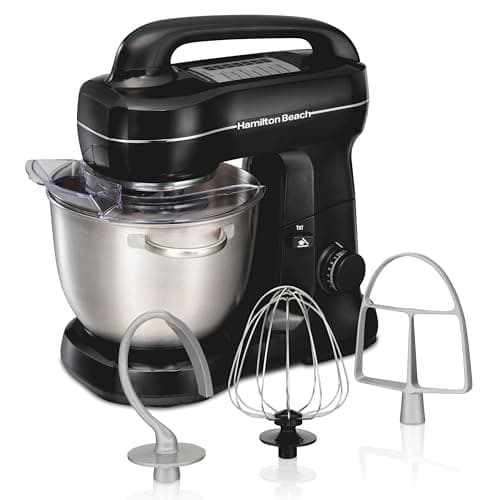 Hamilton Beach 4-Qt Stand Mixer A 300-watt, 7-speed planetary mixer with a 4-quart stainless bowl, dough hook, whisk, flat beater and splash guard included — for a fraction of a KitchenAid. At 8 lb with a molded carry handle it's also the only mixer here you can genuinely lift into a cupboard one-handed. 4 Quart · 300W | Best budget stand mixer | 4.0★★★★★ | $139.99Amazon |
| 03 | 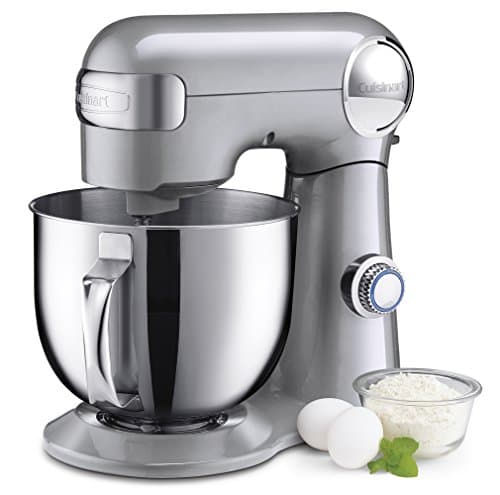 Cuisinart Precision Master SM-50 The 5.5-quart, 500-watt Precision Master gives you a bigger bowl and a stated higher wattage than a same-price KitchenAid. The trade-off is a smaller accessory ecosystem, but for straight mixing it's a lot of machine for the money. 5.5 Qt · 500W | Best big bowl for the money | 4.2★★★★★ | $229.95Amazon |
| 04 | 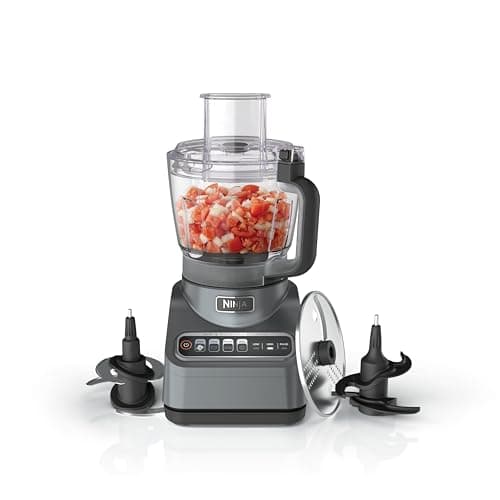 Ninja Professional Plus BN601 A 1,000-peak-watt motor under a 9-cup (72-ounce) bowl with four Auto-iQ programs and a dough blade in the box. It's the processor for people who want to press one button — and the only one here that ships with a dedicated dough blade as standard. 72 Oz · 1000W | Best for dough and presets | 4.3★★★★★ | $129.99Amazon |
#ad · Live prices from the Amazon Product API, as of October 16, 2026. Where we have no verified live price, we show none — a gap beats a number that has rotted.
The picks, in detail
KitchenAid Classic (4.5 Qt)
spec score /5
$399.9919% off
Price as of October 16, 2026. Prices change — Amazon's is the one that counts.
#ad · we may earn a commission from this link to KitchenAid Classic (4.5 Qt)
The 4.5-quart Classic is the cheapest way into the KitchenAid ecosystem and takes the same attachments as the Artisan. A slightly smaller bowl and fewer colors, but the same fundamentals.
- Capacity
- 4.5 Q
- Footprint (W×D×H)
- 8.7 × 14.1 × 13.9 in
- Weight
- 24.2 lb
- Warranty
- 1 Year Limited Warranty
- Lowest-cost route to KitchenAid
- Takes the full attachment lineup
- Compact-ish 4.5-qt bowl
- Smaller bowl than the Artisan
- Fewer color options
- Same dough limits as the 5-qt
Hamilton Beach 4-Qt Stand Mixer
spec score /5
Price as of October 16, 2026. Prices change — Amazon's is the one that counts.
#ad · we may earn a commission from this link to Hamilton Beach 4-Qt Stand Mixer
A 300-watt, 7-speed planetary mixer with a 4-quart stainless bowl, dough hook, whisk, flat beater and splash guard included — for a fraction of a KitchenAid. At 8 lb with a molded carry handle it's also the only mixer here you can genuinely lift into a cupboard one-handed.
- Capacity
- 4 Quart
- Footprint (W×D×H)
- 10.9 × 14.5 × 14.4 in
- Power
- 300 W
- Weight
- 8 lb
- Cost per use*
- ≈2¢
- Est. per year*
- ≈$4
- Warranty
- One(1) Year Warranty
- All four attachments and a splash guard in the box
- 8 lb with a carry handle — actually storable
- Slow first speed keeps flour in the bowl
- 300 W is a cake-and-cookie motor, not a bread motor
- 4-qt bowl limits batch size
- No third-party attachment ecosystem
*Cost-to-run computed from the manufacturer's stated 300W at $0.17/kWh (US average), 20-min sessions, 4×/week. Your rate and use will vary.
Cuisinart Precision Master SM-50
spec score /5
$319.9528% off
Price as of October 16, 2026. Prices change — Amazon's is the one that counts.
#ad · we may earn a commission from this link to Cuisinart Precision Master SM-50
The 5.5-quart, 500-watt Precision Master gives you a bigger bowl and a stated higher wattage than a same-price KitchenAid. The trade-off is a smaller accessory ecosystem, but for straight mixing it's a lot of machine for the money.
- Capacity
- 5.5 Qt
- Footprint (W×D×H)
- 11.2 × 16.5 × 15.9 in
- Power
- 500 W
- Weight
- 17 lb
- Cost per use*
- ≈3¢
- Est. per year*
- ≈$6
- Warranty
- Limited 3-Year Warranty
- Bigger 5.5-qt bowl
- 500 W stated motor
- Often cheaper than KitchenAid
- Smaller attachment ecosystem
- Less iconic resale value
- Plastic trim in places
*Cost-to-run computed from the manufacturer's stated 500W at $0.17/kWh (US average), 20-min sessions, 4×/week. Your rate and use will vary.
Ninja Professional Plus BN601
spec score /5
Price as of October 16, 2026. Prices change — Amazon's is the one that counts.
#ad · we may earn a commission from this link to Ninja Professional Plus BN601
A 1,000-peak-watt motor under a 9-cup (72-ounce) bowl with four Auto-iQ programs and a dough blade in the box. It's the processor for people who want to press one button — and the only one here that ships with a dedicated dough blade as standard.
- Capacity
- 72 Oz
- Footprint (W×D×H)
- 7.76 × 9.88 × 16.02 in
- Power
- 1000 W
- Weight
- 7.65 lb
- Cost per use*
- ≈6¢
- Est. per year*
- ≈$12
- Warranty
- 1
- Dough blade included, not an upsell
- 4 Auto-iQ presets — chop, puree, dough, more
- All removable parts BPA-free and dishwasher-safe
- 9 cups is smaller than the 13–14-cup benchmarks
- 16 in tall assembled
- Presets can over-process if you walk away
*Cost-to-run computed from the manufacturer's stated 1000W at $0.17/kWh (US average), 20-min sessions, 4×/week. Your rate and use will vary.
Stand mixers occupy an odd place in kitchen advice. They are simultaneously the most recommended appliance in home baking and one of the most frequently abandoned — bought on the strength of an aesthetic and a wedding registry, used four times, then moved to the top of a cupboard where 23 pounds of enamelled metal lives out its days.
So rather than restate the sales pitch, this is the case both ways. Everything below is about what the machine physically does differently from the alternatives, because that is what should decide a purchase this size.
What a stand mixer genuinely does better
It is hands-free, and that changes what you can make
This is the real argument and it gets undersold. A hand mixer occupies both your hands and your attention for as long as it runs. A stand mixer runs while you do something else — weigh the next ingredient, melt chocolate, line a tin, wash up. For a recipe with several concurrent steps, that is not a convenience, it is what makes the recipe practical on a weeknight.
It also enables techniques that are genuinely impractical by hand. Swiss and Italian meringue buttercream needs continuous whipping while you stream in hot syrup or soft butter — you need a free hand for the pouring. Enriched doughs like brioche need butter added a cube at a time over several minutes of continuous kneading. Both are standard stand mixer recipes and both are miserable with a hand mixer.
It sustains what your arms cannot
Creaming butter and sugar properly takes five minutes at medium speed. Whipping egg whites to stiff peaks takes several more. Kneading a stiff dough takes ten. Hand mixers are rated for short bursts and get hot; hands get tired and, more importantly, get bored and stop early — which is the actual reason a lot of home cakes come out dense. A machine does not get bored at minute four.
It handles volume
A 4.5-to-5.5-quart bowl with a beater sweeping a planetary path handles a double batch of cookie dough in one go. A hand mixer in a mixing bowl handles about half that before the bowl starts moving around the counter and the mixture climbs the beaters.
What it does not do
It does not chop, slice, shred or dice — that is a food processor, and confusing the two is the most common mistake in this category. It does not blend; a stand mixer will not make you a smoothie and the beater geometry is wrong for liquids — for that job you want one of the best blenders. It does not make you better at baking. And with the base attachments it does not do anything a hand mixer cannot eventually do — it does the same things faster, longer and unattended.
It is also worth saying that the attachment ecosystem, which is a large part of the KitchenAid pitch, is used by a minority of owners. If you buy the machine because of the pasta roller you might one day buy, be honest with yourself about the base rate on that.
The real cost: counter space
The purchase price is the number people weigh, and it is the wrong one. A KitchenAid Artisan is 22.8 lb and a Classic 24.2 lb — heavy enough that lifting one in and out of a cupboard is a genuine deterrent, which means in practice a stand mixer either lives on the counter permanently or does not get used. It occupies roughly 8.7 by 14.1 inches for the KitchenAids, or 11.2 by 16.5 for the Cuisinart SM-50, and needs clearance above to tilt the head or raise the bowl.
In a small kitchen that is a significant share of your total working surface, permanently, for an appliance used a few times a month. That is the trade being made, and it is why the 8 lb Hamilton Beach with a carry handle is a genuinely different proposition from a KitchenAid — it is the only one on our list that survives being a cupboard appliance. If space is your binding constraint, our small-kitchen appliance guide is built entirely around footprint.
The honest alternatives
A hand mixer. Around a tenth of the price, stores in a drawer, and does cakes, cookies, whipped cream and frosting perfectly well. What it cannot do is run unattended, knead dough, or sustain a ten-minute whip. For someone baking occasionally, this is the correct purchase and nobody says so often enough.
A food processor with a dough blade. The Ninja Professional Plus BN601 brings dough together in about a minute with a 1,000-peak-watt motor and a dough blade in the box, and it also chops, slices and shreds — jobs a mixer cannot touch. It develops gluten by shear rather than stretch, so it is excellent for pizza and pastry and poor for open-crumb sourdough. If you want one machine and your baking is savory and rustic, this is a better buy than a mixer. We draw the full line in blender vs. food processor.
Your hands. No-knead and stretch-and-fold bread methods need no machine at all and produce excellent results. Rubbing butter into flour for pastry is arguably better by hand. This is a real option, not a consolation prize.
The argument nobody makes: resale changes the math
Stand mixers are one of very few kitchen appliances with a genuine second-hand market, and it materially changes the cost of the decision — which is worth knowing before you talk yourself out of one.
KitchenAid machines in particular are all-metal, widely repairable, and hold a substantial fraction of their value for years. That has two consequences. First, the true cost of trying one is the purchase price minus what you could recover if it turns out you do not bake enough — which is a much smaller number than the sticker. Second, it makes buying second-hand a genuinely sensible route in, since a well-kept older machine is mechanically the same as a new one and the parts to refresh it are readily available.
The reverse is also true and worth saying: budget mixers have essentially no resale value. That does not make them a bad purchase — an inexpensive machine used weekly for five years has paid for itself many times over — but it does mean the "I can always sell it" escape hatch only exists at the branded end of the market.
The four questions that settle it
- How often did you bake in the last three months? Not how often you intend to — how often you did. Under six times, buy a hand mixer.
- Do you make anything needing sustained beating? Meringue, buttercream, enriched dough, bread. If yes, a stand mixer is a capability upgrade rather than a convenience.
- Is there a permanent 9-by-15-inch patch of counter for it? If not, and you would be lifting 23 lb out of a cupboard, be realistic about how often that happens.
- Will you ever buy an attachment? If yes, buy KitchenAid. If no, the ecosystem premium is money you can put toward a better bowl size elsewhere.
The case for buying a hand mixer first
If you are genuinely undecided, this is the move, and almost nobody suggests it. A hand mixer costs roughly a tenth of a stand mixer, lives in a drawer, and does cakes, cookies, frosting, whipped cream and meringue perfectly well. Buy one, bake with it for three months, and let it tell you the answer.
What you will learn is specific and useful. If you find yourself annoyed that both hands are occupied, or that your arm tires before the recipe is done, or that you are avoiding recipes because of the beating involved — those are precise signals that a stand mixer is a capability upgrade for you rather than a convenience. If none of that happens, you have your answer and you have spent very little to get it.
The hand mixer also keeps earning its place afterwards. Even in a kitchen with a stand mixer, a single egg white, a small bowl of cream or a quick frosting is faster in a hand mixer than lifting 23 pounds of machine onto the counter.
If the answer is yes, which one?
Bake a few times a month, cakes and cookies, tight budget: the Hamilton Beach 4-quart. Bake often and want the ecosystem: the KitchenAid Classic is the cheapest route in. Want the most machine for the money and do not care about attachments: the Cuisinart Precision Master SM-50, with its 5.5-quart bowl and 3-year warranty. Bake bread weekly: skip all of these and read best stand mixers for bread.
The full field is on our best stand mixers page, the cheaper end is covered in best budget stand mixers, and if you are weighing a mixer against other appliances entirely, our brand guide is a useful five minutes first.
If you came here because you already own a hand mixer and want to know whether the step up is real, that is a slightly different question and it is worth answering job by job rather than in the round — hand mixer vs. stand mixer goes through creaming, whipping, kneading and cookie volume one at a time. And if the honest answer for you is a better handheld rather than a stand mixer at all, best hand mixers ranks that field — including the two machines that ship dough hooks and the one that carries a three-year warranty.
If the answer for you is yes but this is your first one, the specs that decide whether it gets used are not the ones on the front of the box. Best stand mixers for beginners ranks the field on published weight — 8 lb to 24.2 lb across these machines — and on how slow the lowest speed goes, which is what stops flour leaving the bowl.
A note on the lifespan half of that calculation, because it cuts in the machine's favour: the part that gives out on a stand mixer is a nylon worm gear buried in the head, and it is polymer on purpose — a mechanical fuse that strips under overload instead of letting the motor burn out. It costs a few dollars and replacing it is the most common repair in the category. The published warranty table and the full failure order are in how long do stand mixers last.
Frequently asked questions
Are stand mixers worth it for occasional baking?
Usually not. If you baked fewer than about six times in the last three months, a hand mixer costs a tenth as much, stores in a drawer, and does cakes, cookies, whipped cream and frosting perfectly well. Buy the stand mixer when frequency or technique demands it.
What can a stand mixer do that a hand mixer cannot?
Run unattended, sustain long mixes without overheating, knead dough, and handle roughly double the volume. That enables techniques that are impractical by hand — Swiss buttercream needs a free hand to stream in hot syrup, brioche needs butter added over several minutes of continuous kneading.
Do stand mixers take up a lot of counter space?
Yes, and that is the real cost. A KitchenAid occupies about 8.7 by 14.1 inches permanently and weighs 22.8 to 24.2 lb — heavy enough that cupboard storage becomes a deterrent. The 8 lb Hamilton Beach with a carry handle is the exception that genuinely survives being stored.
Can a food processor replace a stand mixer?
Partly. A processor with a dough blade brings dough together in about a minute and also chops, slices and shreds — jobs a mixer cannot do. But it develops gluten by shear rather than stretch, so it is good for pizza and pastry and poor for open-crumb bread, and it cannot whip egg whites or cream butter and sugar properly.
How often do people actually use their stand mixer?
Far less than they expect at purchase, which is why so many end up in cupboards. The useful predictor is how often you baked in the last three months rather than how often you intend to, and whether your hands currently limit what you are willing to make.
Is a stand mixer worth it just for bread?
Only if you bake bread regularly and dislike hand kneading. No-knead and stretch-and-fold methods produce excellent bread with no machine at all. If you do buy for bread, buy a bowl-lift — tilt-head mixers cope with occasional loaves but not weekly ones.
Sources
Keep reading
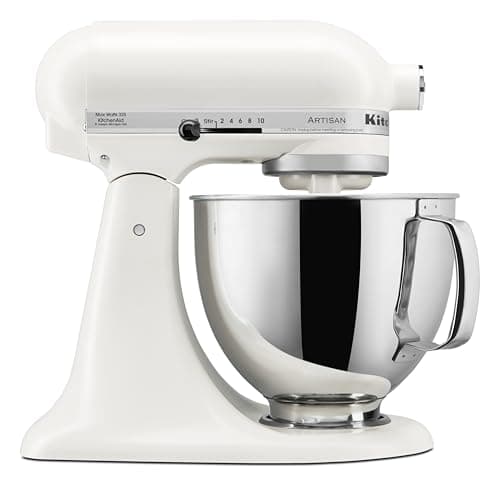
Stand Mixers
The Best Stand Mixers of 2026
KitchenAid Artisan, KitchenAid Classic and Cuisinart compared on bowl size, build and attachments.
Roundup
The Best Budget Stand Mixers
Budget stand mixers ranked on bowl size, stated wattage, weight and warranty — plus what you actually give up.
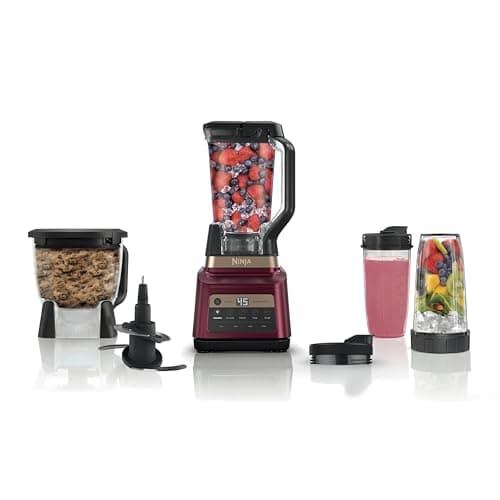
Comparison
Blender vs. Food Processor: Which Do You Actually Need?
The honest line between a blender and a food processor, which to buy first, and when a combo machine is the right answer.
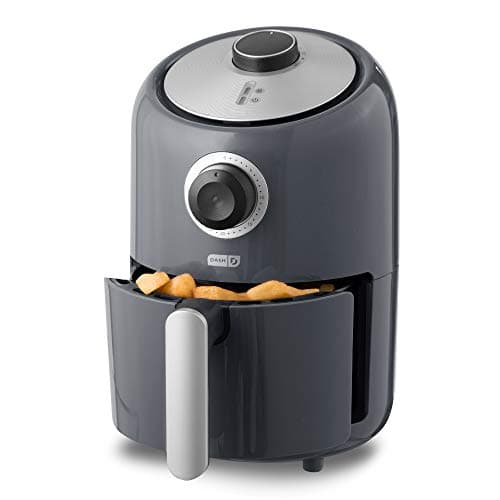
Small Kitchen
Best Appliances for Small Kitchens & Apartments
The most compact air fryer, blender, food processor and sous vide, chosen footprint-first for tight kitchens.
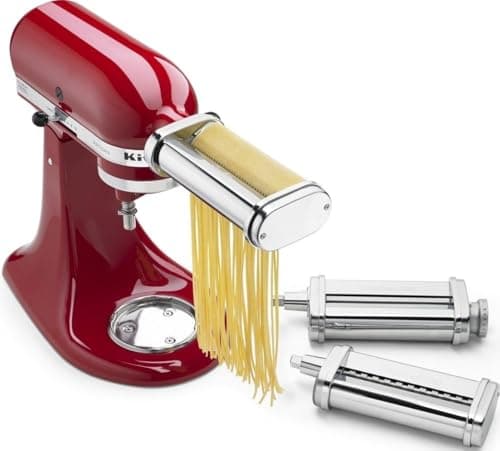
Guide
Stand Mixer Attachments: Which Are Actually Worth It?
Which stand mixer attachments are worth buying, in what order, plus the compatibility traps to check first.
Roundup
The Best Stand Mixers for Beginners
Ranked on the two specs that decide whether a first mixer gets used — published weight and slow-speed control — not on quart ratings.
https://wattandwhisk.com/stand-mixers/are-stand-mixers-worth-it