First Apartment Kitchen Appliances: What to Buy, In Order
Three appliances cover almost everything. Here is what they are, what they cost, and the long list of things you have been told you need and do not.
Disclosure:Watt & Whisk is reader-supported. When you buy through links on this page we may earn an Amazon Associates commission, at no extra cost to you. Prices are pulled live from Amazon and shown with the date checked. How this works.
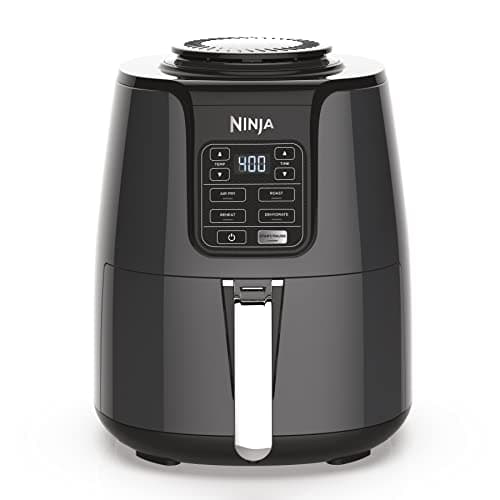
Buy three things, in this order. An air fryer — the Instant Vortex 4-Qt at 10.2 inches wide, or the Dash Compact at 8.1 inches if space is desperate — because it replaces most of what a bad rental oven does badly. A blender — the Ninja BL610 for a full pitcher or the NutriBullet 600 if you drink alone. And a mini chopper — the Cuisinart Mini-Prep Plus, which stores in a cabinet and does the knife work you will otherwise avoid. That is the whole list.
The short answer
Quick picks
| # | Product | Best for | Score | Price |
|---|---|---|---|---|
| 01 | 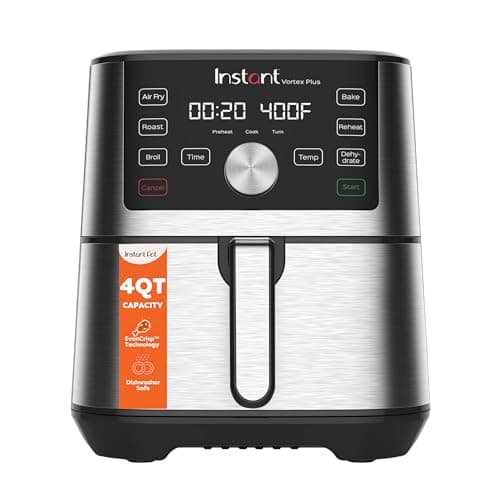 Instant Vortex 4-Qt A 4-quart, digital, single-basket Vortex that stays compact (10.2 in wide) while giving you real preset buttons. It's the middle ground between the bare-bones Dash and a full 6-quart machine. 4 qt | Best small digital | 4.2★★★★★ | $69.99Amazon |
| 02 | 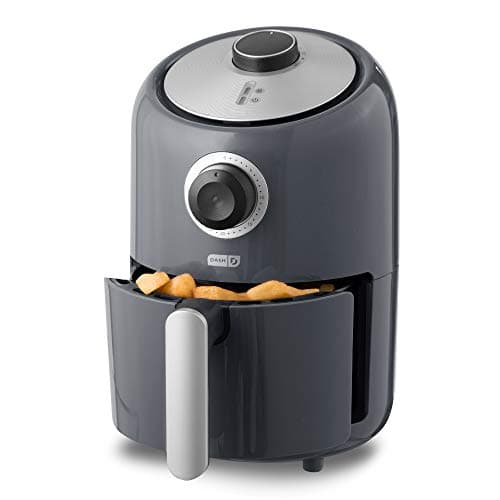 Dash Compact At 2 quarts and just 8.1 inches wide, the Dash Compact is the smallest real air fryer here — the one that fits a dorm, an RV, or a studio-apartment counter with no room to spare. Analog dials, nothing fancy, very cheap. 2qt | Best for tiny counters | 4.0★★★★★ | $49.99Amazon |
| 03 | 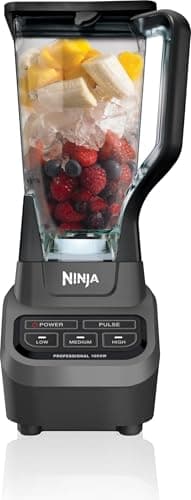 Ninja Professional BL610 The BL610 is the plain, cheap, hard-working Ninja: a 1,000-watt base, a 72-ounce Total Crushing pitcher, and three speeds plus pulse. No Auto-iQ presets, no to-go cups, nothing to break — which is exactly why it's the full-size blender we'd hand someone with a strict budget. 72oz · 1000W | Best full-size blender under $100 | 4.2★★★★★ | $99.00Amazon |
| 04 | 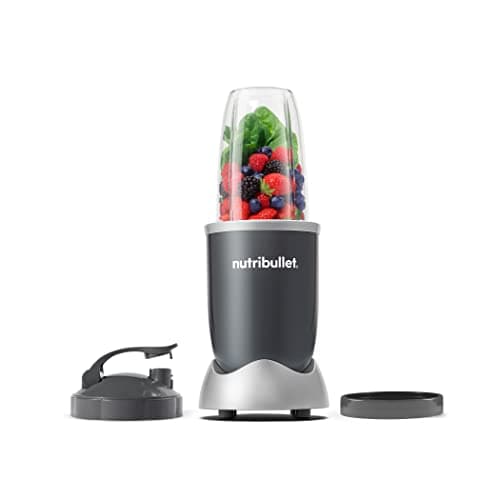 NutriBullet 600 The original 600-watt NutriBullet does one thing: a 24-ounce smoothie in a cup you drink from. It is the cheapest way into blend-and-go without dropping to a 250-watt bullet, and it fits in the gap between the kettle and the toaster. One Cup · 600W | Best cheap personal blender | 4.1★★★★★ | $59.96Amazon |
| 05 | 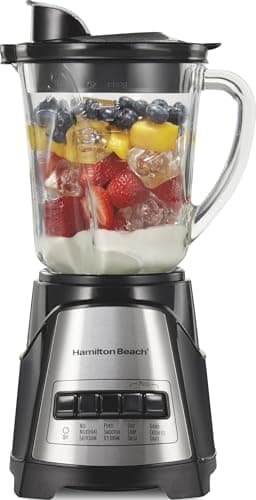 Hamilton Beach Power Elite 700 peak watts, a 40-ounce dishwasher-safe glass jar, and 12 functions on five buttons. The glass jar is the real argument: it doesn't scratch or hold odors the way plastic does, and at this price almost nothing else gives you one. 40 Oz · 700W | Best under $50 | 3.9★★★★★ | $39.95Amazon |
| 06 | 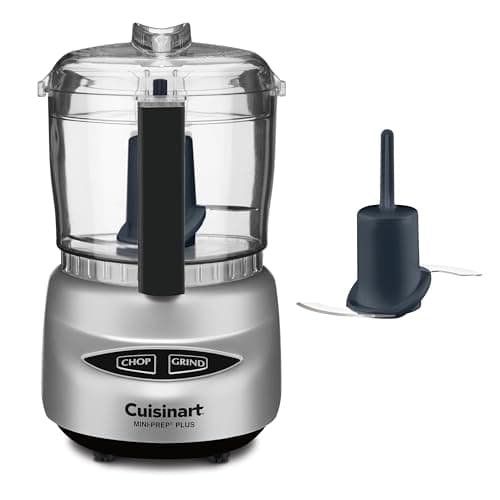 Cuisinart Mini-Prep Plus A 3-cup, 250-watt chopper that lives in a cabinet and comes out for pesto, dressings, nuts, and a single onion. For small kitchens that don't need a 14-cup monster, it does 80% of the jobs at a fraction of the size. 3 Cup · 250W | Best mini / small kitchen | 4.1★★★★★ | $29.29Amazon |
#ad · Live prices from the Amazon Product API, as of October 17, 2026. Where we have no verified live price, we show none — a gap beats a number that has rotted.
The picks, in detail
Instant Vortex 4-Qt
spec score /5
$129.9946% off
Price as of October 17, 2026. Prices change — Amazon's is the one that counts.
#ad · we may earn a commission from this link to Instant Vortex 4-Qt
A 4-quart, digital, single-basket Vortex that stays compact (10.2 in wide) while giving you real preset buttons. It's the middle ground between the bare-bones Dash and a full 6-quart machine.
- Capacity
- 4 qt
- Footprint (W×D×H)
- 10.2 × 13.03 × 11.02 in
- Weight
- 9 lb
- Digital presets in a compact body
- 10.2-in width fits small counters
- Often on sale under $80
- Standard nonstick basket
- 4 qt is single-person to couple sized
- No window
Dash Compact
spec score /5
Price as of October 17, 2026. Prices change — Amazon's is the one that counts.
#ad · we may earn a commission from this link to Dash Compact
At 2 quarts and just 8.1 inches wide, the Dash Compact is the smallest real air fryer here — the one that fits a dorm, an RV, or a studio-apartment counter with no room to spare. Analog dials, nothing fancy, very cheap.
- Capacity
- 2qt
- Footprint (W×D×H)
- 8.1 × 10.2 × 11.4 in
- Weight
- 5.8 lb
- Warranty
- 1 year limited warranty
- Smallest footprint here (8.1 in wide)
- Very inexpensive
- Cool-touch handle, auto shut-off
- 2 qt cooks for one, maybe two
- Analog timer only
- Standard nonstick basket
Ninja Professional BL610
spec score /5
$109.9910% off
Price as of October 17, 2026. Prices change — Amazon's is the one that counts.
#ad · we may earn a commission from this link to Ninja Professional BL610
The BL610 is the plain, cheap, hard-working Ninja: a 1,000-watt base, a 72-ounce Total Crushing pitcher, and three speeds plus pulse. No Auto-iQ presets, no to-go cups, nothing to break — which is exactly why it's the full-size blender we'd hand someone with a strict budget.
- Capacity
- 72oz
- Footprint (W×D×H)
- 8.27 × 10.71 × 15.94 in
- Power
- 1000 W
- Weight
- 7.1 lb
- Cost per use*
- ≈6¢
- Est. per year*
- ≈$12
- Warranty
- 1 year limited warranty
- Full 72-oz pitcher at a budget price
- 1,000 W crushes ice without complaint
- Three speeds and pulse — nothing to learn
- No presets or programs
- Stacked blade assembly to wash separately
- Not rated for hot liquids
*Cost-to-run computed from the manufacturer's stated 1000W at $0.17/kWh (US average), 20-min sessions, 4×/week. Your rate and use will vary.
NutriBullet 600
spec score /5
Price as of October 17, 2026. Prices change — Amazon's is the one that counts.
#ad · we may earn a commission from this link to NutriBullet 600
The original 600-watt NutriBullet does one thing: a 24-ounce smoothie in a cup you drink from. It is the cheapest way into blend-and-go without dropping to a 250-watt bullet, and it fits in the gap between the kettle and the toaster.
- Capacity
- One Cup
- Footprint (W×D×H)
- 6.85 × 11.61 × 12.28 in
- Power
- 600 W
- Cost per use*
- ≈3¢
- Est. per year*
- ≈$7
- Warranty
- One Year Limited
- Blends straight into the 24-oz cup you drink from
- Under 7 in wide — parks anywhere
- Twist-off blade rinses in seconds
- 600 W stalls on thick frozen loads
- Single-serve only
- One-year limited warranty
*Cost-to-run computed from the manufacturer's stated 600W at $0.17/kWh (US average), 20-min sessions, 4×/week. Your rate and use will vary.
Hamilton Beach Power Elite
spec score /5
Price as of October 17, 2026. Prices change — Amazon's is the one that counts.
#ad · we may earn a commission from this link to Hamilton Beach Power Elite
700 peak watts, a 40-ounce dishwasher-safe glass jar, and 12 functions on five buttons. The glass jar is the real argument: it doesn't scratch or hold odors the way plastic does, and at this price almost nothing else gives you one.
- Capacity
- 40 Oz
- Footprint (W×D×H)
- 6.5 × 8.66 × 14.69 in
- Power
- 700 W
- Weight
- 5.62 lb
- Cost per use*
- ≈4¢
- Est. per year*
- ≈$8
- Warranty
- Three(3) Year Warranty
- Dishwasher-safe 40-oz glass jar
- Pour spout — no drips down the side
- Three-year warranty at a sub-$50 price
- 700 peak watts is the weakest full-size pick here
- Glass jar adds weight
- 40 oz is small for a full-size blender
*Cost-to-run computed from the manufacturer's stated 700W at $0.17/kWh (US average), 20-min sessions, 4×/week. Your rate and use will vary.
Cuisinart Mini-Prep Plus
spec score /5
$39.9527% off
Price as of October 17, 2026. Prices change — Amazon's is the one that counts.
#ad · we may earn a commission from this link to Cuisinart Mini-Prep Plus
A 3-cup, 250-watt chopper that lives in a cabinet and comes out for pesto, dressings, nuts, and a single onion. For small kitchens that don't need a 14-cup monster, it does 80% of the jobs at a fraction of the size.
- Capacity
- 3 Cup
- Footprint (W×D×H)
- 7 × 5 × 9.25 in
- Power
- 250 W
- Weight
- 2.2 lb
- Cost per use*
- ≈1¢
- Est. per year*
- ≈$3
- Warranty
- 18 months
- Tiny — stores in a cabinet
- Perfect for herbs, nuts, dressings
- Very inexpensive
- 3 cups is small
- Chop/grind only — no slicing disc
- Not for big batches
*Cost-to-run computed from the manufacturer's stated 250W at $0.17/kWh (US average), 20-min sessions, 4×/week. Your rate and use will vary.
Setting up a first kitchen is where people buy the most appliances they will never use, usually because a list somewhere told them a functional kitchen has twelve devices in it. It does not. Three countertop appliances cover the overwhelming majority of what a person cooking for one or two actually does, and the rest is a pan, a knife and a chopping board.
Everything below is chosen for a rental kitchen: small footprints, no installation, nothing that needs a cupboard you do not have. Dimensions come from each machine's current listing, and prices are live from Amazon. Our method is on how we review.
Buy first: an air fryer
If you buy one appliance, buy this one, and the reason is specific to rentals. Apartment ovens are frequently old, badly calibrated, slow to preheat and expensive to run for one person's dinner. An air fryer is a small convection oven that preheats in three minutes, cooks a portion for one or two faster than the big oven, and costs a fraction as much to run — we do the full arithmetic in how air fryers work.
It handles roasted vegetables, chicken thighs, salmon, chips, frozen food, reheating leftovers so they are crisp rather than soggy, and bacon without the splatter. That is a very large share of what people actually eat.
The Instant Vortex 4-Qt is the pick for most first kitchens: 10.2 inches wide, digital with real preset buttons, and 4 quarts — enough for one person cooking a full meal or two people cooking simply. If your counter is genuinely desperate, the Dash Compact is 8.1 inches wide and 2 quarts, with analog dials and nothing to go wrong; it is the smallest real air fryer we track and it suits a dorm, an RV or a studio. Both have standard nonstick baskets — if that matters to you, read best non-toxic air fryers before choosing.
Buy second: a blender
The second-most-used appliance in most young kitchens, and the choice comes down to one question: are you blending for yourself or for a household?
For one person, buy a personal blender. The NutriBullet 600 puts 600 watts under a 24-ounce cup you drink from directly, and the twist-off blade rinses in seconds — the cleanup is the reason it stays in use. The base is under 7 inches wide. Using a 72-ounce pitcher to make one 12-ounce smoothie is worse, not better, because the blade never gets proper contact with such a small load.
For two or more, or if you want to make sauces and soups as well as drinks, buy a full-size machine. The Ninja BL610 is a 1,000-watt base with a 72-ounce pitcher at 8.27 inches wide and 15.94 tall, so it clears a standard cabinet, and it is the cheapest full-size blender we would recommend. If you would rather have a glass jar than plastic — glass does not scratch, cloud or hold smells — the Hamilton Beach Power Elite has a 40-ounce dishwasher-safe glass jar and a 3-year warranty for very little money.
None of these is rated for hot liquids, so no blending soup in the jar. The full field is in best blenders under $100.
Buy third: a mini chopper
The one people skip and then wish they had bought. Not because chopping is hard, but because on a Tuesday evening the amount of chopping a recipe needs is the thing that decides whether you cook it or order food instead.
The Cuisinart Mini-Prep Plus is a 3-cup, 250-watt chopper measuring 7 × 5 × 9.25 inches and weighing 2.2 lb — it lives in a cabinet and comes out for onions, garlic, herbs, nuts, pesto, salsa and dressings. Its reversible blade has a sharp edge for chopping and a blunt edge for grinding hard things like parmesan.
It will not slice or shred — no mini will, because discs need a wide bowl and a feed tube. For a first kitchen that is not a limitation you will feel. The alternatives are in best mini food processors.
What to skip
A stand mixer. Twenty-plus pounds, permanent counter space, and used a few times a month at best. A hand mixer costs a fraction and lives in a drawer. Revisit this when you bake weekly — the honest version of that question is in are stand mixers worth it.
A full-size food processor. A 14-cup machine is a batch-cooking tool. In a first apartment it is a large object you will use twice a year, and the mini above does the jobs you will actually do.
Single-purpose novelty appliances. Egg cookers, quesadilla makers, pizza ovens, milk frothers, electric can openers. Each solves a problem you do not have with a pan you already own.
A microwave, if one is fitted. Most rentals have one. If yours does not, it is worth having for reheating and for speed — but an air fryer reheats better, and the comparison is in air fryer vs. microwave.
Rental-specific things worth knowing
Three constraints that apply to apartments and rarely get mentioned in general buying advice.
Circuit load. Older rentals often run the whole kitchen from one or two circuits. An air fryer at 1,500 watts plus a kettle plus a microwave on the same circuit is how you find the breaker. Nothing here is a problem on its own; running two high-wattage appliances simultaneously can be. If a breaker trips, move one appliance to an outlet on a different wall rather than assuming the machine is faulty.
Ventilation and clearance. Air fryers vent hot air from the back and manufacturers specify clearance behind and above them. Pushed against a wall under a cabinet, a machine runs hotter, cooks less evenly and — in a small kitchen with no extractor — can set off a smoke alarm. Pull it forward when it runs.
Landlord fittings you do not control. If the oven is bad you cannot replace it, which is the entire argument for buying the air fryer first. Similarly, if the extractor is decorative, favor appliances that do not produce smoke — an air fryer produces far less than a hot pan, provided you keep it clean, which is covered in how to clean an air fryer.
Measure before you buy anything
Two numbers, and taking them will save you a return. First, the usable depth of your counter — the run between the wall or backsplash and the front edge, minus anything permanently there. Second, the height from counter to the underside of your cabinets, which is about 18 inches in a standard kitchen and often less in older rentals.
Those two numbers rule out more appliances than budget does. The Ninja BL610 at 15.94 inches tall clears most cabinets; a 20.5-inch premium blender does not. Air fryers need clearance behind and above for their vents, which manufacturers specify. Write both numbers in your phone before you shop.
A realistic buying order for the first few months
You do not need to buy these together, and spreading them out means you find out what you actually cook before you commit.
Week one: the air fryer. Buy this before you have unpacked, because it starts working immediately and it is the appliance that makes a bad rental oven irrelevant. It will handle most of your cooking while everything else is still in boxes.
Month one: the blender or the chopper — whichever matches what you have found yourself wanting. If you have been buying smoothies out, buy the blender. If you have been ordering food on nights when a recipe needed chopping, buy the chopper. Do not buy both at once; buy the one your first month tells you about.
Month three: the other one. By now you know whether you blend for one or for two, which decides between a personal blender and a full-size pitcher — and that is a decision worth making with evidence rather than optimism.
Also buy, and it is not an appliance: one heavy-based frying pan you can get properly hot, one sharp knife, one chopping board. These do more for your cooking than any of the three appliances above, and a first kitchen that has them plus an air fryer is already a working kitchen.
When to upgrade, and to what
Once the three basics are earning their space, the upgrade path is driven by what you cook rather than by any list.
Cooking for more people pushes you toward a bigger air fryer, and eventually a dual-basket machine so a main and a side finish together — our dual-basket roundup covers the footprint cost honestly. Baking regularly is the point at which a stand mixer stops being a liability. Caring about meat is when a sous vide circulator starts to make sense, and it is the cheapest high-impact upgrade in the kitchen — see best budget sous vide. Batch-cooking on Sundays is when a full-size food processor finally earns its cupboard.
Until one of those becomes true, three appliances and a decent pan is a complete kitchen. The compact pick in every category is on our small-kitchen appliances hub, and if you want a gift for someone else setting up, our gift guide is sorted by budget.
If the reason you are buying is specifically to cook once and eat all week, the buying order changes — prep capacity matters more than cooking capacity, and storage matters more than either. Best kitchen appliances for meal prep maps a machine to each stage of that pipeline.
Buying for somebody else's first place rather than your own? The same footprint-first logic, written for a gifter who has not seen the kitchen, is best housewarming gifts — including the five appliances a newly moved household most reliably already owns, so you do not buy a second one.
Frequently asked questions
What kitchen appliances do you need for a first apartment?
Three: an air fryer, a blender, and a mini chopper. An air fryer replaces most of what a bad rental oven does badly, a blender covers drinks and sauces, and a mini chopper removes the prep work that stops people cooking on a weeknight. Everything else is optional.
What is the best small air fryer for an apartment?
The Instant Vortex 4-Qt at 10.2 inches wide is the right size for most first kitchens — digital, with preset buttons, and enough capacity for one person's full meal. If counter space is desperate, the Dash Compact is 8.1 inches wide and 2 quarts.
Should I buy a stand mixer for my first apartment?
Almost certainly not. Stand mixers weigh 22 to 24 lb, need permanent counter space, and get used a few times a month at best. A hand mixer costs a fraction and lives in a drawer. Revisit the question when you are baking weekly.
Personal blender or full-size blender for one person?
Personal blender. Using a 72-ounce pitcher to make one 12-ounce smoothie is actively worse, because the blade never gets proper contact with such a small load — and you wash a pitcher to drink one cup. Buy full-size only if you blend for two or more or make sauces and soups.
What should I measure before buying kitchen appliances?
Two things: the usable depth of your counter, and the height from the counter to the underside of your cabinets, which is about 18 inches in a standard kitchen and often less in older rentals. Those two numbers rule out more appliances than your budget does.
Do I need a microwave if I have an air fryer?
Not necessarily. An air fryer reheats food better than a microwave because it crisps rather than steams, though it is slower and cannot heat liquids. Most rentals come with a microwave fitted, so this rarely needs to be a purchase decision at all.
Sources
Keep reading
Small Kitchen
Best Appliances for Small Kitchens & Apartments
The most compact air fryer, blender, food processor and sous vide, chosen footprint-first for tight kitchens.
Roundup
The Best Kitchen Appliance Gifts
Kitchen appliance gifts by price tier — under $50, under $100 and splurge — chosen for real counters and real kitchens.
Roundup
The Best Blenders Under $100
Five blenders under $100 ranked on jar size, frozen-load handling and materials, with the trade-offs stated plainly.
Roundup
The Best Small Air Fryers of 2026
The smallest-footprint air fryers for apartments, dorms and RVs, ranked by real width.
Roundup
The Best Dorm Room Appliances
Dorm-sized appliances ranked on real footprint and wattage — plus the housing rules to check before you buy.
Guide
When to Upgrade Your Kitchen Appliances
How to tell a worn-out appliance from a dirty one, the four real reasons to upgrade, and the cheap fixes to try first.
Roundup
The Best Housewarming Gifts
Kitchen appliance housewarming gifts chosen on published footprint and on what a newly moved household actually lacks.
https://wattandwhisk.com/small-kitchen/first-apartment-kitchen-appliances